



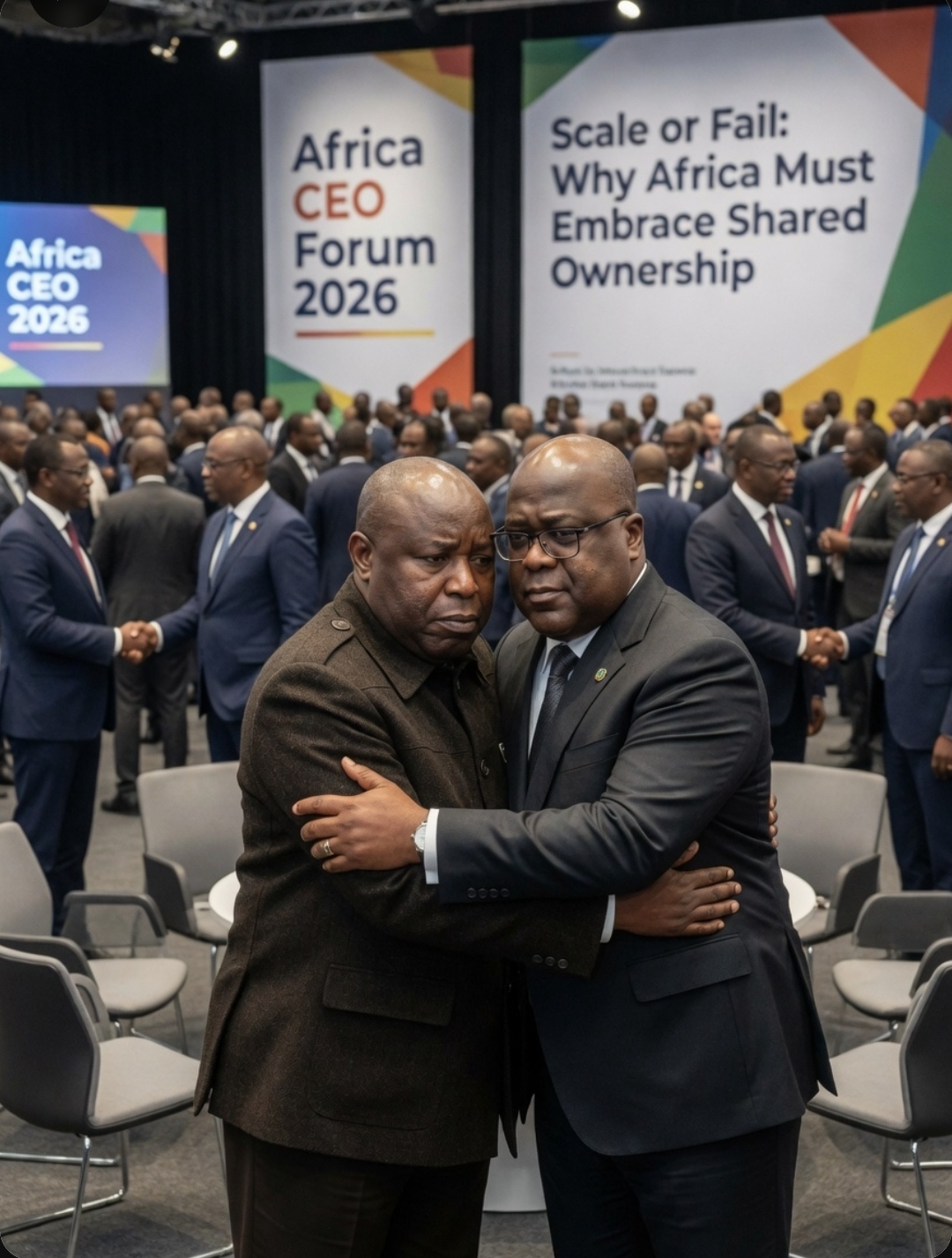
There were no anti-Congo speeches from conference stages. No anti-Burundi campaign sessions. Bujumbura and Kinshasa just don’t want to be part
At the corridors of the Africa CEO Forum 2026 in Kigali, where presidents, investors, bankers and industrialists spent two days discussing Africa’s economic future, two absences quietly stood out.
There were no visible official delegations from the Democratic Republic of the Congo. Burundi, too, appeared absent, save for one Burundian official from an international company.
On the surface, perhaps it was unsurprising.
Relations between Rwanda and both neighboring countries remain deeply strained. Kinshasa accuses Kigali of backing the AFC/M23 rebellion in eastern Congo — allegations Rwanda denies while insisting its primary security concern is the continued presence of the FDLR militia, founded by perpetrators of the 1994 Genocide against the Tutsi.
Burundi, meanwhile, has increasingly aligned itself politically and militarily with Kinshasa in the regional confrontation.
But the Africa CEO Forum was never designed to be a political summit.
It is a business gathering.
That distinction matters.
For two days, the continent’s most influential economic actors have debated industrialization, infrastructure, cross-border investment, artificial intelligence, energy transitions and the future of African capital.
Presidents pitched their countries to investors. CEOs searched for partnerships. Banks negotiated financing. Governments courted manufacturers.
The theme this year — “Scale or Fail: Why Africa Must Embrace Shared Ownership” — was itself built around the argument that Africa’s future depends on integration rather than fragmentation.
Which is precisely why the absence of visible Congolese and Burundian business delegations raised uncomfortable questions.
Who benefits when politics begins closing economic spaces?
Certainly not businesses.
The Democratic Republic of the Congo possesses one of Africa’s largest untapped markets. Burundi’s economy, though smaller, remains heavily dependent on regional trade corridors, logistics networks and financial connectivity with East Africa.
Both countries have private sectors that need investment, partnerships and market access.
And forums like the Africa CEO Forum are designed precisely for that purpose.
What made the Congolese absence particularly striking is that Rwanda did not publicly or privately block Congolese businesses from attending.
No formal restriction prevented Congolese entrepreneurs or companies from coming to Kigali.
Instead, President Félix Tshisekedi has poisoned the atmosphere through escalating accusations, anti-Rwanda rhetoric and increasingly confrontational regional diplomacy.
The Congolese government is openly facilitating narratives and alliances targeting Congolese Tutsi communities and aligning itself with armed groups hostile to Rwanda, including the FDLR.
Kinshasa’s regional lobbying as part of a broader effort aimed at weakening or destabilizing Rwanda politically.
The Congolese president has become more focused on political survival and regional confrontation than on building an inclusive national economic vision capable of uniting Congolese around shared development goals.
In that climate, economic engagement itself becomes collateral damage.
The situation with Burundi reflects a similar pattern.
It was Burundi’s government — not Rwanda’s — that unilaterally closed its border with Rwanda in early 2024, sharply limiting movement and engagement between citizens of the two countries.
That closure effectively narrowed opportunities for Burundian entrepreneurs, traders and companies to engage with Rwanda’s business ecosystem, including participation in regional networking platforms such as the Africa CEO Forum.
Burundi has increasingly aligned itself with Kinshasa politically and militarily in the eastern Congo conflict, deepening tensions with Kigali.
Across the forum, African leaders repeatedly argued that the continent cannot industrialize if countries continue operating as isolated economic islands. Presidents called for regional integration, shared infrastructure and intra-African trade under the African Continental Free Trade Area.
Yet some of Africa’s closest neighbors were missing from one of the continent’s largest business platforms.
The irony was difficult to ignore.
There were no anti-Congo speeches from conference stages. No anti-Burundi campaign sessions. Panels focused overwhelmingly on investment, finance, industrial policy and economic transformation.
In other words, this was exactly the kind of neutral economic space where business actors from politically divided countries could still engage.
And perhaps that is what makes the absence significant.
Because if even business forums become casualties of geopolitical hostility, then regional fragmentation begins extending far beyond politics.
The first victims are rarely governments themselves.
They are businesses, entrepreneurs and young professionals whose opportunities shrink every time diplomacy collapses.
The empty seats in Kigali became a quiet reminder of what Africa still risks losing when political conflict overwhelms economic pragmatism.
