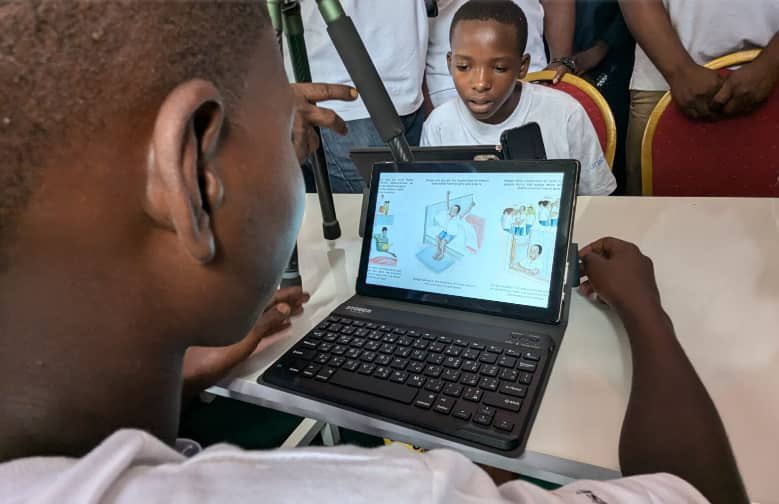
A growing number of entrepreneurs are designing digital tools specifically for Rwanda’s schools, teachers and students.
KIGALI – Not long ago, improving digital learning largely meant bringing technology into classrooms. As a result, a growing number of entrepreneurs are designing digital tools specifically for Rwanda’s schools, teachers and students.
Their platforms are tackling everyday classroom challenges, from improving lesson delivery to making learning more interactive, while reflecting the realities of the education system they are meant to serve.
However, turning a promising innovation into something that thousands of schools can confidently adopt requires more than good ideas.
It depends on government policies that encourage innovation without compromising quality, private companies willing to invest in long-term solutions, and universities that can transform research into practical products.
That evolving relationship between the three sectors formed the focus of the latest EdTech Mondays discussion on KT Radio on July 27, 2026.

Bella Rwigamba, the Chief Digital Officer at the Ministry of Education.
Policymakers, innovators and education leaders reflected on what it will take for Made-in-Rwanda education technology to move from individual success stories to mainstream classroom tools.
Bella Rwigamba, the Chief Digital Officer at the Ministry of Education noted that government sees its role as creating an environment where innovation can flourish while ensuring every solution introduced into schools meets clear standards.
She said the ministry’s responsibility goes beyond embracing technology. It must also safeguard learners by ensuring issues such as data privacy, responsible innovation and quality assurance remain central as digital tools become more common in education.
Rather than encouraging innovation in isolation, the ministry works with the ICT Chamber under the Private Sector Federation to engage developers, review emerging technologies and guide innovators through existing standards.
“The good thing is that these technologies are being developed in response to existing challenges. Most of these solutions are designed to solve particular problems,” she said.
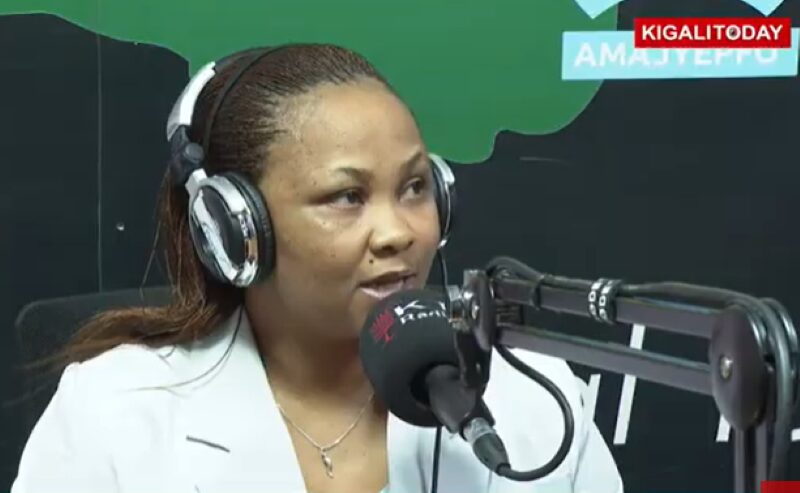
Aurore Hirwa, the Chief Executive Officer of EdTech Solutions speaking at the radio talk show.
For entrepreneurs building those solutions, government support is measured not only by regulation but also by trust.
Aurore Hirwa, the Chief Executive Officer of EdTech Solutions, said one of the biggest misconceptions surrounding education technology is that it is designed to replace teachers.
Instead, she argued, the most effective digital tools strengthen the work teachers are already doing by making lessons more engaging, reducing administrative burdens and giving learners additional support beyond the classroom.
“Government has an important role in helping communities understand that distinction while creating conditions that allow promising innovations to reach schools more quickly,” she noted.
Hirwa called for more accessible communication channels between innovators and public institutions to enable faster guidance and closer collaboration as new products are developed but decried limited financing and constrained resources.
Universities Are More Than Training Institutions

Dr. Olivier Habimana, the Head of Digitalization and Research at the Higher Education Council, described higher learning institutions as places where ideas should be tested, refined and eventually transformed into products that address national priorities.
He said technology transfer offices established within universities are helping bridge the gap between academic research and the private sector, creating opportunities for researchers and entrepreneurs to develop solutions together rather than working independently.
“While infrastructure such as reliable internet connectivity remains essential, we are also proud a growing pool of researchers and innovators capable of developing technology that responds directly to Rwanda’s needs,” he said.
Increasingly, Rwanda has demonstrated the ability to cultivate the expertise, partnerships and confidence needed to build its own educational technologies, the next chapter is to ensure that the next generation of digital learning solutions carries a Made-in-Rwanda signature.

Dr. Olivier Habimana, the Head of Digitalization and Research at the Higher Education Council, described higher learning institutions as places where ideas should be tested and refined.