



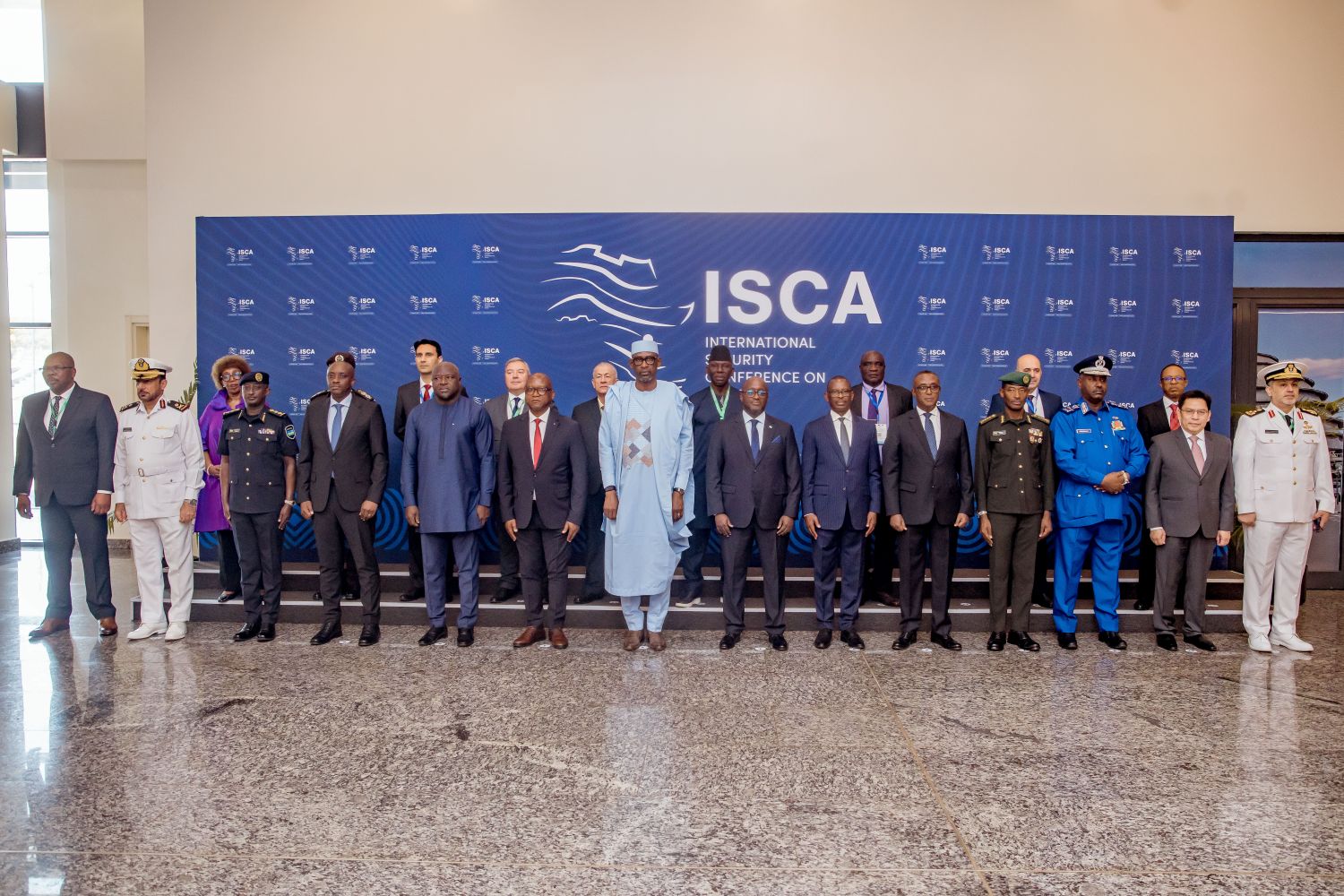
High-level participants at the ISCA in a group
Like most conversations about Africa and security, the recent high-level discussion of the International Security Conference on Africa, ISCA in Kigali was long overdue.
Under the theme “The Rise of Autonomous Systems: Implications for Defence and Security in Africa,” the conference forced an uncomfortable but necessary conversation: can Africa secure its own future in an age of rapidly evolving technology, or will it remain dependent on foreign systems and, by extension, foreign will?
The discussions that followed raised urgent questions about Africa’s vulnerabilities, its technological gaps, and the pressing need to take control of its own security destiny.
One thing became clear: security can no longer be left to the military alone. The complexity of autonomous systems, whether automated, unmanned, supervised, or fully autonomous, demands a symbiotic relationship between academia, the security sector, political leadership, and even the private sector.
Without this integrated approach, African countries risk building fragmented systems that are neither sustainable nor cost-effective. Worse, they risk failing to tap into talent that could be readily available. In the face of emerging threats, our countries cannot afford the luxury of having various sectors within the same country pulling in different directions.
Equally important was the recognition that Africa must command technology, not merely consume it. Every system imported from abroad, every algorithm designed elsewhere, every platform controlled by foreign actors creates a vulnerability. When African nations rely on foreign models for their security infrastructure, they inherit not just technology but also foreign backdoors and foreign constraints.
Investing in homegrown talent in fields like artificial intelligence, robotics, cybersecurity, and data analytics is about strategic autonomy. Without it, African nations will remain perpetually dependent on external providers, their security tools and sovereignty exposed to outside control and, worse, manipulation.
There was also a sober recognition that foreign models cannot be transplanted wholesale into African contexts. The security challenges of the Sahel are not those of the Great Lakes, and the environments are not the same. Similarly, the technological infrastructure available in one country is not what exists in others.
African countries must therefore develop the capacity to adapt foreign-conceptualised models to their specific needs, environments, and operational realities. They must also work more closely together to close gaps, because a threat to one often becomes a threat to many, if not all. This requires not just technical expertise but quality political leadership, as well as a deep understanding of local political dynamics, cultural contexts, and historical legacies.
President Kagame’s consistent message that Africa’s security cannot be outsourced echoed through the halls. The conference did not produce easy answers, but it produced a clear direction. Africa must invest in its people, its institutions, and its technological infrastructure. It must foster collaboration across sectors and borders. And it must resist the temptation to rely solely on imported solutions that come with hidden costs to sovereignty.
As autonomous systems become increasingly central to all spheres of human life, especially warfare, surveillance, and peacekeeping, the decisions made today will determine whether Africa becomes a master of its own security destiny or remains a theatre for the strategic interests of others.
