


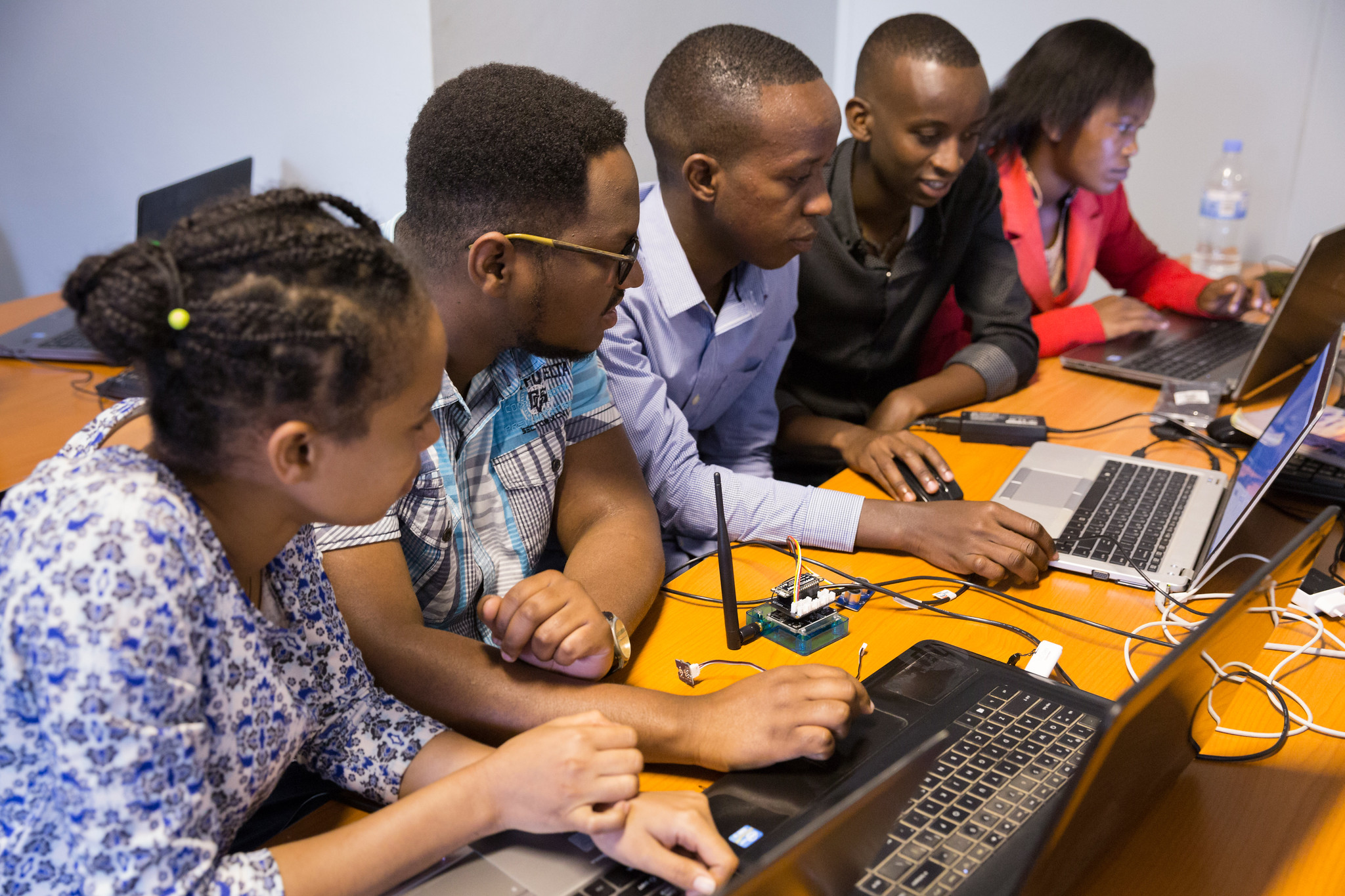
In 2019, a First-year Master’s class at the African Center of Excellence in the Internet of Things
The World Bank Group’s new Country Partnership Framework for Rwanda will guide its support from July 2026 to June 2035. Consultations around the framework placed job creation, market-relevant skills, private-sector growth, finance, agriculture, infrastructure and digital connectivity at the centre. (World Bank)
For young Rwandans, this should not be read only as another development announcement. It should be read as a map of where future opportunity may emerge—and a warning that opportunity will not automatically become employment.
A certificate alone will not be enough. Nor should young people expect government, development partners or employers simply to place jobs before them. National plans can create direction, investment and institutions, but individuals must still bring discipline, ethics, curiosity and continuous learning.
The labour market is becoming more competitive because technology is changing how work is performed. It would be misleading to claim that one AI-enabled employee will always replace five or ten workers; productivity gains differ by task and industry. But the direction is clear: employers increasingly expect people to use technology to complete work faster, analyse more information and solve more complex problems.
The World Economic Forum’s Future of Jobs Report 2025 found that nearly 40 per cent of workers’ core skills are expected to change by 2030. AI, big data, cybersecurity and technological literacy are among the fastest-growing skills, alongside creative thinking, resilience and lifelong learning. (World Economic Forum)
This matters across every sector named in Rwanda’s framework. Agriculture will increasingly use data, sensors, digital finance and artificial intelligence. Infrastructure will require modern engineering, project management and automation. Finance will demand digital skills, risk awareness and cybersecurity. Connectivity will create opportunities only for people capable of building useful services on top of it.
Young people should therefore choose sectors according to their strengths and interests, but they should not separate those sectors from technology. A soldier may have courage, but still needs the right equipment. In the same way, talent without modern tools is increasingly incomplete.
Rwanda already has evidence that practical, employer-led training can work. A World Bank-supported skills programme reached nearly 24,000 young people, with 82 per cent employed or self-employed within nine months. Employers also reported strong satisfaction with its effect on productivity. (World Bank)
Those are encouraging results, but employment numbers should not become the only measure of success. A person can be placed in work without building a durable career. Better indicators should also examine job retention, income progression, employer satisfaction, enterprise survival, productivity and whether participants continue learning after the programme ends.
The deeper issue is mindset.
Many students still see AI mainly as a threat to jobs, while others believe using ChatGPT means they have mastered artificial intelligence. Both views are incomplete. AI, robotics and the Internet of Things will still require people who understand problems, operate systems, verify results and apply technology responsibly.
Government, universities, employers and development partners should therefore translate the nine-year framework into visible career pathways. Young people need to know which sectors are expanding, which occupations are emerging, what skills employers require, and where apprenticeships, projects and practical experience can be found.
Universities should update curricula with employers, not years after industries have changed. Companies should offer real projects and apprenticeships. Development partners should measure quality, not just enrolment. Government should communicate investment priorities in language young people can convert into preparation.
The strongest message is simple: do not wait for opportunity to arrive before becoming ready.
Rwanda’s next nine years are already taking shape. The young people who benefit most will not necessarily be those with the most certificates. They will be those who study where the country is going, equip themselves early and become useful before the market starts looking for them.
The writer is a career and relationship clarity coach based in Kigali, Rwanda.
