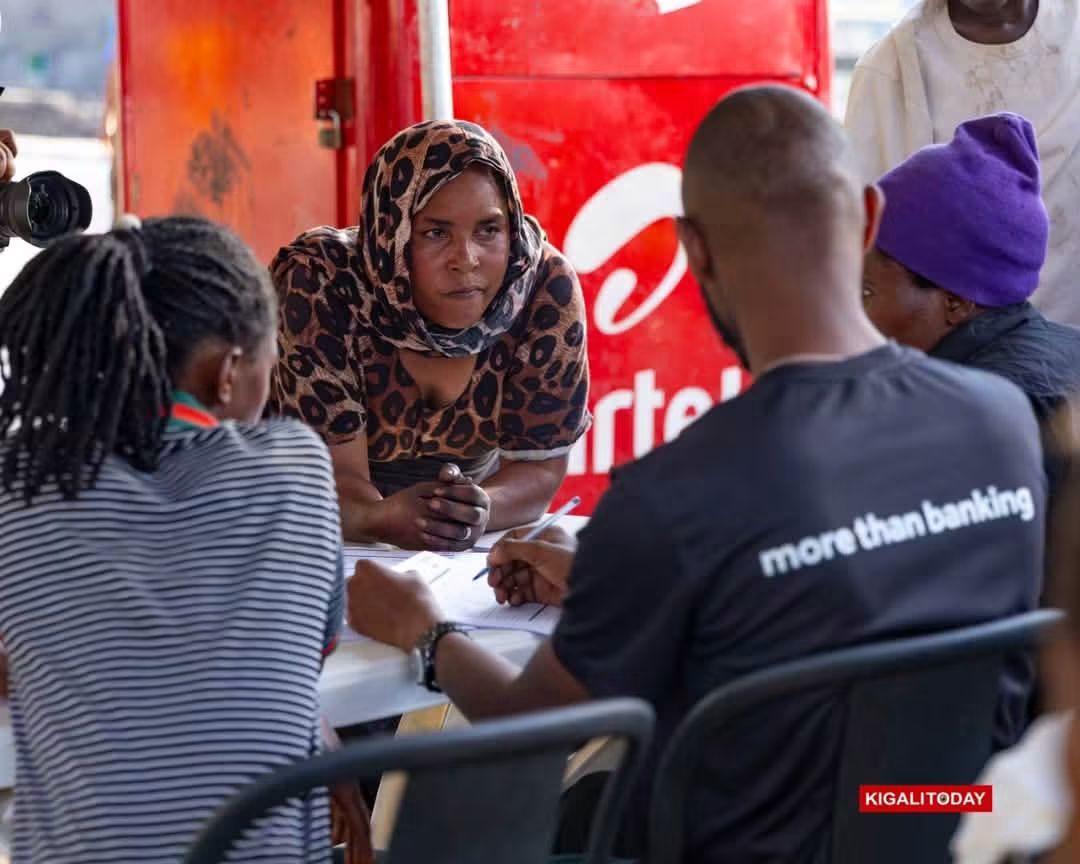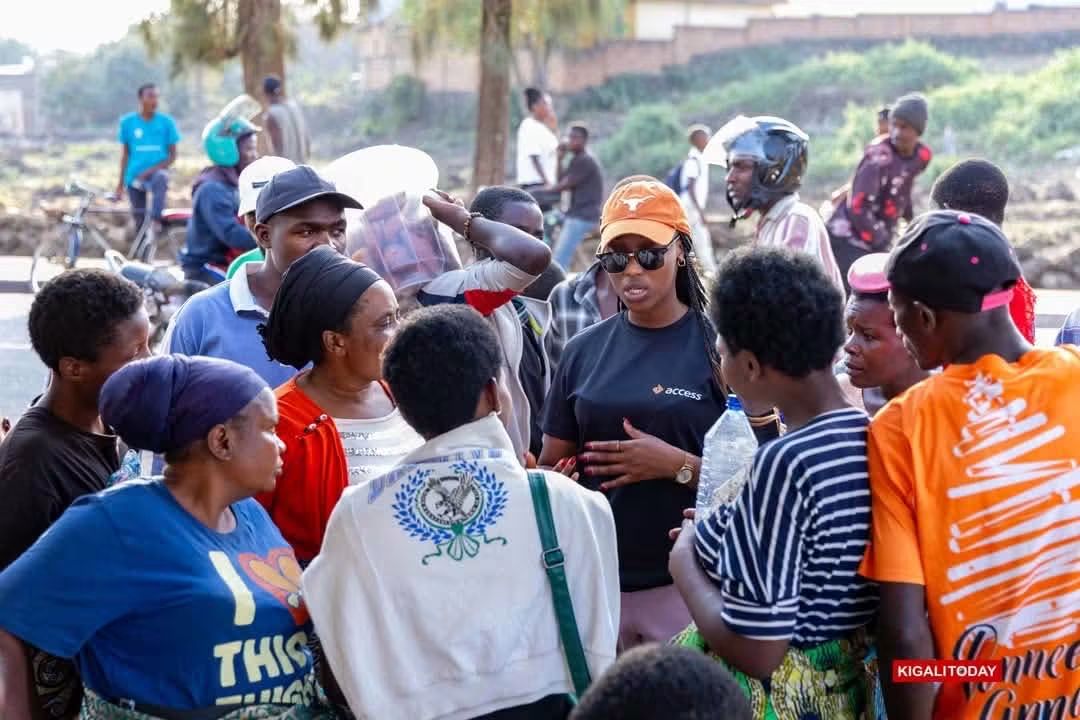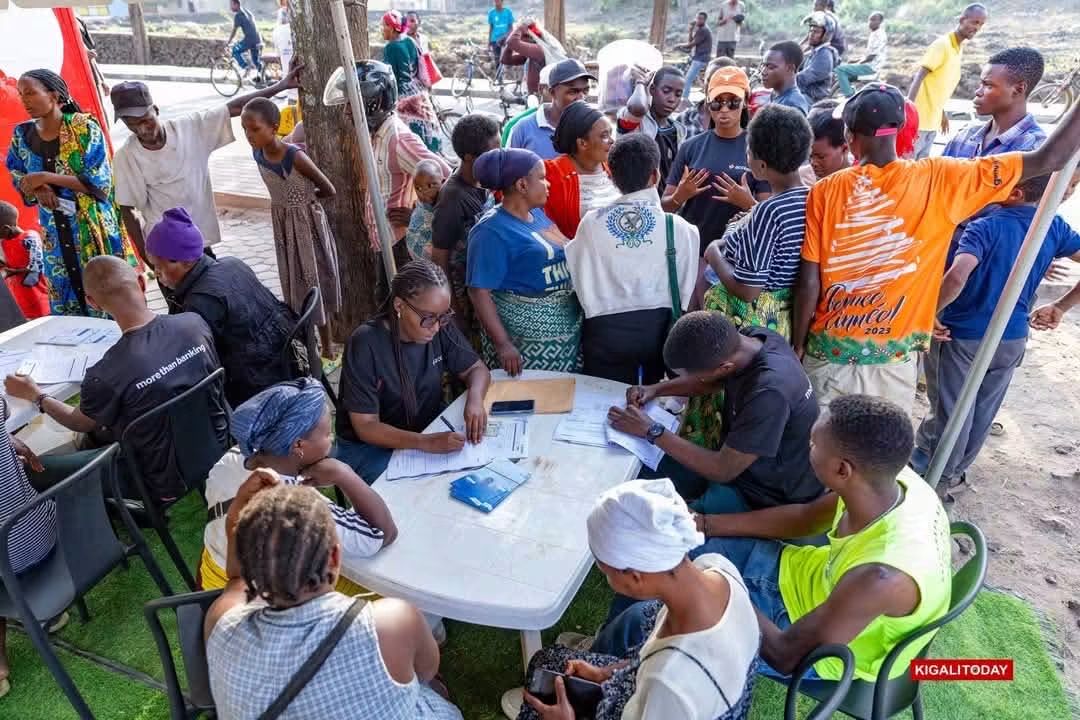
All photos from the inaugural campaign in Rubavu District on September 7-9, 2026
KIGALI — Rwanda’s central bank has launched a national campaign to persuade consumers and businesses to replace cash with digital payments, despite widespread access to digital financial accounts.
The National Bank of Rwanda data shoe 85.3% of Rwandans hold a digital account. Yet 92% still primarily use cash for everyday expenses, according to government data.
The gap is particularly visible in routine payments.
Cash is used for 65% of airtime and data purchases, 45% of medical bills, 45% of farming inputs and 44% of school fees. Utility bills are the main exception, with 33% paid digitally.
The figures are driving BNR’s new #TwagiyeKashiresi campaign (“Lets Go Cashless”). Its goal is to turn access to digital financial services into regular use.
The campaign launched in Rubavu District September 7-9, is being implemented with the Ministry of ICT and Innovation, RSwitch, commercial banks and mobile-money operators.
At the centre is eKash, Rwanda’s national interoperable payment system. It allows users to send and receive money between participating banks and mobile-money platforms using their existing accounts.
Doreen Makumi, BNR’s Director of Communications and Engagement, told hundreds at a market in Rubavu District that cash comes with costs that extend beyond the transaction itself.

“Carrying cash is not only burdensome and unnecessary, it is also expensive in terms of money spent conducting basic transactions, time wasted and cost of printing new currency,” she said.
The campaign is planned to move to Huye scheduled for September 14-16. Rusizi will be next on September 22 and 23.
The campaign comes after Rwanda made eKash its national instant payment system in July, connecting banks and mobile-money platforms through a common payment infrastructure.
For BNR, the challenge is no longer simply getting people into the financial system.

It is getting them to use the digital tools they already have.
The central bank’s campaign is therefore aimed at changing a deeply established habit: reaching for cash when paying for everyday needs.