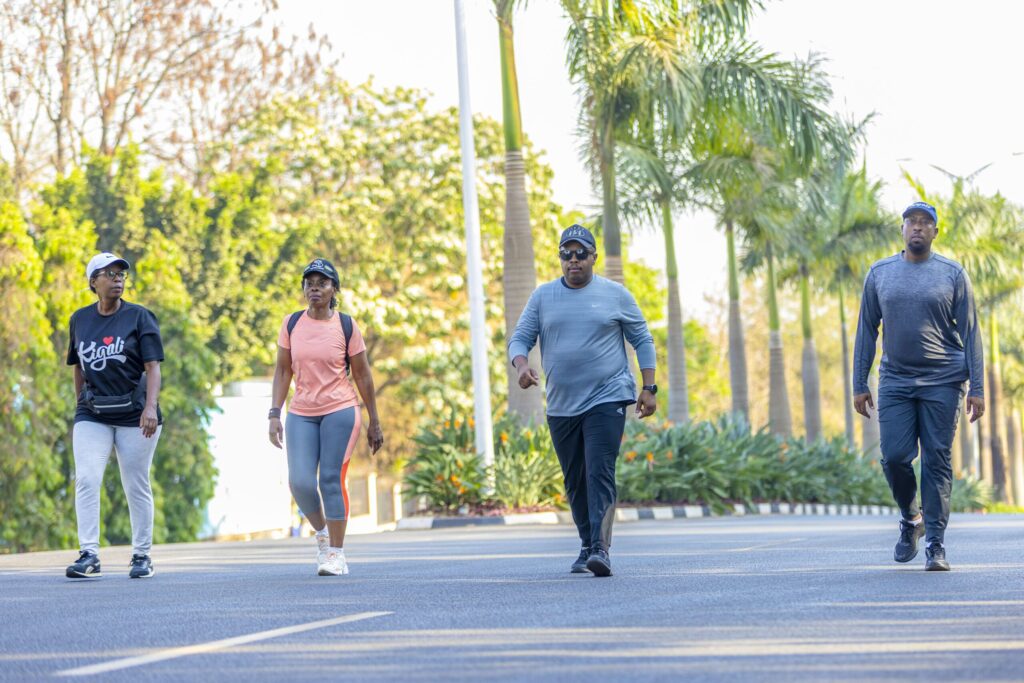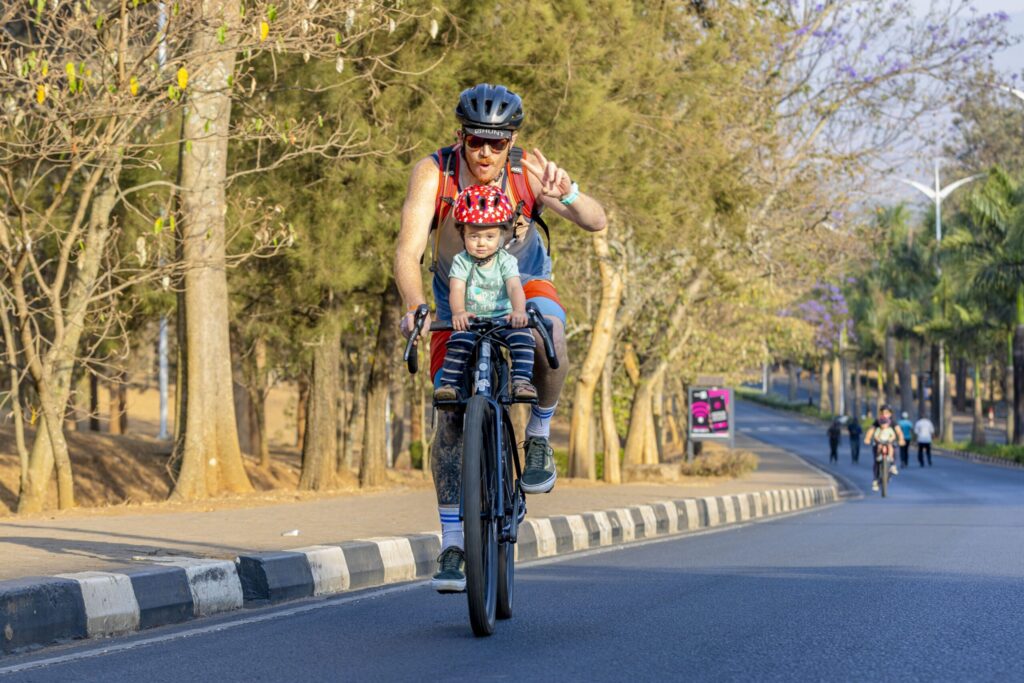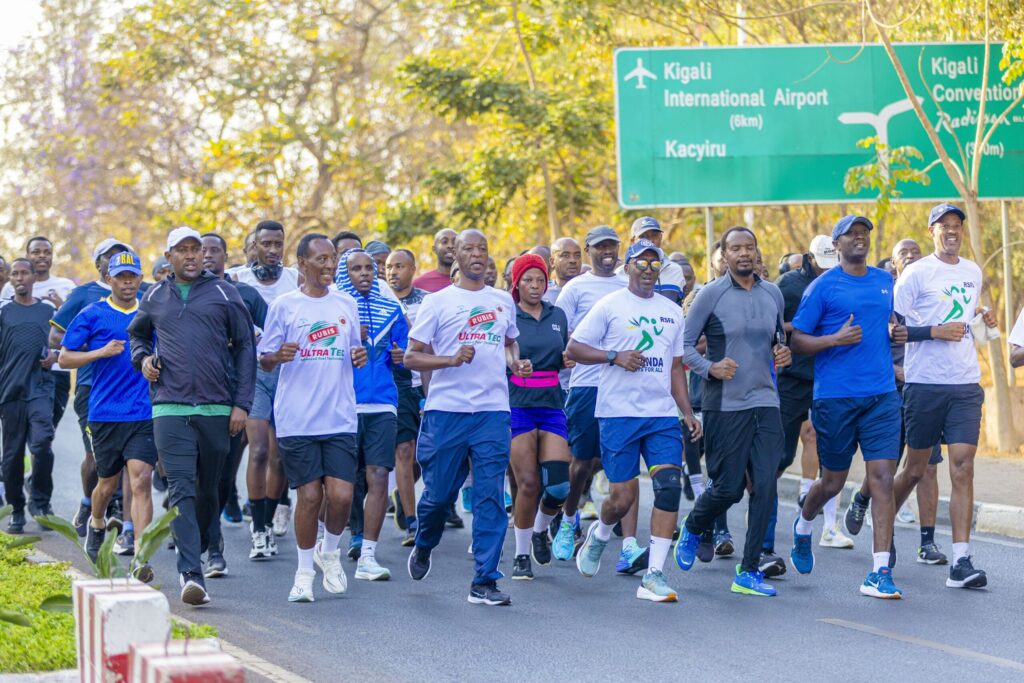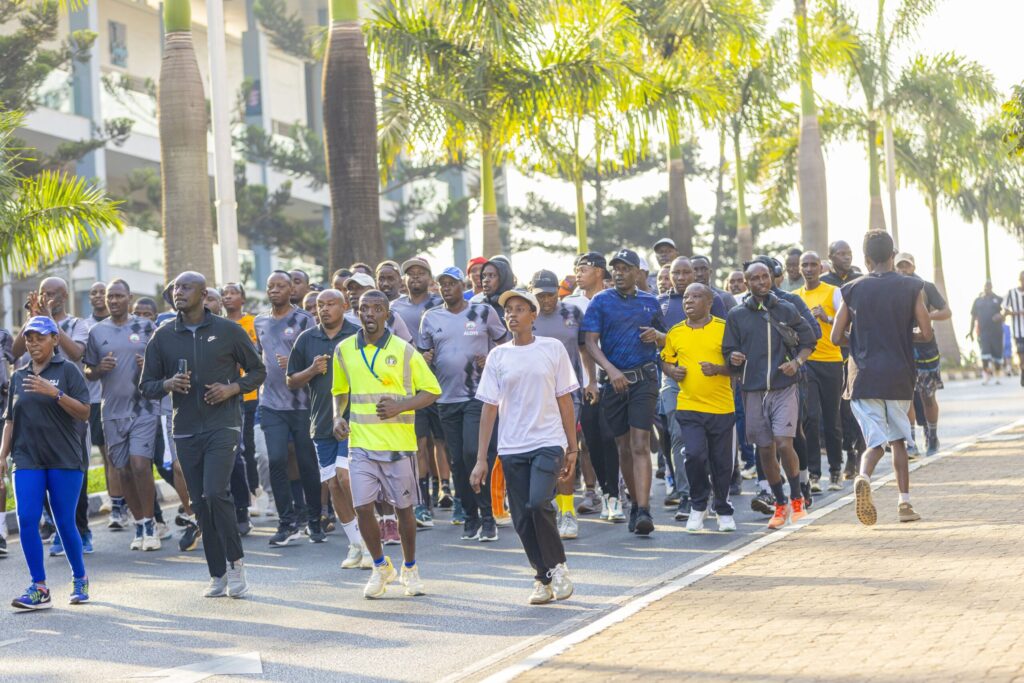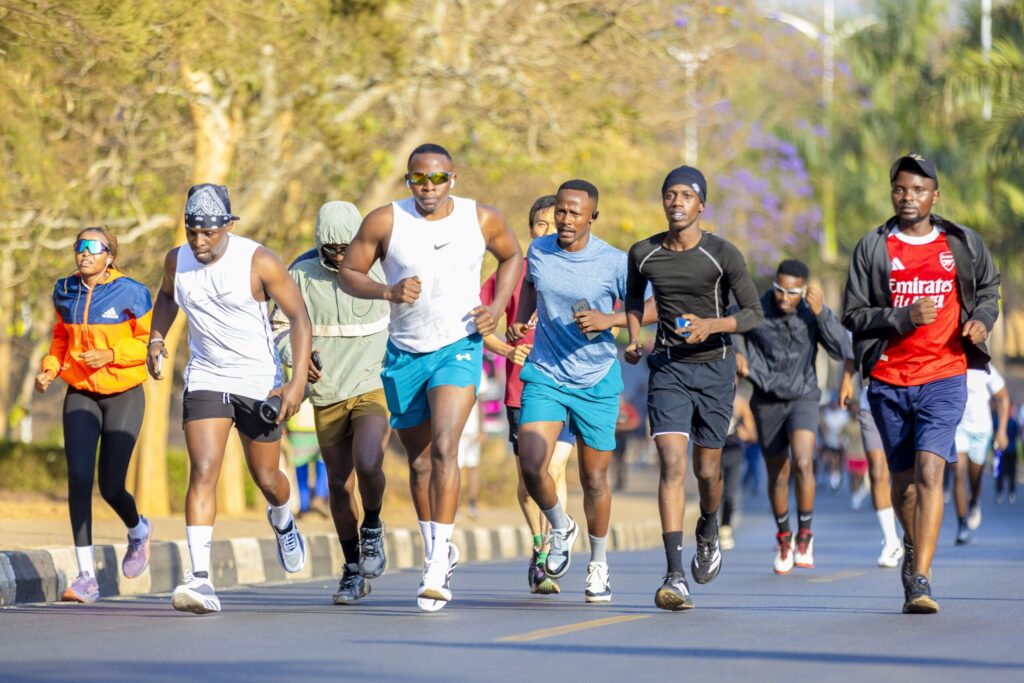
Residents participate in the car free day community sports activity.
KIGALI – On a Sunday morning, some of Kigali’s busiest roads take on an unusual look.
The traffic thins out and the streets fill instead with runners, cyclists, families, young people and groups following aerobics and other exercises. What would normally be a route for getting somewhere becomes the destination itself.
That’s a result of the Kigali’s Car Free Day, a twice-monthly community sports activity that is steadily becoming one of the city’s most visible public-health platforms, bringing exercise, preventive health and community together in the same space.
Occasionally, residents from Kigali’s three districts turned out in large numbers, with activities ranging from walking and running to cycling, aerobics and gymnastics.
Today in Kicukiro district, Minister of Sports Nelly Mukazayire joined young people and other residents for the mass sports activity, which started at Sonatube and concluded at IPRC-Kigali.

Minister of Sports Nelly Mukazayire joined young people and other residents in Kicukiro district for the mass sports activity.
Her presence reflected a message she has repeatedly championed of making sport to not only be viewed simply as competition or entertainment, but as part of the foundation of a healthy society.
“Sport is more than exercise; it is a powerful tool for building a healthy, active and productive generation,” Mukazayire said in one of her previous messages.
It is a message that gives Car Free Day a bigger purpose of not simply getting Kigalians moving for a few hours, but making physical activity part of how people live.
Where Exercise Meets Prevention
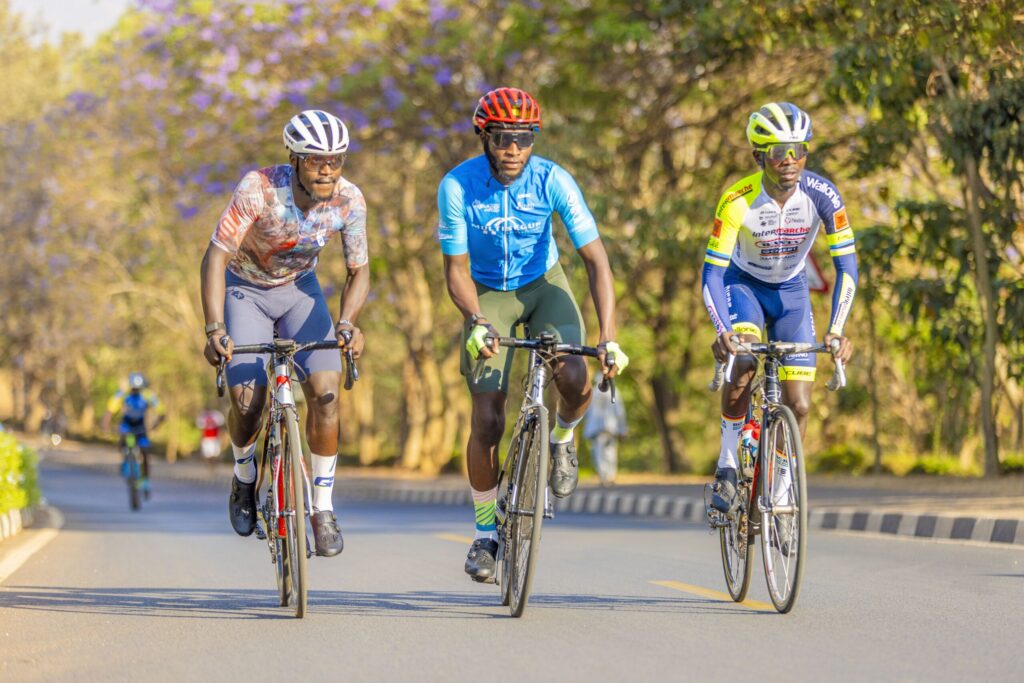
The traffic thins out and the streets fill instead with runners and cyclists.
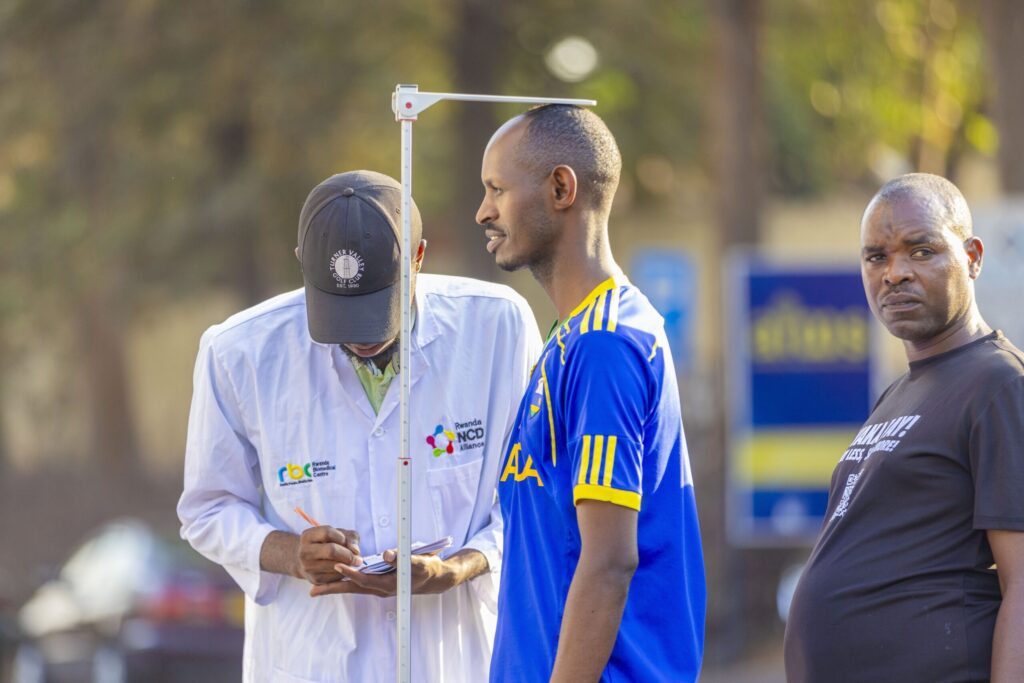
Alongside the running, cycling and group exercises, residents also get access to voluntary and free screening for non-communicable diseases, as well as advice on healthier daily habits.
That combination makes the streets a temporary extension of the public-health system.
A resident can come out for a morning walk and, before heading home, receive information about their health and what they can do to reduce the risk of disease.
The idea is particularly relevant as Rwanda seeks to encourage healthier lifestyles and prevent illnesses linked to physical inactivity and other risk factors.
“This is extremely inspiring, creating a healthy country. What if this continues in all districts, can you imagine how healthy Rwandans will become? A healthy body is the ultimate fashion statement,” John Peter Niyigena, a resident who joined the activity said.
The sentiment captures something important about the appeal of Car Free Day. It is not an activity reserved for athletes. People can participate at their own pace, whether walking with friends, cycling, jogging or simply joining group exercises.
When Roads Belong to People
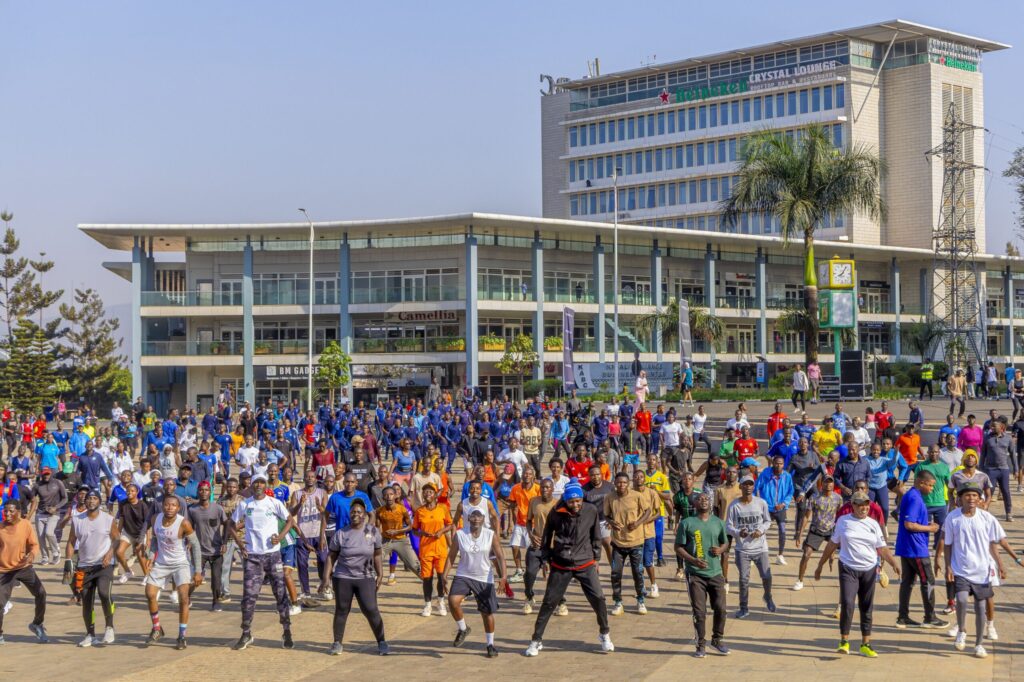
There is also a social dimension to the Car Free Day. Kigali’s roads normally connect people to workplaces, schools, businesses and homes. On this day, they temporarily serve another purpose of bringing people together.
Families walk together. Young people exercise alongside older residents. Cyclists share the road with runners. The city becomes a shared space rather than simply a place people pass through.
The City of Kigali has long presented Car Free Day as a way of combining physical activity with healthier communities. The program has also been associated with reduced vehicle emissions during the restricted hours.
Recent research has further examined Kigali’s Car Free Days as an urban measure that can reduce traffic-related air pollution during the hours when motorized traffic is restricted.
But perhaps its most lasting impact is less visible. It is the habit of showing up.
A Healthier City Also Needs Cleaner Air
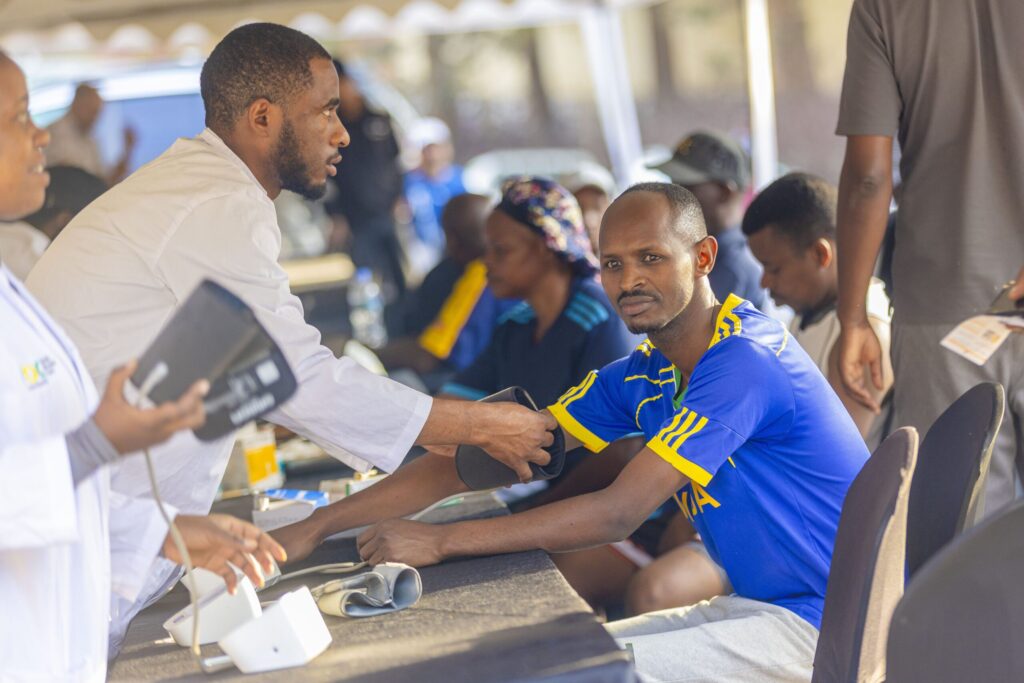
Residents also get access to voluntary and free screening for non-communicable diseases, as well as advice on healthier daily habits.
That idea of healthier living extends beyond exercise.
As Kigali encourages residents to walk, cycle and use public transport, it is also confronting another part of the health equation regarding the quality of the air people breathe.
During this year’s observance of the International Day of Clean Air for Blue Skies on September 11, Fidèle Bingwa, Permanent Secretary in the Ministry of Environment, estimated that air quality may need to improve three to four times to reach the desired level.
“Clean air is not a luxury for a modern city; it is a basic requirement for healthy people and a healthy economy. The quality of the air we breathe directly affects the health, productivity and quality of life of our people,” Bingwa said.
Rwanda is expanding air-quality monitoring, vehicle emissions testing, cleaner transport, industrial controls and cleaner cooking. The country now has 23 monitoring stations tracking pollutants including PM2.5 and PM10.

But Bingwa says cleaner air will ultimately depend on changing everyday choices ranging from how people travel to how industries operate.
That makes Car Free Day more than a fitness ritual. Every Sunday when Kigali’s roads fill with walkers and cyclists instead of vehicles, the city is demonstrating how healthier movement can also support a cleaner urban environment.
The transformation is gradual but deliberate. For Kigali, that journey is already visible with one Car Free Sunday, one healthier choice and one cleaner breath at a time.
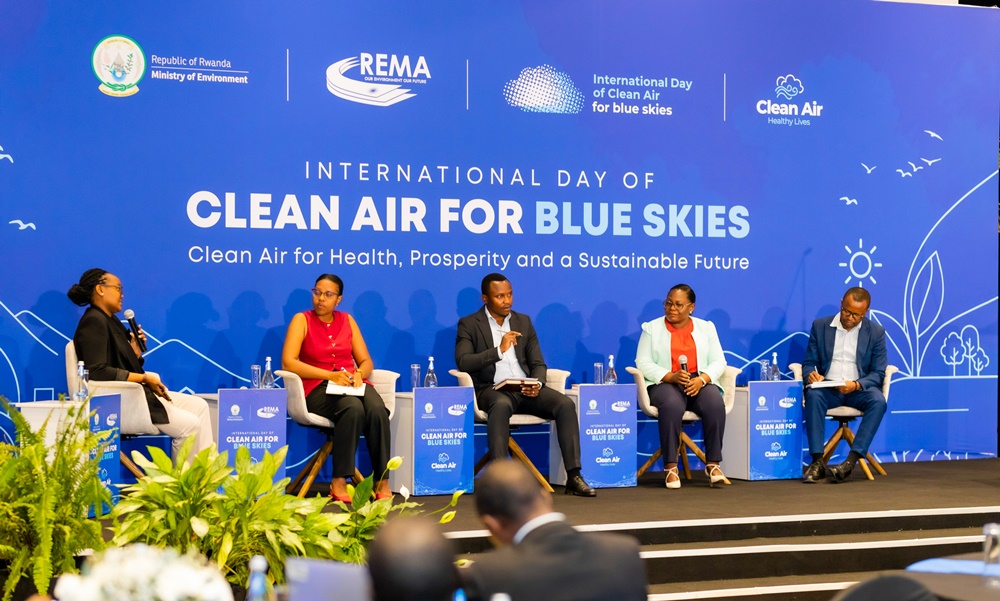
Rwanda observed this year’s International Day of Clean Air for Blue Skies on September 11, 2026.