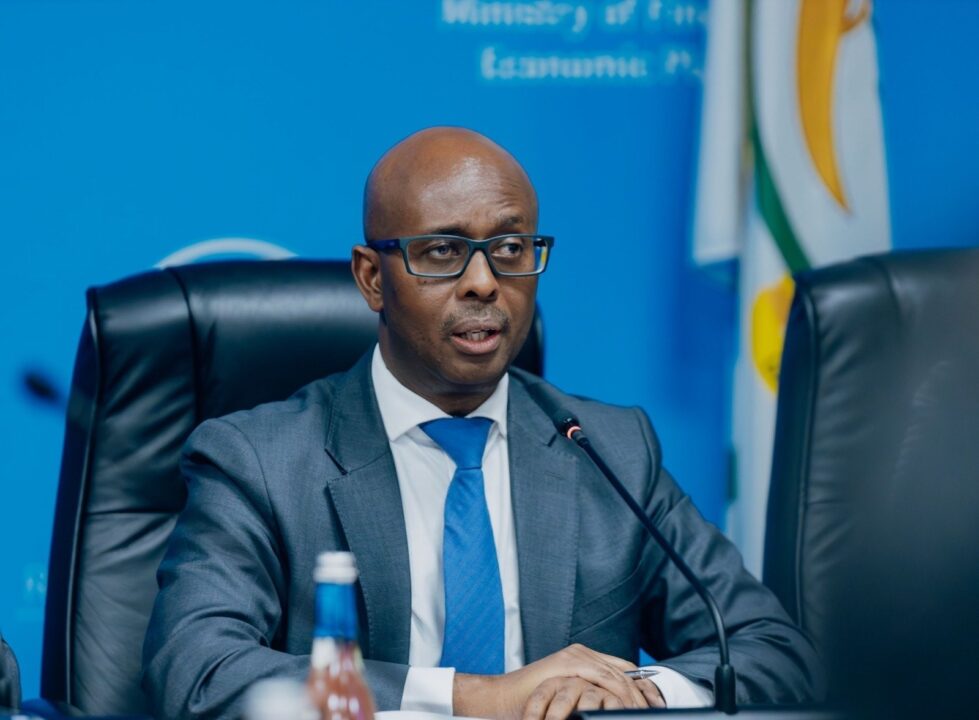
Finance Minister Yusuf Murangwa.
KIGALI – Rwanda’s economy is expanding far faster than initially projected, but the strong growth comes against a difficult backdrop of high inflation, tighter monetary policy and pressure to keep public finances under control without slowing investment.
The economy grew by 9.7% in the first half of 2026, well above the government’s full-year growth target of 6.8%, while the fiscal deficit narrowed to 4.8% of GDP in the 2025/26 financial year.
But inflation reached 15.7% in August, prompting policymakers to devise means of ensuring that strong headline growth translates into sustainable gains for households and businesses.
These competing pressures were at the center of discussions between government and the International Monetary Fund, which reached a staff-level agreement on the first review of the country’s Extended Credit Facility program on Tuesday.
The IMF said Rwanda had met all end-June quantitative performance criteria and was advancing structural reforms, while warning that fiscal consolidation would remain critical to preserve debt sustainability and rebuild policy buffers.
For Finance Minister Yusuf Murangwa, however, the challenge is not simply to reduce borrowing or raise taxes, but to ensure that the money Rwanda borrows generates enough economic value to support future repayment.
Growth Must Carry the Debt
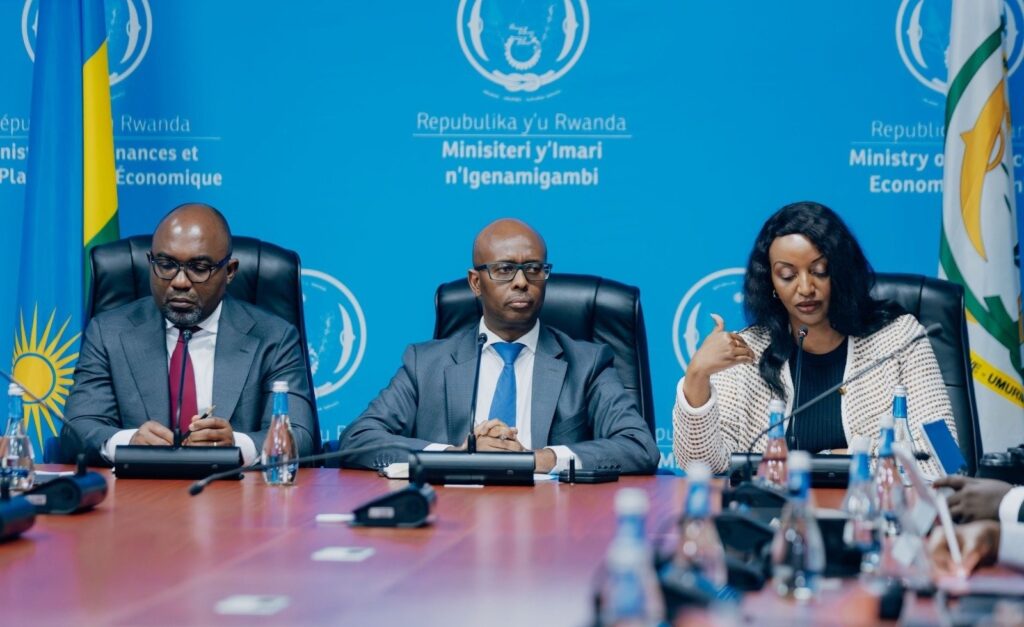
Responding to questions about whether Rwandans should expect higher taxes or spending cuts to repay government loans, Murangwa rejected the idea that taxation would be the main answer.
“We are not saying that we are going to pay from taxes. We are going to pay from an economy that is extremely productive The government’s strategy is to channel borrowed funds into investments capable of generating returns greater than the cost of borrowing,” he said.
The Minister argued that much of Rwanda’s borrowing is concessional, carrying very low or zero interest rates and long repayment periods.
He pointed to education and health as investments in human capital and cited major infrastructure projects as examples of investments expected to generate wider economic activity. The objective is to invest in projects that are more productive than the debt supposed to be paid.
That approach will now have to operate alongside the IMF’s call for continued fiscal consolidation.
The Fund says Rwanda should strengthen domestic revenue mobilization through the forthcoming second Medium-Term Revenue Strategy, carefully prioritize foreign-financed capital expenditure and protect social and other priority spending.
Inflation Becomes the Harder Test
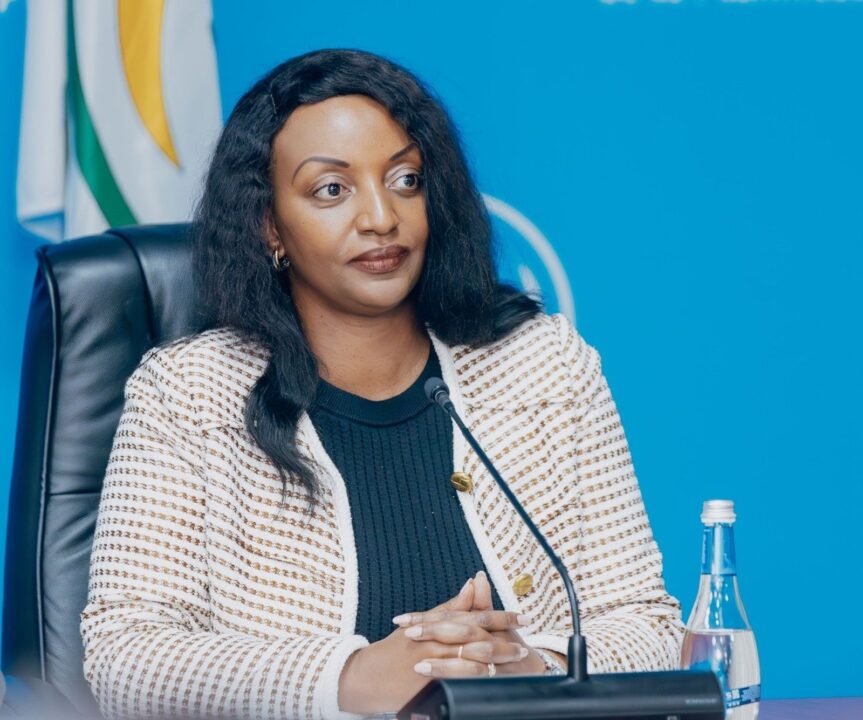
Governor Soraya Hakuziyaremye.
Inflation has been driven partly by higher international oil and fertilizer prices, as well as supply constraints affecting agricultural products, with the IMF also warning that geopolitical and commodity-price shocks could keep inflation elevated.
For the central bank Governor Soraya Hakuziyaremye, the immediate challenge is to prevent those pressures from becoming entrenched.
“Having headline inflation at 15%, this is double-digit inflation, actually causes more harm to households and businesses when their purchasing power is reducing. Without a tighter monetary policy, the cost of high inflation could be greater than the cost of tighter credit,” she said.
The Governor said monetary policy would remain data-driven and focused on returning inflation towards the 5% medium-term target. Based on the central bank’s latest projections, inflation is expected to fall below 8% from 2027.
Only then, she said, would the central bank be in a position to recalibrate its monetary policy.
Keeping Development on Track
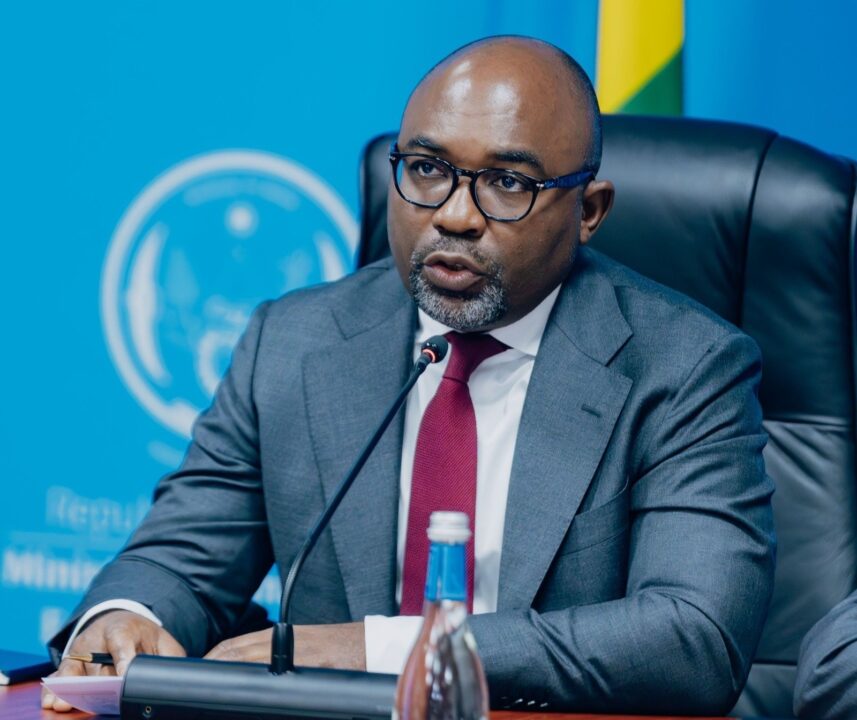
IMF Mission Chief for Rwanda Albert Touna Mama.
The balancing act extends to Rwanda’s second National Strategy for Transformation, or NST2, which requires continued investment even as the government tightens its fiscal position.
Murangwa acknowledged that fiscal consolidation and development investment can theoretically pull in opposite directions. “In theory, there should be conflict but in practice, this is our job, to balance,” he said.
The government, he said, would seek to slow the pace of spending where necessary without abandoning investments needed to sustain growth.
The IMF expects Rwanda’s economy to grow by 7.8% in 2026 and 7.2% in 2027, but says downside risks include global commodity volatility, geopolitical tensions, weather shocks and tighter global financing conditions.
Despite those risks, IMF Mission Chief for Rwanda Albert Touna Mama said Rwanda’s fiscal targets remain achievable, pointing to the government’s record under the current program.
“We hold the belief that those targets remain realistic, and certainly there is a commitment to take the necessary measures when the shocks occur, but also to safeguard the welfare of the population,” Touna Mama said.
His assessment gives Rwanda some room to maintain its development ambitions, but not without continued discipline.
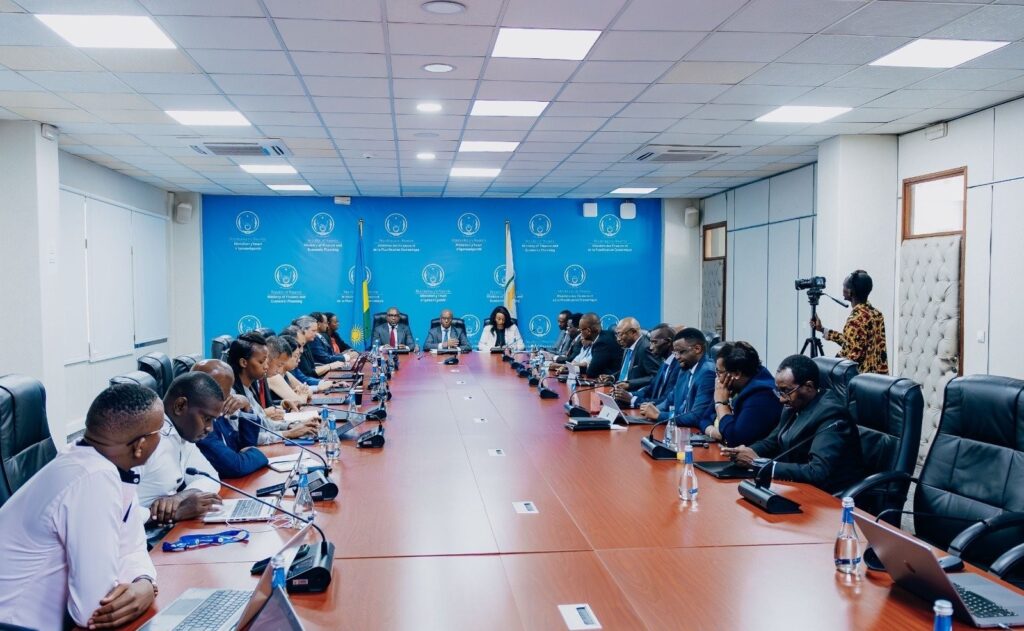
The government must now navigate a policy environment where sustaining investment, containing inflation and keeping debt at a manageable level all compete for room within the same economy.
The next phase is to navigate whether the country can convert its strong growth into broader economic gains while bringing down inflation and ensuring that borrowing continues to support productive investment.
That leaves Rwanda with a narrow policy path to sustain investment and the economic momentum that has produced 9.7% growth, while bringing inflation down, rebuilding fiscal buffers and ensuring that borrowing continues to generate enough productive capacity to justify its cost.