


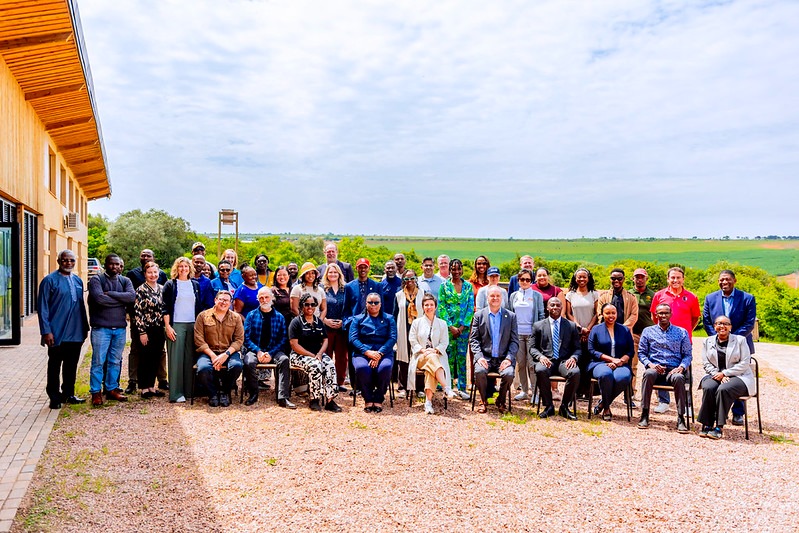
A group photo highlighted the visit
Donald Danforth Plant Science Center, the world’s largest independent nonprofit research institute dedicated to plant science is building partnership with the Rwanda Institute for Conservation Agriculture (RICA).
The development is taking shape from an already existing partnership with the Rwanda Agriculture and Animal Resource Development Board (RAB) in combating Cassava Brown Streak Disease, a major constraint to cassava production in Rwanda.
The Danforth Center intends to expand its engagement from cassava disease research into broader crop improvement, conservation agriculture and scientific workforce development.
“Well, so far, it’s really been focused on Brown Streak Disease in cassava. And so, the field trials that are going on right now, which has really solved that problem,” said Dr. Giles Oldroyd, President of Donald Danforth Plant Science Centre.
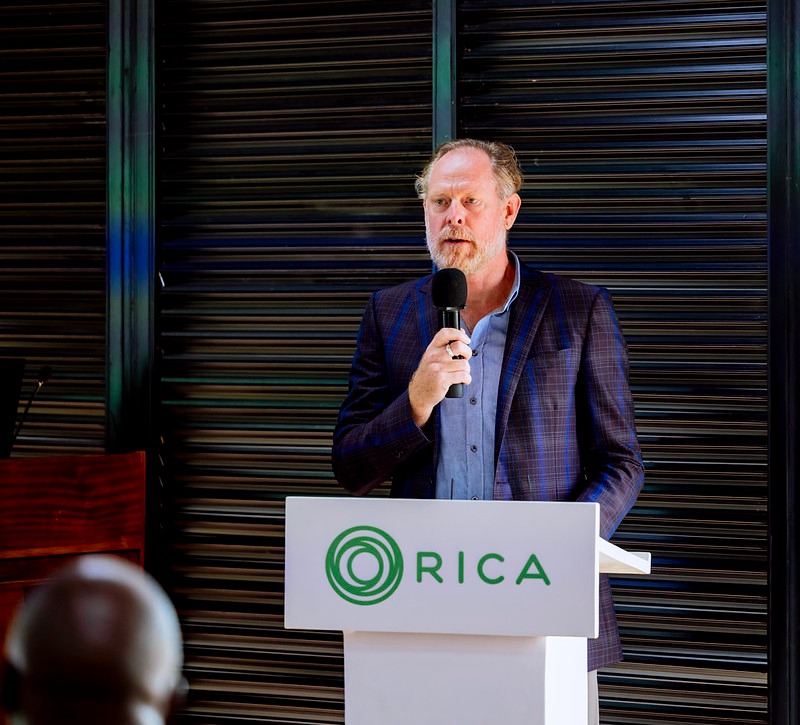
Dr. Giles Oldroyd, President of Donald Danforth Plant Science Centre
From the Headquarters of Donald Danforth Plant Science Center in Saint Louis – Missouri, Dr. Giles was accompanied by a delegation of his County, including the Mayor, yesterday.
“Looking forward,” he said, “I see huge opportunities for working here at RICA on developing conservation agriculture, expanding the focus outside of cassava to also include other crops like maize and sorghum, millets. These are all crops that we work on, as well as beans. That’s a crop that I’m excited to start working on.”
“I see an opportunity to really expand the collaboration, both with RAB and with RICA, and as part of the broader Rwandan Food Innovation Partnership.”
The Food Innovation Partnership was initiated by the Government of Rwanda to turn Rwanda into a hub for food systems innovation. RICA is a key partner and founding member of the program.

Cara Spencer, the Mayor of Saint Louis
Narrowing down on the partnership with RICA for example, Dr. Giles said that his institution sees an opportunity for much more exchange with students from Rwanda and the US reciprocating field visits.
For Dr. Giles, joining the partnership and particularly seeing the opportunities offered by RICA, he said “I could see a really fantastic opportunity of expanding the work we do in sustainability and conservation agriculture to also include crops that are relevant here.”
“I think what we bring to that discussion on conservation agriculture is crop improvement,” Dr. Giles said.
A win – win partnership
According to Dr. Momar Dieng, RICA Vice Chancellor, the two parties have a lot to gain.
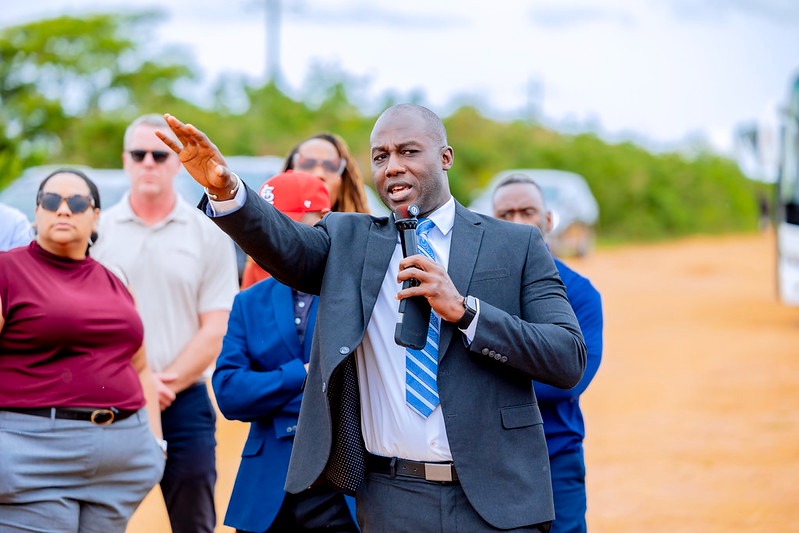
Dr. Momar Dieng, RICA Vice Chancellor
First of all, he noted the big profile of Donald Danforth Plant Science Center, as “one of the premier, the leading research ecosystems around agriculture and plant science, with the highest concentration of PhD scientists working on how to improve agriculture and crops in the world, in that small space around St. Louis.”
He further said “they want to build a partnership with RICA, RICA being also the premier institution for agriculture in Rwanda, they want to see how they can exchange technology, help our research also move forward and help us be the premier and the excellent centre for agricultural research in Africa.”
But Dr Momar believes The Danfold Center also has a lot to gain because they have been working on cassava out there in the US, but when it comes to testing it and trying their technology on the ground, they need to come to Rwanda and to learn from local scientists and RICA.
“So those are the kinds of relationships that we are trying to build,” Dr. Dieng said.
He also brought forward the education model at RICA and said, “it is something any partner would love to emulate.”
“The RICA education model is very experiential,” he said adding “Our students don’t just stay in the classroom, they are out there, they have access to very good equipment and infrastructure and they are able to learn by doing.”
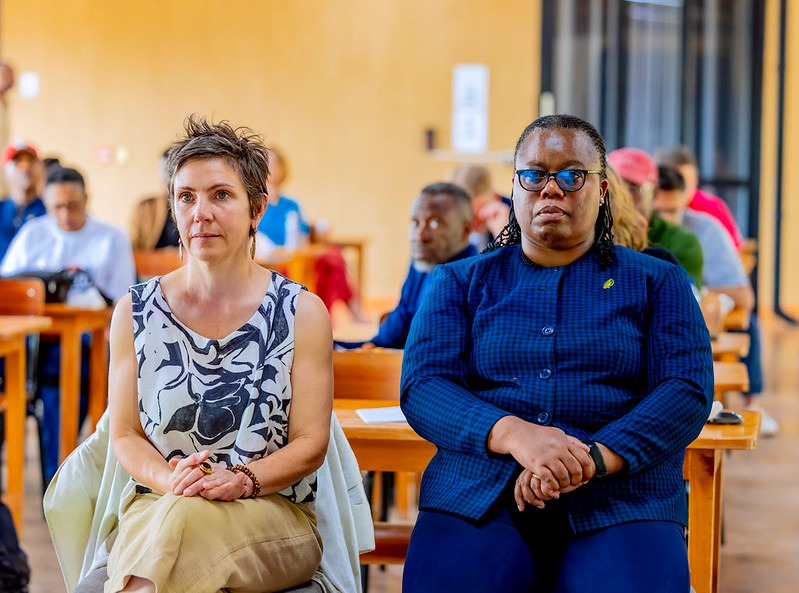
From experience, Dr. Dieng said it’s something that is not necessarily accessible in other parts of the world, not even in developed countries.
The RICA’s new partners visited RICA seed center, which is expected to transform Rwanda into “The Netherlands of Africa”, in terms of seeds. Currently, African countries largely rely on seeds imports from The Netherlands and Rwanda wants to use this center to change the status quo.
Minister of State in Ministry of Agriculture, Solange Uwituze said, that the existing partnership with The Danforth Centre is already yielding results.
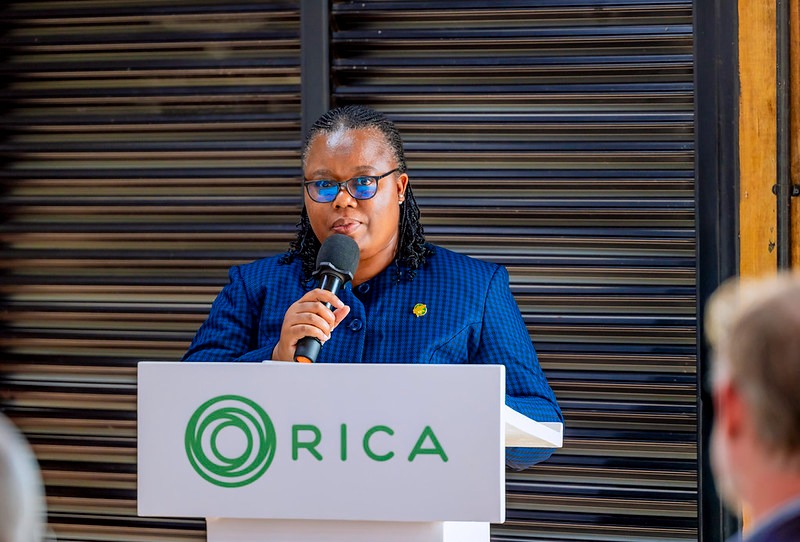
Dr. Uwituze Solange, Minister of State, Ministry of Agriculture and Animal Resources (MINAGRI)
She said that following the devastating outbreak of Cassava Brown Streak Disease, which reduced Rwanda’s cassava production from approximately 3.3 million to 657,000 tonnes, the Danforth-led VIRCA project began working with RAB in 2019 to develop resistant varieties. This project is providing clean Cassava, cultivated by more than 700,000 farming households on approximately 200,000 hectares.
Going forward, she expects the cooperation to cover five areas, including smart agriculture and technology transfer, research and innovation, education and skills development, agribusiness investment as well as Climate-smart agriculture and food security.
RICA is Rwanda’s only accredited, recognized institute of higher learning focused on conservation agriculture innovation and impact.
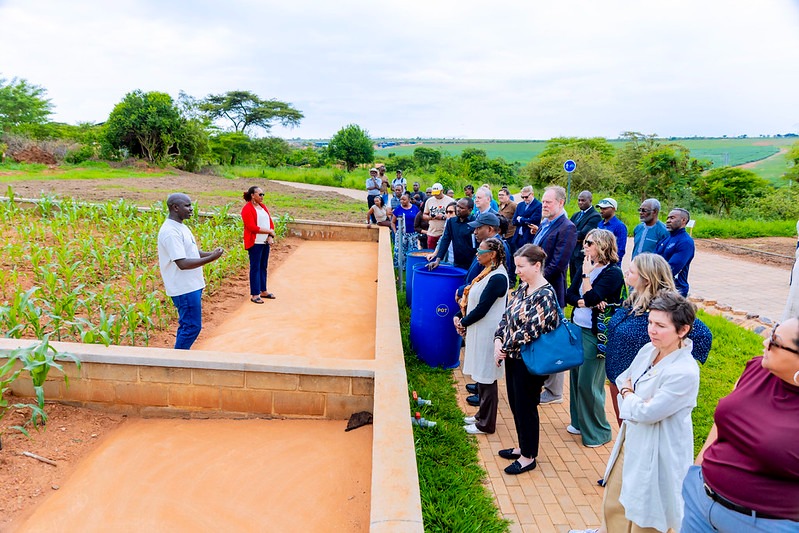
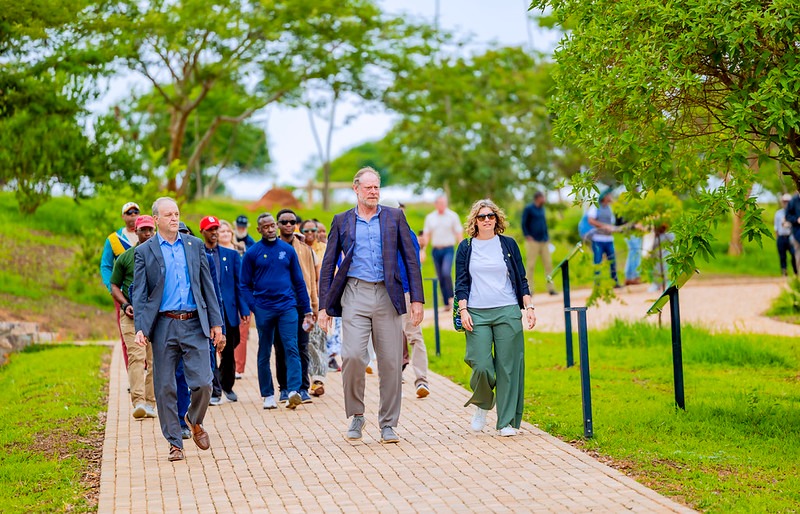
The guest delegation was given tour of the Institute’s demo sites
From its 1300-ha campus in Bugesera, Eastern Province, it combines research, education, and extension services to train Rwanda’s next generation of leaders in agriculture, while supporting national priorities for agricultural and economic development.
RICA students earn a Bachelor of Science in Conservation Agriculture degree with specialization in crop production systems, animal production systems, food processiong and agricultural mechanization.