



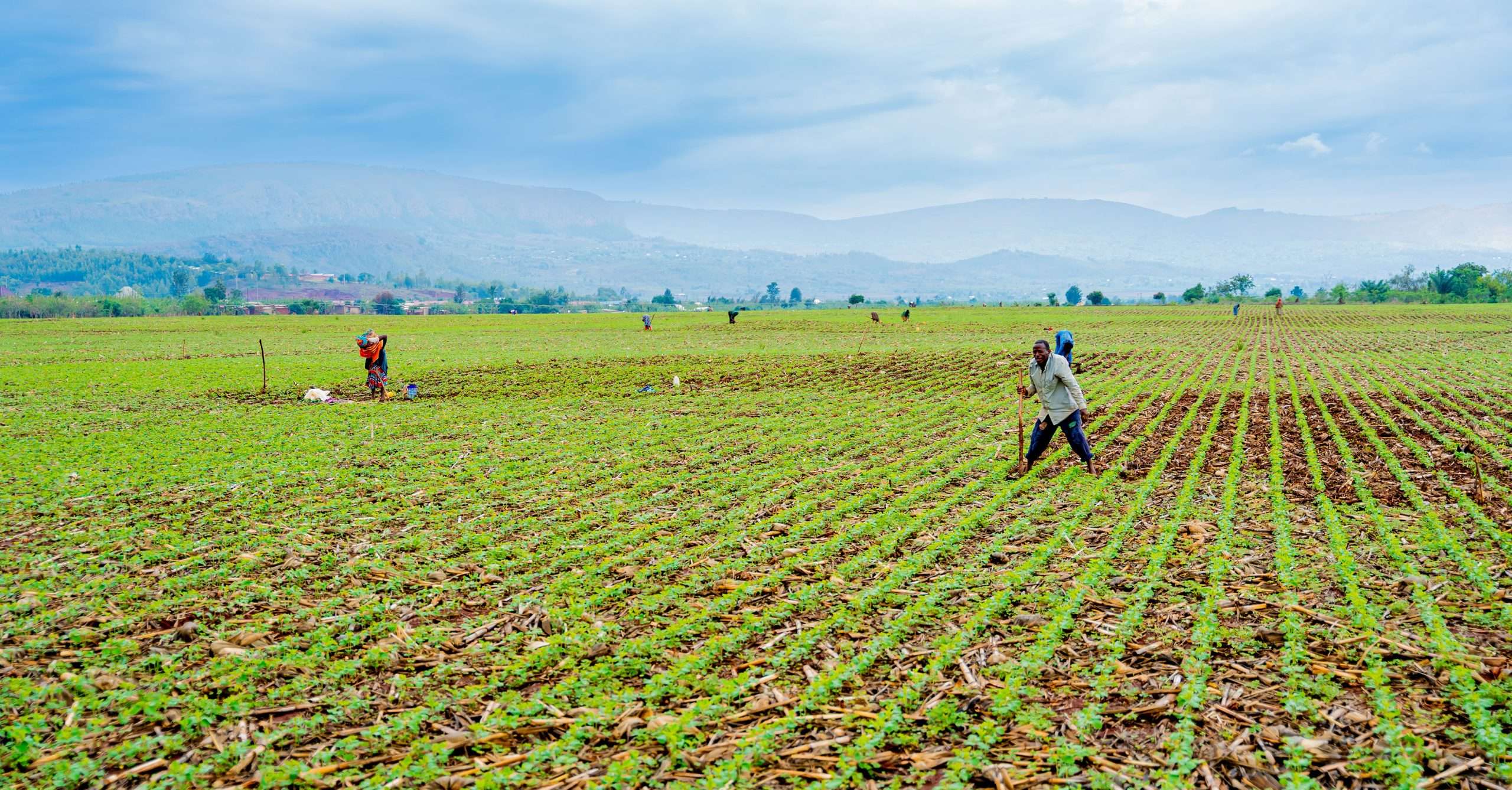
Bugesera farmers practicing Crop Production Systems
Every time a heavy rainstorm sweeps across Rwanda’s rolling hills, a piece of the country’s economic future is quietly washed away.
It is a high-stakes crisis. Rwanda loses more than 27 million tonnes of fertile topsoil annually to erosion. For a country reliant on agriculture, the damage is severe, undermining food security, tanking farmers’ incomes, and draining an astronomical Rwf 810 billion from the national economy every single year.
But down in Bugesera District in the Eastern Province, a new generation of agricultural leaders is stepping onto the frontlines to halt this downward spiral.
Betting big on the power of youth-driven climate action, the Rwanda Institute for Conservation Agriculture (RICA) has just launched a vital four-year partnership with the Ministry of Agriculture and Animal Resources (MINAGRI). The goal is bold: accelerate and scale up conservation agriculture practices to smallholder farmers nationwide by 2030. And they are using their own highly trained students as the primary weapon.
Shifting Mindsets on the Hillside
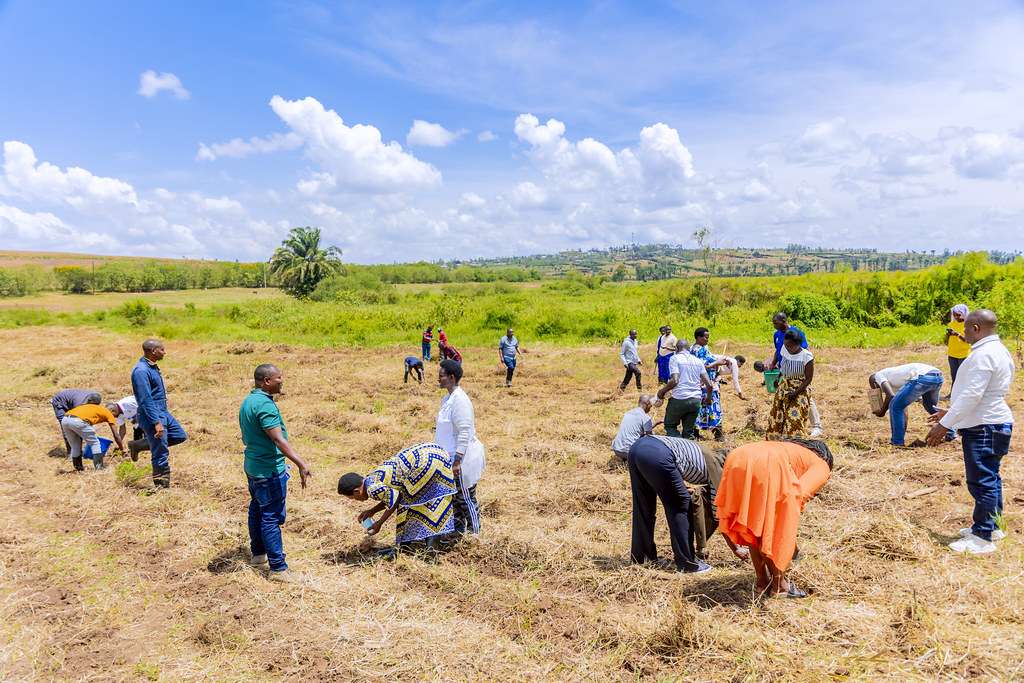
Bugesera farmers learning how mulch their plain farms
“Through conservation agriculture, we can address the loss of fertile soil caused by erosion,” explains Jean Claude Kayisinga, RICA’s Deputy Vice Chancellor for Institutional Development, speaking during a live KT Radio broadcast.
The challenge isn’t just scientific; it’s social. Convincing local communities to abandon traditional farming methods requires deep trust. That is where RICA’s unique educational model comes in.
“We cannot do this alone, but together with our graduates and the Ministry of Agriculture, we can help implement government priorities,” Kayisinga explains.
Students pursuing RICA’s three-year Bachelor of Science in Conservation Agriculture spend roughly half of their entire training out of the classroom, participating in intensive practical fieldwork and direct community extension services. When they visit rural farms, they aren’t just handing out policy brochures—they are standing in the mud alongside local families, physically demonstrating a better way forward.

Jean Claude Kayisinga, RICA’s Deputy Vice Chancellor for Institutional Development.
To shield vulnerable soil, they champion three fundamental principles: minimal soil disturbance to stop aggressive tilling that loosens earth, permanent soil cover by using cover crops to protect land from heavy rain impact, and strategic crop rotation to rebuild soil nutrients naturally.
The Shocking 10x Difference
For skeptical farmers, the students bring hard, localized data that is tough to argue with. RICA’s targeted research across the Bugesera, Kirehe, and Gakenke districts revealed that farms that do not use conservation methods lose nearly ten times more fertile soil than neighboring plots applying them.
Beyond saving the literal earth, the students are also proving that conservation is a massive win for the wallet. On student-managed demonstration farms and community learning platforms, the seasonal cost of maintaining soil fertility plummeted from roughly Rwf 10,000 down to Rwf 6,000.
Building a 600-Strong Defense

RICA students speaking to Germain Umukazana (left), KT Radio presenter during the special live coverage on the institute
The race against time now depends entirely on scaling up.
Since its inaugural graduation, RICA has injected 239 highly specialized graduates into the agricultural sector across three cohorts from 2023 to 2025. Highlighting a progressive shift in the industry, the latest batch of 83 graduates achieved near-perfect gender parity, sending 42 young men and 41 young women directly into the field.
If RICA maintains this steady momentum, the institute projects it will deploy a fresh army of roughly 639 expert agricultural leaders by the time the MINAGRI partnership wraps up in 2030.
As Rwanda fights to protect its limited, precious arable land against the compounding stresses of climate change, these young scientists are proving that the best shield for the country’s ancestral hillsides is a new generation equipped with modern science, practical grit, and a shared mission to save their soil.

2 comments
Very good story. Kindly share the audio version aired on the radio.
Martin Ssemakula
+266 772 492 240
Thanks for your comments Mr. Ssemakula. Please find the details in this link https://www.youtube.com/watch?v=MBerwjoQ_cU
Please keep visiting our website for more good and impactful stories…
Comments are closed.