



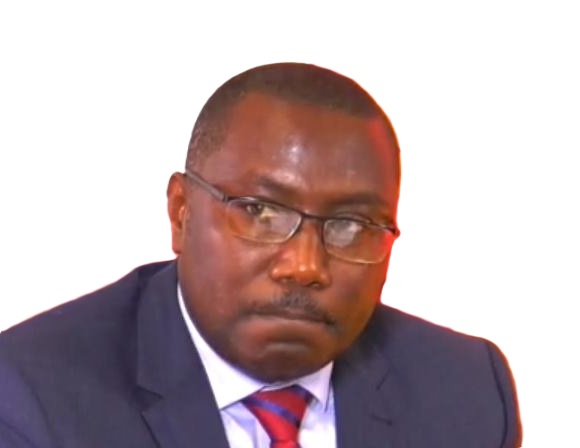
Ex-Catholic priest, Thomas Nahimana is subject of relentless social media riducule from his former colleagues over his conman tactics
A priest who failed within the Catholic Church and went into exile—where he almost immediately reinvented himself as a politician—Thomas Nahimana continues to dominate debate on social media.
Those who began this journey with him describe his political path as something closer to theatre than strategy, and their collective movement as resembling people chasing carefully constructed illusions.
The latest in a series online vendetta is coming from a former close associate identified as Gahunde Chaste. He recounts how, in the early 2010s, he first came to know Nahimana. At the time, he believed he was speaking to “holly father,” a Catholic priest serving in a parish.
Gahunde says he was then living in Guyana, South America, when he learned about Le Prophète, a virulent online platform run by Father Nahimana and two other priests. Drawn by its editorial line, he sought contact. Gahunde’s interest, he admits, was driven by a desire to publish divisive political ideas that aligned with the newspaper’s tone.
Beyond vile propaganda work, the two exiles soon realized they shared ambitions of forming a political party. Nahimana assured his colleague that the project was already well advanced—not only politically, but operationally.
According to Gahunde, Nahimana frequently portrayed himself as a man with extraordinary reach inside Rwanda. He claimed that Catholic priests across parishes regularly fed him information, sometimes boasting that he received updates every morning from within Church structures. This, Nahimana suggested, gave him unmatched insight into the country’s political mood and grassroots dynamics.
He invited Gahunde to discuss how to begin, and meetings followed in France involving several individuals. After long debates, they launched Ishema, a political group that has never been legally recognized anywhere.
As he mobilized founding members, Nahimana—by then expelled from the Church—presented what former associates describe as his strongest card. He repeatedly told recruits: “My political project is backed by Rome. Rome supports me. It is my main sponsor.”
Combined with claims of daily intelligence from priests across Rwanda, the message was clear: Nahimana wanted to be seen not merely as an opposition figure, but as a political genius—well-informed, internationally connected, and operating several steps ahead of everyone else.
The claim spread widely within the group. But after Ishema was formally launched with the stated goal of challenging the FPR Inkotanyi in the 2017 presidential elections, Nahimana’s conduct began to shock those around him. Many have later admitted: “We did not know.”
The man they believed to be a priest protected by powerful institutions, they say, turned out to be something else entirely—an engineer of rumors rather than a leader anchored in reality.
Greed
Former associates have since gone public with harsh accusations, describing Nahimana as a man consumed by money, willing to pursue it anywhere and by any means. One frequently cited example is an alleged scheme involving the sale of burial plots through social media.
Gahunde explains that after Ishema’s creation, a serious debate arose about sustainability. The party needed to function continuously, not as a “weekend organization” run by people unwilling to commit fully.
At least three full-time staff were required, particularly for administration and finance. Convincing people to abandon stable livelihoods to work for an exile party with no proven resources proved extremely difficult.
Gahunde says he himself was living comfortably with a good job in Guyana. Motivated by what he describes as a genuine desire to fight for political change in Rwanda, he resigned and relocated to France to work full time for the party.
He says he was given a contract guaranteeing basic living expenses, based on assurances that donors had committed to funding permanent staff. Nahimana allegedly reassured them repeatedly: “I personally don’t have money, but I have backers. The funds are there. Your salaries exist—you will get everything you need.”
Months passed without payment. After the first, then the second and third months, frustration turned into conflict. What happened behind closed doors remains unclear, but the fallout eventually pushed Gahunde to go public, exposing what he describes as deep internal fractures among exiled actors claiming to seek power in a country that had rebuilt national unity.
ALSO READ: Nahimana Thomas, the Catholic Priest-Turned-Politician, is Back With Another Comic Opposition Group
“The Party Is Mine Alone”
The decisive rupture came after 2017, when internal elections were held again. Nahimana, convinced he was the natural and undisputed leader, found himself reduced to an ordinary party member.
The outcome made it clear that he was no longer viewed as dominant. According to Gahunde, this marked the beginning of a campaign of accusations against former allies.
Nahimana publicly claimed he had “rescued” Gahunde from misery abroad—at one point asserting he had pulled him out of Mexico—and brought him into the party. Gahunde categorically denies ever having been in Mexico and insists he was never dependent on anyone.
He maintains that political parties are built collectively, not owned by individuals. Nahimana, however, is said to have viewed the party as his personal possession.
Declaring the President Dead While Alive
Unable to accept his loss of control, Nahimana allegedly escalated matters dramatically. As elections approached, he reportedly spread a rumor claiming that President Paul Kagame was dead around 2020, and that elections should be abandoned in favor of immediate seizure of power.
Colleagues dismissed the claim and demanded evidence. None was provided. They reminded him that leadership was about the country, not individuals.
Nevertheless, Nahimana persisted. He was told that if he wanted leadership, he had to campaign like everyone else. He did—and lost again in the group’s internal election.
At the same time, he intensified promotion of a so-called government-in-exile, presenting it as ready to take over Rwanda. He reportedly urged party members to abandon Ishema and join his “government,” sometimes refusing party meetings by saying he was “in cabinet.”
Others pushed back, insisting the party came first and that the government-in-exile was meaningless without party legitimacy.
“I Met Tshisekedi, and He Told Me to Run”
Another episode cited by former associates involves a claimed trip to Kinshasa, where Nahimana said he met Congolese President Félix Tshisekedi and received encouragement to pursue leadership.
At the time, Tshisekedi was reportedly receiving various exiled figures in Europe who harbored dreams of overthrowing Rwanda’s government. Nahimana’s return to contest leadership again surprised many, but he was allowed to run, in line with party rules protecting founding members.
He lost once more. Afterwards, he claimed marginalization and withdrew further into his government-in-exile, collecting contributions independently. Party founders later clarified that any such activities were conducted in his personal capacity, not on behalf of Ishema.
“When I Take Power, You Will See Me”
According to those who once stood closest to him, Nahimana now openly speaks of revenge, claiming that when he takes power he will punish his enemies.
This, they say, is the man who presents himself as an alternative to Rwanda’s current government.
Gahunde and other former associates respond bluntly. For them, the story of Ishema is not merely history but a warning—evidence of a recurring pattern in which exaggerated authority, imagined networks, and claims of secret institutional backing are used to attract followers, only to leave disappointment and anger behind.
As Gahunde puts it: “They lied to you. Who told you that he would ever take power?”
