



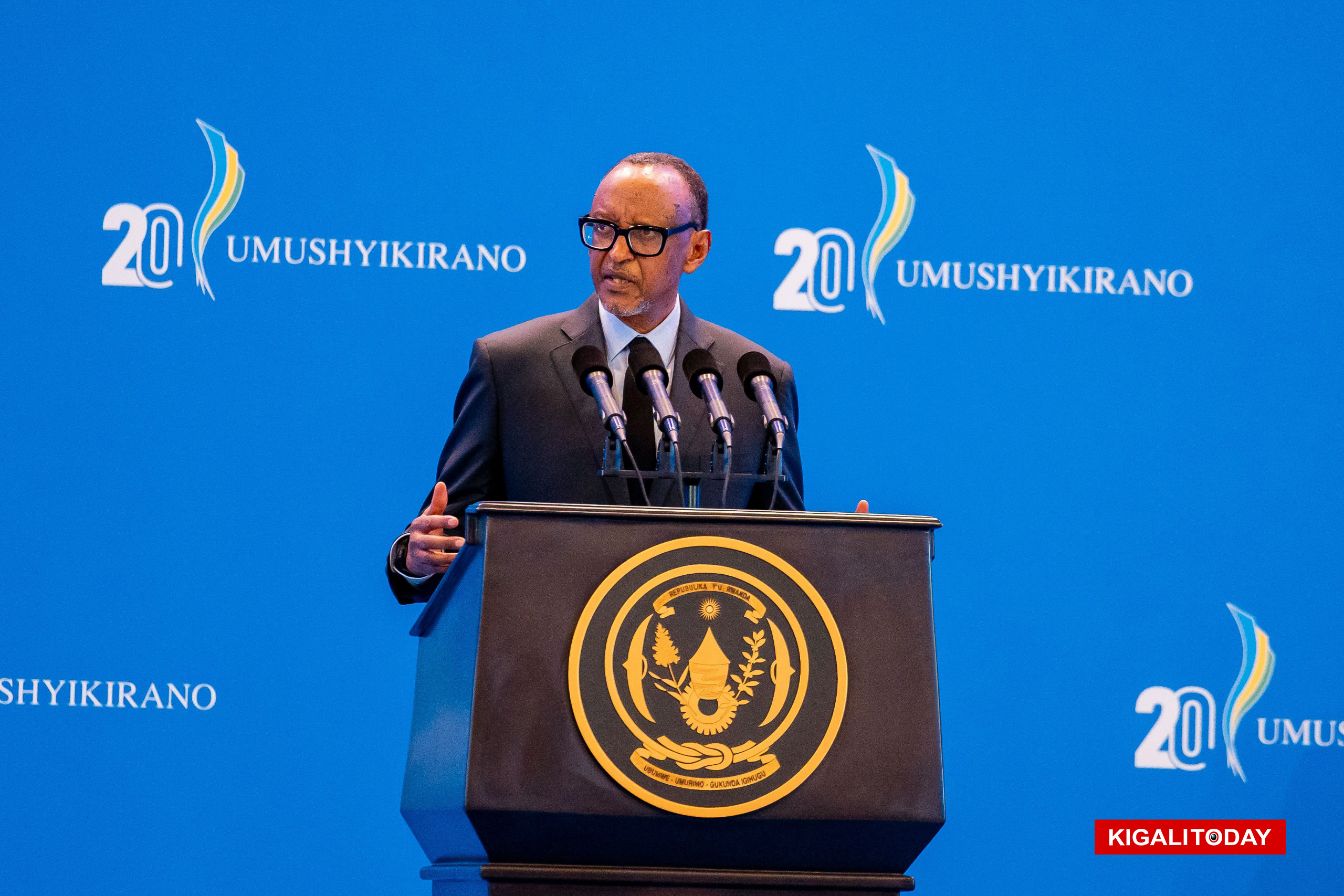
President Paul Kagame
President Paul Kagame has used the opening of the 20th edition of Umushyikirano to deliver a wide-ranging address urging leaders and citizens alike to deepen self-reliance at home while standing firm against external threats to Rwanda’s security and dignity.
Marking two decades of the national dialogue forum, President Kagame described Umushyikirano as a continuous process that sharpens national priorities and drives practical action.
He said each edition builds on the last, creating momentum that pushes the country toward stronger governance and sustained development.
“This meeting was founded on the conviction that Rwanda must stand on its own feet. We cannot exist because some good Samaritan is willing to help us,” he said.
Adding that Rwanda’s target has always been self-reliance, “because the consequences of dependency are never good,” he said.
He acknowledged progress made over the years, including tangible improvements in livelihoods and the lifting of many citizens out of poverty, but warned against complacency.
Rwanda, he said, still faces both challenges and opportunities, and the presence of progress should not weaken the country’s determination to improve further through its own efforts.
Leadership, responsibility and accountability:
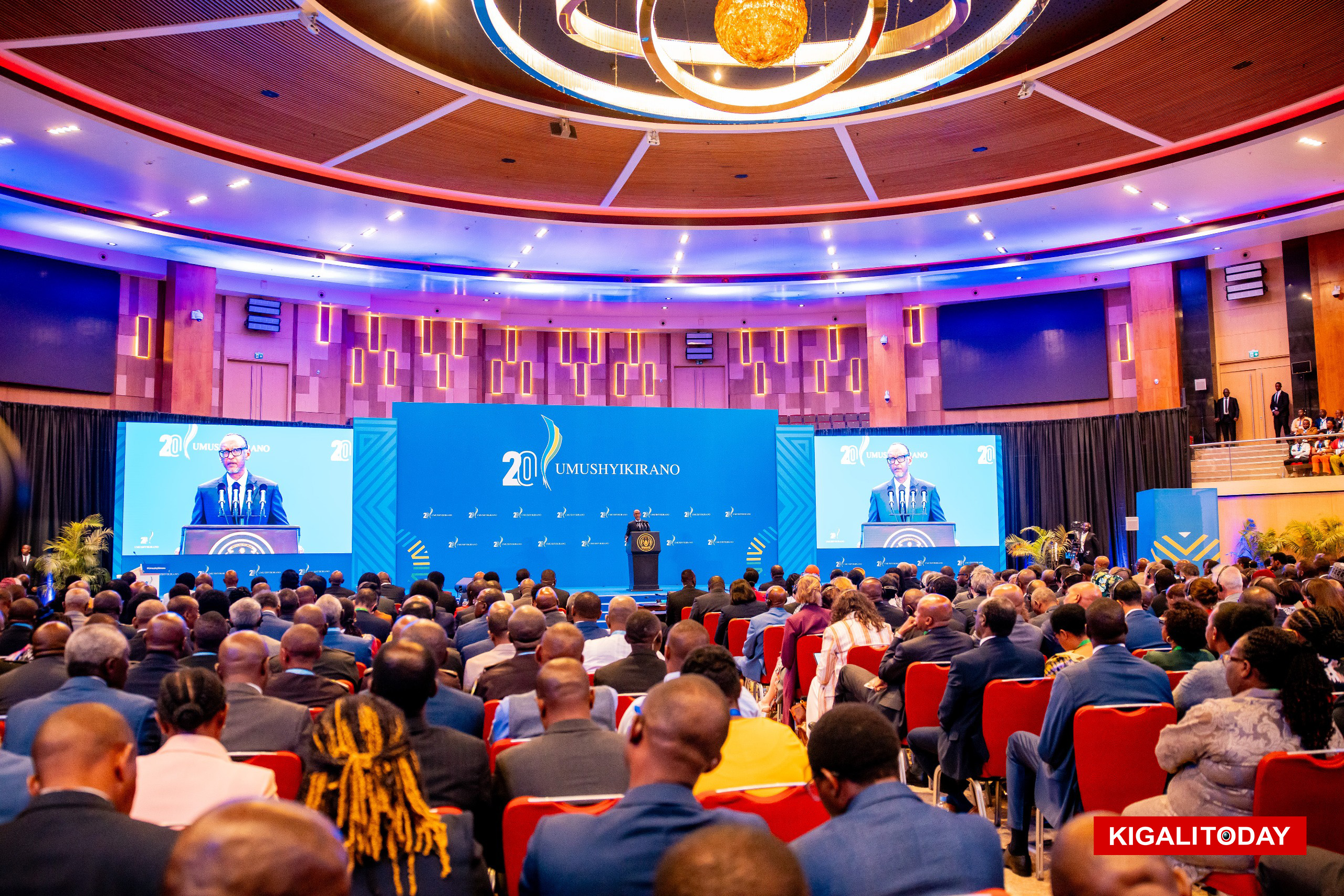
The Head of state gave a pointed reminder that authority comes with accountability and sacrifice. He stressed that leaders at all levels must be prepared to work relentlessly because citizens are watching and relying on them.
“Living is a right, but a good life is something we must work for… Every gain requires effort,” he cautioned.
Kagame called for a culture of responsibility in public service, insisting that misuse of authority or resources must have consequences.
He warned that failures in planning, coordination and follow-up on public projects have lingered for too long and must end immediately.
“As leaders, you have a responsibility to the public good. Every responsibility and every resource must be accounted for. If they are misused, someone must answer for it,” he warned.
Self-reliance at home, resolve abroad:
Turning to regional security, President Kagame addressed Rwanda’s relations with its neighbours, particularly the Democratic Republic of Congo (DRC) and Burundi, which he referred to as countries historically linked to Rwanda.
“We are supposed to be like twins but Burundians have decided otherwise”, he said.
He rejected accusations that Rwanda is responsible for instability in eastern Congo, insisting that the roots of the conflict lie elsewhere.
“These wars did not start with Rwanda and they did not come from Rwanda. The real problem we face there is the presence of the Interahamwe and the genocide ideology that continues to threaten us,” he noted.
He criticized narratives portraying Rwanda as a country seeking Congolese minerals or territorial expansion, arguing that such claims deliberately ignore the continued presence and alleged support of genocidal forces within Congo.
Kagame expressed frustration with what he described as selective attention by parts of the international community, which he said sometimes helps to solve problems while at other times contributes to creating them.
“You cannot create problems for me, blame me for them, and then threaten me. We will own our own problems, but we will not take responsibility for other people’s problems,” he reaffirmed.
The President scoffed at the international community and said Rwanda cannot look by and be stepped on.
He warned that Rwanda would not accept prescriptions that lead to its destruction, nor seek favours from those contributing to its insecurity.
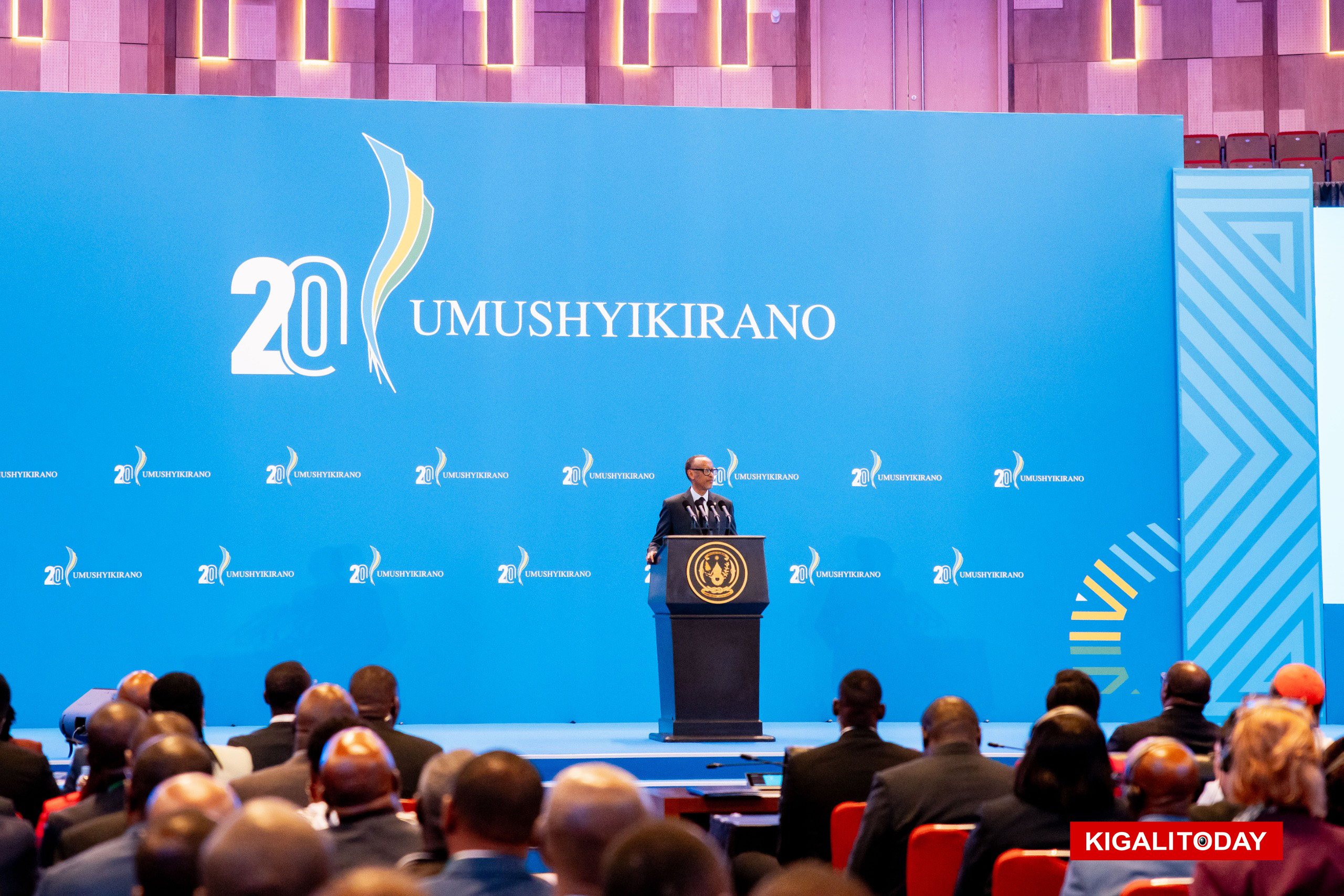
For more than three decades, he said, threats from across the border have persisted, some of them materializing, and Rwanda has a duty to protect its people.
Rwanda blames the Democratic Republic of the Congo (DRC) government for supporting the FDLR–Interahamwe militia.
Over the years, the FDLR militia has carried out several attacks on Rwanda.
The Head of State expressed cautious optimism, stating that the regional crisis is solvable if all parties act responsibly and in good faith. The persistence of conflict, he said, is less about lack of solutions and more about vested interests that benefit from instability.
