4th African MENA brain week conference held in Kigali city
Rwanda is steadily redefining Africa’s approach to mental and neurological health, positioning itself as a continental hub where policy, science, and human experience intersect.
Long treated as a marginal issue across much of the continent, brain health is now emerging as a national priority in Rwanda, anchored in coordinated public institutions, research-driven universities, and community-based care.
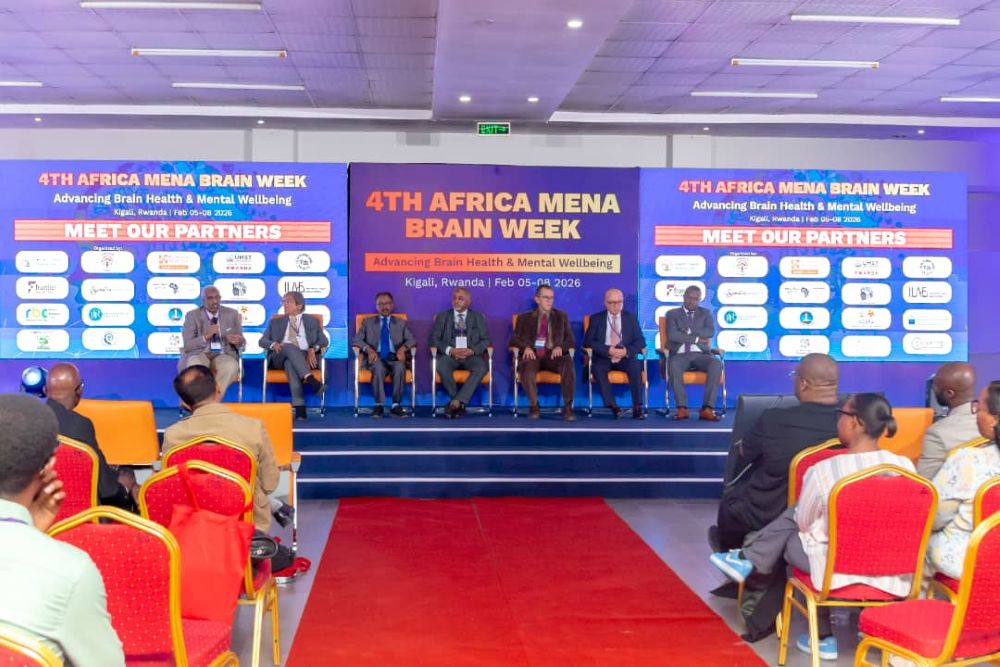
This growing leadership was demonstrated during the 4th African MENA brain week conference, hosted by UMST Rwanda from February 5 to 8, which brought together experts, policymakers, researchers, and advocates from across Africa and the Middle East.
One in four people will experience a mental health condition in their lifetime. For many African countries, fragile systems and limited resources have made that burden even heavier.
Participants repeatedly pointed to Rwanda’s model with the Rwanda Biomedical Centre (RBC) as a central pillar, coordinating policy implementation, research, data systems, and referral networks that link national strategy to care at community level.
RBC’s approach and emphasis is not only on treatment, but on prevention, early diagnosis, and dignity in access to services.
According to officials, the psychological and neurological scars left by the 1994 Genocide against the Tutsi continue to shape health priorities, pushing the country to invest in evidence-based mental health services that reach both urban and rural populations.
Rather than isolating mental health as a specialist concern, Rwanda has integrated it into broader health and development planning, reinforcing the idea that brain health is foundational to social stability and economic progress.
By aligning institutions, investing in human capital, and embracing innovation, the country is laying the groundwork to influence regional and continental agendas on neuroscience and mental wellbeing.
Universities, policy, and the science of progress:
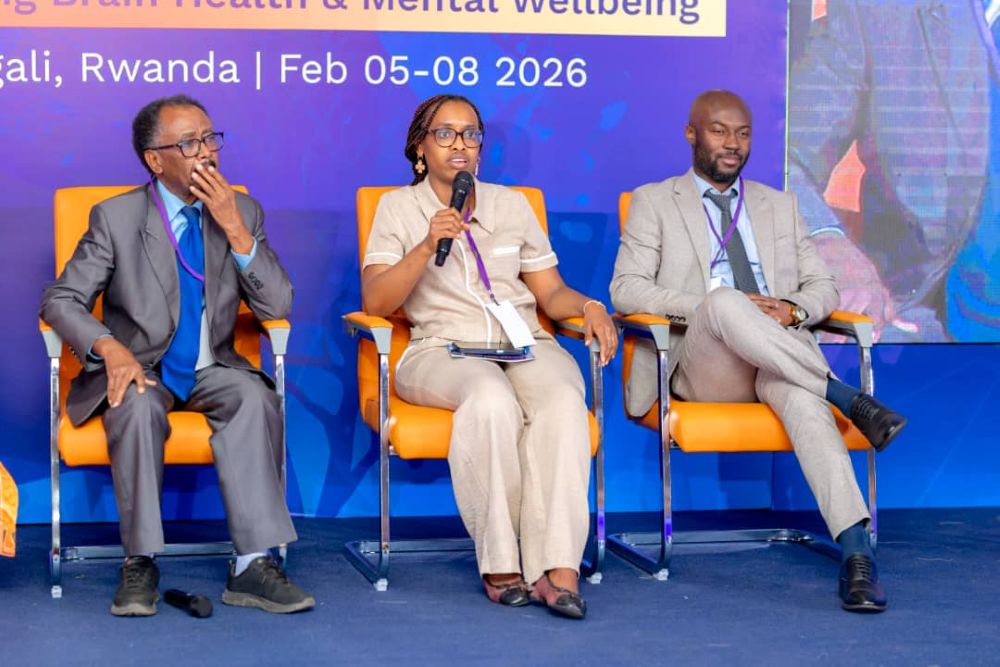
A central theme of the conference was the role of universities as engines of biomedical innovation with neuroscience increasingly shaped by digital technologies, artificial intelligence, genomics, and advanced imaging.
Participants stressed that Africa must produce its own knowledge rather than depend on external expertise.
Rwanda’s stable and secure environment was repeatedly cited as an advantage in building sustainable research ecosystems.
Professor Mamoun Homeida, a renowned academic and conference leader underscored this point, praising Rwanda’s long-term vision and institutional coordination.
“Universities are the backbone of development. They drive research, innovation, and knowledge sharing. Biomedical science is advancing fast with today’s technology, and Africa must empower its young researchers to lead the way,” he said.
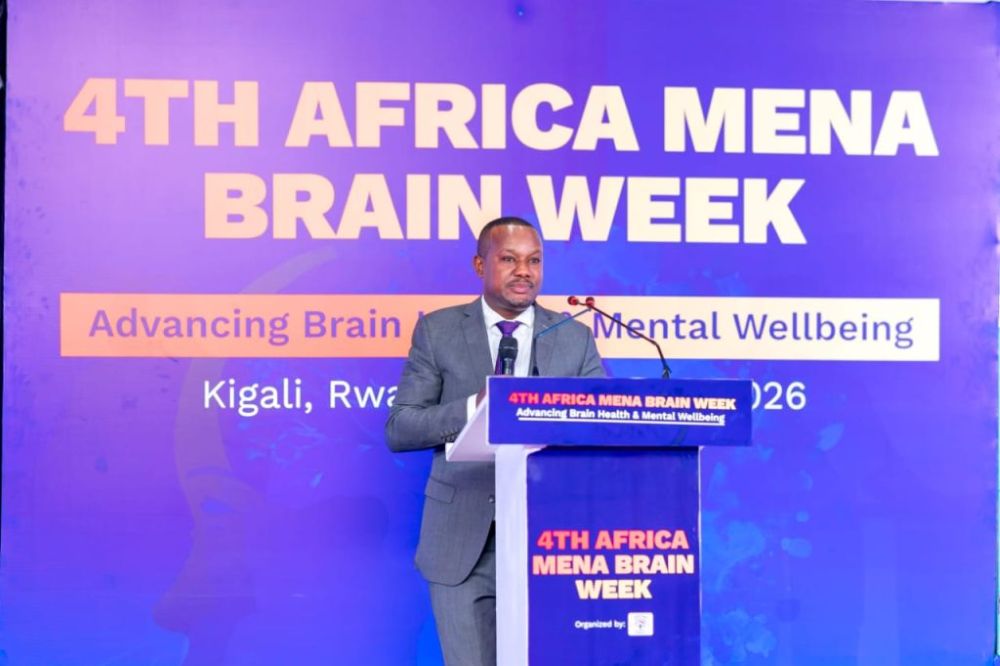
Dr. Darius Gishoma
The Ministry of Health echoed this confidence, emphasizing that Rwanda’s commitment to brain health is rooted in responsibility as much as policy.
“Rwanda remains deeply committed to mental and brain health. With the lasting impact of the Genocide against the Tutsi, we have centralized services, invested in innovation, and strengthened research partnerships to ensure quality care for all,” said, Dr. Darius Gishoma, representing the ministry.
Participants were urged to move from awareness to action, emphasizing that brain health must be addressed at personal, family, community, and national levels if meaningful outcomes are to be achieved.
Chantal’s journey and the human face of reform:
The most compelling moments of the conference emerged not from policy frameworks, but from lived experience. Chantal Kanyabutembo, a disability rights advocate and founder of GECO Rwanda, offered a deeply personal account of what access to neurological care can mean.
Diagnosed with epilepsy at the age of 11, her childhood was marked by seizures, stigma, and interrupted education.
“Epilepsy changed my childhood.
The seizures, the fear, and the stigma made school and daily life extremely difficult. For many years, my condition was misunderstood,” she shared.
Her life changed after moving to the United Kingdom, where proper diagnosis and treatment allowed her to complete her education.
“Access to proper diagnosis and treatment changed everything. It gave me back my confidence, my education, and my future,” Kanyabutembo said.
She later returned to Rwanda to co-found GECO Rwanda, working with the Ministry of Health, social security institutions, and Rwanda Biomedical Centre to support people living with epilepsy.
Her advocacy highlights gaps in access, awareness, and medication, while proving that supported individuals can study, work, and contribute fully to society.
Kanyabutembo also praised Rwanda’s investment in digital health systems such as e-Ubuzima, noting their importance for chronic neurological care.
Her story, woven into national policy and institutional reform, captures Rwanda’s broader vision of a future where brain health is not a privilege, but a shared national responsibility and a model for Africa.