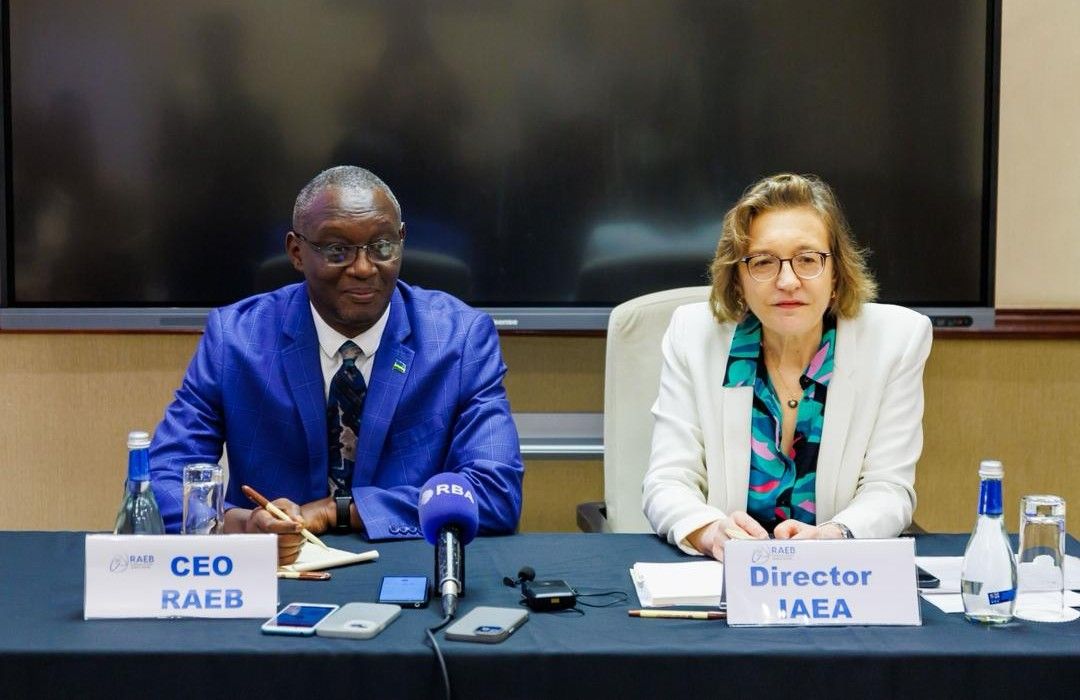
RAEB Chief Executive Officer Dr. Fidele Ndahayo and IAEA Director Aline Des Cloizeaux speaking to the media at the sidelines of the Integrated Nuclear Infrastructure Review (INIR) mission in Kigali.
KIGALI – Rwanda’s nuclear energy ambitions have received a significant vote of confidence from the International Atomic Energy Agency (IAEA), with senior officials affirming that the country is progressing in the right direction as it prepares for the possible introduction of nuclear power in the 2030s.
An IAEA expert team is in Kigali from March 2–9 conducting the first phase of an Integrated Nuclear Infrastructure Review (INIR) mission. The exercise assesses Rwanda’s readiness for safe, secure and sustainable nuclear power development.
A Structured and Sovereign Journey
The IAEA supports countries through a structured “milestones approach” designed to guide newcomers through three progressive phases of nuclear development. Rwanda is currently in phase one.
The first phase mainly focuses on building the institutional, legal and policy foundations before a final decision to construct a plant is taken.
IAEA Director Aline Des Cloizeaux explained that the agency does not authorize construction but provides independent advice, technical expertise and recommendations based on international best practice.
“It is a sovereign decision. The role of the IAEA is to help countries identify gaps and establish action plans to address them,” she in an interview at the sidelines of the mission.
Globally, 31 countries operate 413 nuclear reactors, supplying around 10 percent of the world’s electricity. Interest is growing as nations seek reliable, low-carbon energy sources that complement renewables.
Rwanda has expressed interest in deploying Small Modular Reactors (SMRs), with at least 110 megawatts projected in the early 2030s. According to the IAEA, a 10–15-year development timeline is typical for large plants, but SMRs could shorten that timeframe.
During the week-long mission, experts are reviewing Rwanda’s self-evaluation report, which examines 19 key infrastructure areas. The mission will conclude with recommendations to guide the next phase of progress.
The infrastructure areas include national policy and strategy, regulatory frameworks, safety and security systems, radioactive waste management, stakeholder engagement and human resource development.
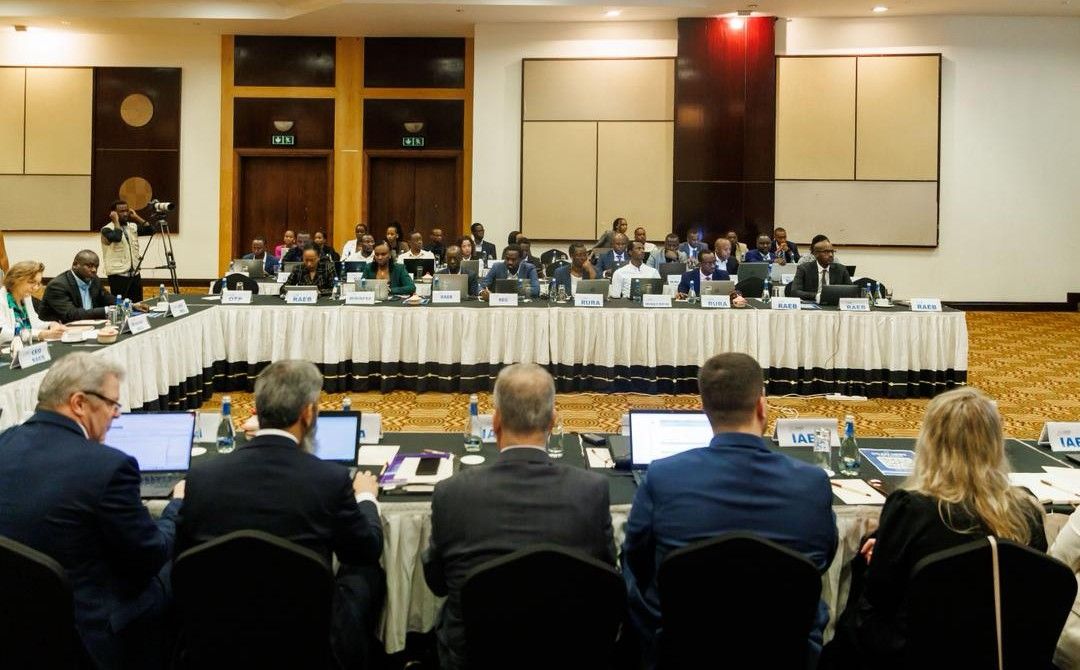
The Integrated Nuclear Infrastructure Review (INIR) mission by IAEA is underway in Kigali.
Building the Foundations at Home
On the domestic front, the Rwanda Atomic Energy Board (RAEB) is spearheading preparations. Rwanda has been an IAEA member state since 2012 and has steadily expanded cooperation in nuclear science and technology.
RAEB Chief Executive Officer Dr. Fidele Ndahayo said nuclear infrastructure goes far beyond physical construction. “It starts with establishing a clear national position, putting in place laws and independent regulatory systems, and ensuring public understanding,” he said.
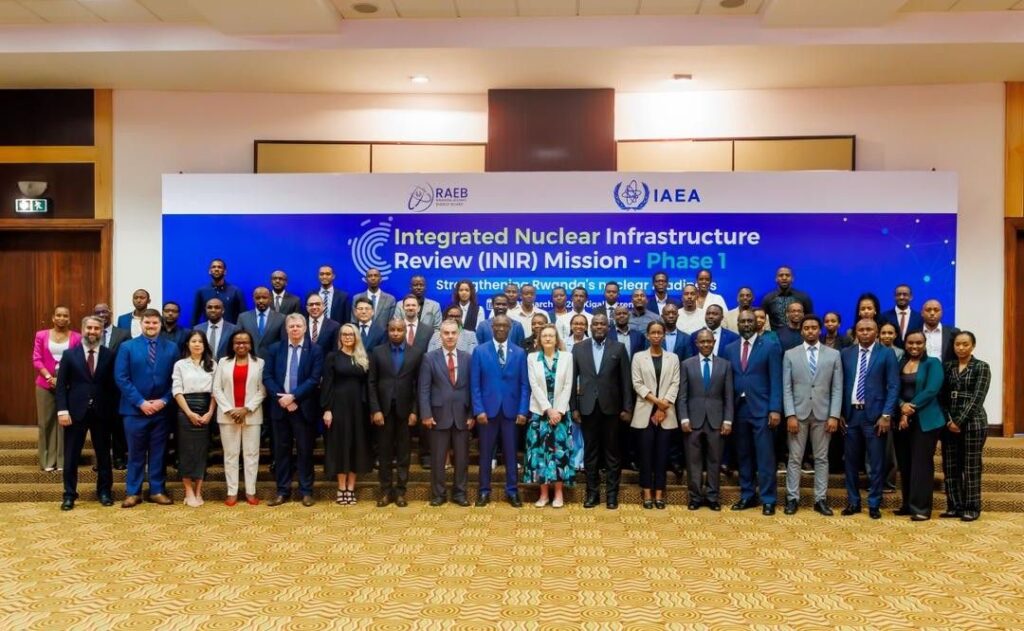
Officials from RAEB and IAEA are attending the Integrated Nuclear Infrastructure Review (INIR) mission in Kigali.
The country is also evaluating grid stability and identifying potential sites that meet international safety criteria. Human capital development has also become a priority.
A new program focusing on atomic and nuclear sciences has been introduced at the University of Rwanda to train future engineers, scientists and regulators. Officials say building local expertise is essential for long-term sustainability and national ownership of the program.
Beyond electricity generation, nuclear technology is expected to support lighting, factories, agriculture and industrial growth. In healthcare, Rwanda already applies nuclear techniques in the administration of certain treatments.
Ndahayo confirmed that within the coming months, the country will expand into nuclear-based diagnostic services, strengthening its medical imaging and disease detection capabilities.
With electricity access at 84.6 percent and demand projected to rise to between 2.5 and 4.5 gigawatts by mid-century, Rwanda views nuclear energy as a stable complement to hydropower, solar and methane resources.
The ongoing review confirms that Rwanda is advancing methodically. The affirmation signals growing international confidence that the country’s nuclear journey is firmly on the right track.