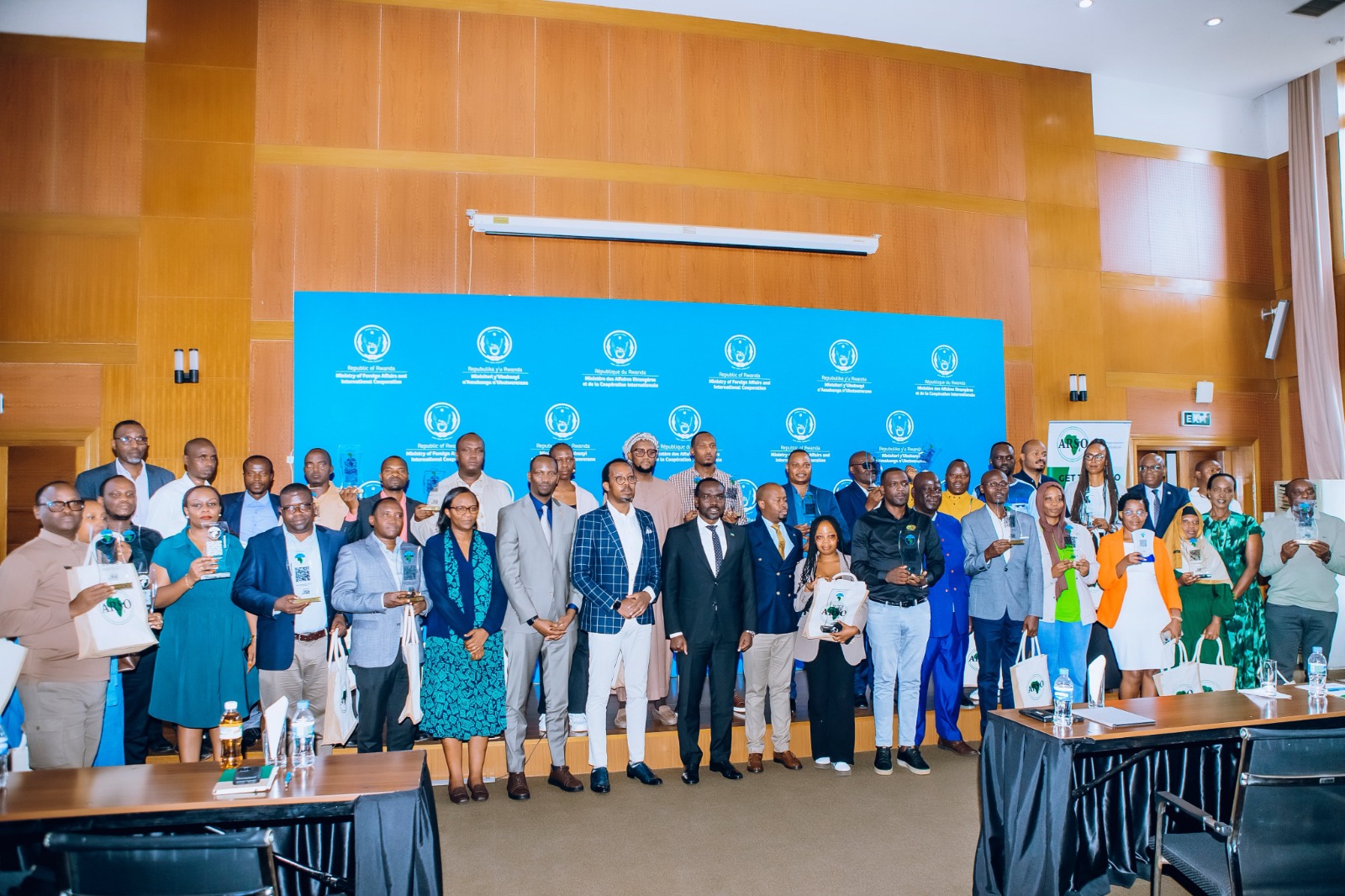
Rwanda ARS certified SMES with officials from ARSO, RSB and Minister of Trade Prudence Sebahizi, (in black suit)
Rwanda has signed Mutual Recognition Agreements with the Republic of Congo and Zimbabwe, marking a milestone for 32 Rwandan small and medium-sized enterprises (SMEs) that will now be able to officially export 72 certified food and agro-processed products to Southern and Central African markets.
The signing ceremony was held this Friday at the Ministry of Foreign Affairs in Kigali. It was presided over by Rwanda’s Minister of Trade and Industry and witnessed the awarding of the first-ever African Organization for Standardization (ARSO) certificates in the agro-processing sector to 32 Rwandan companies.
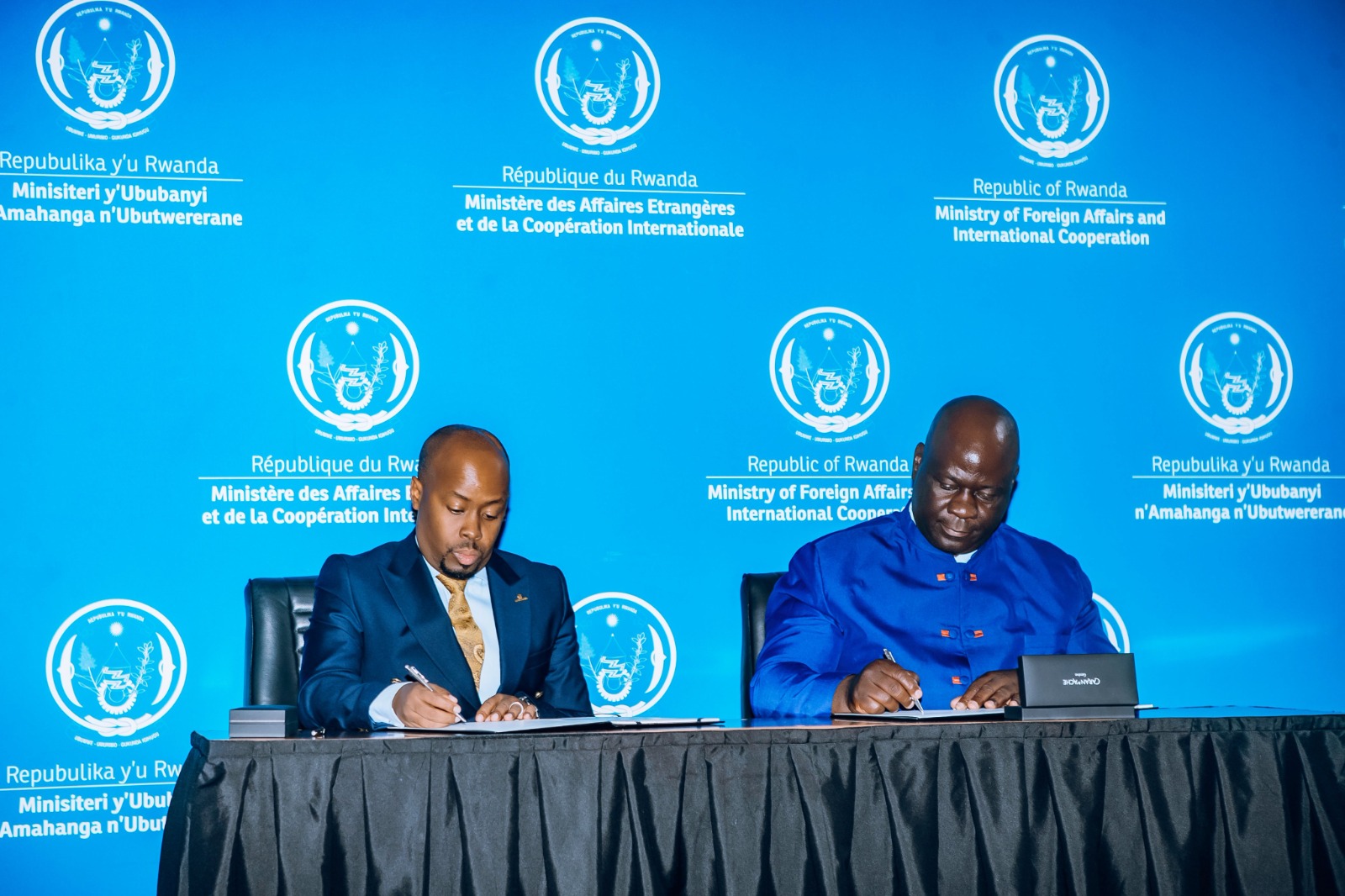
Signing between Murenzi Raymond (left) Director General RSB and Cosmus Mukoy, DG Standards Association of Zimbabwe
With agro-processing emerging as Rwanda’s fastest-growing value chain, the certification will allow Rwandan SMEs to export food products including sorghum, wheat, maize, potatoes, rice and honey, among others, to markets within the Southern African Development Community (SADC) and Central Africa.
Some of the prominent certified companies include Bakresha Azam, Kinazi Cassava Plant, and Inganji Maize Milling Company, along with several other small but fast-growing enterprises that have successfully met ARSO certification requirements.
The standards cover critical areas such as food safety limits (including microbial and chemical contaminants), product composition, hygiene and sanitation, packaging and labeling, as well as shelf-life and storage conditions.
The move in the agricultural and food products sector is part of a broader ambition by ARSO to harmonize standards for products produced across the 55 African countries. The initiative aims to accelerate the implementation of the African Continental Free Trade Area (AfCFTA), a landmark pact creating the world’s largest free trade area by uniting African Union member states into a single market for goods and services.
Earlier this month, ARSO also held its final textile and leather products harmonization cluster meeting in Kigali, where representatives from 15 African countries agreed on 26 new production and export standards. These add to the 1,044 standards that have already been validated under the AfCFTA protocol.
Why Harmonizing African Standards Matters:
Over the past decade, African economies have become increasingly integrated through regional trade agreements, infrastructure investment and economic reforms. However, trade within Africa — which AfCFTA seeks to expand — remains lower than its potential.
According to the African Export-Import Bank (Afreximbank), the value of intra-African trade — trade among African countries — has steadily grown.
In 2023, intra-African trade reached approximately $192 billion, representing a 7.2 percent increase from the previous year. This accounted for about 15 percent of Africa’s total trade that year, slightly higher than in previous years but still modest compared with other regions of the world.
In 2024, the trend continued, with intra-African trade estimated at between $208 billion and $220 billion.
Despite this growth, the proportion of Africa’s trade that occurs within the continent remains relatively small. In comparison, intra-regional trade in Asia and Europe typically accounts for more than 50 percent of total trade within those regions.
Meanwhile, Africa continues to trade more extensively with partners outside the continent. The European Union remains Africa’s largest external trading partner, accounting for roughly 31 percent of African exports and 29 percent of imports, while China is also a major trading partner.
Overall, Africa’s total trade — combining both intra-continental and international flows — reached approximately $1.4 trillion in 2024. Both exports and imports expanded during the period, contributing to a reduction in the continent’s overall trade deficit.
This reflects both progress and ongoing challenges: while Africa is trading more, the majority of its economic exchanges still take place with external partners rather than with neighboring countries.
Increasing intra-African trade is therefore not only a central objective of AfCFTA but also a critical pathway toward sustainable industrialization, economic diversification and deeper regional integration.
Against this backdrop, harmonized standards and mutual recognition of conformity assessment results are key enablers. They help reduce non-tariff barriers, which often hinder trade within Africa more than trade with external partners.
Rwanda Sets the Pace:
ARSO Secretary-General Dr. Hermogene Nsengimana said Rwanda became the first country to receive ARSO agro-processing certification due to its strong progress in implementing the required standards.
“We see Rwanda as an exemplary country. This is a milestone not only for Rwanda but also for the continent, which continues to face non-tariff barriers that affect intra-African trade,” Nsengimana said.
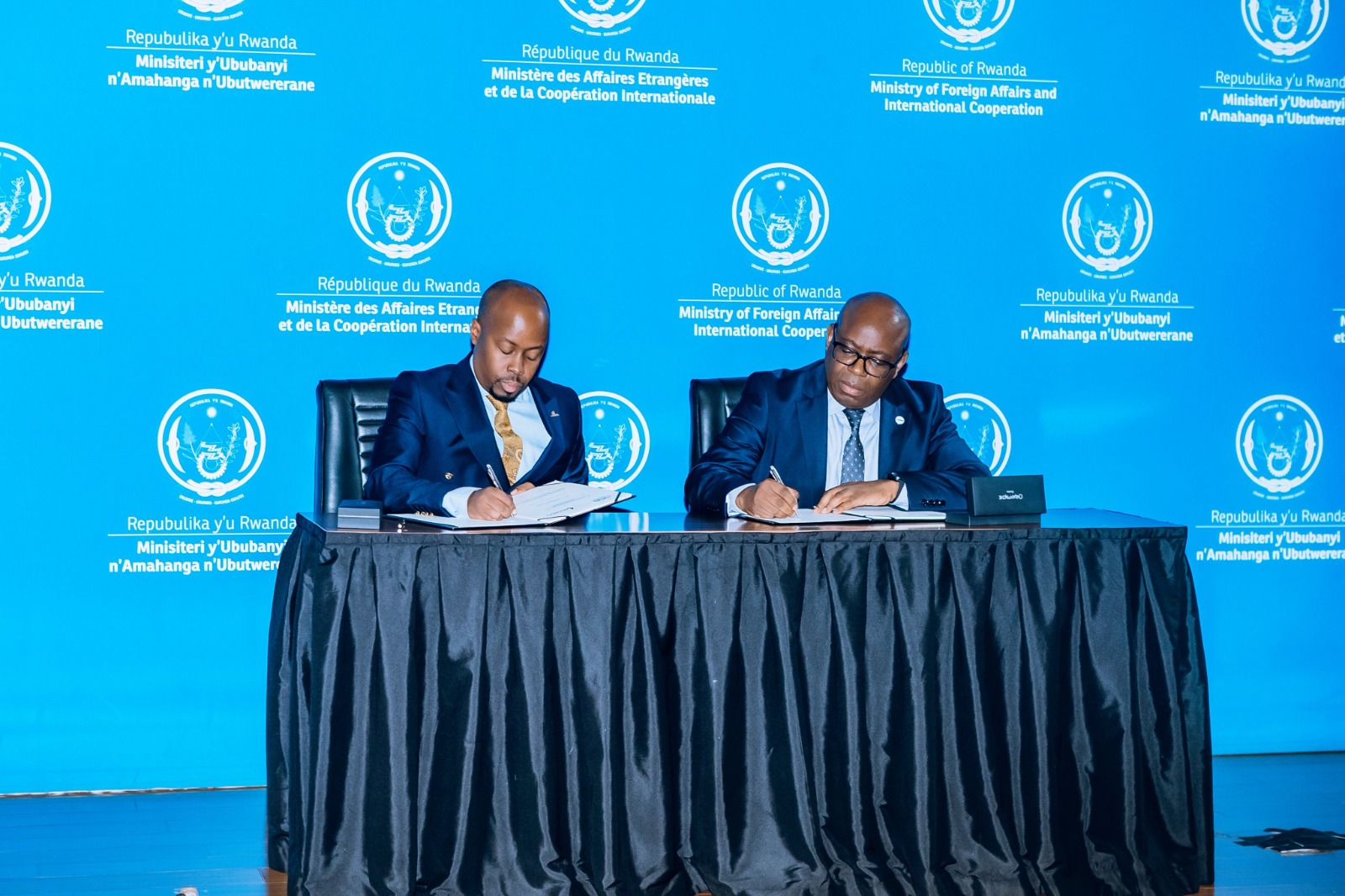
Signing between Murenzi Raymond (left) Director General RSB and Jean Jacques Ngoko Mouyabi, DG ACONOQ
Jean Jacques Ngoko Mouyabi, Director-General of the Congolese Agency for Standardization and Quality (ACONOQ), welcomed the agreement, saying it will strengthen trade and cooperation between Rwanda and Congo.
Cosmus Mukoy, Director-General for Finance and Administration at the Standards Association of Zimbabwe, noted that the agreements have been long awaited, as Zimbabwe has been committed to the harmonization agenda from the start.
Rwanda’s Minister of Trade and Industry, Prudence Sebahizi, said the agreements will help address trade barriers but emphasized that both sides must increase production, engage the private sector and continue working together to establish strong African standards.