



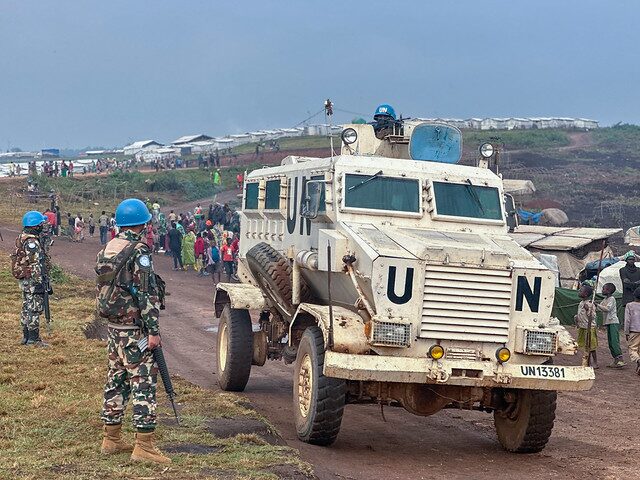
MONUSCO in Goma: Deployed to safeguard civilians and aid workers, the UN force operates under constant threat from drones, armed groups, and escalating inter-Congolese conflicts.
The death of French UNICEF employee, Karine Buisset, in a drone attack on Goma has rightly drawn strong condemnation, including from the United Nations. Yet some of the very voices now denouncing the attack have indirectly enabled such tragedies.
Buisset’s death, along with the two other unidentified victims of the same attack, could have been prevented—just as the deaths of hundreds of Kinyarwanda-speaking Congolese communities have been avoidable. These recurring fatalities reflect the consequences of Western powers’ determination to shield Democratic Republic of Congo (DRC) President Felix Tshisekedi from accountability for his actions, including violations of ceasefires he has signed. Notably, none of the international condemnations of Buisset’s death have called for adherence to existing ceasefire agreements, not even the UN.
The drone strike targeted members of the AfC/M23 leadership (Congo River Alliance), continuing a pattern of assassinations that recently claimed the life of AfC/M23 military spokesperson, Lieutenant-Colonel Willy Ngoma, along with unnamed colleagues. For communities in eastern DRC, such attacks have become almost routine. Only weeks ago, unmanned aerial vehicles (UAVs) struck Minembwe and surrounding areas, targeting primarily the Kinyarwanda-speaking Banyamulenge population
The Siege of Minembwe and the Role of Foreign Forces
The attacks against Minembwe were led by Burundian forces—tens of thousands of whom are stationed in the DRC—alongside the national army (FARDC), foreign mercenaries, and various armed groups under the umbrella of “Wazalendo.” Among them, the FDLR (Democratic Forces for the Liberation of Rwanda) has been particularly notorious.
The FDLR, established by planners and perpetrators of the 1994 Genocide Against the Tutsi in Rwanda, includes former Interahamwe militia members responsible for mass murders exceeding one million people. Granted safe conduct into the DRC (then Zaire) by their French allies, these forces regrouped and, over the last thirty years, have propagated genocidal ideology targeting Kinyarwanda-speaking Congolese.
Weeks before Presidents Paul Kagame of Rwanda and Felix Tshisekedi of the DRC signed the so-called Washington Accords to normalize relations, this coalition besieged the Banyamulenge people of Minembwe. The siege flagrantly violated a ceasefire under the Doha process, mediated by Qatar. The Wazalendo, often led by the FDLR, issued a ten-day ultimatum demanding the Banyamulenge leave Uvira or face massacre—a stark and explicit threat.
International Inaction and the AfC/M23 Response
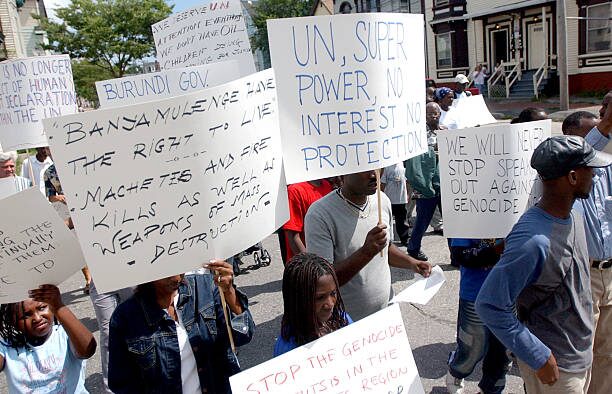
Crowds march through Goma city, highlighting public outrage over security failures and international inaction in Eastern DRC.
Despite repeated alerts to the international community, including MONUSCO, the UN peacekeeping force in the DRC, no action was taken. In response, AfC/M23 launched an offensive to capture Uvira. As Bertrand Bisimwa, President of the rebel movement, explained, the operation aimed “to lift the blockade around Minembwe and allow the people to breathe and live again, since people were dying every day.”
The international community, including the United States, condemned AfC/M23 only after it relieved the besieged population. No condemnation occurred when mostly female members of the Banyamulenge tried to break the siege for essential supplies and were raped or murdered. Nor was there criticism when AfC/M23 voluntarily withdrew from Uvira, leaving the Wazalendo to exact reprisals against Kinyarwanda-speaking communities.
Meanwhile, sanctions were imposed on Rwanda, largely at Tshisekedi’s urging, as he misrepresented the inter-Congolese conflict, falsely blaming Rwanda for supporting the rebels. Assured of near-total immunity, Tshisekedi has financed mercenary operations, including those involving American contractor Eric Prince’s Blackwater group, responsible for attacks like the one that killed Karine Buisset.
Western Complicity and the Cost of Silence
When France’s President Emmanuel Macron tweets that international humanitarian law must be respected to prevent deaths like Buisset’s, it is disingenuous. France, as a permanent member of the UN Security Council (P5), shares responsibility. Had France and other Western powers pressured Tshisekedi to respect the ceasefire with AfC/M23, Karine Buisset might have survived to return home.
Had the UN expressed concern over the Minembwe siege, the murders, and rapes of desperate Banyamulenge women, Buisset might not have fallen victim to the same attackers. Her death reflects the deadly consequences of Western silence and the shielding of Tshisekedi from accountability.
