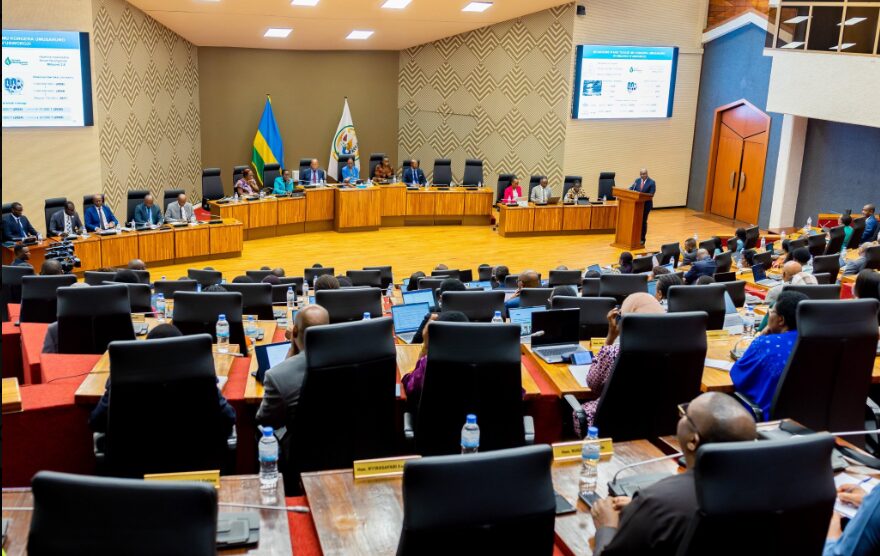
A joint session of Parliament was held under the “Citizen at the Center” program.
KIGALI – Prime Minister Justin Nsengiyumva has urged Rwandans to remain calm following the introduction of new contribution tiers for the community-based health insurance scheme, Mutuelle de Santé, insisting the changes were established thoughtfully to ensure social equity.
Speaking to a joint session of Parliament during the Citizen at the Center program, the Prime Minister addressed rising public anxiety over the shift from a flat fee to a socio-economic tiered system.
A Tiered Approach to Sustainability
The reforms replace the previous flat annual fee of 3,000 Rwandan francs with a sliding scale ranging from 3,000 to 20,000 francs, based on household wealth categories. Nsengiyumva stated that he wanted to reassure citizens that these categories reflect a deliberate effort to align contributions with economic capacity.
Government officials maintain that the transition is vital for the healthcare system’s financial health, aiming to expand the range of treated conditions and improve service quality. For the 2026–2027 fiscal year, Mutuelle contributions are projected to hit 70 billion francs, covering roughly 48 percent of the nation’s healthcare financing, while the government is expected to subsidize the remaining 52 percent.
Addressing Misclassification
Despite the government’s optimistic outlook, many citizens have raised alarms regarding their assigned tiers, claiming the classifications do not mirror their actual financial status. Nsengiyumva acknowledged these inconsistencies, promising that the classification process would remain under constant review to ensure fairness.
To illustrate the necessity of the scheme, he cited the high cost of chronic care, noting that a patient paying the full cost of dialysis for kidney disease would spend approximately 9.4 million francs annually. Under Mutuelle, a patient covering a 10 percent co-pay would pay approximately 941,000 francs per year, which significantly reduces the financial burden.
Solving Medicine Shortages
The Prime Minister also detailed a shift in how health facilities are funded. Moving away from a reimbursement-after-service model, which often led to cash-flow issues and medicine shortages, the government is shifting to advance funding based on patient volume.
This new model has already been piloted in the Western Province and is slated for a nationwide rollout in the coming months. The goal is to streamline service delivery and ensure that health center and hospital pharmacies remain properly stocked to meet citizen needs.
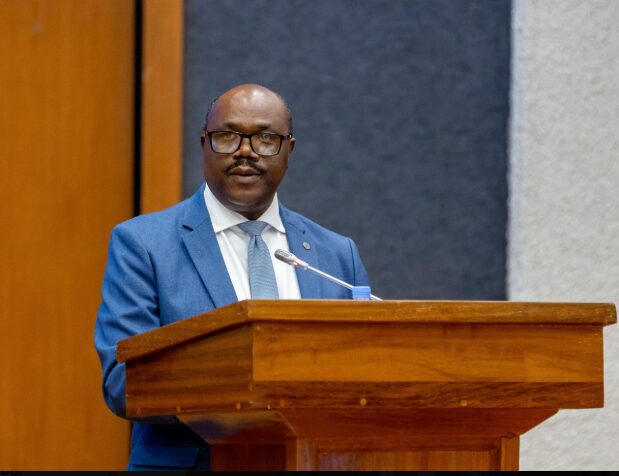
Prime Minister Justin Nsengiyumva speaking before a joint session of Parliament.