
Thomas Ndayambaje, a Senior Technologist in charge of Digital age infrastructure & platforms interoperability at MINICT.
KIGALI – Rwanda’s education sector is undergoing a decisive transformation, with teachers across the country shedding long-held fears of technology as digital systems become fully embedded in classroom practice and administration.
This progress was highlighted during the latest #EdTechMondays discussion aired on KT Radio on March 30, 2026, where experts explained how sustained investment in connectivity and infrastructure is reshaping learning, particularly in rural schools.
The conversation painted a picture of a system that has moved beyond hesitation and into confident adoption of digital tools. For years, the integration of technology in schools, especially in remote areas, was slowed by uncertainty and limited familiarity.
In some instances, computers distributed to schools were left unused, carefully covered and stored away due to fears they could be damaged. That caution, rooted largely in mindset, often stood in the way of meaningful digital adoption. Today, that reality has significantly changed.
Thomas Ndayambaje, a Senior Technologist in charge of Digital age infrastructure & platforms interoperability at MINICT says the shift has been both deliberate and measurable. He notes that as Rwanda’s education system transitioned to fully digital operations, teachers had no choice but to adapt, and they have done so successfully.
“That was mainly a mindset issue, but based on our ongoing assessments, most of it has been resolved. No teacher is afraid of computers anymore or hesitant to use them because our system is now fully digital. Nothing in education is done manually anymore,” he said.

Shadrach Munyeshyaka, CEO of Nyereka Tech, a company specializing in technological innovation appearing during the talk show.
He added that teachers must use technology, whether it’s entering marks into the system or performing other tasks. “They have no alternative. What remained were just perceptions, but those have faded. There may still be a few individuals, but they are very few,” he noted.
The government’s aggressive rollout of internet connectivity has been central to this shift. Connectivity in schools has now reached about 90 percent, supported by a fiber optic network stretching approximately 30,000 kilometers across the country.
Expansion efforts continue, often aligned with the rollout of electricity infrastructure. “There is a need for coordinated collaboration across all sectors to address the key challenges that still persist in the use of technology in schools,” said Shadrach Munyeshyaka, CEO of Nyereka Tech, a company specializing in technological innovation.
In hard-to-reach areas where conventional infrastructure remains limited, alternative solutions have been introduced. Since 2022, some rural schools have been connected through solar-powered systems and satellite technology, ensuring that geography no longer dictates access to digital learning.
The numbers reflect steady progress. In the 2023–2024 academic year, 3,082 schools had internet access. By 2026, that figure had risen to 4,184 out of 4,996 schools nationwide. The remaining 812 schools, mostly in remote regions, are yet to be connected, largely due to challenges related to electricity access.

Ndoli Mitali, Chief Commercial Officer BSC, a company specializing in internet infrastructure and service provision, stresses a point during the #EdTechMondays discussion.
“There is a collective responsibility to safeguard the progress made in integrating technology in schools, ensuring that past setbacks are not repeated,” said Ndoli Mitali, Chief Commercial Officer BSC, a company specializing in internet infrastructure and service provision, during the #EdTechMondays discussion.
As Rwanda deepens its digital transformation in education, the shift among teachers from reluctance to readiness marks a critical milestone. What was once seen as a barrier has now become a foundation for a more inclusive, technology-driven future in learning.
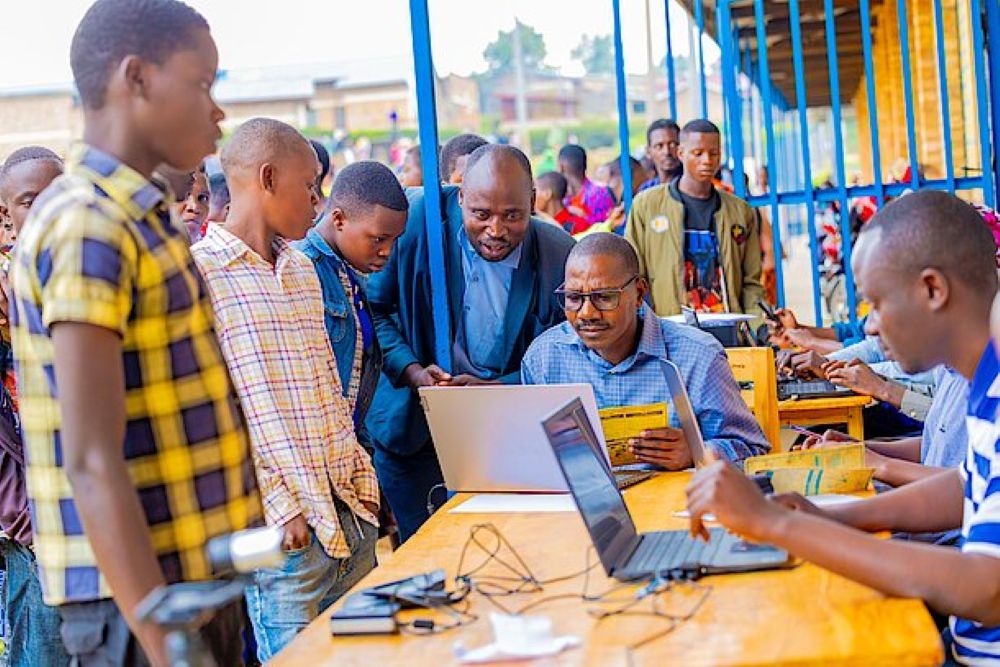
Teachers across the country have embraced technology as digital systems become fully embedded in classroom practice and administration.