



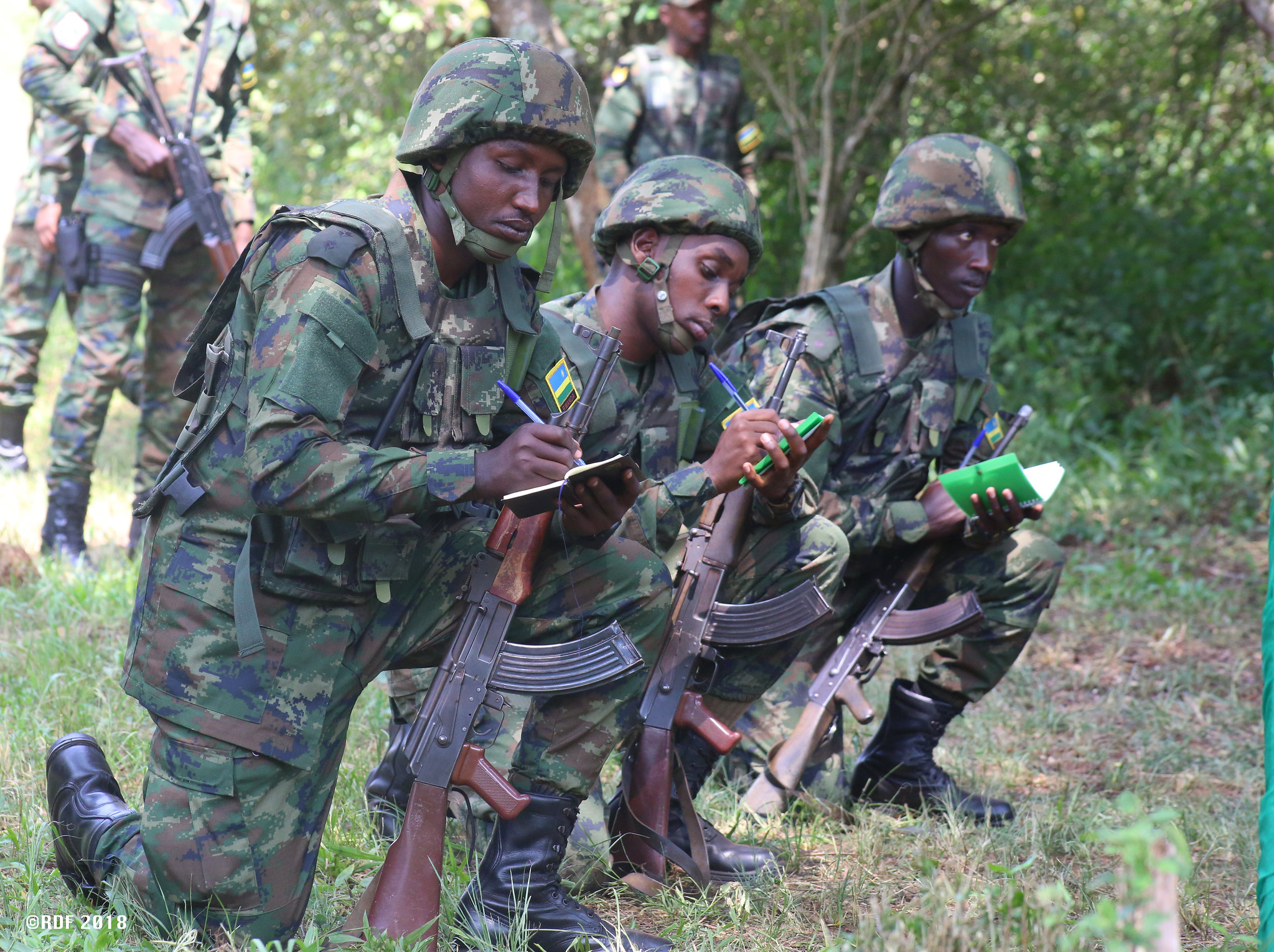
This is an RDF Special Operations Force training program | Nasho, 21 December 2018
KIGALI, Rwanda — The soldier had been dismissed — cast out of the Rwanda Defence Force (RDF) after three separate stints in military detention. His career was over. His pension was gone. Under almost any other military justice system in the world, that would have been the end of the story.
But under a sweeping new disciplinary code that took effect today Thursday, that soldier may one day return to service.
In one of the most notable provisions ever seen in African military law, Rwanda’s new code offers a formal rehabilitation process for dismissed soldiers — a second chance that runs counter to the harsh finality of most military justice systems.
The same 79-article Ministerial Order, however, also expands control over soldiers’ beliefs in striking ways, including an explicit ban on “witchcraft practices” listed alongside desertion and insubordination.
The code, published in the official gazette on April 2, 2026, replaces the 14-year-old military justice framework from 2012.
The new military code suggests that the armed forces — long the bedrock of Rwanda’s stability — are undergoing their own strategic reset, one that tightens control while offering a door for redemption.
Rare in Military Law
Under Article 75 of the new code, dismissed soldiers in two categories may seek rehabilitation. Those dismissed after receiving three 30-day detention sanctions within three consecutive years may apply for rehabilitation after two years. Those dismissed for gross misconduct — a category that includes rape, child defilement, armed robbery, embezzlement, drug trafficking, and acts compromising national security — may apply after five years.
The application is made in writing to the Chief of Defence Staff and must include proof of good conduct issued by the local Cell authority where the former soldier resides. The Chief of Defence Staff has final authority to grant rehabilitation.
Academic reviews show that most militaries do not have a formal rehabilitation process for disciplinary dismissals. Once you’re out, you’re out. What Rwanda is doing is more like a civilian criminal expungement system — and that is genuinely unusual.
The new provision suggests a recognition in the RDF leadership that permanent dismissal may be excessive in some cases and that a pathway back could serve both individual redemption and institutional needs.
It also creates an incentive for dismissed soldiers to maintain good conduct — monitored by local authorities — in hopes of return.
Witchcraft as a Disciplinary Offense
In stark contrast to the rehabilitation provision, the new code also expands the reach of military discipline into spiritual practices. Article 8(o) explicitly prohibits “witchcraft practices” — defined in the Kinyarwanda version as kuragura, kuraguza no kujya mu bapfumu, meaning divination, fortune-telling, and consulting sorcerers. The prohibition is listed alongside drunkenness, indecent acts, lateness, insubordination, and prohibited commercial activity.
Military codes around the world typically focus on operational discipline, chain-of-command violations, and conduct unbecoming a service member. Explicit bans on witchcraft are virtually nonexistent in national military law.
It reflects a distinctly domestic cultural and legal concern. The state is signaling that traditional spiritual practices are viewed as a potential threat to order — even within the ranks.
The order does not define what constitutes a punishable act of witchcraft, leaving that determination to military disciplinary committees.
Rwanda’s penal code also contains provisions related to witchcraft, suggesting a broader state effort to regulate traditional spiritual practices.
What Else Changed
The 2026 code also introduces several other significant shifts.
Under Articles 61 and 62, any decision to dismiss a soldier must ultimately be approved by the Commander-in-Chief.
The decision must pass through a first-level committee, an appeal, the RDF Command and Staff Council, and the Minister of Defence before reaching the President.
Civilian employees of the Ministry of Defence and the RDF will now be investigated by military disciplinary panels, though sanctions will follow civilian public service law. Most countries keep civilian defense employees under entirely separate legal frameworks.
The code applies to soldiers both during and outside military service, and both inside and outside the country. That means off-duty behavior and personal conduct abroad are now subject to military discipline — a stricter standard than many Western militaries.
The Order defines “gross misconduct” to include “any act that undermines the reputation of the country and that of the Rwanda Defence Force,” elevating reputational harm to one of the most serious disciplinary offenses.
While military codes typically focus on breaches of command, duty, or law, this formulation explicitly extends accountability to how actions reflect on the state itself.
In effect, it formalizes national image as a matter of discipline, signaling a broader emphasis not only on what institutions deliver, but on how their conduct is perceived.
