



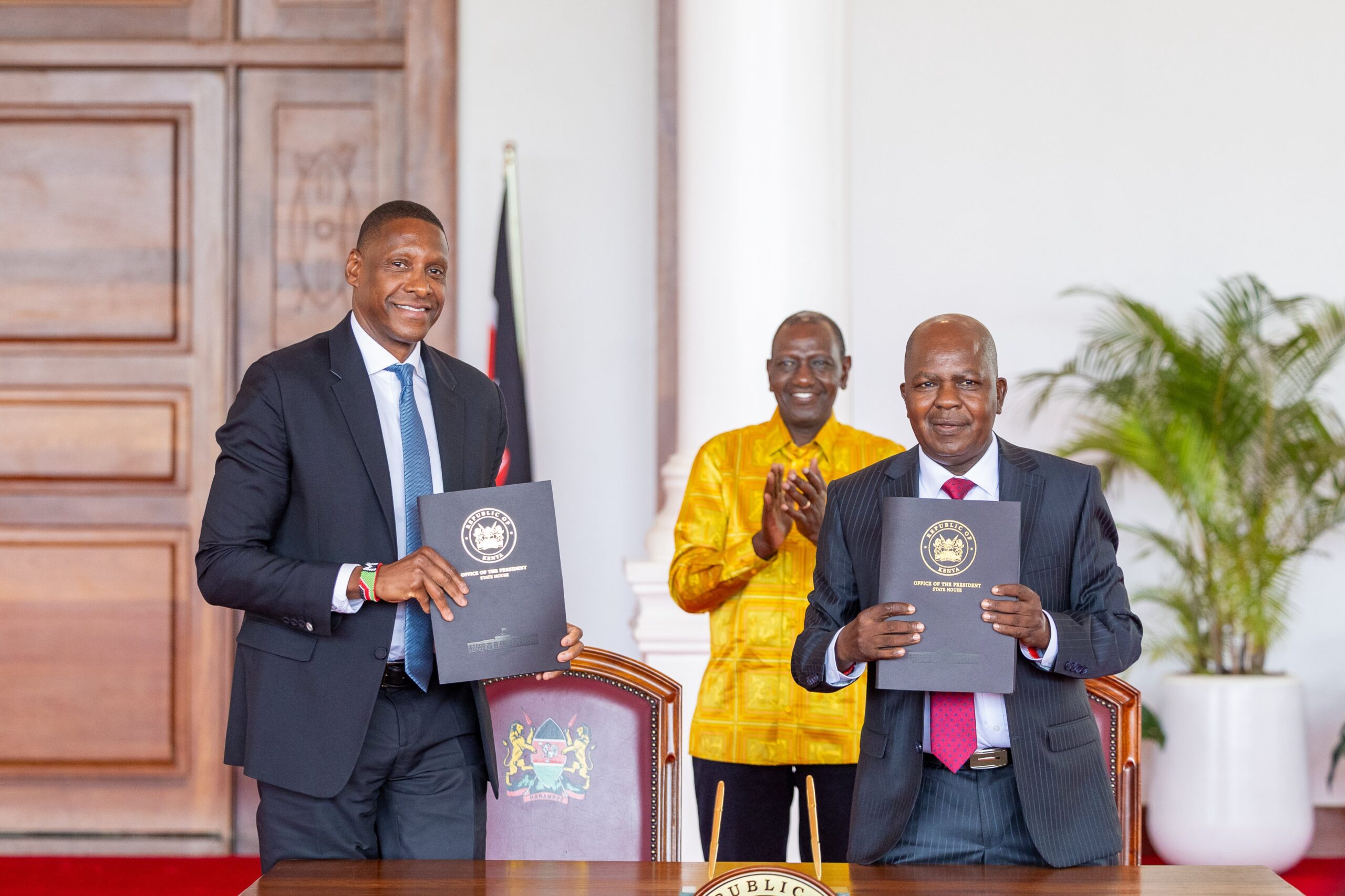
Kenya President William Ruto looks on as Masai Ujiri complete deal with Kenyan Government for a mega sports city in Nairobi
NAIROBI, Kenya — On a Friday morning at Kenya’s State House, President William Ruto stood witness as Masai Ujiri, the Nigerian-born Canadian basketball executive who led the Toronto Raptors to an NBA championship, signed a landmark agreement with the Kenya Railways Corporation.
The lease deal grants Zaria Group, the pan-African development company Ujiri co-founded, the rights to build and operate a modern multi-purpose indoor arena and integrated entertainment district at the heart of Nairobi’s Railway City urban renewal project.
It is the latest chapter in a story that began in Kigali’s Sports City district, where Ujiri’s vision first took concrete form.
In July 2025, Ujiri and President Paul Kagame officially opened Zaria Court Kigali, a $26 million mixed-use development built on a 2.44-hectare site.
The project transformed a historic modernist building into a sports, hospitality and cultural hub.
It sits between the 10,000-seat BK Arena and the renovated 45,000-seat Amahoro Stadium.
Zaria Court Kigali has quickly become a working model for what Ujiri calls “arena ecosystems” across Africa.
The development includes an 80-room boutique lifestyle hotel operated under the Tapestry Collection by Hilton — the first of its kind in Rwanda.
The hotel features contemporary African design, local art and views over the sports district. Amenities include a heated outdoor pool overlooking a central multi-purpose court, a members-only gym and wellness center, and multiple dining options, including an all-day restaurant, a sports bar, a lobby bar and a rooftop lounge.
At the center of the complex is a full-size basketball court that doubles as a flexible event space. It hosts concerts, fitness classes, fashion shows and community gatherings, with capacity for up to 2,000 people.
READ MORE: EXCLUSIVE ACCESS: $25m Zaria Court Kigali-Rwanda is Open (Photos and Video)
The wider site includes two five-a-side football pitches, an outdoor calisthenics area, a children’s playground and landscaped park space.
A shipping-container retail park supports local entrepreneurs, while co-working spaces and a podcast studio cater to creatives.
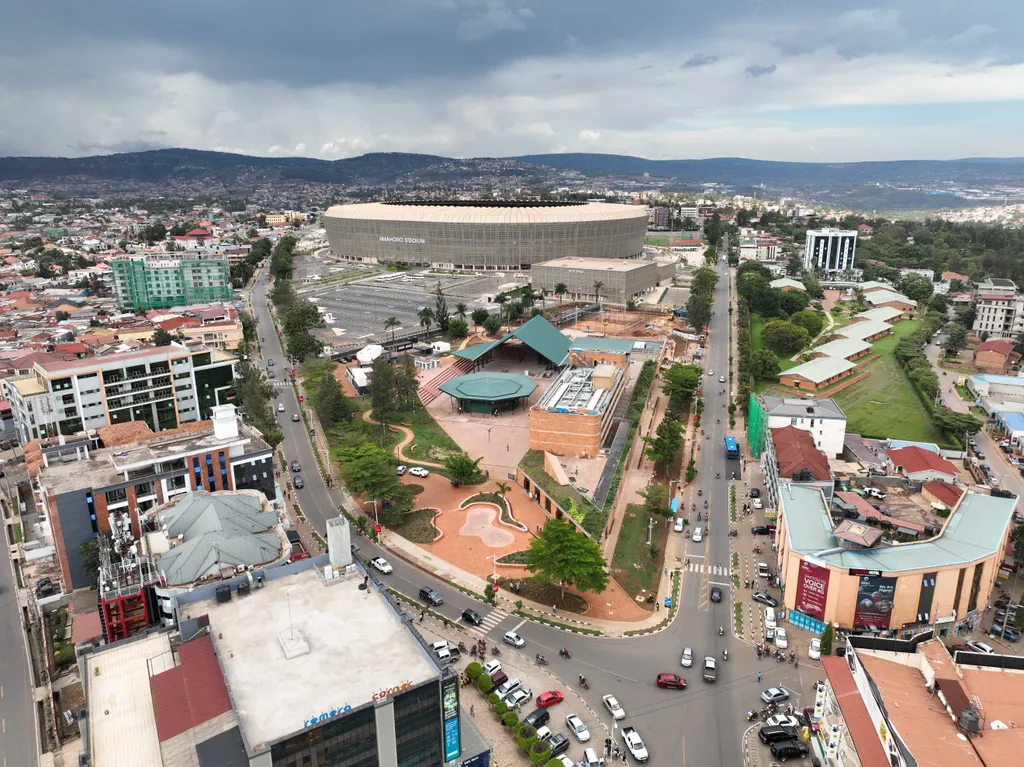
Am aerial view of Zaria Court Kigali
The project created nearly 500 construction jobs, most of them local, and supports more than 100 permanent roles.
Ujiri has framed Zaria Court as more than a real estate venture.
“Courts create community. Venues create value. Sport ecosystems create economy,” he has said, reflecting the broader mission of Giants of Africa, the nonprofit he co-founded.
The organization has built basketball courts and hosted youth festivals across the continent. The Kigali opening coincided with one such festival, bringing together young athletes from 20 African countries.
That model is now being extended to Kenya.
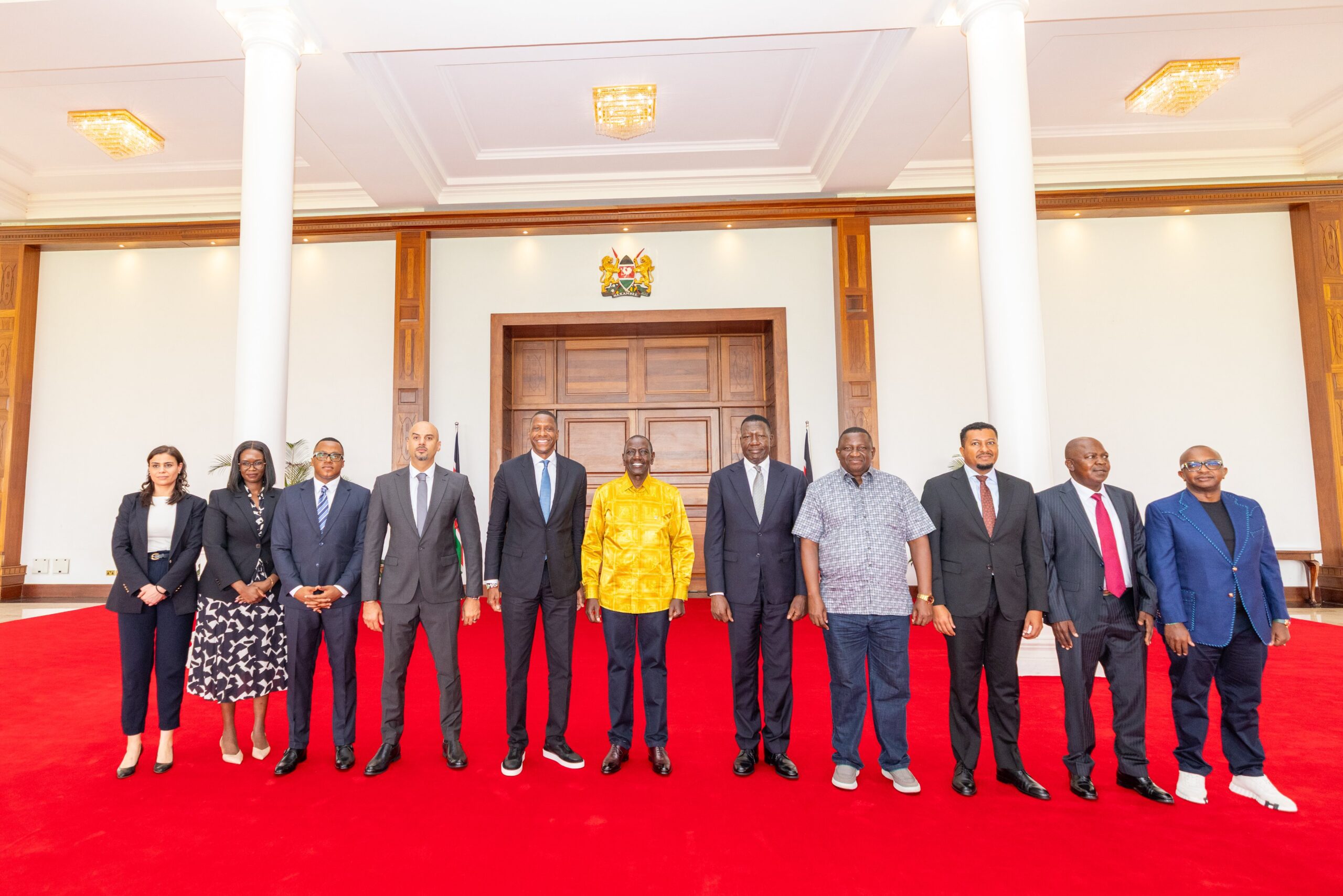
The Nairobi project, the first flagship initiative under the Railway City master plan, envisions a multi-purpose arena and entertainment district capable of hosting international sports and cultural events.
It forms part of a broader redevelopment aimed at transforming the old central railway station area into a modern multi-modal transit hub.
The plan includes green spaces, residential areas and commercial developments designed to serve hundreds of thousands of daily commuters.
Officials say the arena will help position Nairobi as a regional hub for sports, entertainment and the creative industries.
President Ruto described the agreement as a catalyst for urban regeneration, expected to generate thousands of jobs across construction, operations, hospitality and youth programming.
Ujiri called the moment “momentous,” adding that the facility would serve as “an economic driver” not only for the city, but for Kenya and the wider continent, with a particular focus on opportunities for young people.
Zaria Group plans to expand the concept further, with ambitions to develop up to five similar projects in major African cities by 2030.
Nairobi has long been identified as a priority, alongside cities such as Lagos and Johannesburg.
For Ujiri, the expansion carries personal significance. His journey took him from playing basketball in Nigeria and Kenya to the upper ranks of the NBA.
Through Giants of Africa, he has maintained a long-standing presence in Kenya, building courts and organizing youth camps.
The Railway City project extends that work from grassroots development to large-scale urban infrastructure.
Details on the project’s cost, timeline and design have not yet been released. Government officials have, however, pledged supporting infrastructure, and the development is expected to move quickly as part of broader efforts to modernize the capital.
As one of Africa’s most prominent sports figures turns increasingly to development, the question is no longer whether such mixed-use sports districts can succeed on the continent.
It is how quickly the model can spread — and how deeply it can reshape cities and the lives of the young people who will fill their courts, stands and creative spaces.
