




Kigali, though relatively small in size, is rated as one of the most profitable in the region.
KIGALI — In the early months of each year, Rwanda’s banks perform a familiar ritual: they open their books. Balance sheets are published, profits tallied, and executives step forward to explain the numbers.
This year, something else is visible beneath the routine disclosures — a sector that is no longer merely growing, but consolidating, refining, and quietly expanding its ambitions.
What distinguishes this moment is not a single standout result, but the unusual alignment between individual bank performance and the broader health of the system.
The numbers released between March and April 2026, covering the financial year ended December 2025, point to a sector that is not only expanding, but stabilizing as it grows — a combination that, in many emerging markets, proves difficult to sustain.
A System Reaches Critical Mass
The starting point is scale. Rwanda’s banking sector has reached a size where its internal dynamics now matter as much as its growth rate.
According to the Rwanda Bankers’ Association, banks generated Rwf 282.5 billion in net profit in 2024, a sharp 29 percent increase from the previous year.
Total assets climbed to Rwf 8.7 trillion, equivalent to roughly 45 percent of the country’s gross domestic product, while banks now account for 67.5 percent of all financial sector assets.
These are not just indicators of expansion. They signal that banking has become one of the central mechanisms through which Rwanda’s economy is financed, intermediated, and increasingly shaped.
Yet what stands out most is not how fast the sector is growing, but how well it is holding together under that growth. Asset quality has improved, with non-performing loans falling to 3.1 percent.
Capital buffers remain high, with a 20.5 percent capital adequacy ratio, and liquidity is abundant, with coverage exceeding 300 percent. Profitability, meanwhile, remains strong, with returns on equity above 20 percent.
This combination — high growth, high profitability, and improving stability — is rare. It suggests a system that is beginning to move beyond its early expansion phase into something more controlled and deliberate.
Rwanda’s banking sector remains highly profitable by regional and global standards, driven by strong interest income, expanding digital financial services, and significant holdings of government securities.
Industry data from the Rwanda Bankers’ Association, State of the Banking Industry Report 2025, shows double-digit returns on equity, often exceeding 20%, supported by improving efficiency and steady deposit growth.
Similar trends are reflected in IMF and regional banking analyses such as the McKinsey African Banking Survey (2025), which highlight strong profitability across African banks relative to global peers. Profitability remains concentrated among a few large banks, with structural limits from Rwanda’s small credit market and narrow industrial base.
Bank of Kigali

Dr. Diane Karusisi, Chief Executive Officer, BK
Nowhere is that transition more visible than at Bank of Kigali, the country’s largest lender and the anchor of the sector.
With approximately Rwf 2.9 trillion in assets, Rwf 1.76 trillion in loans, and Rwf 1.9 trillion in customer deposits, it operates at a scale unmatched in the domestic market. Its 2025 results showed net profit of about Rwf 110.1 billion, continuing a steady upward trajectory.
But the significance lies less in the size of the profit than in how it was achieved. Loan growth of 16.1 percent and deposit growth of 14.8 percent were accompanied by improvements in asset quality, allowing the bank to release provisions previously held against potential losses.
“2025 was yet another successful year for BK Group,” said Group Chief Executive Dr. Uzziel Ndagijimana, noting that the improvement in asset quality “allowed us to release provisioning capacity that flowed directly into earnings.”
He described the results as “solid,” underscoring sustained growth while pointing to a “stronger balance sheet” and a “more diversified franchise.”
Dr. Diane Karusisi, the bank’s chief executive officer, framed the moment in broader terms. “This year is bigger than numbers,” she said. “The commitment is clear: build even stronger for the next 60.”
The message is subtle but important: growth is no longer the story. Structure is.
BPR and I&M
Behind Bank of Kigali, a second tier of banks is emerging — large enough to shape the market, but distinct in structure, often backed by regional groups.
At BPR Bank Rwanda, the transformation has been rapid. The bank reported Rwf 40.9 billion in profit after tax, a 37.8 percent increase, alongside Rwf 1.41 trillion in assets, Rwf 836.5 billion in loans, and Rwf 874.6 billion in deposits.
Deposits alone grew by more than 50 percent, a sign of aggressive market capture following its merger.
Public messaging focused less on the headline numbers than on trajectory. The bank highlighted “strong audited results” and the extension of “post-merger integration momentum,” signaling a shift from consolidation risk to operational confidence.
At I&M Bank Rwanda, the story is more measured but equally significant.
The bank crossed the Rwf 1 trillion asset threshold, reporting Rwf 1.1 trillion in total assets and Rwf 23.1 billion in profit, up 24 percent. Deposits reached Rwf 898 billion, with loans at Rwf 488 billion.
“Our FY 2025 results reflect disciplined execution, a resilient balance sheet, and continued diversification of our income streams across the region,” the bank said — language that reflects a sector increasingly focused on how growth is achieved, not just how much.
Regional Banks
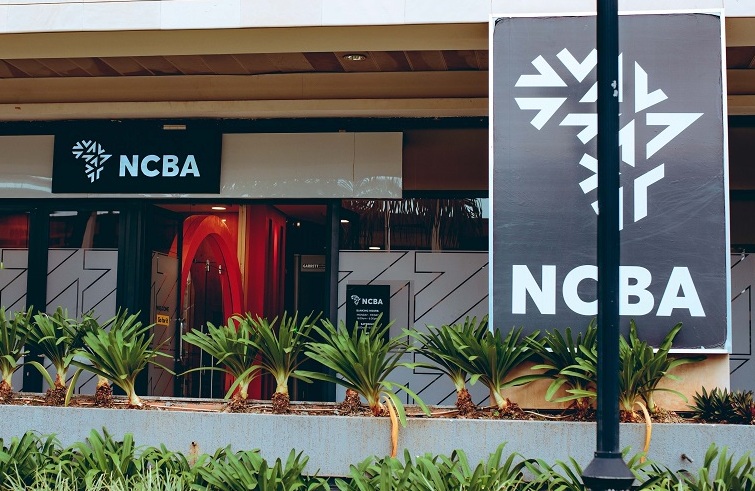
The Kenyan group NCBA Bank Rwanda is making as much money here as in Tanzania despite obvious differences
If domestic banks reflect internal strength, regional players reveal a deeper structural shift.
At Equity Bank Rwanda, part of Equity Group Holdings, Rwanda is no longer a peripheral operation. The bank posted profit of around Rwf 59 billion, with strong loan growth and rising revenue, contributing to a broader trend in which regional subsidiaries now generate roughly half of the group’s banking profit.
“The performance reflects the success of our deliberate transformation into a diversified, regional financial services group,” said Dr. James Mwangi.
That statement carries strategic weight. It signals that Rwanda is increasingly integrated into regional capital flows, risk management frameworks, and growth strategies — no longer just a small market, but a functional node in a larger financial system.
The “Pan-African Stability
At Ecobank Rwanda, profit rose to about Rwf 12.1 billion, while assets expanded to more than Rwf 636 billion, and deposits climbed above Rwf 552 billion. The growth is steady rather than dramatic, but it contributes to system-wide resilience.
Mid-Sized Banks
Further down the market, a cluster of mid-sized banks is reinforcing the system’s depth.
At Guaranty Trust Bank Rwanda (GT Bank Rwanda), performance was more mixed. The bank reported Rwf 3.7 billion in profit, down from Rwf 6.1 billion the previous year, despite strong growth in loans and deposits.
“Our 2025 result underscores the resilience and depth of our earnings capacity,” said Group Chief Executive Segun Agbaje, emphasizing sustainability even in a year of declining profits.
At Access Bank Rwanda and Bank of Africa Rwanda, results were less prominently publicized, but underlying trends point to continued expansion in lending, deposits, and income, aligned with broader continental strategies.
NCBA: Efficiency Over Size
Perhaps the most revealing case is NCBA Bank Rwanda, a subsidiary of Kenya’s NCBA Group.
The bank generated KES 2.5 billion in total income, equivalent to roughly Rwf 23.3 billion, and recorded a profit before tax of KES 92 million, reversing a loss the previous year.
On its own, the profit is modest. But the context is striking. Rwanda’s performance is nearly identical to that of Tanzania within the same group — despite Tanzania’s vastly larger economy and population.
The conclusion is difficult to ignore: Rwanda is delivering efficiency that compensates for scale.
Group commentary pointed to “strong efficiency and cost control” and a “diversified business model,” reinforcing a broader trend in which success is increasingly defined by execution rather than market size.
Then Comes Zigama CSS
Beyond traditional banks, Zigama CSS offers a different model of financial growth.
The cooperative bank, which serves members of the security forces, reported Rwf 39.3 billion in net profit and set a Rwf 42.2 billion target for 2026, reflecting steady, internally driven expansion.
The Bank’s management described the results as “robust,” emphasizing a “solid foundation” and long-term commitment to member welfare.
Unlike commercial banks, its growth is less tied to market competition and more to institutional stability.
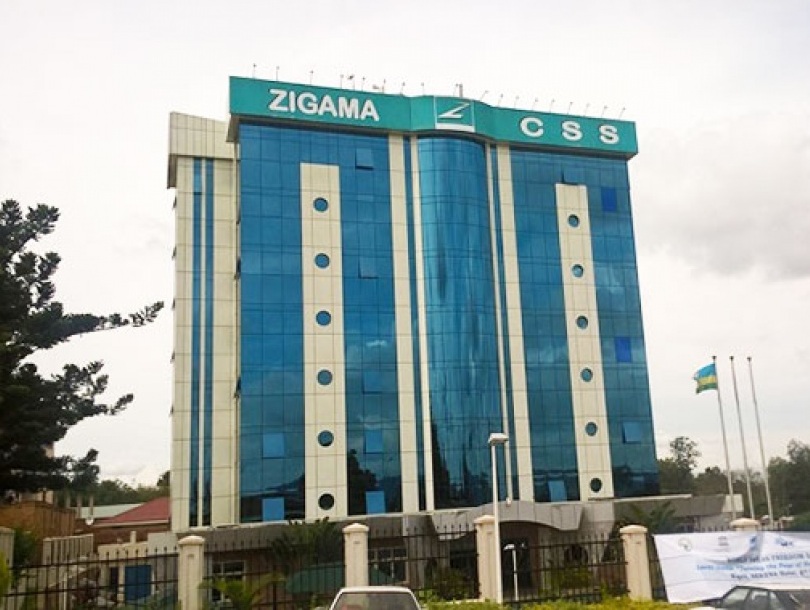
The bank for members of the security forces is making as much money as the commercial ones
From Growth to Structure
Taken together, these results reveal a sector that is becoming more complex, but also more coherent.
Large banks are consolidating their dominance while improving efficiency. Mid-sized institutions are expanding steadily, adding depth and competition.
Smaller players are stabilizing, focusing on cost control and sustainable margins. Regional groups are integrating Rwanda more deeply into their operations.
Across all of them, the language is converging: resilience, discipline, diversification, sustainability.
These are not just corporate phrases. They are indicators of a shift in mindset.
Rwanda’s banking sector is no longer defined solely by how much it grows, but by how it grows — how it manages risk, allocates capital, and integrates into wider financial systems.
A Quiet but Decisive Shift
There are still constraints. The market remains relatively small, and external shocks — regional or global — could test its resilience. Concentration, while efficient, carries its own risks.
But for now, the trajectory is clear.
The annual ritual of opening the books may have come to an end. But what those books now reveal is something more than expansion.
They reveal a sector that has begun to take shape — structured, disciplined, and increasingly confident in its role at the center of Rwanda’s economic life.
It is a transformation that unfolds quietly, in ratios and balance sheets, in statements that emphasize discipline over speed.
But taken together, it marks a decisive shift.
Rwanda’s banks are no longer simply growing.
They are becoming something more enduring.
