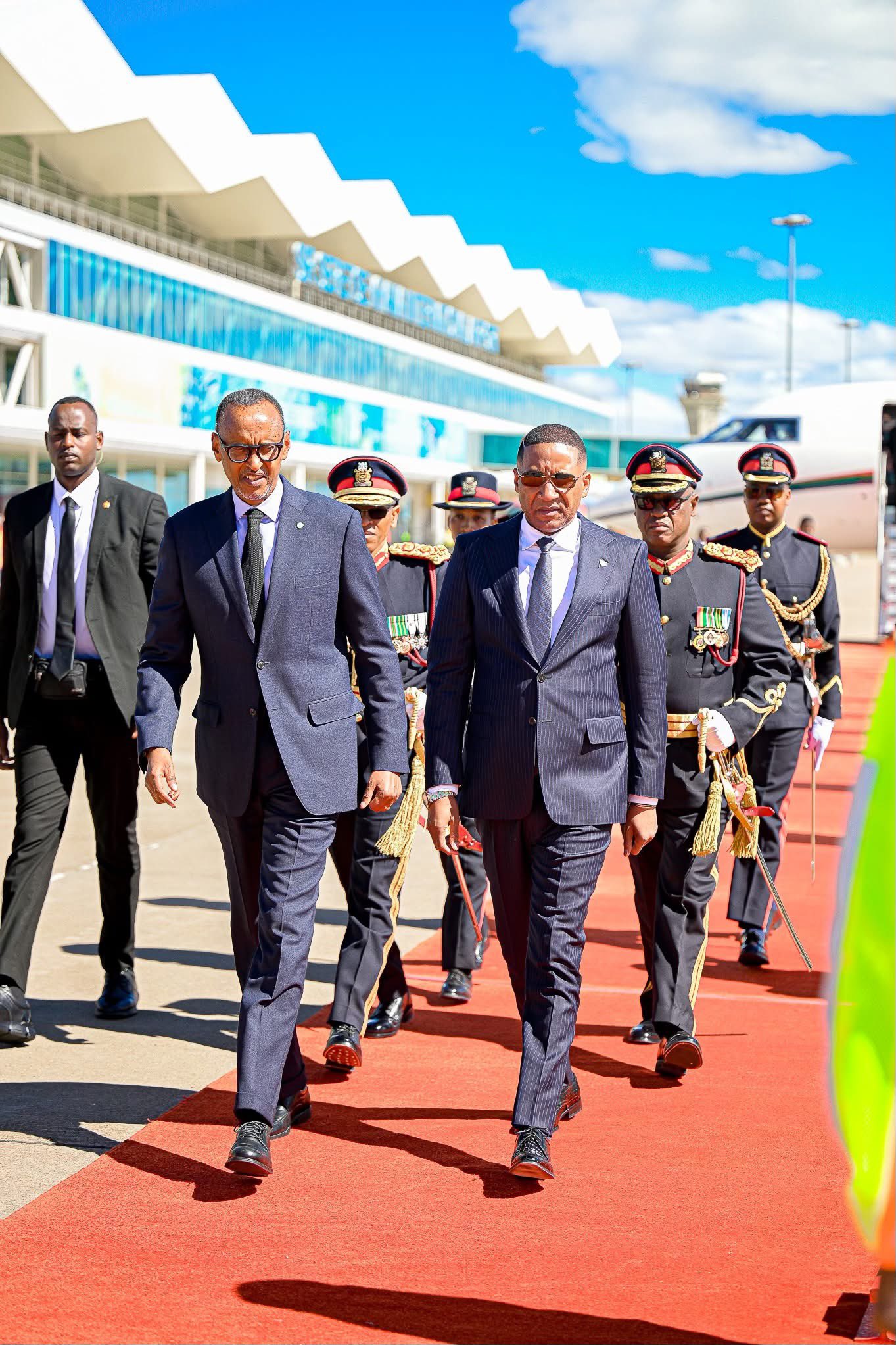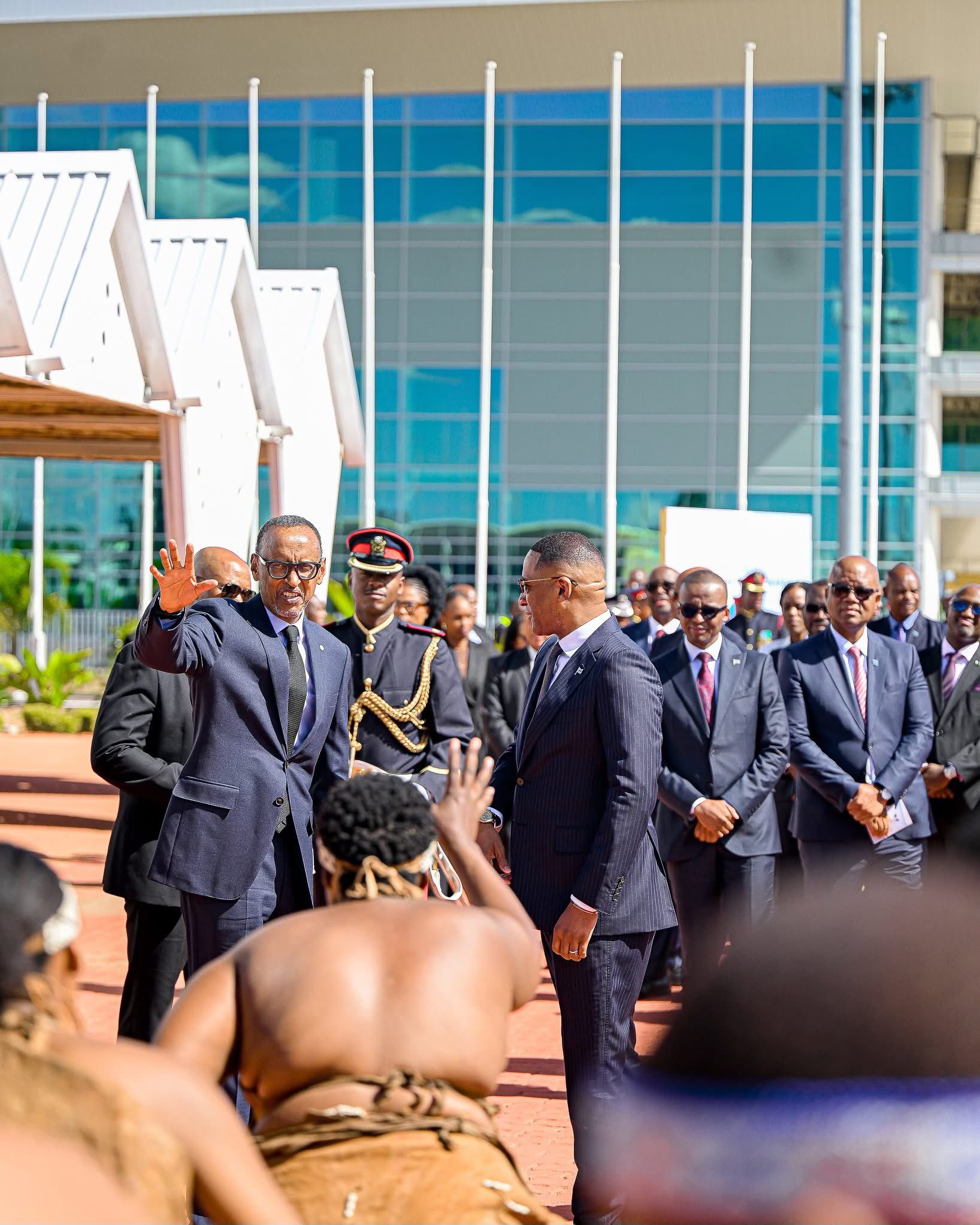
At the State House in Gaborone, President Kagame held talks with Botswana’s President Duma Boko
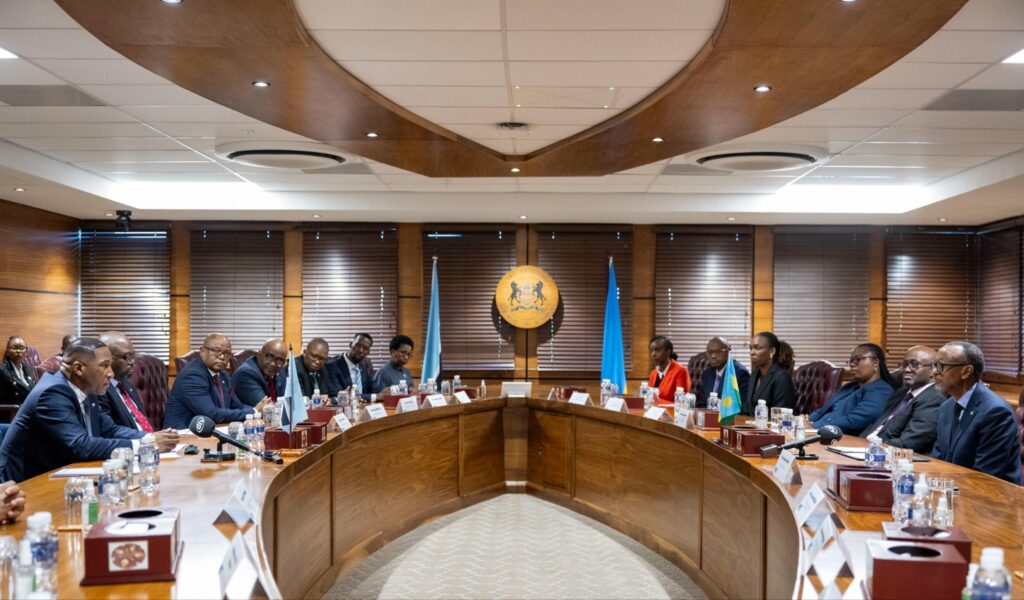
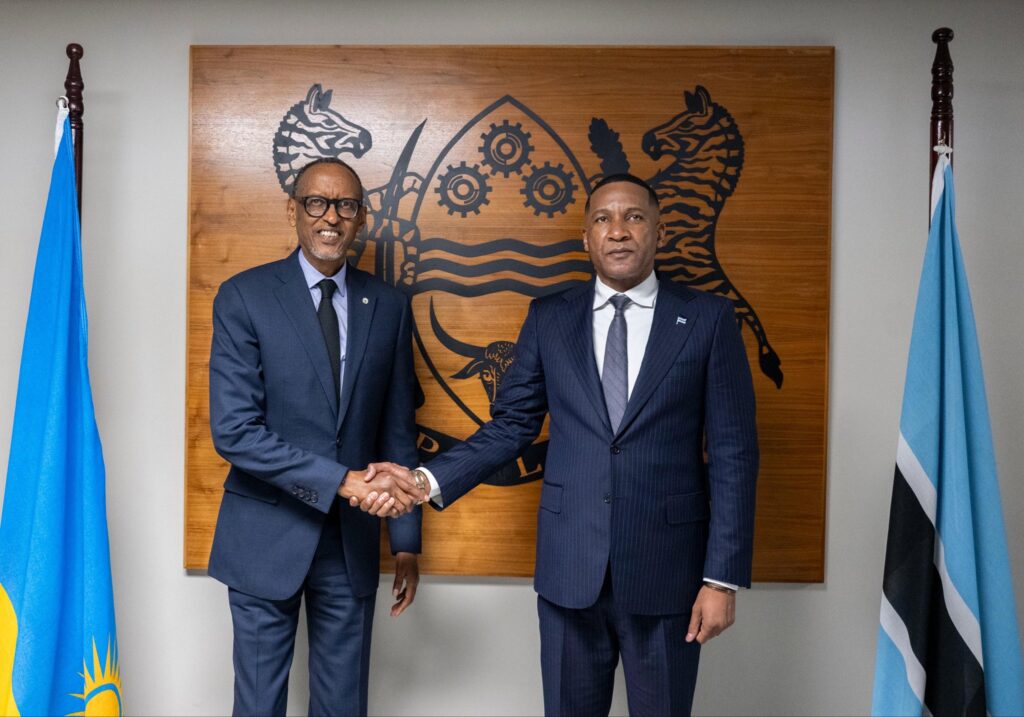
KIGALI – After landing in Gaborone to a state welcome, President Kagame was hosted at State House in Gaborone by President Duma Boko where the two leaders held a tête-à-tête meeting followed by bilateral talks with their respective delegations.
The two Heads of State then witnessed the signing of bilateral agreements and Memorandums of Understanding between Rwanda and Botswana on avoidance of double taxation, visa exemption for holders of diplomatic, official, and national passports, air services, health, economic, trade and investment cooperation.
The framework also covers collaboration between the Rwanda Development Board and the Botswana Investment and Trade Centre.
Rwanda and Botswana are not, by any measure, major trading partners today.
Current trade volumes between the two countries remain extremely low, reflecting a relationship that has historically been more diplomatic than economic. And that is exactly what President Paul Kagame’s visit to Gaborone set out to change.
Rather than focusing on what already exists, both sides used the engagement to confront what does not, and to define a clear path forward. The tone from Botswana’s leadership was unusually direct.
“We did not meet… to exchange diplomatic pleasantries. The talks were a moment for “strategic realignment” backed by action and strict timelines,” President Duma Boko said, during a joint press briefing.
For Rwanda, President Kagame reinforced it by grounding cooperation in outcomes, stressing that this partnership will be judged not by agreements signed, but by results delivered.
“What we agree here must translate into tangible improvements in the lives of our citizens,” he said.
Execution as the Core of Cooperation
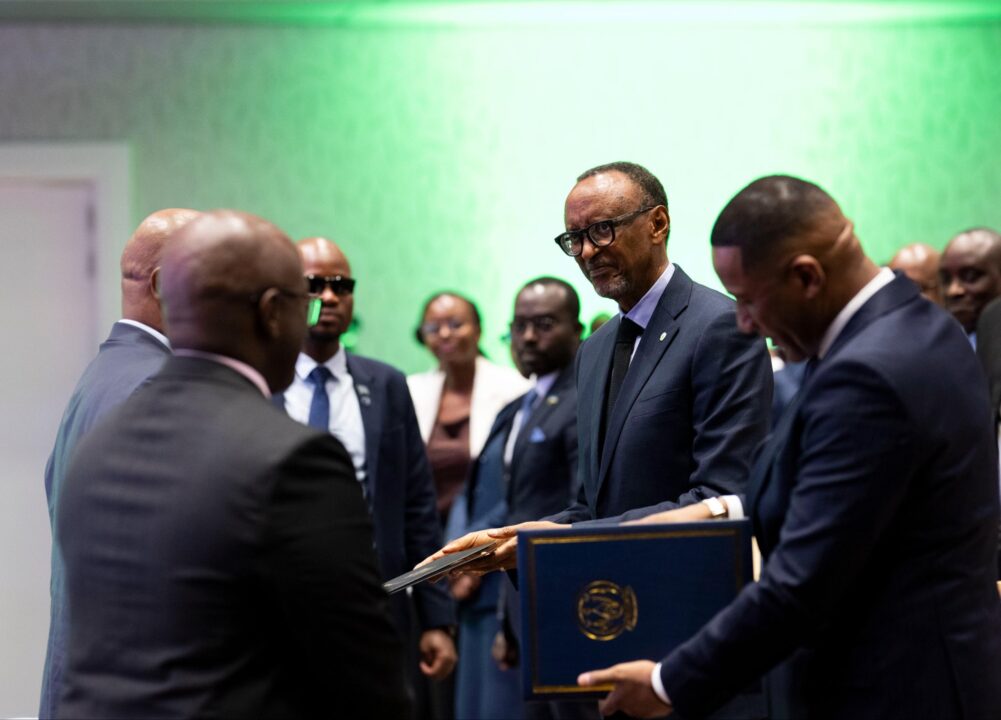
President Kagame interacts with other leaders during a visit to Botswana.
One of the strongest points of alignment between the two countries is the emphasis on implementation. Botswana’s leadership underscored the urgency of delivery, warning that time is unforgiving and that failure to act comes at a cost. “When you are contesting against time… the casualties will be on your side,” President Boko noted.
This mirrors Rwanda’s governance approach, where policies are tied to performance and timelines are enforced. Over the years, Rwanda has built its reputation on execution, turning strategy into measurable outcomes.
For a Rwandan audience, this moment signals something important: the country’s model of disciplined delivery is not only recognized, but increasingly shaping how other African nations define effective governance.
Openness as Strategy, Not Gesture
A key highlight of the engagement was Botswana’s acknowledgment of Rwanda’s decision to remove visa requirements and extend stays for its nationals to six months. Botswana described the move as “exemplary,” noting that it breaks from standard practice and actively encourages movement between the two countries.
This is central to Rwanda’s broader strategy. By reducing barriers to travel, Rwanda is positioning mobility as a driver of economic activity, supporting trade, tourism, and investment.
Botswana’s commitment to reciprocate is significant. It suggests that Rwanda’s policy choices are not just facilitating bilateral ties, but influencing how openness is approached within the continent.
Mutual Learning, Not One-Sided Influence
While Botswana has lessons to draw from Rwanda, it also brings its own experience, particularly in managing natural resources and building long-term economic stability.
President Kagame pointed to Botswana’s handling of its diamond sector as a model of value retention, highlighting a deliberate effort to translate resources into tangible benefits for citizens.
He also noted Botswana’s investments in health security and pharmaceutical capacity as examples of forward-looking leadership.
This balance matters. For Rwanda, it reinforces a partnership model built on exchange rather than hierarchy, engaging with confidence while remaining open to learning.
Beyond the policy discussions and signed agreements, both leaders returned to a single benchmark of impact.
Sectors such as trade, health, education, infrastructure, and youth development were all highlighted as areas of cooperation. Business engagements held alongside the visit point to immediate opportunities, while both governments commit to continuous coordination.
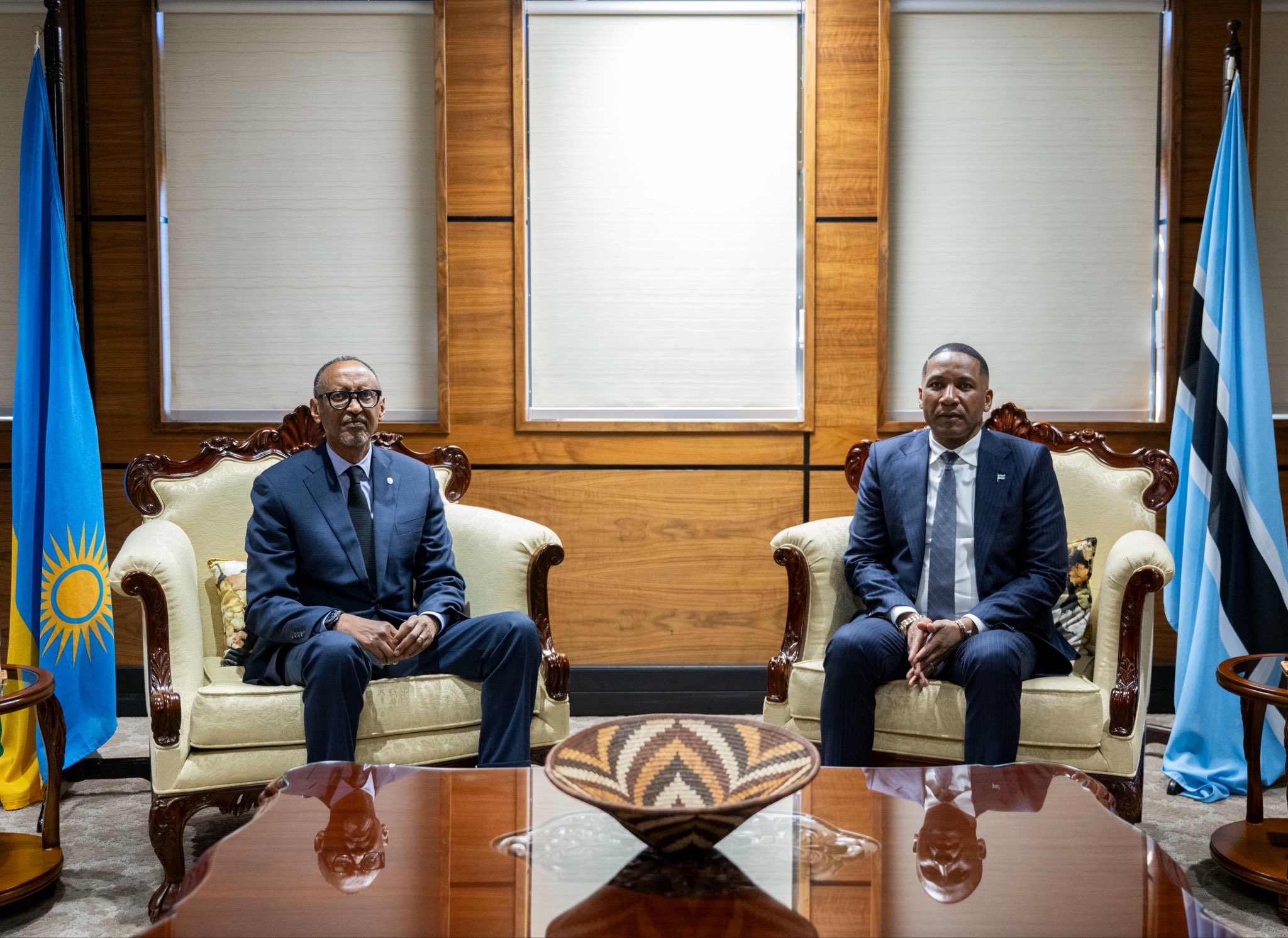
President Kagame and Duma Boko, held a closed-door meeting before expanding into formal bilateral discussions with both delegations and the later the media.
This is a cooperation anchored in execution, openness, and accountability. International partnerships must translate into economic value, whether through increased trade, investment flows, or job creation.
For Rwanda, this reflects a broader trajectory for ably designing policies that work and partnerships that deliver. If implemented as outlined, the Rwanda–Botswana relationship could evolve into a working example of how African countries should unite to achieves results that citizens can see and measure.