

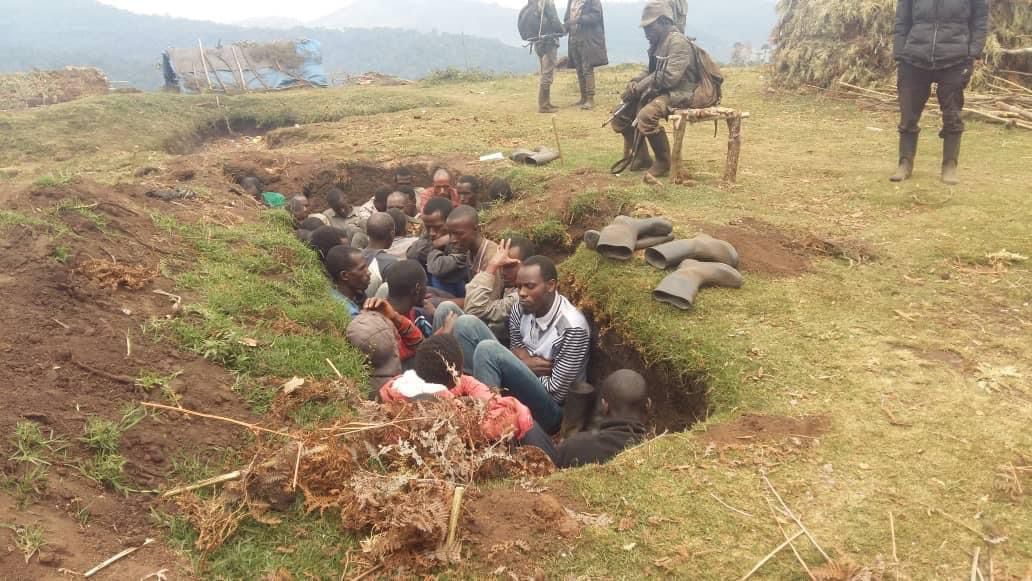
On face value these people piled in a hole appear like combatants. No, actually, they are civilians rounded up in the South Kivu mountains by the DRC-Burundi coalition in a campaign of terror
GOMA — A consortium of Congolese human rights groups has accused government forces of carrying out a wave of drone and aerial attacks against ethnic Banyamulenge civilians in the highlands of South Kivu.
They are warning in a letter to the United Nations and the United States that the violence could escalate into mass atrocities, with over 25,000 people displaced in a few weeks.
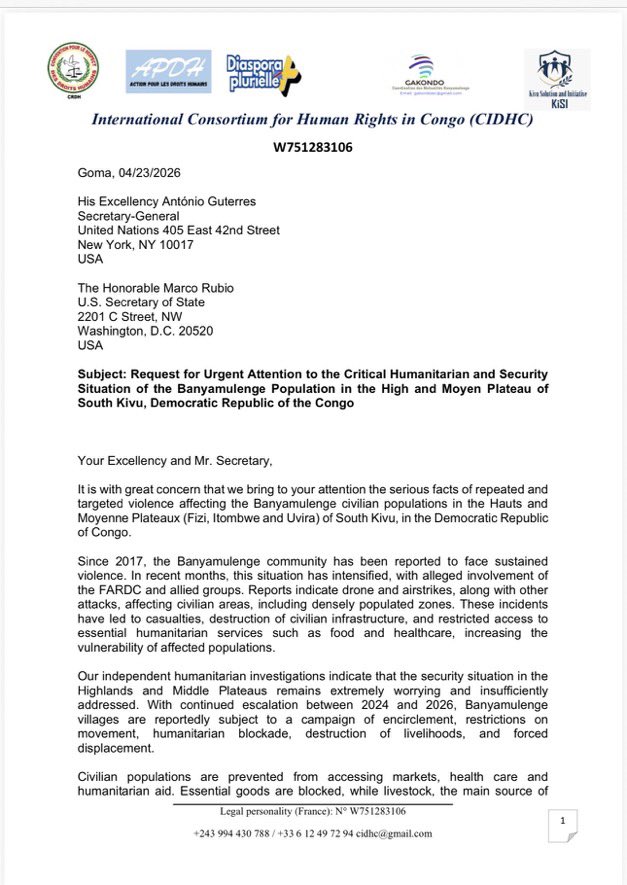
“In recent months, this situation has intensified, with alleged involvement of the FARDC and allied groups,” wrote Mr. Pitchou Roland Shomongo Mbey and Master Jean-Paul Paluku Ngahangondi, co-chairs of the International Consortium for Human Rights in Congo (CIDHC).
Their letter attached below this story, dated April 23, 2026, was addressed to United Nations Secretary-General António Guterres and U.S. Secretary of State Marco Rubio.
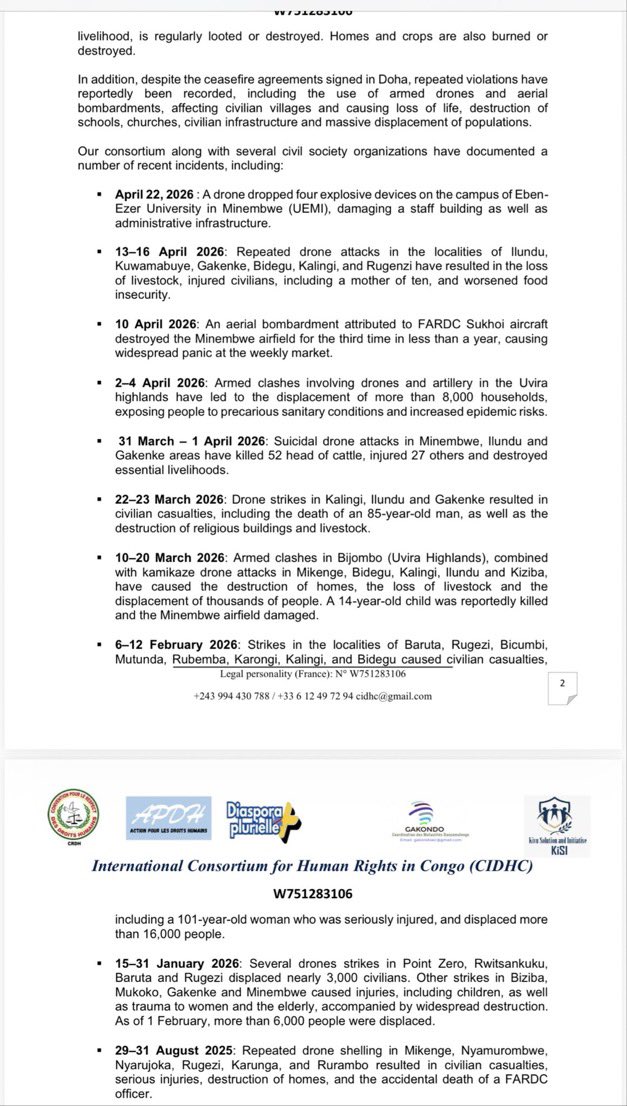
The consortium documented more than a dozen strikes between August 2025 and April 2026 across the Hauts and Moyenne Plateaux, a rugged region near the borders with Burundi and Rwanda.
“Banyamulenge villages are reportedly subject to a campaign of encirclement, restrictions on movement, humanitarian blockade, destruction of livelihoods, and forced displacement,” the co-chairs wrote.
Weapons have included armed drones, “kamikaze” drone strikes and aerial bombardments attributed to Sukhoi aircraft of the Armed Forces of the Democratic Republic of Congo (FARDC).
The attacks have struck villages, markets, schools, churches and, most recently, a university campus.
On April 22, according to the letter, a drone dropped four explosive devices on the campus of Eben-Ezer University in Minembwe, damaging a staff building and administrative infrastructure.
Less than two weeks earlier, on April 10, an aerial bombardment “attributed to FARDC Sukhoi aircraft destroyed the Minembwe airfield for the third time in less than a year, causing widespread panic at the weekly market,” the co-chairs wrote.
The letter provided a detailed accounting of other recent strikes.
In early February, attacks across nine localities, including Baruta and Rugezi, caused civilian casualties “including a 101-year-old woman who was seriously injured” and displaced more than 16,000 people.
In late March, drone strikes in Kalingi, Ilundu and Gakenke resulted in “civilian casualties, including the death of an 85-year-old man, as well as the destruction of religious buildings and livestock.”
Between March 10 and March 20, the co-chairs wrote, armed clashes combined with kamikaze drone attacks killed a 14-year-old child and displaced thousands of people.
Subsequent attacks between April 2 and April 4 displaced more than 8,000 households, the letter said.
The consortium noted that the violence has continued despite ceasefire agreements signed in Doha. “Repeated violations have reportedly been recorded, including the use of armed drones and aerial bombardments, affecting civilian villages and causing loss of life,” the co-chairs wrote.
Mr. Shomongo and Mr. Ngahangondi framed the current escalation within a longer history of persecution of the Banyamulenge, a Tutsi-speaking community that has long faced marginalization in eastern Congo.
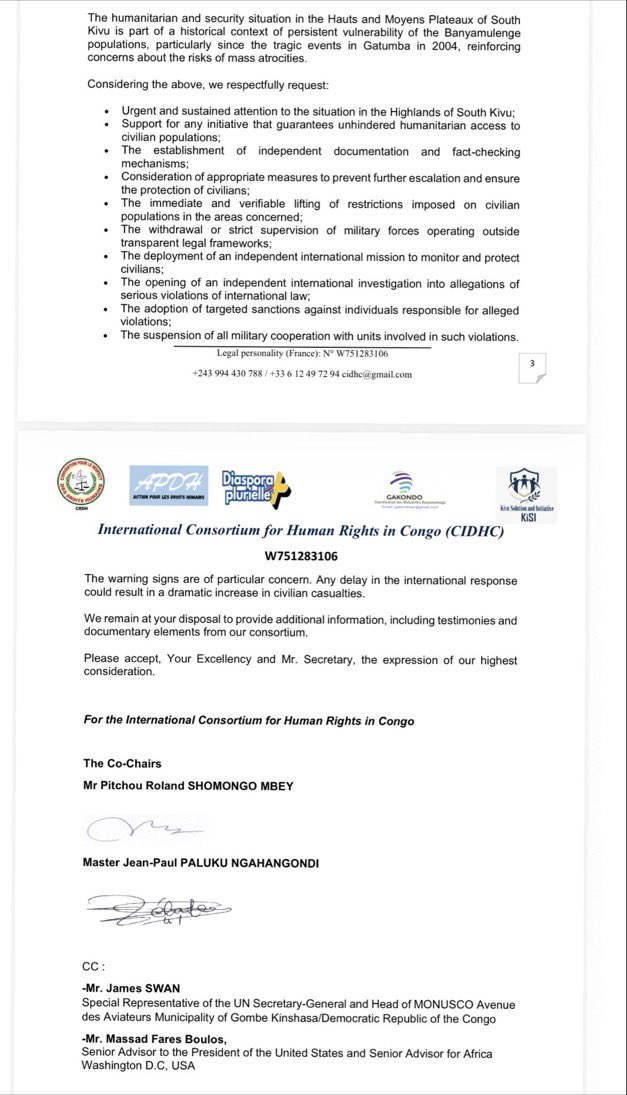
They pointed to the 2004 Gatumba massacre, in which more than 150 Congolese Tutsi refugees were killed in Burundi, as a precedent that “reinforces concerns about the risks of mass atrocities.”
“The warning signs are of particular concern,” the co-chairs wrote. “Any delay in the international response could result in a dramatic increase in civilian casualties.”
The consortium urged Mr. Guterres and Mr. Rubio to take urgent action, including deploying an independent international mission to protect civilians, opening an investigation into alleged violations of international law, and suspending all military cooperation with units involved in such violations.
“The humanitarian and security situation in the Hauts and Moyens Plateaux of South Kivu is part of a historical context of persistent vulnerability of the Banyamulenge populations,” the letter concluded.
There was no immediate response from the Congolese government or the FARDC to the allegations.