



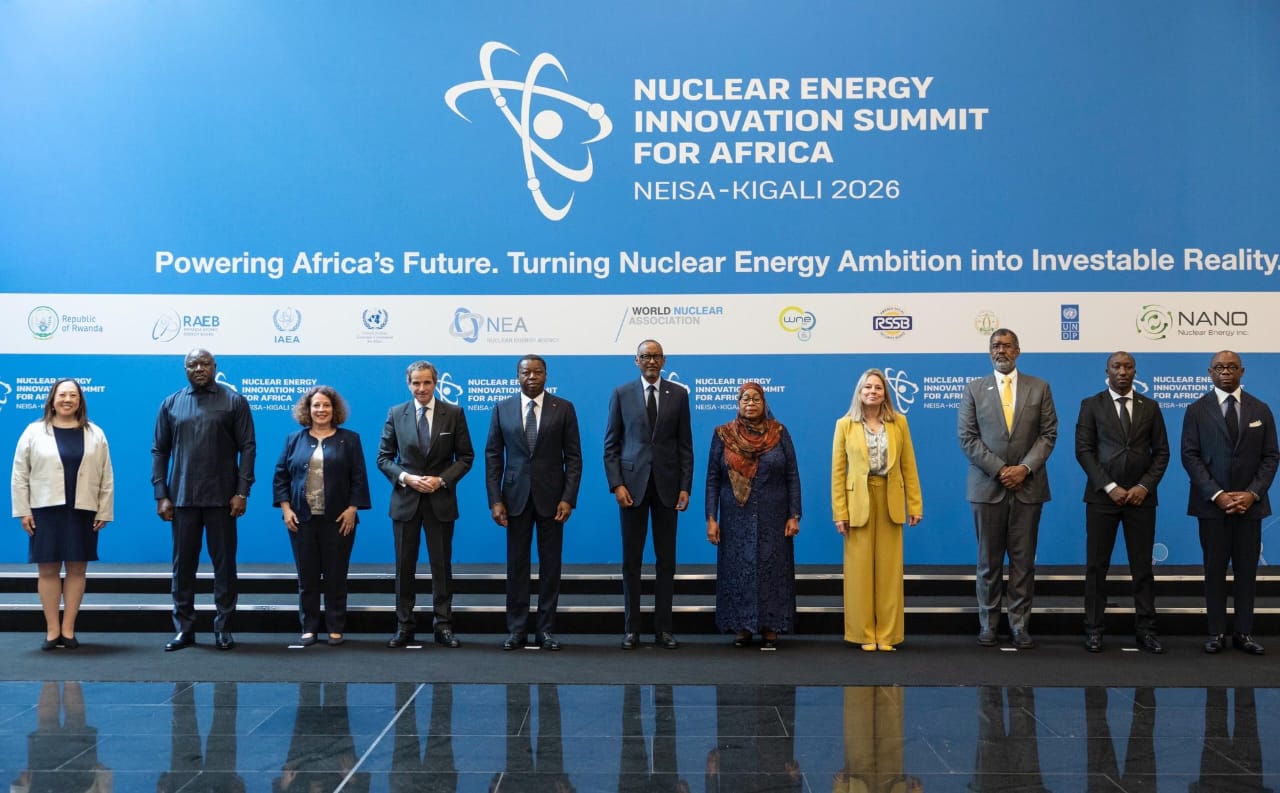
KIGALI — African leaders are calling for a united front, massive regulatory reforms, and urgent action to unlock the continent’s nuclear energy potential.
Speaking at this year’s nuclear energy summit in Kigali, Rwanda’s President Paul Kagame, Tanzania’s President Samia Suluhu Hassan, and Togo’s President Faure Essozimna Gnassingbé emphasized that regional integration and youth development are critical to powering Africa’s green transition.
De-Risking Investments and Ending Fragmentation
Rwanda’s President Paul Kagame urged African nations to create a conducive atmosphere that unlocks international funding for nuclear energy. He noted that global investors often hesitate to fund African energy projects due to “perceived risks,” and called on the continent to internalize regulatory reforms to build market confidence.
“We must work to strengthen regulation, ensure consistency, and predictability. We must build trust and attract long-term capital,” President Kagame said.
He highlighted that shifting global financial trends now favor nuclear energy as a key component of the green transition, opening lucrative new financial windows for Africa. However, Kagame warned against isolated national efforts, stating that Africa “cannot afford fragmentation” if it is to successfully deploy nuclear technology.
With Africa boasting 54 national economies and a combined GDP exceeding $3 trillion USD, Kagame stressed that cooperation is no longer optional.
“If countries work in isolation, progress will be slow and more costly. Cooperation, alignment, financing, and regional integration are essential,” Kagame asserted. He added that as the world’s fifth-largest continental economy, backed by a population of 1.47 billion people, Africa is on track to become a global workforce powerhouse by 2050.
Building Capacity and Trust
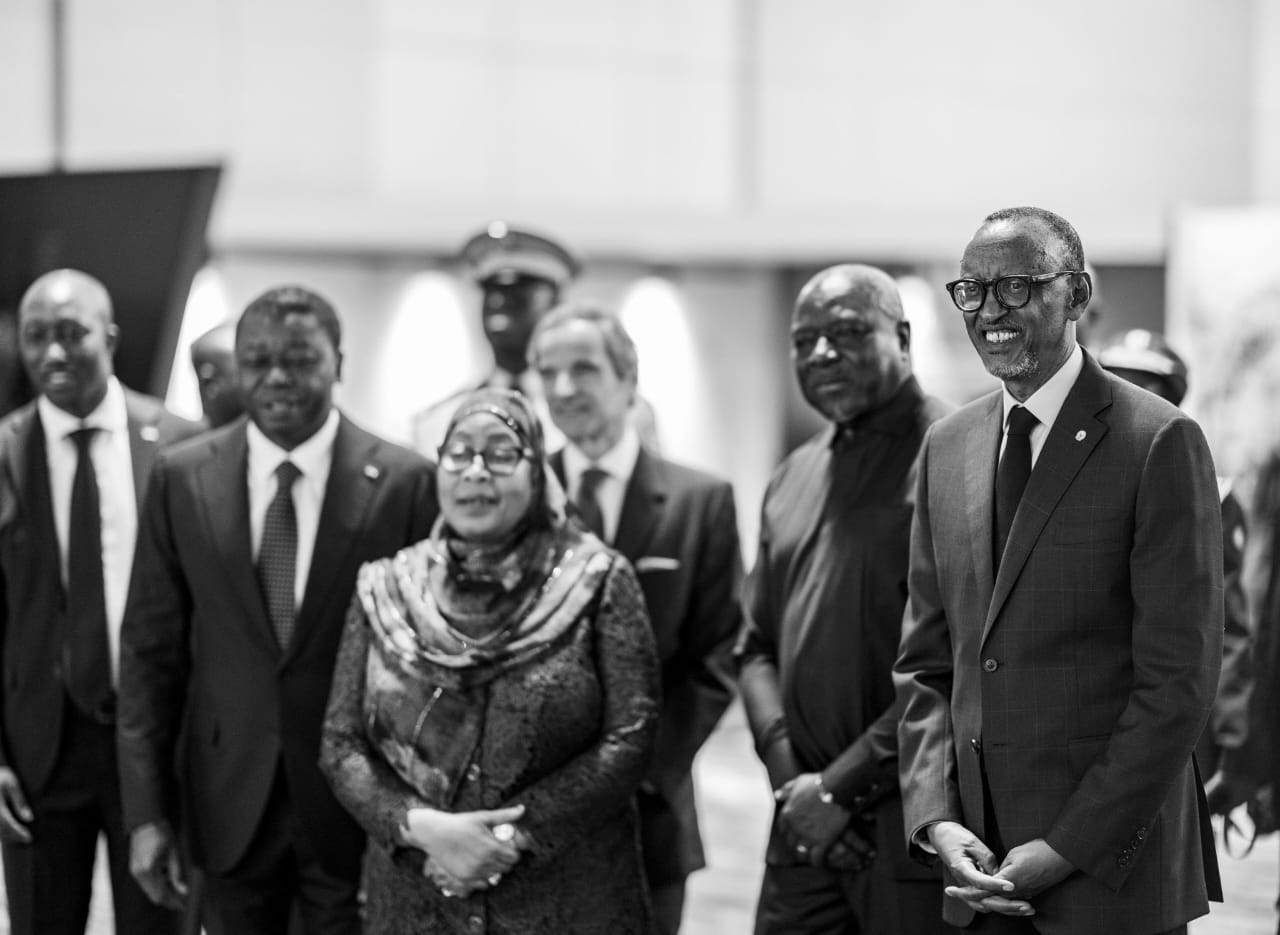
Tanzania’s President Samia Suluhu Hassan echoed these sentiments, outlining the structural hurdles Africa must overcome to achieve full nuclear capability. She identified the continent’s financing architecture, operational preparedness, and institutional capacity as areas requiring a robust overhaul.
“It is fundamental to have confidence and awareness about both the opportunities and responsibilities associated with nuclear energy development,” President Suluhu said.
Expressing her gratitude to President Kagame for hosting the summit, she reinforced the message of unity: “Regional cooperation is essential for nuclear energy development to succeed.”
From Imagination to Action: The Rwanda Example
Taking the stage to look toward the future, Togolese President Faure Essozimna Gnassingbé—whose country is slated to host next year’s summit—delivered a blunt call to action. He urged African nations to transition from rhetoric to execution.
“There are moments where and when you have to stop thinking and imagining, and start to act,” President Gnassingbé said.
He pointed to the host nation as the blueprint for this transition. “This is exactly what Rwanda is doing. Kigali is a testimony and witness to us today of what action looks like.”
Looking forward, the Togolese President emphasized that because Africa possesses the world’s youngest workforce, youth must be placed at the center of the nuclear transition.
“In Togo, we are building institutional credibility and training massively, especially our youth,” Gnassingbé concluded. “We are well aware that this must not be an imported source of energy. It will be something made in Africa, by Africa.”