


PARIS — The applause began slowly.
It was not the kind reserved for speeches, ceremonies, or diplomatic protocol. It was the sound of hundreds of people trying to respond to something that had reached beyond politics, beyond history, and into the raw, unhealed wound of memory.
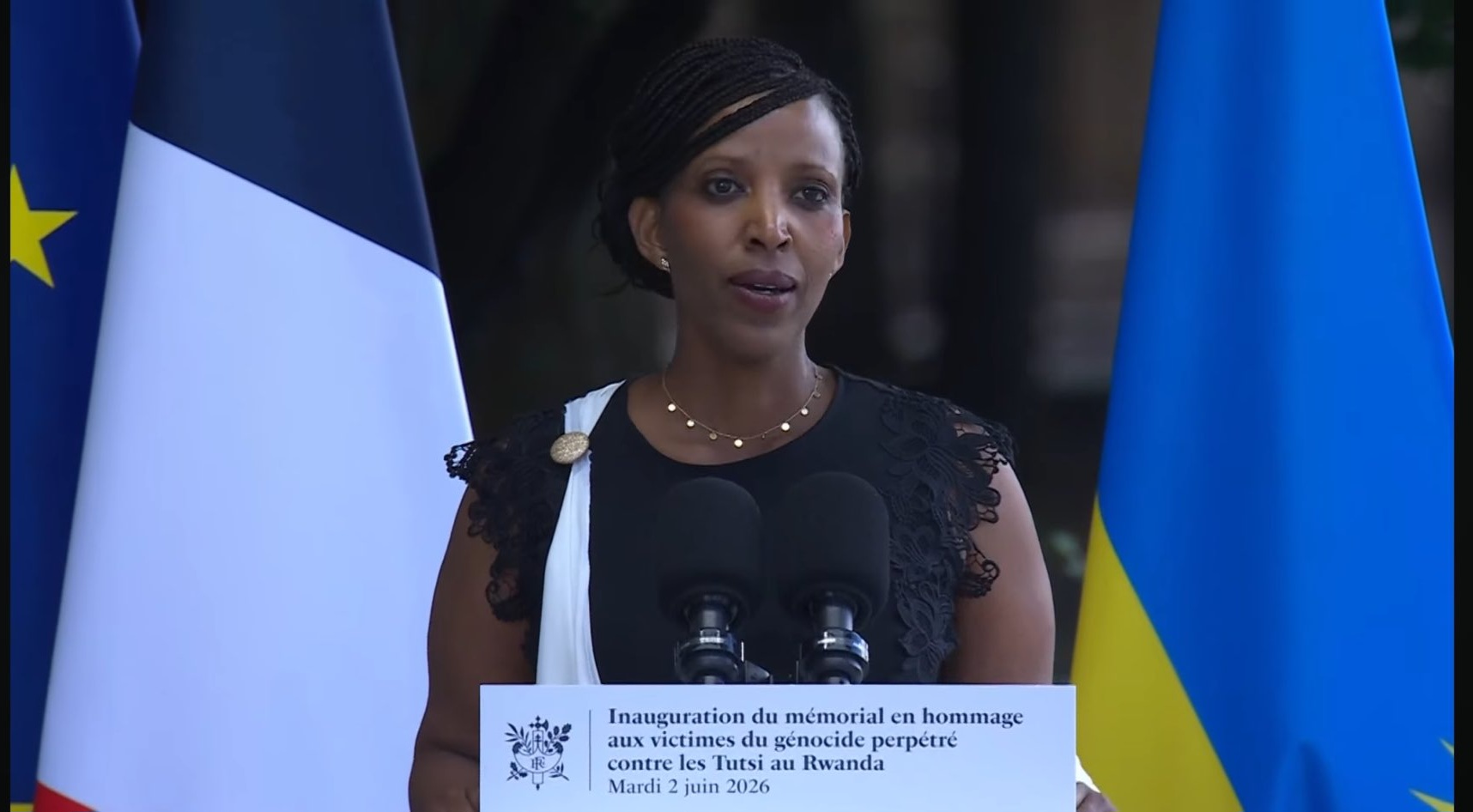
Moments earlier, a woman Jeanne Uwimbabazi had stepped to the podium. She was not a diplomat or a head of state. She was a survivor. And she had come to tell the truth.
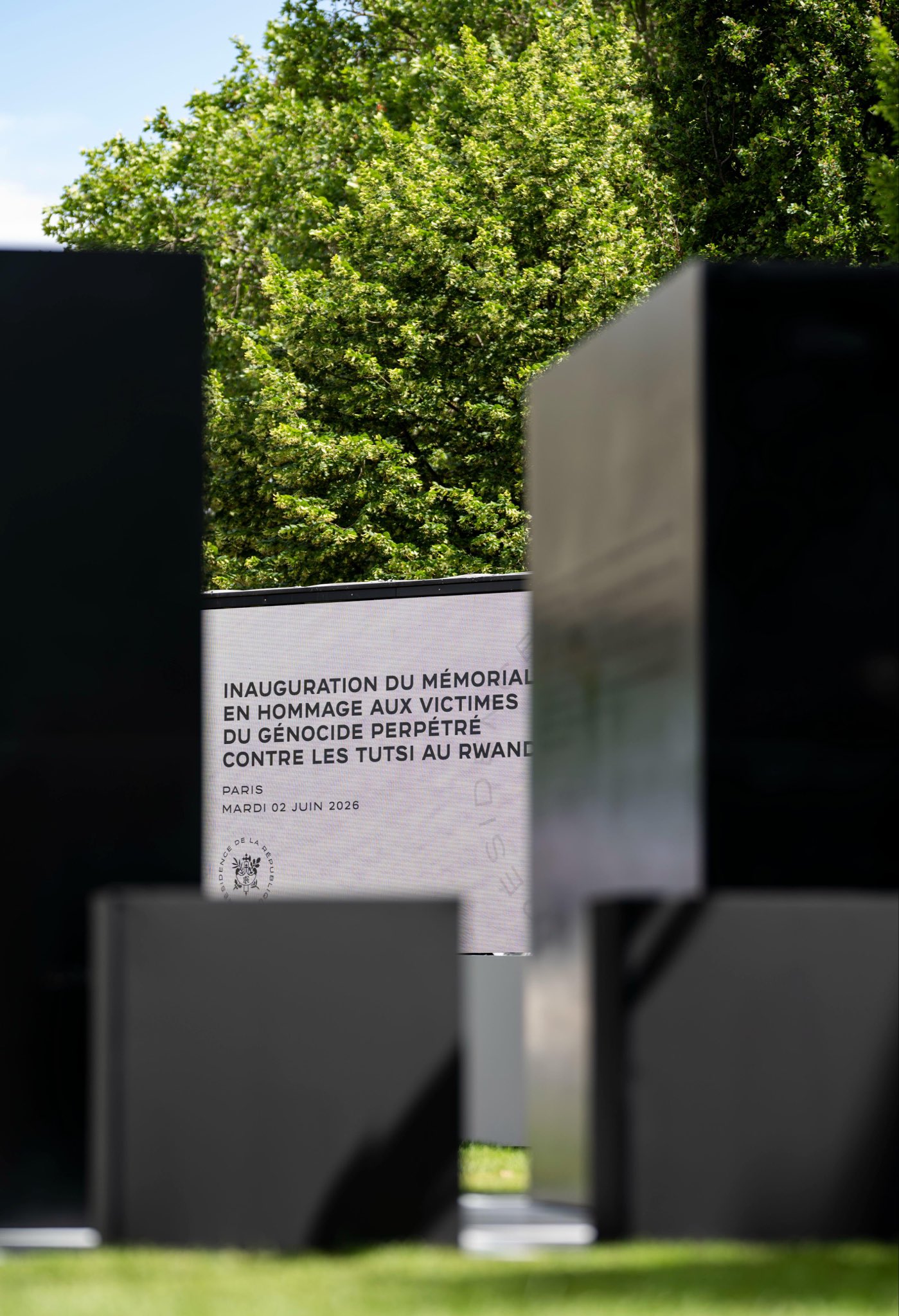
The scene unfolded Tuesday on the Esplanade Habib-Bourguiba, along the banks of the Seine, during the inauguration of a permanent memorial dedicated to the victims of the 1994 Genocide against the Tutsi.
The monument, known as “L’Archive,” was jointly inaugurated by Presidents Paul Kagame and Emmanuel Macron—another milestone in the fraught but evolving relationship between Rwanda and France.
The ceremony was filled with dignitaries: senior French political, diplomatic, and military officials; representatives of Ibuka France; members of parliament; and diplomats from several nations.
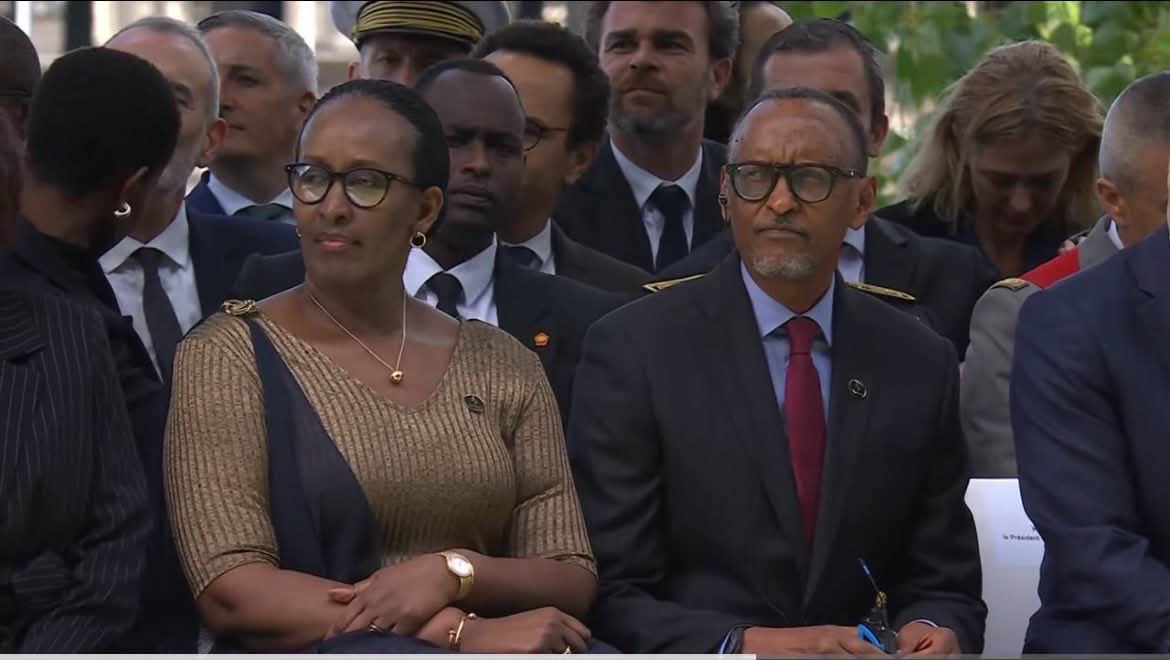
President Kagame sat with First Lady Jeannette Kagame, next to Macron.
But when Jeanne Uwimbabazi approached the microphone, the protocol fell away. The cameras kept rolling, but the ceremony itself seemed to pause. What followed was not a speech. It was a testimony carried across 32 years of silence.
“We Had Been Evacuated to France”
She began not on April 6, 1994, but on June 5, 1994—a date seared into her memory.
“I landed at Orly airport,” she said, her voice steady but fragile. “With 31 other children, we were grievously wounded. At the initiative of Médecins du Monde, we had been evacuated to France to receive the medical care we so desperately needed.”
She remembered everything feeling unreal, almost devoid of meaning.
“It wasn’t that I was unaware of the chance I was being given,” she explained. “It was that I was still plunged into that timeless space of the genocide itself, where ordinary reality struggles to find its place.”
She was 16 years old. But the child who landed in France was already a witness to the absolute crime.
The Last Easter in Kigali
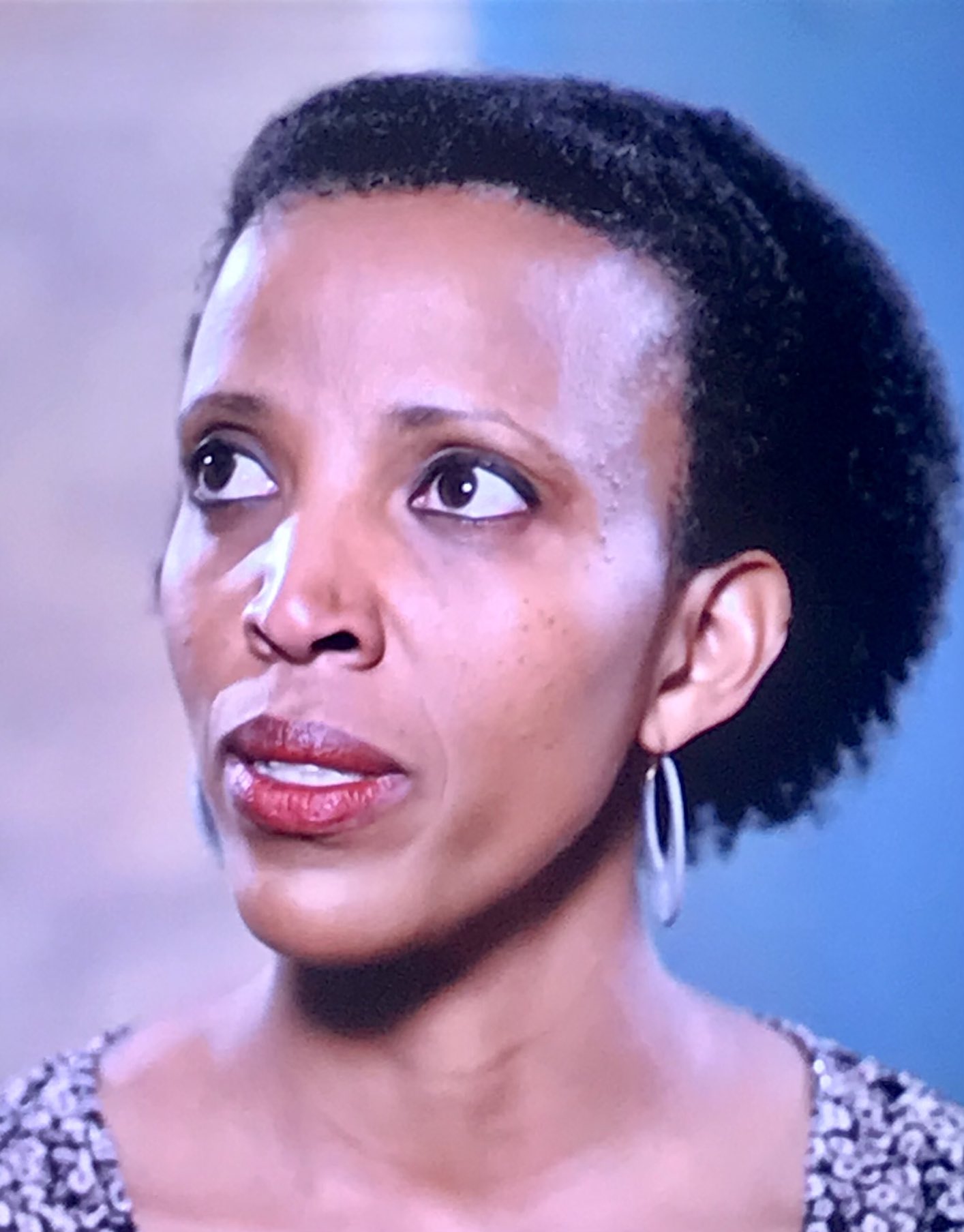
Then she took the audience back to a time before the killing—to a home that no longer exists.
“I was 16, living in Kigali with my family. During the Easter holidays, we were joyfully preparing for the baptism of my little niece, Ornella, who was 11 months old. She was the first granddaughter of the family.”
The ceremony was set for Sunday, April 10, 1994.
On April 6, Jeanne planned to go to her older sister’s home in the neighborhood of Nyamirambo to look after little Ornella, allowing her sister and brother-in-law to finalize the last preparations for the baptism.
“That evening,” she recalled, “my uncle Joseph was passing through our home. The evening was unfolding normally. Then the announcement came: President Habyarimana’s plane had been shot down. The militiamen were already erecting roadblocks around the neighborhood.”
The Morning the Killing Began
By 5 a.m. on April 7, her father made a decision that would cost him his life.
“Papa told us to leave the family home. It was becoming too dangerous for us. We were to go and hide with my aunt and her family in a house under construction near their home.”
Her father and her uncle Joseph stayed behind to watch over the house, perhaps believing the violence would calm down.
“A few hours later,” Jeanne said, her voice catching, “papa was assassinated in front of our home by soldiers of the Rwandan army.”
Uncle Joseph managed to flee. Jeanne and the rest of the family ran for their lives.
“In the panic, I lost sight of my family members.”
The Long Road to the ETO
There was only one hope: to reach the base of the UN peacekeepers—MINUAR—located about 500 meters away, at the École Technique Officielle (ETO) in Kigali. But the neighborhood was under the control of Interahamwe civilian militias and Rwandan army soldiers. Every step was a gamble with death.
She made it inside the school grounds.
“From that moment on,” she said, “I was certain I was saved.”
Her anxiety turned to her family, who eventually arrived at the school as well. But one sister was missing.
“We had no news of my older sister, Yvonne, 26, her husband Laurent, 36, and their little daughter, who lived in the Nyiramirambo neighborhood.” Jeanne tried to reassure herself.
Her brother-in-law worked at a major company, and she thought perhaps he and his family had been evacuated with his international colleagues.
“I would know nothing more.”
The Day the Blue Helmets Left
For a few days at the ETO, Jeanne watched the UN soldiers make back-and-forth trips, bringing Western civilians from their homes to the school. Then came April 11.
“In the morning, we saw them preparing their belongings for departure. Even the religious leaders in charge of the school.”
The tension became palpable. Some Rwandans with passports tried to get on the evacuation list. An opposition minister, Boniface Ngirinzara—present with his family—also asked to leave.
“But the Blue Helmets refused, judging his evacuation too dangerous for themselves.”
Fear spread through the crowd of roughly 2,000 refugees, mostly Tutsi. Jeanne noticed an unusual nervousness among the peacekeepers.
“We asked them: Are you going to leave too? They told us they would stay for another three weeks, and that perhaps they would be relieved after that.”
Around 1 p.m., Western civilians climbed into vehicles and left for Kigali airport, escorted by UN trucks.
Then the betrayal began.
“They Abandoned Us”
The remaining UN soldiers devised a ruse.
“They invited us to go inside the buildings, telling us that lunch was about to be served. People started to enter. Meanwhile, the Blue Helmets loaded their trucks with extreme nervousness.”
A military jeep arrived with three French soldiers inside.
The MINUAR soldiers started their engines.
“A moment of panic erupted. People screamed. Others were in a state of shock. We threw ourselves in front of their trucks. Others clung to the vehicles.”
And then: “They fired into the air.”
For a terrible instant, Jeanne and the others didn’t know if they were being shot at directly. They threw themselves to the ground. People ran in all directions.
“One of the Blue Helmets told us to let them leave. He said French soldiers were going to stay with us.”
They started their trucks. The French jeep led the way.
“They abandoned us.”
Her voice broke on those three words. In the audience, people covered their mouths. Others wept openly.
“Their mere presence would have been enough to protect us,” she said. “After such an act, if there are still questions that remain unanswered, I still ask myself: What was the chain of responsibility? Why have those responsible enjoyed total impunity and continued their careers without having to answer for their actions?”
The Militiamen Arrive
The peacekeepers were barely gone before the killers came.
“The soldiers and militiamen were already there.”
They gathered the refugees near a factory. Then the massacre began.
Jeanne began to list the dead, not as statistics, but as her life.
“The friends of my parents. And of course, my own family. My mother, Angeline, who was 46 years old. My sister, Marie-Josée, who was 19. My uncles. My cousins. My cousins’ children.”
She paused.
“The list is long. Very few survived.”
She herself was not yet wounded. As night fell, she and a few others hid for hours in a small wooded area. But the militiamen found them the next day.
“We were wounded with machetes. Some did not have the chance to survive.”
Rescued from Annihilation
Two days later, lying in the tall grass on the heights of Kigali, Jeanne and other survivors were discovered by soldiers of the RPF (Rwandan Patriotic Front), who were still fighting the genocidaires.
“They gave us clean clothes. They treated us with whatever means they had, even as they continued to fight. During our journey through darkness, they restored our sense of humanity. They tore us away from annihilation.”
This was the pivot point of her testimony. Not just the horror, but the rescue. Not just the abandonment, but the hand that reached back.
A Kinyarwanda Proverb for the Ages
Searching for a way to explain how truth survives despite everything—despite denial, despite silence, despite the abandonment of the powerful—Jeanne invoked an ancient saying from her mother tongue.
“Ukuri guca mu ziko ariko ntigushya.”
Truth passes through fire but does not burn.
The audience, many of whom did not understand Kinyarwanda, understood perfectly. Emotional applause rippled through the hall.
She explained why this memorial mattered. “It offers the youngest among us the possibility to understand, to question, and to learn.”
She thanked President Macron and the French government for making the memorial possible. She acknowledged that the path to reparation requires justice, and that France’s recent convictions of several genocide perpetrators were important advances.
Then she made a request—one that landed with quiet force.
“Allow me to express a wish. That the next trials for crimes committed during the genocide take place in the places where they were committed, and before the principal concerned parties. It is essential that survivors and the families of victims be able to attend.”
“For the First Time in 32 Years”
And then, finally, she turned to President Paul Kagame.
For thirty-two years, she had never had the opportunity to face him directly. For thirty-two years, the words had stayed inside her.
“For the first time in 32 years,” Jeanne Uwimbabazi said, her voice cracking into something raw and real, “allow me to say thank you Mr President Paul Kagame, the President of Rwanda.”
The applause followed, mixed with emotion. Macron could been seeing gesturing at President Kagame as he applauded.
Many were sobbing. The applause went on for several seconds, giving witness to a woman who had survived the unsurvivable and had finally, after more than three decades, spoken her gratitude aloud.
President Kagame appeared visibly moved. First Lady Jeannette Kagame was equally emotional. President Macron, too, seemed to understand that the ceremony had been transformed into something far greater.
After the Applause
When the applause finally faded, and the ceremony returned to its scheduled program, something had changed. The memorial on the Seine would stand for generations.
But it was the voice of one survivor—naming her mother Angeline, her sister Marie-Josée, her niece Ornella, her neighborhood Nyamirambo, and the minister Boniface Nguriza—that would linger longest.
She had done what she set out to do. She had testified.
And in a world that often prefers to forget, she had proven the old proverb true once more.
Truth passes through fire.
But it does not burn.