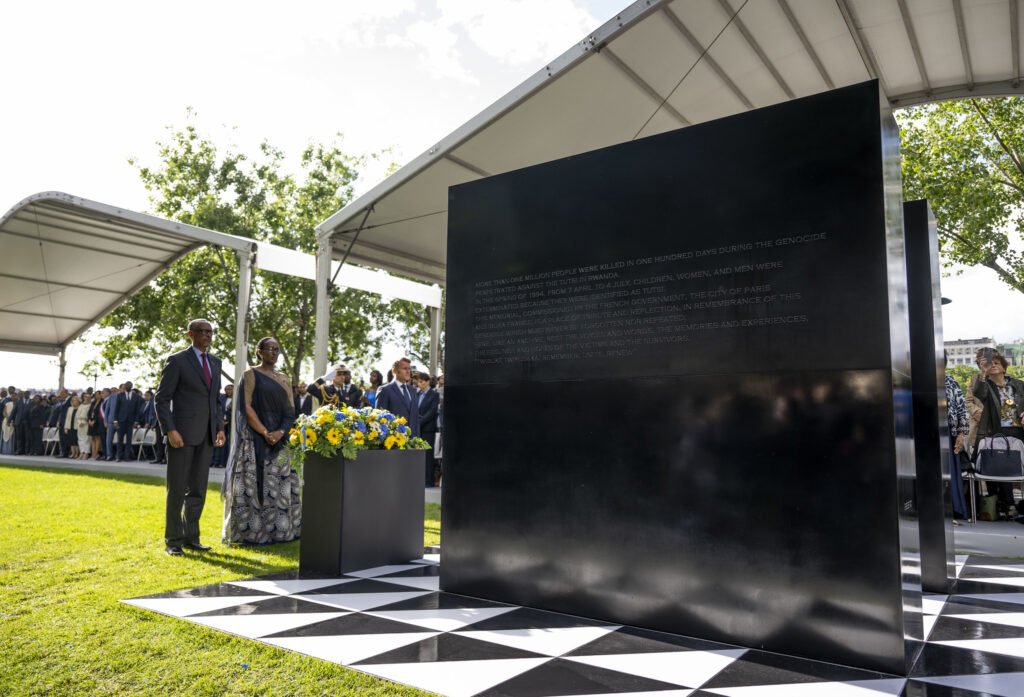
 KIGALI – Last Tuesday, in Paris, by the banks of the river Seine, President Kagame of Rwanda, alongside his French counterpart, President Emmanuel Macron, unveiled a memorial to the victims of the 1994 Genocide Against the Tutsi.
Titled “L’Archive” or the archive, the memorial represents even more than the memory of the over a million men, women and children, murdered in a mere hundred days.
It is also a powerful symbol that humanity can respond to unfathomable depravity with profound humanity, and how a nation’s stand by its sovereignty can be at once unshakable and meet unmeasurable betrayal with forbearance.
President Kagame’s address as he and President Macron unveiled the memorial, was a tour de force, to which it will inevitably be doing an injustice to mention only in passing.
But, his words must stand as the lodstar not only for anyone who would understand the truth of how one of the gravest crimes against humanity, was allowed to be perpetrated, when it was eminently preventable, and inspirational leadership in meeting such a difficult moment.
Anyone familiar with France’s role in the Genocide Against Tutsi, thirty-two years ago, could not but wonder at the serene scene by the Seine.
The country’s dignitaries, led by the head of state, Emmanuel Macron, alongside Rwanda’s President Kagame, accompanied by Rwandan dignitaries, including the first lady.
It is a point on a journey that few envisaged could ever be reached, given the French establishment’s intransigence in acknowledging what history shows was nothing less than complicity in genocide.
That such a point could now have been reached, President Kagame attributed to the unyielding courage and effort of a number of individuals, organisations and associations.
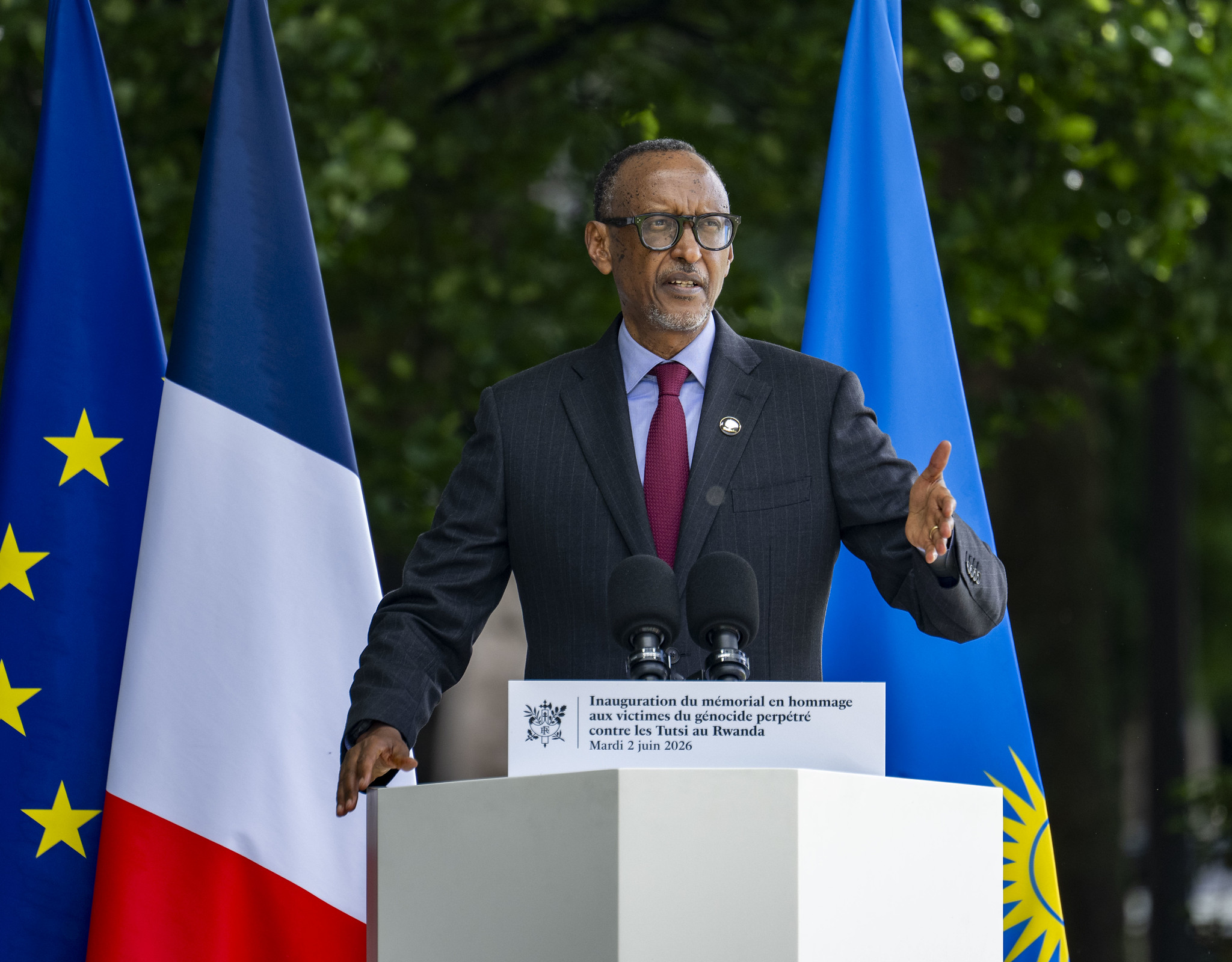
President Paul Kagame addressing mourners at the inauguration of “L’Archive,” a memorial dedicated to more than over a million people who were killed during the 1994 Genocide against the Tutsi.
What he overlooked however, was that without the political philosophy of the leading Rwanda Patriotic Front/Inkotanyi (RPF/Inkotanyi), and his own leadership, Tuesday’s event would have been unimaginable, its very idea dismissed by any well informed, rational person.
Paying tribute to survivors, he noted that with the Genocide Against the Tutsi still fresh in the memory, “the work of memory necessarily begins with their word. Survivors are living memorials, not only by virtue of visible scars of the body, but also the indelible wounds of the spirit, which they transmit to us through their testimony.”
The memorial, he continued, is powerful because it sets the truth in stone, protecting it from the indifference of time, “by instructing the living. It’s not a validation, because none is needed, but it will stand as a mark of respect for the dignity of Rwandans, and our history.”
With characteristic understatement, he then alluded to the arduousness of the journey that had led to that point.
“However, to witness the inauguration of such a memorial, in a place of honour in this is city of Paris, is anything but routine…” He expressed gratitude for both the present Mayor of Paris, Emmanuel Gregoire, and his immediate predecessor, Anne Hidalgo, both of whom were instrumental in making the memorial a reality.
He deftly combined truth telling with generous recognition of the courage it takes to acknowledge and face that truth.
“Confronting historical responsibilities, requires real courage, because it generates fierce opposition by those with a case to answer. You need a strong sense of humanity to see it through.”
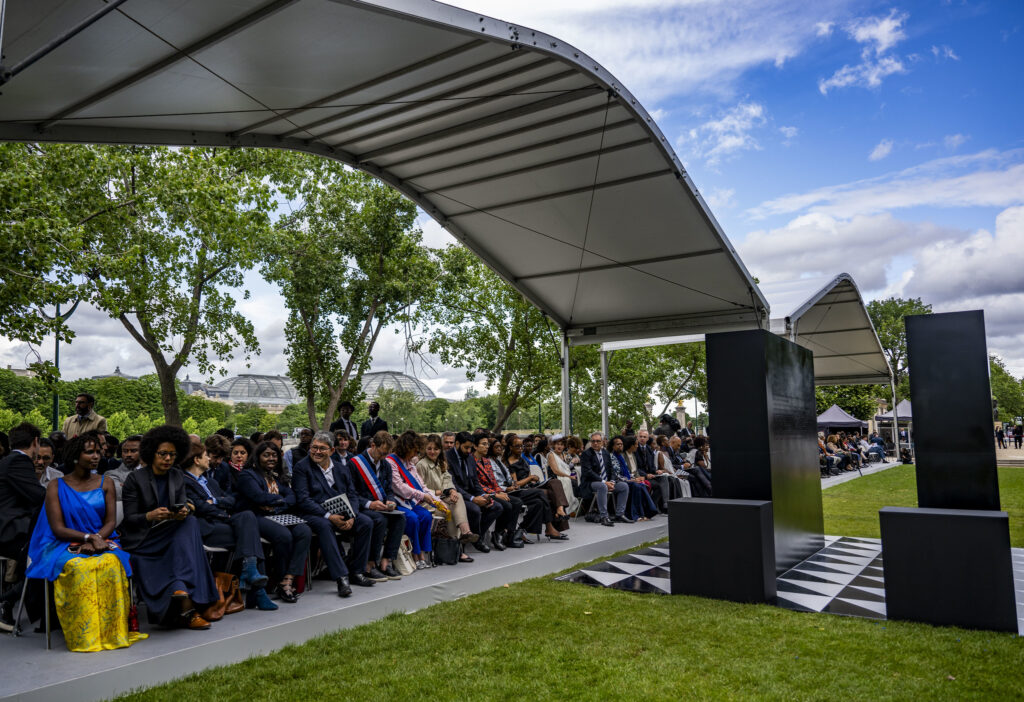
Alighting on what was most likely the central part of his message, he turned to the French President, addressing him directly.
“President Macron, I want to commend you on both counts, courage and humanity.” Kagame recalled Macron’s visit to Rwanda, five years ago, as two independent reports on the Genocide Against the Tutsi, The Duclert Report, “France, Rwanda and the Tutsi Genocide (1990–1994)” and The Muse Report, “A Foreseeable Genocide: The Role of the French Government in Connection with the Genocide Against the Tutsi in Rwanda” commissioned by France and Rwanda, respectively, were released.
“Five years ago, you took a risk and came to Kigali, following the release of two independent reports, one commissioned by your government, the other by Rwanda, but arriving at similar conclusions. You acknowledged that France could have stopped the genocide but did not…”
During that visit and now, as though in defence of Macron against many who felt and still feel that France owed Rwanda an unqualified apology, and in deference to the significant step Macron had taken towards acknowledging the truth, Kagame reminded his host that “in response, I described the words as something more valuable than an apology, namely, the truth.”
And he had praise too for former President, Nicholas Sarkozy. “This door was first opened by President Nicholas Sarkozy, and I wish to commend him today. In an historic visit to Rwanda, in 2010, President conceded ‘serious mistakes’ by France, and said that it was not up to the task of stopping the genocide…”
Some among France’s journalism fraternity, the activists, commentators and academics, were more forthright about France’s role, before, during and after the genocide, and their country’s attempts to disavow the truth. President Kagame had them at heart and in mind too.
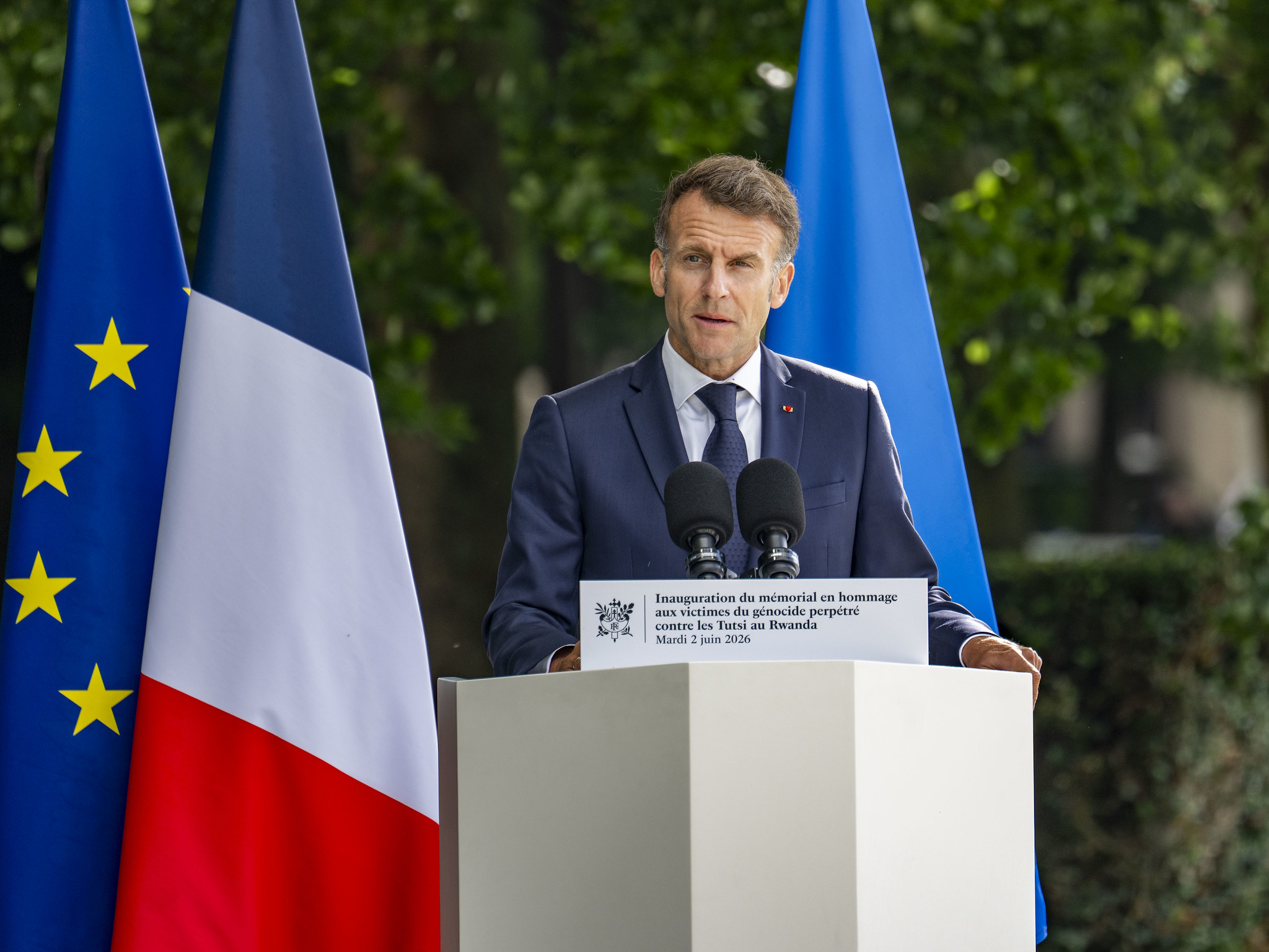
French President Macron speaking at the function.
“I also pay tribute to the dedicated French journalists, activists and researchers, who never wavered in exposing the truth, and many are here today, thank you. Your efforts to make sure that the story was told, have saved countless lives and conferred dignity on the victims.”
Such commendations carry particular weight, coming as they do from a man who seems by nature unable to trade in any form of dissembling. A characteristic that makes it all the more remarkable that he manages to combine unflinching adherence to the truth, with a readiness to offer an olive branch. This quality was clear for for all to see on Tuesday, in the Parisian spring.
“The Genocide Against the Tutsi, was foreseeable, and in fact foreseen, and France was in the unique position to observe, and to act. It took too long for France to come to terms with its role, causing additional pain, and on some points, we still have not found consensus. I fully understand the feelings of those survivors and advocates, who remain dissatisfied with the official record…”
Those words will have hit hard, and doubtless infuriated those with “a case to answer” and a refusal to acknowledge the truth. But then came the encouragement of an olive branch, “but I believe that our common work has initiated a journey towards the truth which is irreversible.”
“And France was not alone in falling short, far from it, many other countries did so as well, but none has gone as far as France, in setting the record straight, and accepting its part in the tragedy. We also appreciate the notable efforts that have been made by France to try genocide perpetrators living here, and to criminalise genocide denial. That work must continue.”
And then the clearest exposition of Rwanda’s political philosophy in its relations with other nations. A political philosophy that is quick to meet others half way, discreetly allowing them leeway to preserve their dignity, even pride, if they show willingness to reckon with the truth.
He concludes what was an extraordinary address with advice France would be wise to take to heart and consider carefully. As is his wont, he lays responsibility where it belongs, beginning at Rwanda’s own doorstop
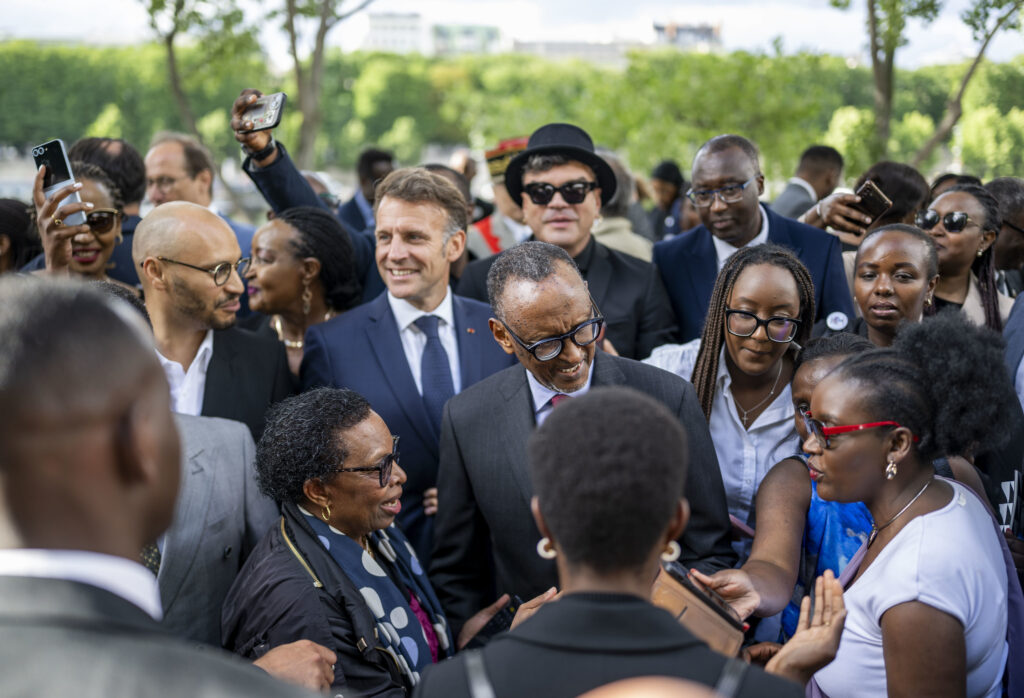
“Settling scores entraps all of us in the past. We needed to walk free from the tangle of lies and we have…Then as now, France serves as a penholder for African affairs at the United Nations, and in other forums. As a result, France will naturally be held to a higher standard, factually, morally, whenever the echoes of history intrude on current affairs on our continent.”
“I hope that France realises the weight and meaning of the special responsibility. It is not easy but it is vitally important, and this memorial symbolises those higher expectations. Rwanda emerged from the experience of genocide and the international response to it, without illusions of any sort.”
“One certitude is that the main responsibility for the genocide, is located within our own society as Rwandans. Others contributed, but we cannot blame them more than we do ourselves. That attitude has liberated us to look within ourselves, and our traditions, for the solutions needed to change our society for the better, for all Rwandans.”
“Rwanda’s determination to overcome its tragic history and ensure that it is never repeated has never waned and never will. We are deliberate about educating our young people to sustain and expand the progress we have made, however modest that may be. Acts of intimidation and pressure no matter powerful the source, only gives us more strength to stand very firm.”
“Overcoming history requires political will on all sides, and in today’s world, that is uncommon. I would therefore like to close by reiterating our appreciation and respect for President Macron’s clarity and resolve. The work we are doing together, will give future generations the tools to build and sustain the peace and understanding which we see. That is the deeper significance of this moment.”
As he perhaps intended, he ended at what felt like a beginning.
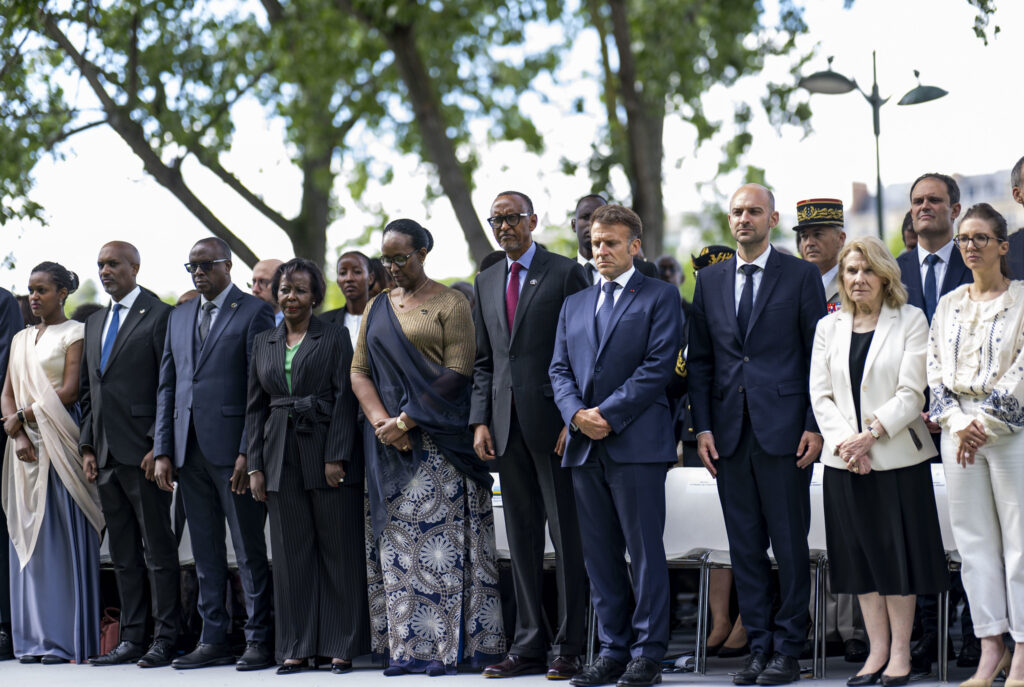
Forbearance and pragmatism are the main hallmarks of the RPF/Inkotanyi, and few embody them more completely than President Kagame. Without two factors which at first glance may seem contradictory the Paris monument may never have even been contemplated.
On the one hand, Rwanda in no uncertain manner repulsed France’s earlier paternalistic bullying, time and again.
But when finally, the realisation that Rwanda would not yield dawned on France, encouraging the country’s leadership to give due regard to Rwanda’s sovereignty, the RPF/Inkotanyi led government was ready to compromise, neither insisting on all that was due to Rwanda, nor that France acknowledge all of its myriad grave wrongs.
Created by Portuguese born artist Grada Kilomba, the memorial is in many ways, a solemn gift to France, one that Rwanda also holds out to the rest of the world.
The truth shall set you free, so goes the biblical saying. By beckoning France towards the truth, Rwanda offers France a chance to liberate itself from the stain of its conscious choice to stand shoulder to shoulder with mass murderers of men, women and children.
It is a gift whose value Emmanuel Macron, at least, seems to fully appreciate. On the 22nd of May 1994, the interim President in the genocidal government, Theodore Sindikubwabo, wrote to his then French counterpart, Francois Mitterand, thanking him for his “material, diplomatic and moral support.”
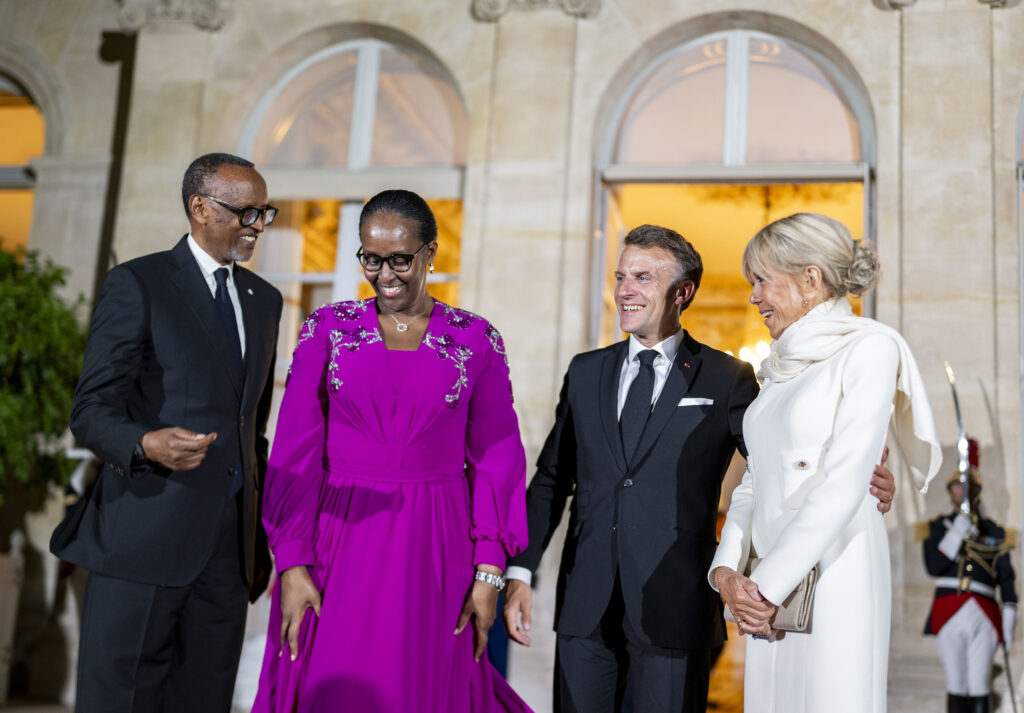
Three decades later, as Mitterand’s successor, it fell to Macron to write a new chapter for France, as a nation that acknowledged that in earning the gratitude of Sindikubwa, it had lost its way.
In his own remarks at the unveiling of the memorial, Macron intimated that realizing it had not been easy. Perhaps he understood that it was arguably as important for France’s redemption, as it was as a commemoration of victims of the Genocide Against Tutsi.
“This monument is a culmination. It now inscribes the genocide of the Tutsi in Rwanda, at the heart of our capital and our history. It is the culmination of a long and patient work of truth, that we have collectively made ours, and which has relied on decades of testimony, of writings, of works, of fierce mobilization.”