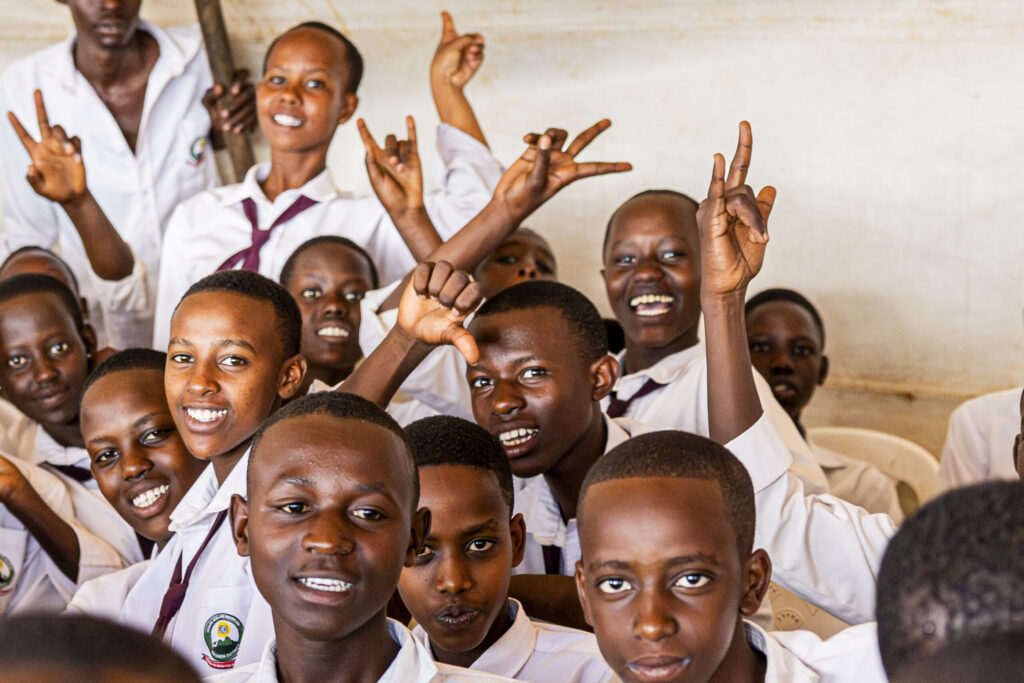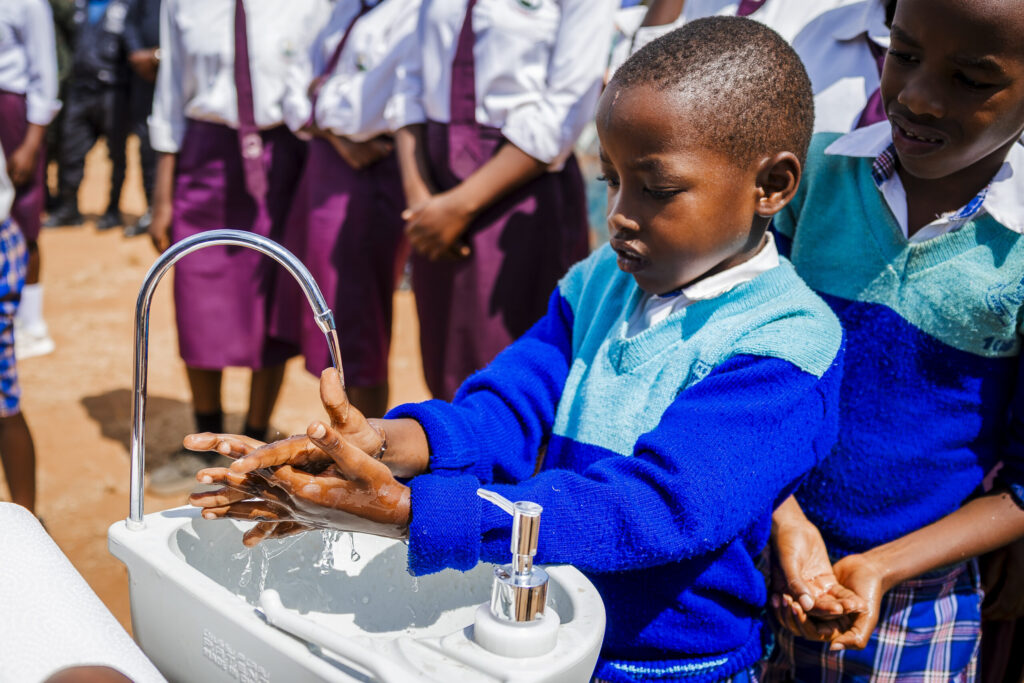
A child washing hands during this year’s celebration to mark the international Day of the African Child.
KAYONZA– Three decades ago, the biggest threats facing many Rwandan children were easy to see. Disease claimed thousands of young lives, malnutrition was widespread and access to healthcare remained a challenge for many families.
Today, much of that picture has changed. Rwanda’s child-development journey has become one of the country’s most remarkable success stories. Vaccination coverage has risen from 86 percent in 1992 to 94 percent in 2025.
Infant mortality has fallen from 85 deaths per 1,000 live births to 27, while under-five mortality has dropped from 151 to 36. Stunting, which once affected more than half of children, has been cut to 27 percent.
The numbers tell the story of a country that has spent decades investing in its youngest citizens.
Yet as Rwanda marked the international Day of the African Child this week, the conversation revealed a new challenge that may not be solved through vaccines, health centres or school construction. It is a challenge that begins at home.
From Survival to Wellbeing
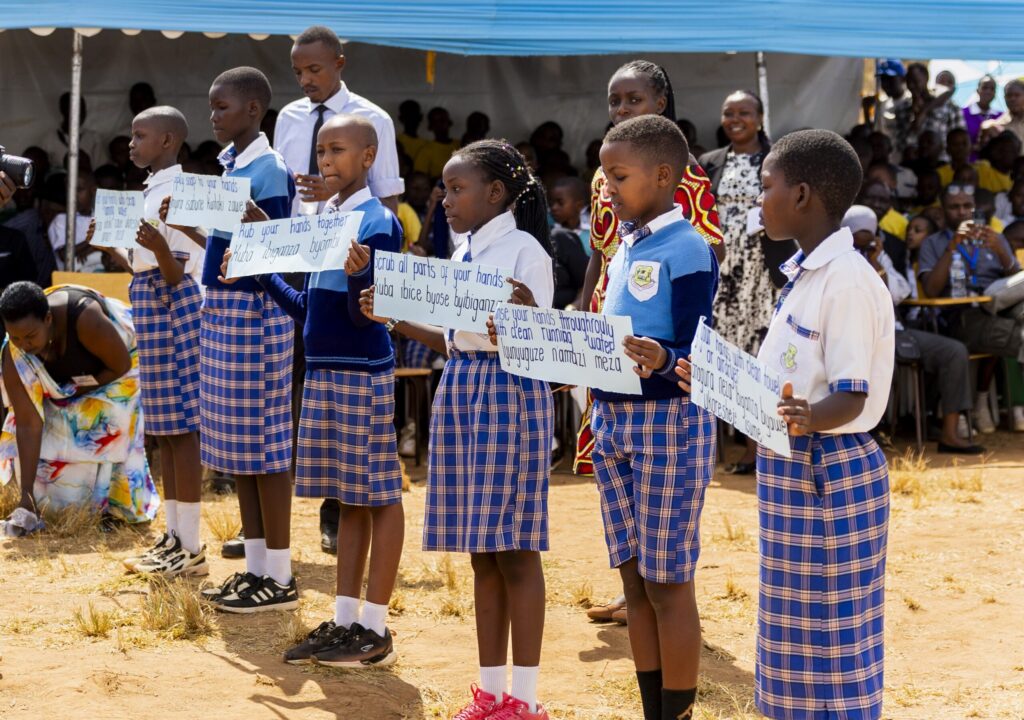
Children carrying placards during the Day of the African Child celebrations.
When children are struggling to survive, the priority is keeping them healthy. When survival improves, attention turns to something less visible but equally important: wellbeing. Development changes the questions a society asks.
During discussions surrounding this year’s Day of the African Child in Kageyo cell, Mwiri sector in Kayonza District, that shift was evident.
Many of the children who spoke were not concerned about access to school or healthcare. Instead, they returned to a surprisingly simple aspect of communication.
“There are many things I would like to share with my mother or father. Even when it is not something new, just talking to them makes me happy,” said Ange Murekatete. Her words were echoed by others.
“We want parents who listen to us, talk to us and guide us instead of beating us,” said Aline Uwase.
Another participant, 12-year-old Moise Manishimwe, highlighted the consequences when such conversations do not happen. “When we are afraid to speak at home, we keep our worries to ourselves,” he said.
The comments came from different children, but they pointed to the same concern. As Rwanda continues to make progress in child welfare, many young people are asking not only for protection and provision, but also for guidance, trust and understanding.
The New Measure of Progress
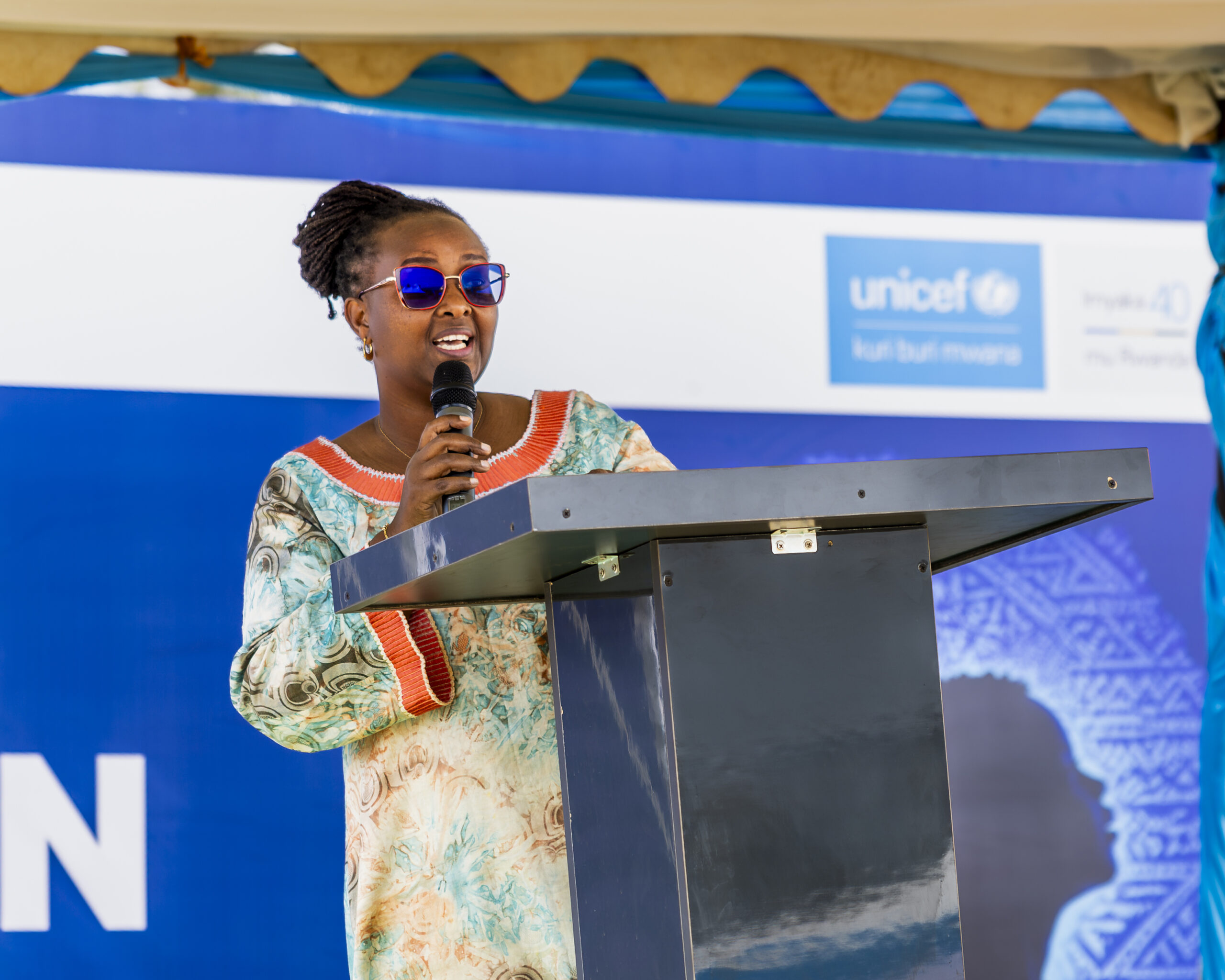
Mireille Batamuriza, the Permanent Secretary in the Ministry of Gender and Family Promotion speaking during the celebrations.
The concerns raised by children reflect a broader reality facing families across Rwanda.
Today’s children are growing up in a rapidly changing world. They are navigating social media, academic pressure, shifting social expectations, and growing questions about their future. These challenges that increasingly require more than traditional forms of guidance.
Mireille Batamuriza, the Permanent Secretary in the Ministry of Gender and Family Promotion (MIGEPROF), cautioned on how parenting must evolve beyond provision and control into everyday communication and guidance within the home.
“Parenting continues through communication. It is protective, guiding, and helps the child understand their responsibilities while instilling Rwandan values. A child is raised within a family,” she said.
She emphasized that good parenting protects children, guides them, reminds them of their responsibilities at every stage of life, and teaches them values that shape them into responsible Rwandans.
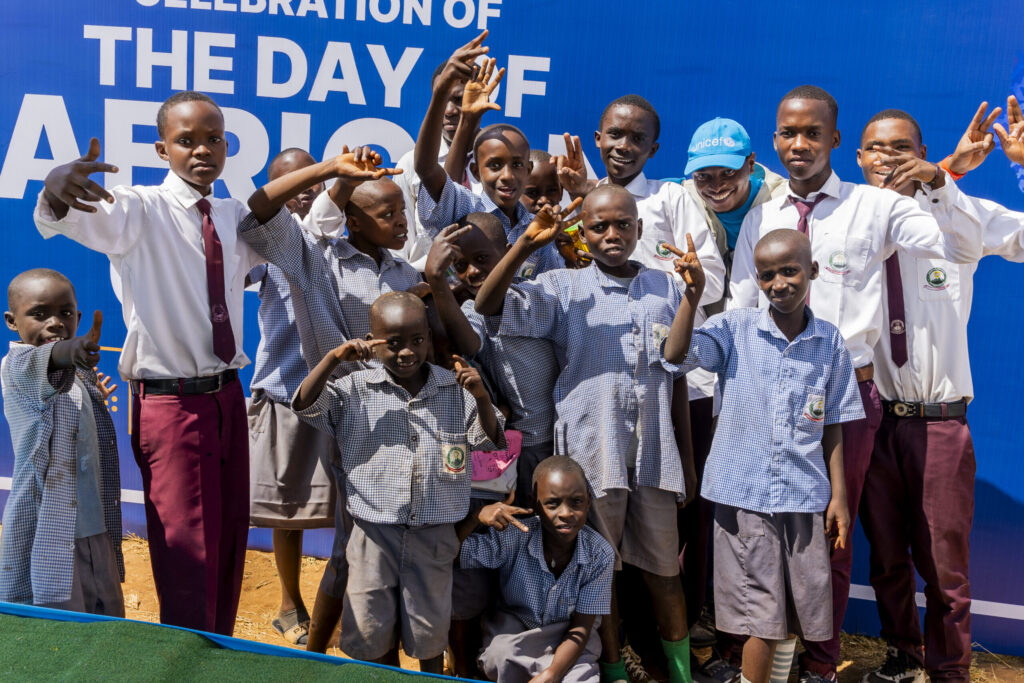
From the perspective of local leadership, Acting Vice Mayor of Kayonza district, Jules Higiro, emphasized the importance of maintaining efforts to address emerging social risks affecting children and adolescents.
“Although much has been achieved, we must continue fighting child abuse, child labour, teenage pregnancies, school dropout, drug abuse, and other challenges that hinder children’s development.”
He also underscored the role of parents in reinforcing values and creating stable environments where children can grow under proper guidance and care.
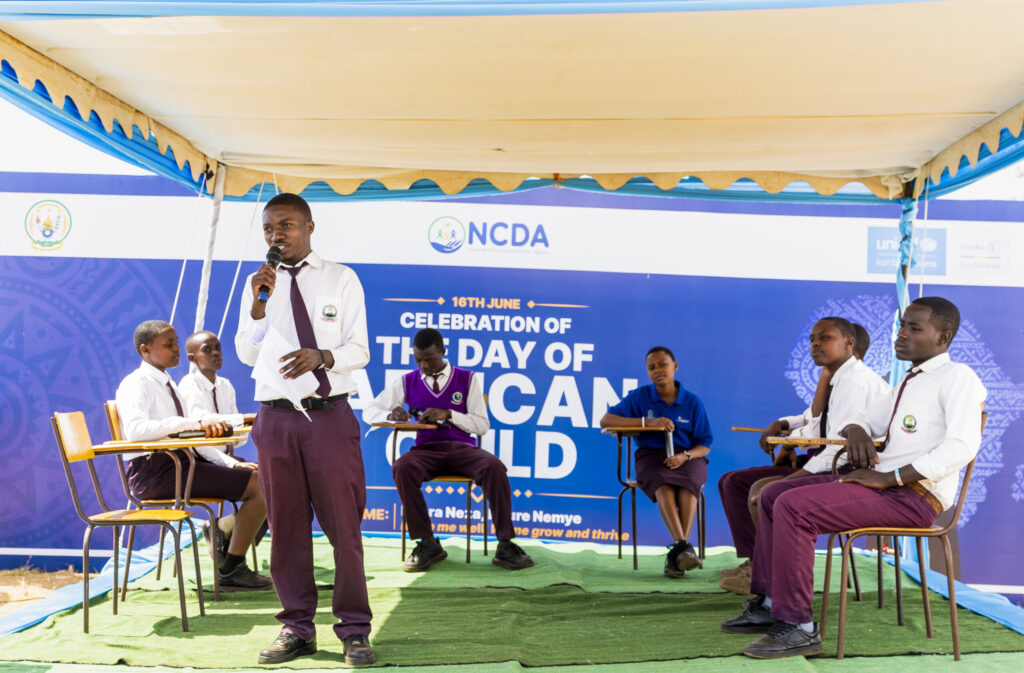
The International Day of the African Child is observed every year on June 16 to highlight the rights and wellbeing of children across the continent.
It was established in 1991 by the African Union in memory of the students who were killed during the 1976 Soweto uprising in South Africa, when young learners protested against the poor quality of education and injustice under apartheid.
The day serves as a reminder of the sacrifices made by those children and calls attention to the continued responsibility of governments, families, and societies to protect children’s rights and improve their living conditions.