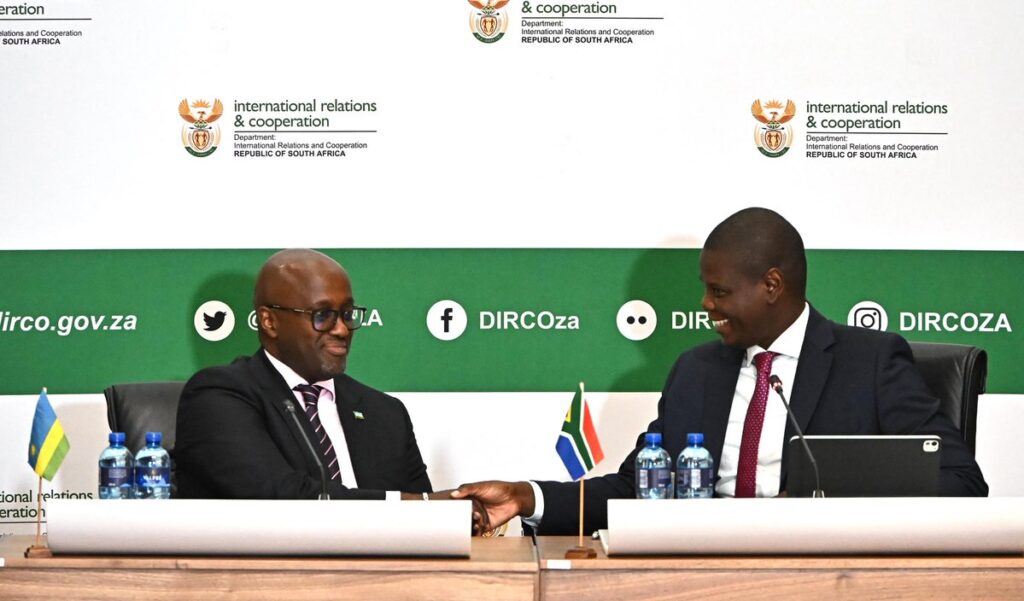
 PRETORIA – As Rwanda and South Africa moved on Wednesday to restore relations after years of diplomatic strain, Rwanda’s Minister of Foreign Affairs and International Cooperation, Olivier J.P. Nduhungirehe looked back to how South Africa stood among the countries that helped Rwanda rebuild after the 1994 Genocide against the Tutsi.
The reminder came during high-level bilateral talks with his South African counterpart, Ronald Lamola, as both governments agreed to accelerate the normalization of relations, revive bilateral cooperation and work toward restoring visas for ordinary Rwandan passport holders.
But beyond the agreements signed in Pretoria, Nduhungirehe used the occasion to revisit a history that, in his view, continues to define the relationship between the two countries.
“Following the 1994 Genocide against the Tutsi in Rwanda, the Republic of South Africa played a significant role in supporting Rwanda’s reconstruction and development efforts,” he said.
“As one of Africa’s largest economies, if not the largest economy, and the leading regional power, South Africa extended assistance across several key sectors, contributing to Rwanda’s recovery and long-term development.”
A partnership that helped rebuild Rwanda
Nduhungirehe said South Africa’s contribution came at a time when Rwanda was rebuilding nearly every institution after the genocide.
He noted that Pretoria invested in rebuilding the country’s human capital by offering scholarships, academic cooperation and professional training that helped prepare a new generation of public servants and professionals.
South Africa also partnered with Cuba to finance the deployment of doctors who helped address Rwanda’s acute shortage of medical personnel in the aftermath of the genocide, while encouraging investment that would later become part of the country’s economic transformation.
One of the most visible examples, he said, was the entry of MTN into Rwanda, which has since grown into one of the country’s leading telecommunications and digital service providers.
“These contributions reflect the strong bilateral relations between Rwanda and South Africa and demonstrate South Africa’s commitment to supporting Rwanda’s recovery, stability and socio-economic transformation in the post-genocide period,” he said.
The minister acknowledged that relations later experienced significant setbacks but argued that those differences should not overshadow the history of solidarity between the two nations.
“Whatever the challenges that happened between our two countries, we believe that the bond between Rwanda and South Africa is unbreakable.”
His South African counterpart echoed that sentiment, saying the two countries share more than a diplomatic relationship. “There is much more that unites us than divides us,” Lamola said.
He noted that both countries emerged from painful chapters in their history, apartheid in South Africa and the Genocide against the Tutsi in Rwanda, and therefore carry a shared responsibility to promote peace, African unity and development.
Turning the page
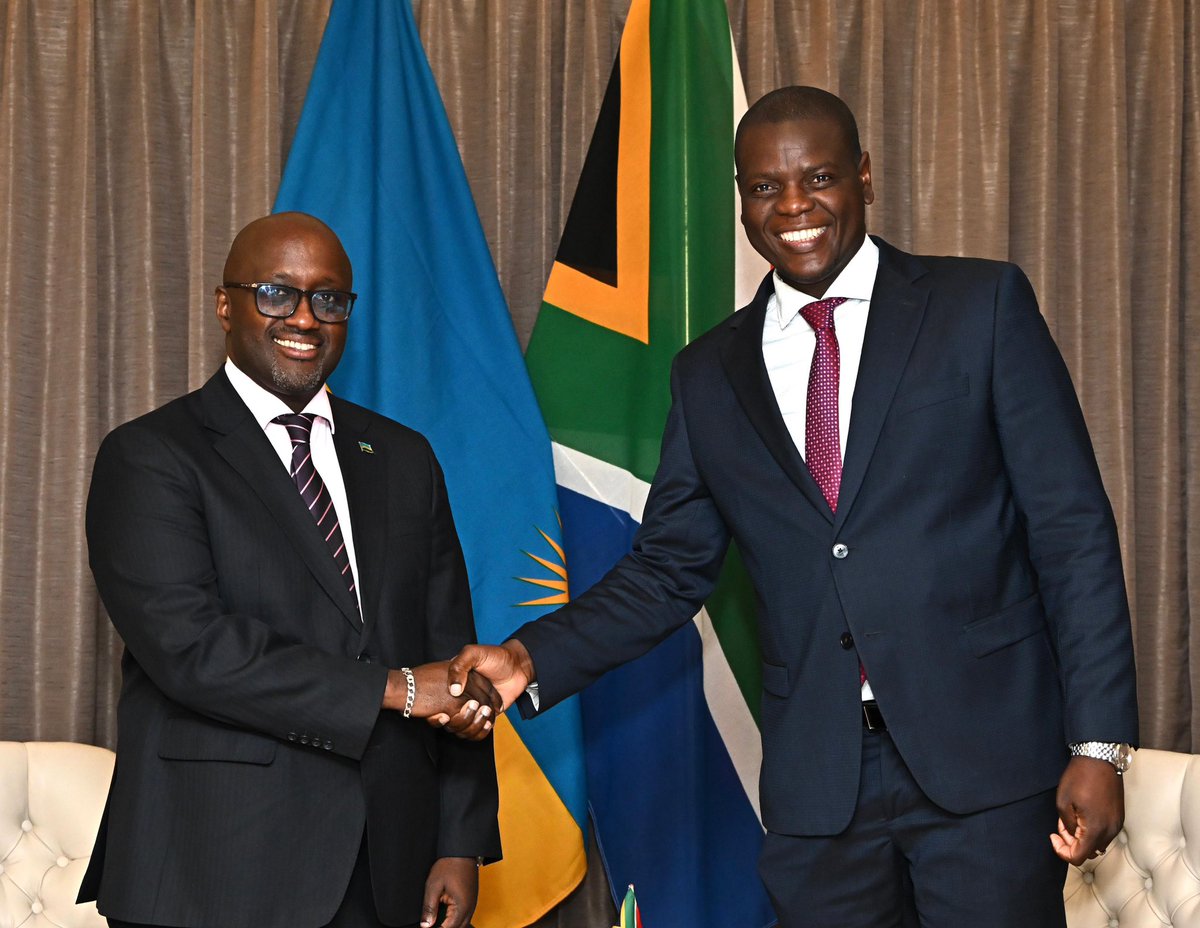
The historical reflections formed the backdrop to what both ministers repeatedly described as the beginning of a new chapter in bilateral relations.
Nduhungirehe said the progress achieved in Pretoria reflected the determination of Presidents Paul Kagame and Cyril Ramaphosa to move beyond past disagreements through dialogue and mutual respect.
“Today’s meeting reflects the commitment of our heads of state to open a new chapter in Rwanda-South Africa relations. It demonstrates our shared belief that dialogue, mutual respect and constructive engagement are the best way to address differences and strengthen cooperation,” he said.
The two countries agreed to revive the Joint Commission for Cooperation, which has been inactive for years, with Rwanda expected to host the next session during the first quarter of 2027.
They also committed to expanding collaboration in trade, investment, tourism, education, innovation, peace and security, while facilitating the resumption of visas for holders of ordinary Rwandan passports within the next 12 months.
Nduhungirehe said stronger bilateral ties would have benefits beyond the two countries. “Stronger bilateral relations will not only benefit our two countries but will also contribute to regional stability and African unity.”
Looking beyond aid
Beyond the bilateral agenda, the Rwandan minister used the occasion to make a broader appeal for African economic self-reliance, arguing that the continent has reached a point where it should depend more on its own markets than on partners outside Africa.
“We have been independent for many of us for more than 60 years, but we are still under development aid. For us, it’s not sustainable,” he said.
He urged African countries to take fuller advantage of the African Continental Free Trade Area by increasing trade and investment among themselves.
Using a simple but symbolic example, he said, “I was telling my brother Lamola that we should, in our hotels and restaurants, have South African wine rather than wine coming from outside the continent.”
Rebuilding relations with South Africa is not only about resolving the disputes of the past, but also about restoring a partnership that can help drive Africa’s economic integration, strengthen regional cooperation and advance a shared vision of a more self-reliant continent.