


KIGALI – Plans to construct Kigali’s first centralized sewerage system have been sent back to the drawing board after engineers discovered the original design would have required digging up nearly 80 percent of the city’s roads to install underground pipelines.
The revelation emerged as the Water and Sanitation Corporation (WASAC Group) appeared before Parliament’s Public Accounts Committee (PAC) to respond to concerns raised in the Auditor General’s latest report.
WASAC Chief Executive Officer Dr. Asphat Kabaasha told lawmakers that the project had to be redesigned after officials realized the proposed pipeline network would run beneath most of Kigali’s road infrastructure.
“We found that the way the project had been designed, most of the sewer pipelines would pass through roads, meaning nearly 80 percent of Kigali’s roads would have to be dug up. That is why we decided to review and redesign the project,” he said.
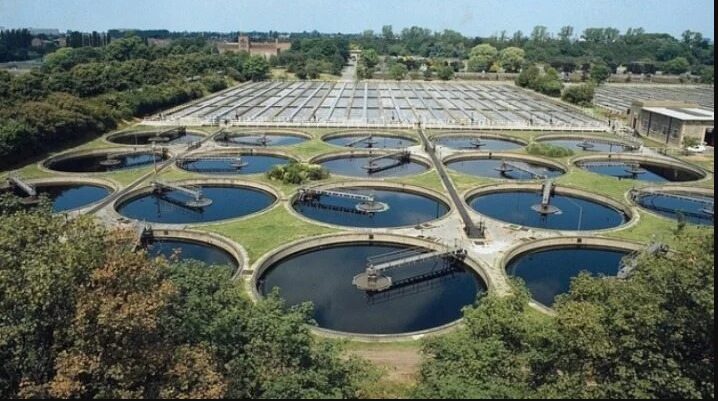
Construction of the Kigali Centralized Sewage System (KCSS) project, valued estimated cost of €96 million (over Rwf 150 billion. was launched in July 2023 and was expected to be completed by January 2026. It would involve a mega wastewater treatment plant at Giti cy’Inyoni and a 92-kilometer pipeline network.
However, the Auditor General found that by March 2026 the completion deadline had already passed, yet the project’s engineering design had still not been finalized.
Although consultants had completed about 90 percent of the design work, only 57 percent had received official approval.
The report warned that continued delays could slow Kigali’s efforts to establish a modern wastewater management system and urged WASAC to accelerate implementation.
WASAC told the committee that it terminated the consultant’s contract in May this year after concluding that the work had not met expectations.
The utility has since begun discussions with the Ministry of Infrastructure (MININFRA) and the Ministry of Finance and Economic Planning (MINECOFIN) on redesigning the project.
Lawmakers also questioned why the same contractor involved in the failed assignment had appeared in another procurement process.
PAC Chairperson Valens Muhakwa asked WASAC what confidence it had in a contractor whose earlier contract had been terminated.
WASAC clarified that the contractor had not been awarded a new contract after failing the first one. Instead, officials said the procurement processes were running concurrently. The first contract had reached about 95 percent of the design phase before serious shortcomings were identified, prompting the decision to terminate the contract and review the entire project.
Water Supply Targets Missed
The Auditor General’s report also found that WASAC failed to implement water rationing schedules as required during periods of water shortages.
Under Rwanda Utilities Regulatory Authority (RURA) regulations, at least 95 percent of published water rationing schedules should be respected, with every household receiving water at least three times a week.
However, an audit covering July to September 2025 found that residents in Agatare, Taba, Nkuzuzu, Gishaka, Musave-Rebero-Rugando and Buliza received water only one to five times over a three-week period instead of the expected nine times.
As a result, compliance with the published rationing schedules ranged from 11 percent to 56 percent, well below the regulatory target.
The report further highlighted continued losses from non-revenue water—treated water that is produced but never generates income because it is lost through leaks, illegal connections, theft or faulty metering.
During the financial year ending June 30, 2025, WASAC produced 85.75 million cubic metres of water but billed customers for only 53.33 million cubic metres.
This means more than 32.4 million cubic metres, equivalent to 37.8 percent of all water produced, generated no revenue.
Although this represented a slight improvement from 39.5 percent the previous year, the Auditor General estimated the losses at Frw10.4 billion, based on the lowest water tariff of Frw323 per cubic metre.
The findings highlight the twin challenges facing Rwanda’s water utility: modernizing critical infrastructure while reducing operational losses that continue to place significant pressure on its finances.
