



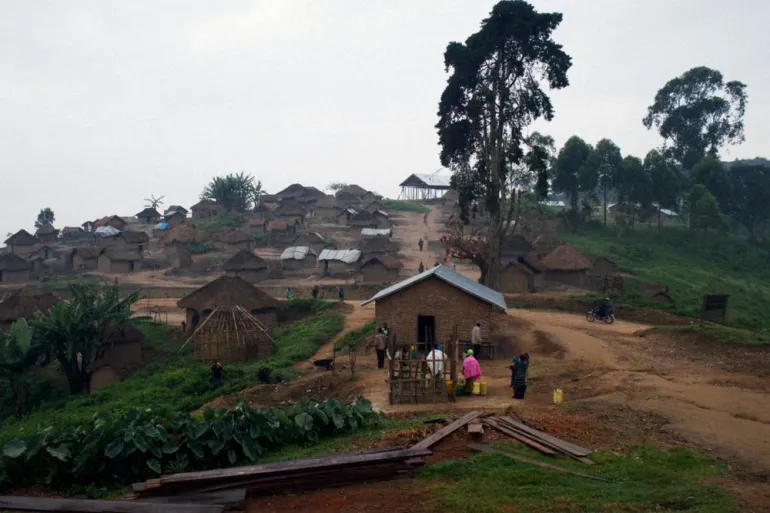
A view of Buleusa – a village deep in jungles of Walikale Territory, North Kivu region – early in the morning. Members of the Democratic Forces for the Liberation of Rwanda (FLDR) have this well established settlement (Photo by Aljazeera)
When the Washington peace agreement between the DRC and Rwanda was signed on December 4, 2025, it rekindled hopes that years of instability in the Great Lakes region could finally give way to a credible path toward peace. Those hopes are now fading. But the question is: who is to blame?
The Washington Accords were built around a simple but essential principle: commitments must be honored by all parties.
The two key issues were clear. Congo pledged to neutralize the FDLR, while Rwanda committed to lifting its defensive measures. A concept of operations had been agreed upon as early as October 2024 in Luanda, Angola. It was reaffirmed in June 2025. The whole process was supposed to take 90 days, meaning that by the time the Washington Accords were signed, the FDLR issue should have been well on its way to resolution. But that has not happened.
Washington, as the mediator, expected both Kigali and Kinshasa to move swiftly from signatures to implementation. Recently, U.S. Secretary of State Marco Rubio stated that he expected Rwanda to have withdrawn troops from Congo by mid-July.
Rwanda’s Foreign Minister Olivier Nduhungirehe confirmed that this was actually Rwanda’s own proposal to accelerate implementation. Contrary to what many concluded following Rubio’s intervention, this mid-July deadline was neither a U.S. ultimatum nor a one-sided engagement that imposed no obligations on Kinshasa.
This meant that by mid-July, there were genuine expectations that concrete progress would already be visible, particularly regarding the neutralization of the FDLR.
But mid-July has passed, and the question remains unanswered: where is the neutralization of the FDLR?
The responsibility for this delay lies squarely with the Tshisekedi administration, which continues to avoid confronting the very security threat at the center of the regional crisis. Instead of taking decisive action against the FDLR and ending its collaboration with the group, Kinshasa has continued to shift blame toward Rwanda, accusing Kigali of maintaining defensive measures while ignoring the conditions that prompted them in the first place.
It takes two to tango. A peace agreement cannot succeed when one party demands concessions from the other while refusing to fulfill its own obligations. Rwanda has been clear and consistent: its defensive measures are not an offensive strategy but a response to a persistent security threat posed by the continued existence and activities of the FDLR. Kigali has repeatedly stated that these measures can only change once the FDLR is effectively neutralized.
The question Kinshasa must answer is straightforward: what concrete steps has it taken to dismantle the FDLR networks operating on Congolese territory? Instead of addressing this question, the Congolese government has repeatedly attempted to portray Rwanda as the obstacle to peace while avoiding scrutiny over its own relationship with armed groups that threaten regional stability.
The continued presence of FDLR elements within Congolese armed structures and their cooperation with various Wazalendo militias, both of which are documented in UN experts’ reports, has raised serious concerns about Kinshasa’s commitment to the peace process. This reality directly contradicts claims from Kinshasa that it is fully committed to the Washington Accords.
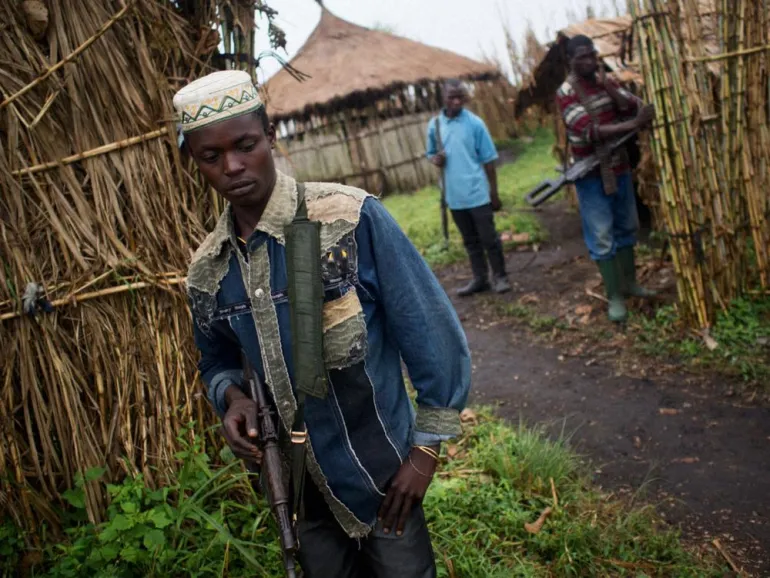
Armed FDLR combatants stand guard in Buleusa, Walikale Territory in North Kivu
In brief, Kinshasa’s approach undermines the very agreement it signed. The FDLR is not a new issue. It represents one of the most persistent security threats in the Great Lakes region, with a history rooted in the aftermath of the 1994 Genocide against the Tutsi. Any serious peace initiative must address this reality instead of treating it as a secondary concern.
The Washington peace agreement was not designed to provide political cover for delays or inaction. It requires both sides to take measurable steps toward resolving the conflict.
At this stage, either Kinshasa is held to its signature, or the fragile peace process risks collapsing into yet another cycle of violence.
