



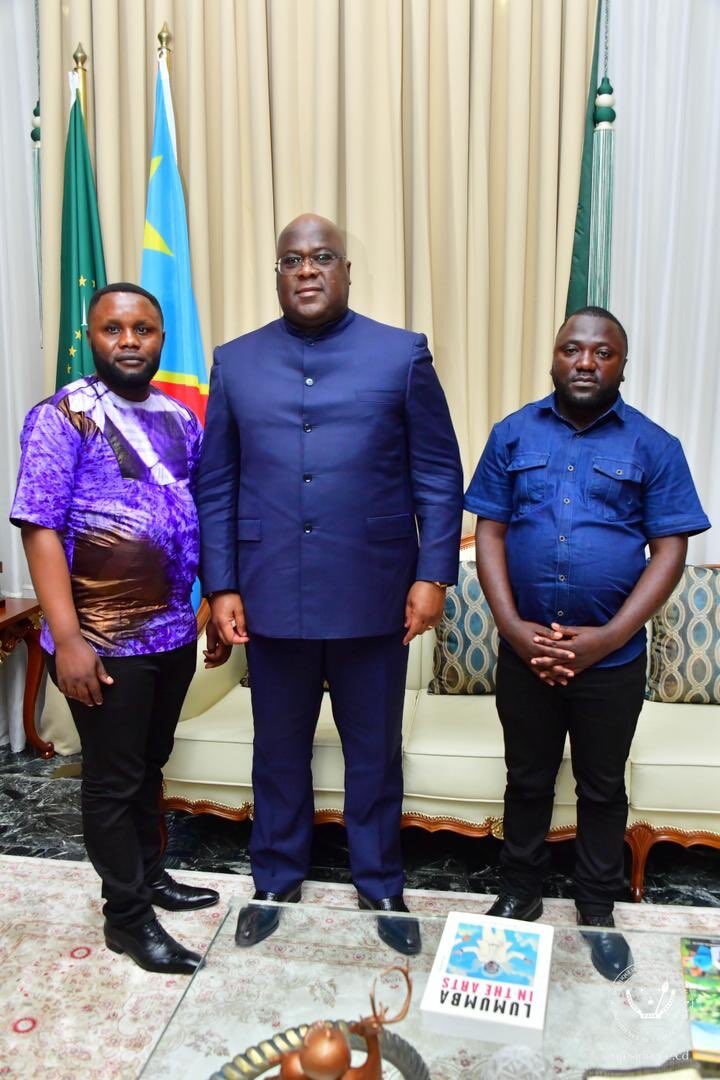
Cultivating genocide ideology: Felix Tshisekedi with l-r “Jules Mulumba” FDLR Nyatura and Ndagendange APCLS Militia
The Democratic Republic of the Congo made a clear commitment before regional and international partners: the FDLR would be neutralized. That commitment was not made behind closed doors or based on vague promises. It was formalized through the Concept of Operations (CONOPS) and later reaffirmed in the Washington Accords.
Yet, instead of implementing those commitments, Tshisekedi’s government has chosen to defend the very group it pledged to dismantle and act as its diplomatic conduit in regional and international meetings.
Indeed, Congolese Minister of Regional Integration Floribert Anzuluni has been touring Europe and Africa carrying a document signed by Gaston Iyamuremye, alias Victor Byiringiro, the president of the FDLR. The document is presented as evidence that the DRC has fulfilled its obligations under the Washington Agreement through what is described as the group’s voluntary disarmament.
However, the contents of that document reportedly consist primarily of the FDLR’s own political demands. In other words, Kinshasa is moving the goalposts from neutralization to political lobbying. Rather than demonstrating concrete progress in dismantling the FDLR, the Congolese government is doing the opposite: serving as the spokesperson of a genocidal movement.
For American mediators, this should raise an obvious question: How can the demands of the FDLR be presented as evidence that the Washington Accords have been implemented?
The peace deal does not call for negotiations over the FDLR’s political aspirations, as no reasonable political actor could entertain the notion that a genocidal movement could have legitimate political aspirations. The deal’s objective is explicit: the neutralization of the FDLR as an armed group.
Here, neutralization means disarmament, dismantling of its military structures, and the group’s repatriation in accordance with the agreed framework.
In fact, on 31 October 2024, under the facilitation of Angola and the African Union, Rwanda and the DRC signed the Concept of Operations (CONOPS), a technical framework designed to pave the way for military operations to that end.
The CONOPS established a defined operational timeline. According to the agreed coordination schedule, the neutralization of the FDLR was to be completed within 90 days. The timeline began in Luanda in October 2024 and expired at the end of January 2025, with not a single military operation conducted by the Congolese army against the FDLR.
When the Washington Accords were later negotiated, the same CONOPS framework was incorporated into the agreement, with both Rwanda and the DRC reaffirming their commitment to its implementation.
The contrast between the DRC’s signed commitments and its current diplomatic efforts is difficult to ignore. Instead of demonstrating operational action against the FDLR, Kinshasa is now presenting documents originating from the group’s own leadership to international audiences, legitimizing an organisation whose continued existence remains one of the central security concerns addressed by both the CONOPS and the Washington Agreement.
As things stand, there is no lingering question about whether the Washington Accords are being disregarded and violated by Kinshasa. While the Tshisekedi administration has shifted from implementing the agreements to advocating on behalf of its proxy, Rwanda has consistently maintained that the FDLR is not a political stakeholder but a genocidal armed group whose continued presence poses an existential threat to the country and, by extension, a threat to regional security.
The implementation of the Washington Accords ultimately depends on the fulfilment of the commitments undertaken by both parties. Should Kinshasa continue to disregard the peace deal, the latter’s death should come as no surprise to its American guarantors.
