



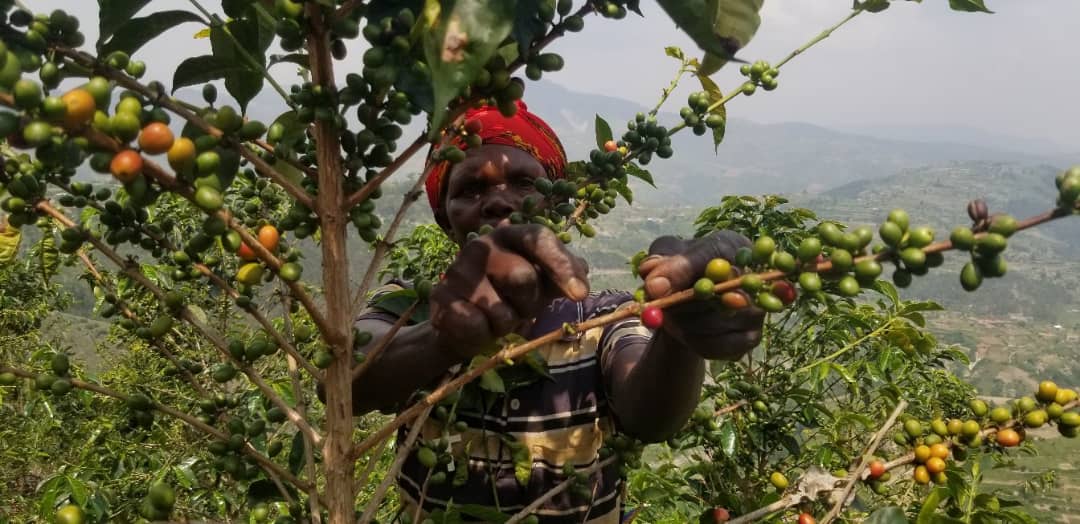
Coffee is one of Rwanda’s leading exports
KIGALI — Rwanda is not one of Africa’s largest countries, and it will never win every agricultural contest by producing the most.
That is exactly why the Best of Rwanda 2026 coffee competition deserves attention beyond the coffee sector.
The competition offers a simple business lesson: when you cannot compete on scale, you can compete on value.
The National Agricultural Export Development Board (NAEB) says the competition is designed to identify exceptional coffees, connect producers with premium specialty buyers and strengthen Rwanda’s position in global markets.
The national jury is evaluating coffees from August 13 to 18, followed by an international jury later this month.
But the bigger story is not just about finding Rwanda’s best coffee. It is about how a small country can build an advantage by becoming known for something customers are willing to pay more for.
From volume to value
Rwanda’s coffee sector has already shown what this strategy can look like.
NAEB reported that coffee export revenues reached a record US$148.6 million in 2025, from 23,860 tonnes of green coffee.
Export volume increased by 39% from the previous year, while revenue jumped 65%. The average export price also increased by 19%, reaching US$6.2 per kilogramme.
The Best of Rwanda competition shows the potential for an even bigger premium.
In the first auction, winning lots averaged US$24.70 per kilogramme, while the top lot reached US$71.80.
In 2025, one winning coffee went even further, setting a new auction record of US$88.18 per kilogramme.
These figures do not mean Rwanda should stop trying to produce more coffee.
Volume matters. Productivity matters. Farmers need higher yields and reliable markets.
But the numbers reinforce an important business principle: growth is not only about selling more units. It is also about increasing the value of what you sell.
Know who you are selling to
That starts with a basic question: Who is your customer?
Rwanda has built a reputation around high-quality Arabica Bourbon coffee. NAEB describes Rwandan coffee as high-altitude Arabica known for its sweetness, bright acidity and body.
The country is also working to strengthen its position in specialty markets in Europe, North America and emerging markets such as the Middle East.
That is market segmentation in practice.
A customer buying mainly on price behaves differently from a specialty-coffee buyer who cares about origin, processing, flavour and consistency.
Research on specialty coffee has also found that characteristics such as origin, quality ratings and certification can influence how much consumers are willing to pay.
The lesson for young entrepreneurs is not that premium pricing is always better.
It is that your business model must match a clearly defined customer.
A Rolex and a basic watch both tell time, but they are not competing for exactly the same buyer or selling the same promise.
Coffee works in much the same way.
One customer may want the cheapest acceptable cup. Another may care about altitude, coffee variety, processing method, farmer story and tasting notes.
Trying to sell a premium product to a price-focused customer can fail just as easily as trying to compete on price without the scale to survive.
A lesson beyond coffee
This is where Rwanda’s coffee strategy becomes relevant to businesses far beyond agriculture.
Before designing a product, an entrepreneur should be able to answer four questions:
Who is my customer? What does that customer value? What makes my product different? And what price can that customer realistically afford?
Only then should product design, branding and pricing follow.
For farmers and processors, that means consistency and quality control.
For exporters, it means understanding which markets value particular characteristics.
For young entrepreneurs, it means resisting the temptation to build a product first and look for customers later.
The same principle can apply to tourism, fashion, technology, food processing and professional services.
A small company may never be able to match a multinational on production volume or price.
But it may be able to offer something more specialised, more reliable or more distinctive.
Small does not mean weak
Rwanda does not have to become the world’s biggest coffee producer to become one of the origins that buyers deliberately seek out.
That is the larger business lesson behind Best of Rwanda.
You do not always win by becoming bigger than your competitors. Sometimes you win by understanding your market so well that the right customer is willing to pay more to find you.
Sannan Khan is a career and relationship clarity coach based in Kigali, Rwanda.
