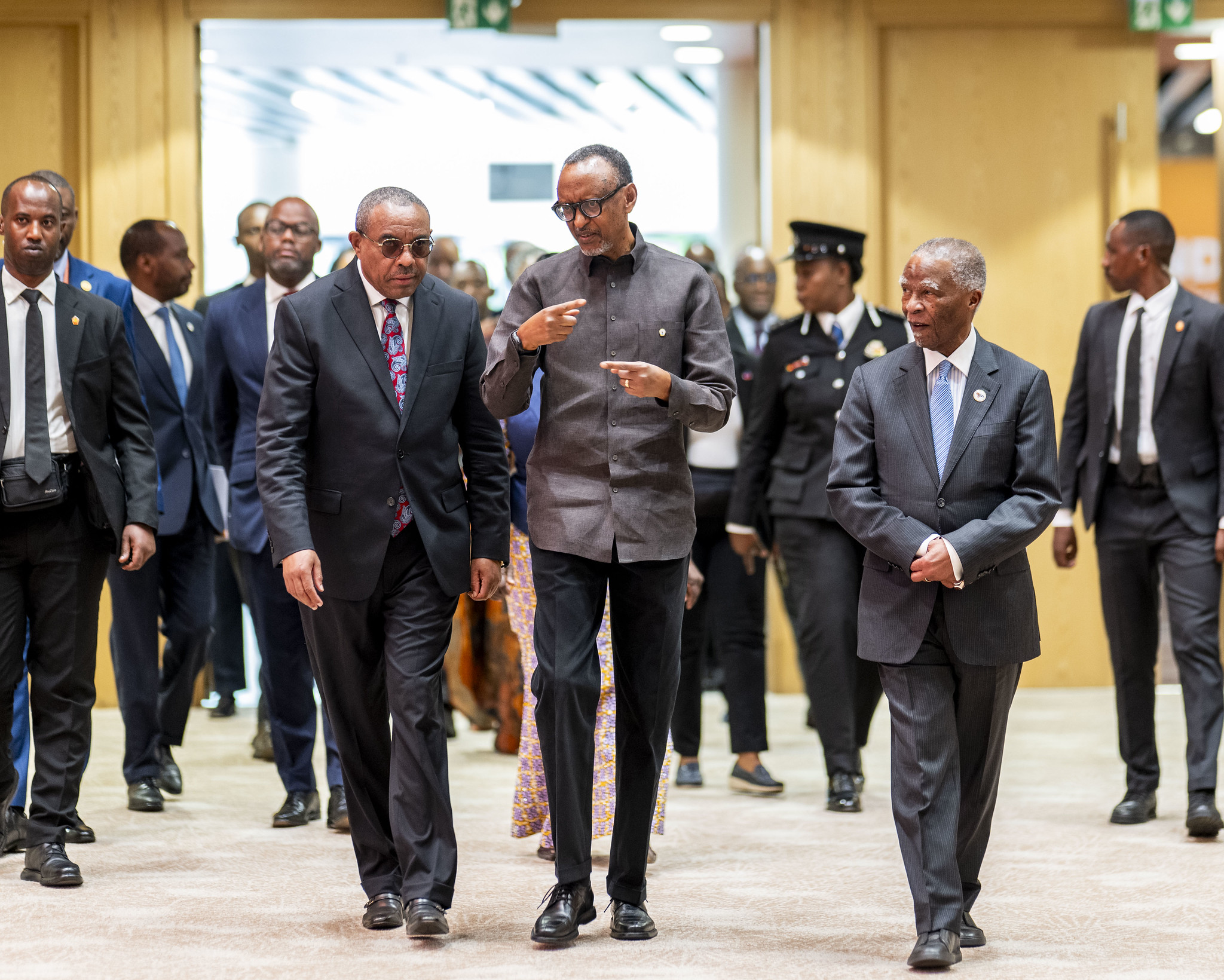
President Paul Kagame, Thabo Mbeki and Hailemariam Desalegn arrive for the Africa Mindset Reset Forum in Kigali.
KIGALI – Long before they occupied presidential offices, negotiated with world leaders or helped shape the political direction of their countries, Paul Kagame, Thabo Mbeki and Hailemariam Desalegn were young people trying to make sense of difficult circumstances around them.
Their paths were different.
Hailemariam grew up in Ethiopia and witnessed famine that would eventually influence his choice of career. Mbeki came of age under apartheid South Africa and became politically active as a teenager. Kagame spent much of his childhood in exile after his family fled Rwanda.
Decades later, the three found themselves sharing a stage in Kigali on Day One of the inaugural Africa Mindset Reset Forum, reflecting not on their time in power, but on the experiences that helped shape the people they became.
The Famine That Changed Hailemariam’s Path
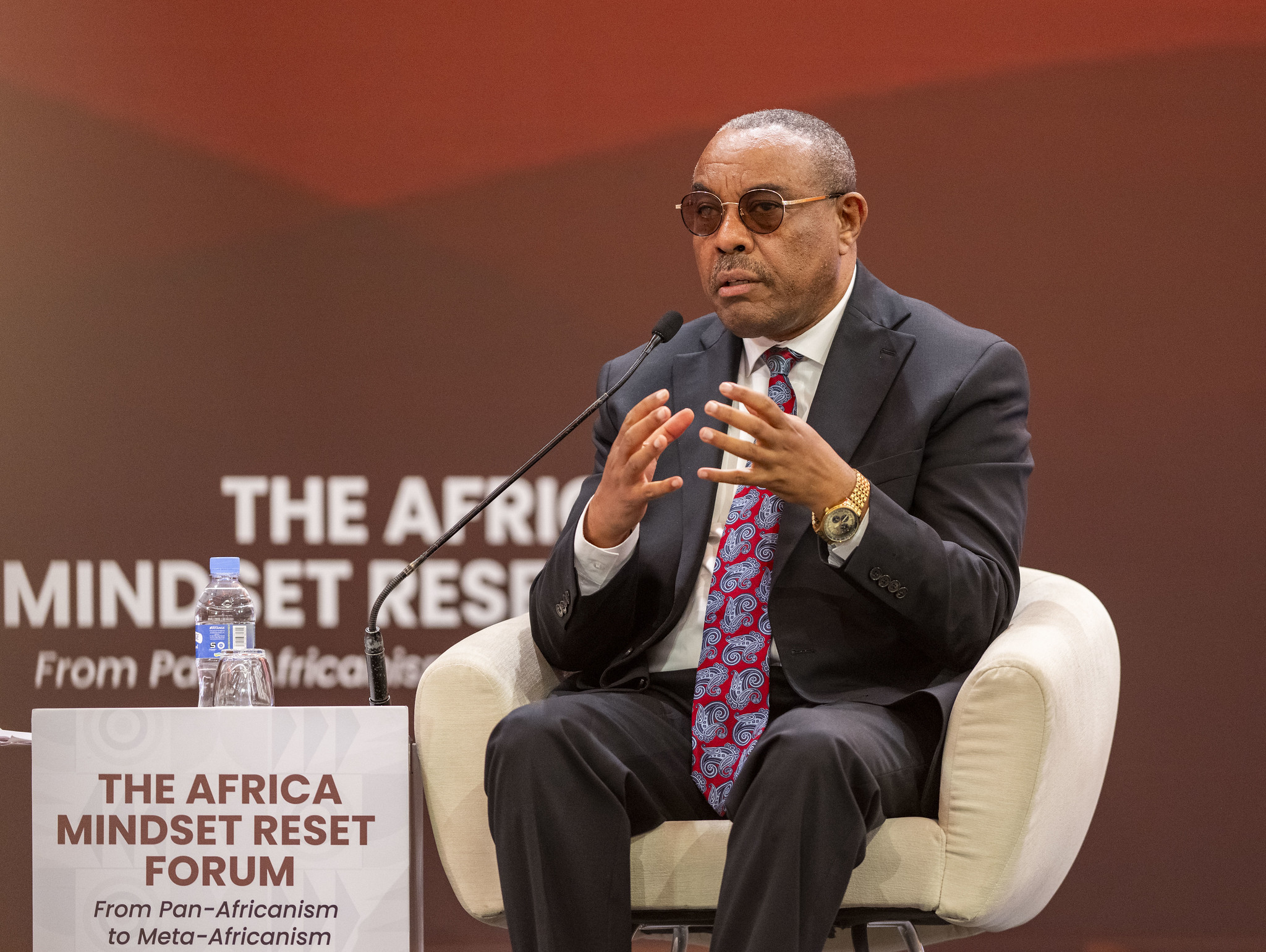
The defining experience for Hailemariam Desalegn came when he was nine years old.
Hailemariam grew up in southern Ethiopia, an area known for producing food, yet witnessed famine around him. The experience stayed with him and eventually influenced his education and political career.
The defining experience came when he was nine. “The famine I experienced when I was nine years old changed my career and my life and my political engagement as well,” he recalled.
Hailemariam eventually became a water engineer because he wanted to become an irrigation engineer and help change Ethiopia’s ability to produce its own food.
Years later, he would confront the same problem from inside government. Ethiopia had to change not only its agricultural production but also the mindset of farmers who had become accustomed to food assistance.
Hailemariam recalled a joke that captured how deeply that dependence had taken root: “Our farmers were saying, let the rain fall in Canada, because the food aid comes from Canada.”
In order to turn those farmers into producers under his rule, Hailemariam and his leadership invested in agriculture and agricultural extension, while trying to put its land, water and people at the centre of development.
“The mindset shifted, when you see practically,” he said, describing the lesson he carried from that experience.
For Hailemariam, the memory of famine had therefore become a childhood scar that completely changed his thinking. It became a reason to spend his life trying to change the conditions that had produced it.
Mbeki: Choosing A Purpose and Staying with It
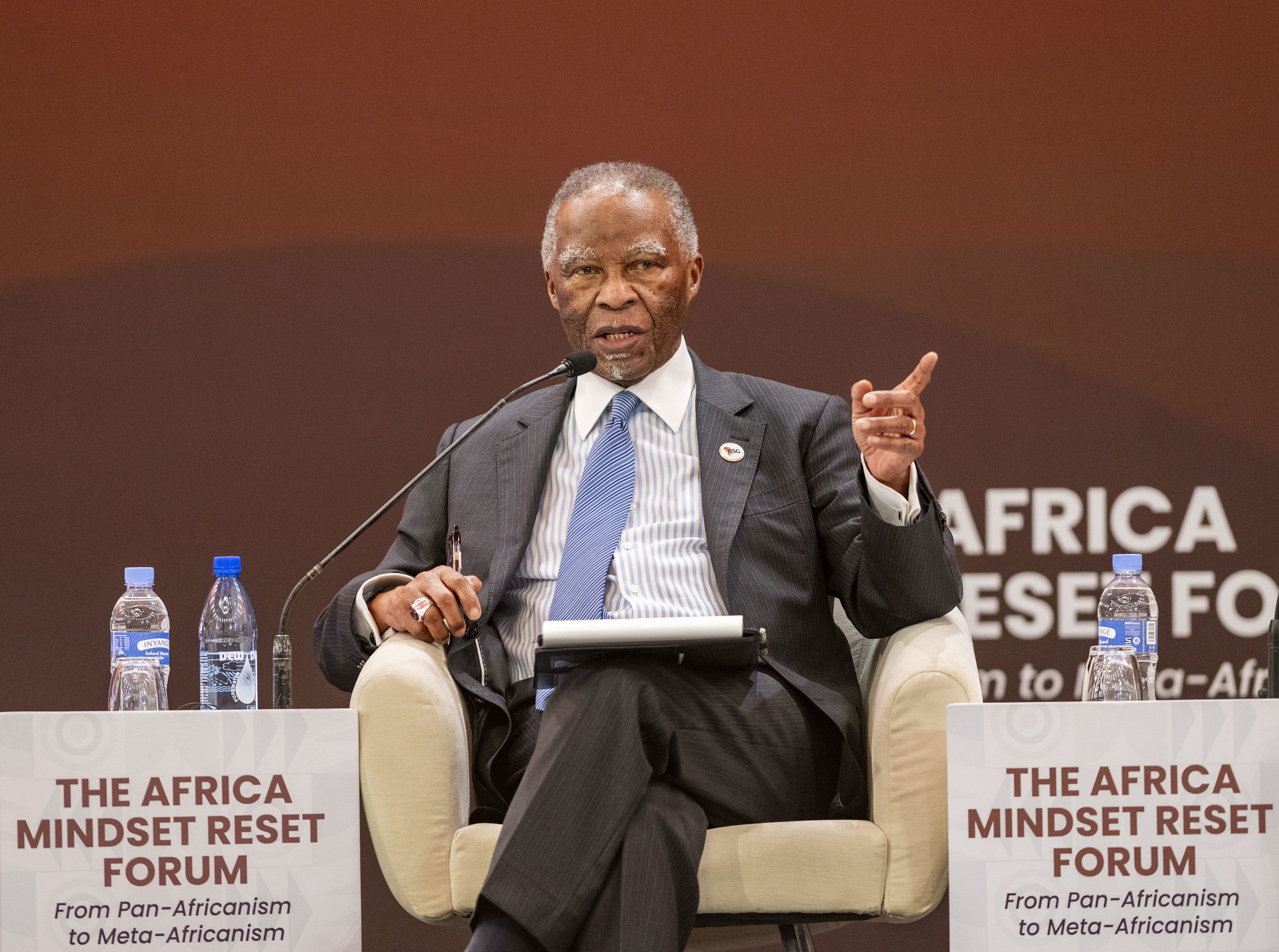
Thabo Mbeki joined the ANC Youth League at about 13 and a half.
Mbeki’s formative years unfolded under apartheid South Africa. He joined the ANC Youth League at about 13 and a half, saying young people of his generation already understood that the system around them was not right.
“It was clear to us as young people that the system is wrong. We had to do something to change it. People had to make a choice and identify what purpose they attach to their lives,” he recalled.
That decision eventually took him into exile and the liberation struggle. But when he reflected on his youth, Mbeki focused less on the circumstances that produced his political journey but more on the choice he and others made to confront them.
Having made that choice knowing it could come at a high cost, his generation understood that such choices should not be confined to personal ambitions but should have an impact on other people’s lives.
“We decided to shape the kind of life we wanted, irrespective of the fact that we were also aware that by doing that, the life we are looking for may not be lived,” Mbeki said.
That is why his message to young Africans was not simply to have ambition, but to remain committed when progress becomes difficult.
Kagame: The Refugee Child Who Refused to Accept Statelessness
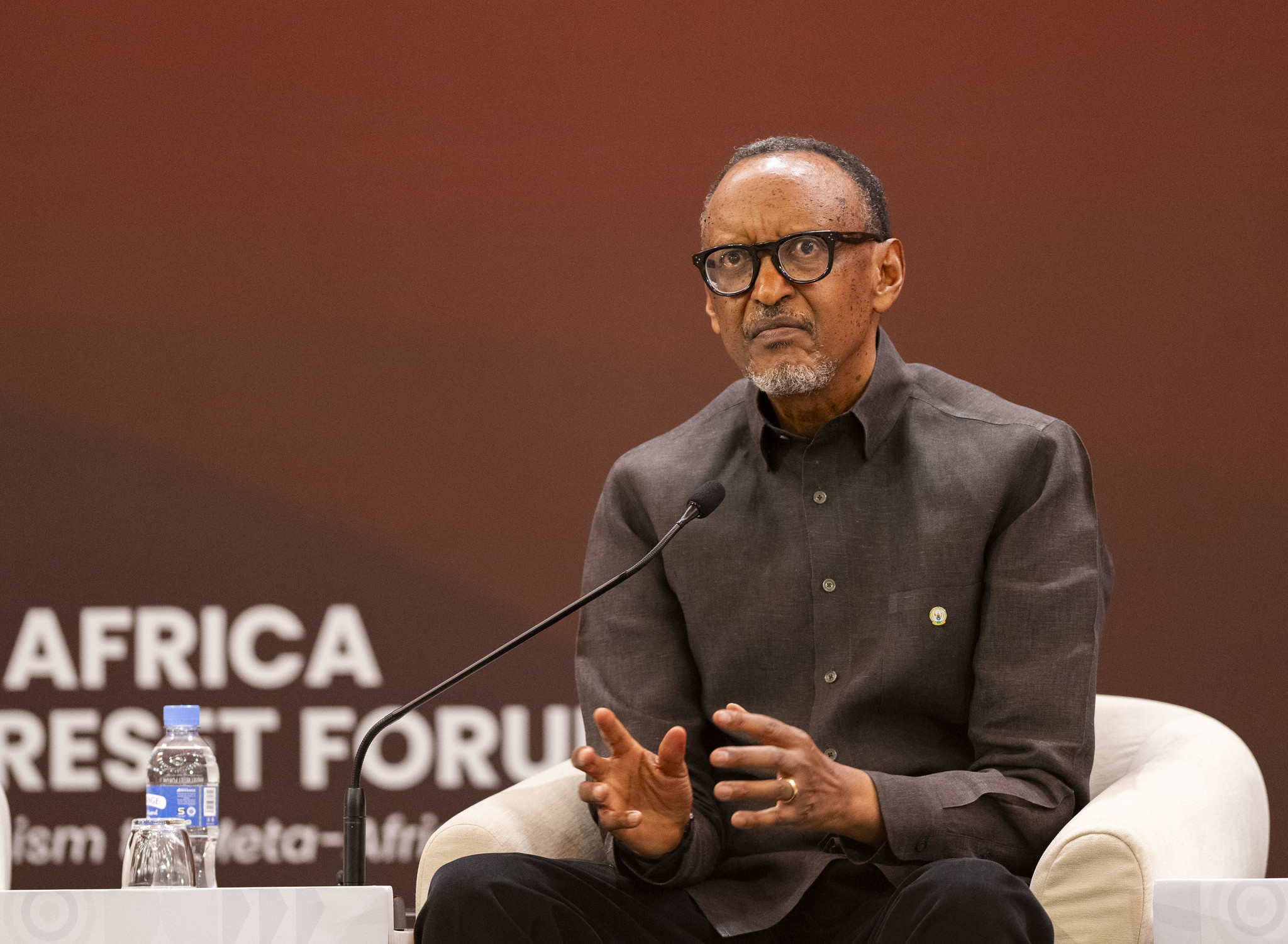
Kagame’s strongest reflection is about what survivors of his generation have done with the history they inherited.
Kagame’s childhood was shaped by displacement.
His family fled Rwanda when he was four, and he spent much of his childhood and youth as a refugee in Uganda. The experience created an early determination that his family could not remain stateless forever.
“We grew up into this kind of determination to say, no, we can’t just live stateless. We can’t live as refugees forever. We had to do something to try and build a life that is worth something,” Kagame said.
The violence that had forced Rwandans into exile had begun decades before the 1994 Genocide against the Tutsi. Some of his relatives who could not escape were killed.
“If I lose a life as a refugee, I don’t think I have lost much,” he recalled thinking such circumstances could have led people to lose hope. For him, they became a reason to attempt something different.
The journey came at a heavy cost. Those who were not lucky didn’t make it, those who were lucky made it. But Kagame’s strongest reflection was about what survivors do with the history they inherit.
For three leaders whose childhoods were marked by famine, apartheid and exile, the experiences were profoundly different.
Yet when they look back at the young people they once were, each describes a moment when hardship becomes a reason to choose a direction rather than accept the circumstances around them.
Why Reflect Now?
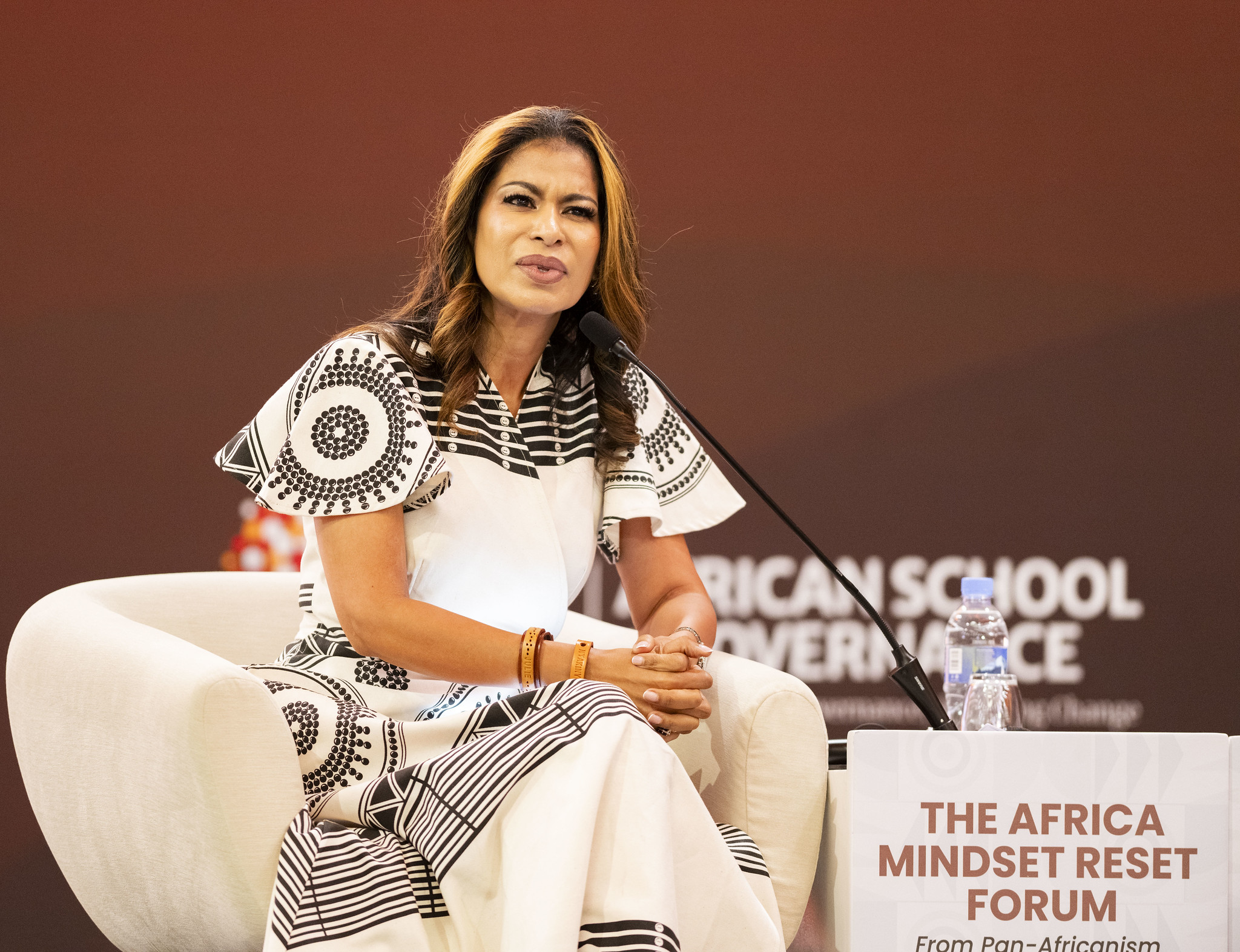
Dr. Julie Gichuru asked the panel what Africa’s most urgent mindset shift should be, then turned the question to the audience.
These personal stories came after moderator Dr. Julie Gichuru asked the panel what Africa’s most urgent mindset shift should be. The discussion had already centered on a question that went beyond identifying Africa’s problems.
If the continent has people, resources, policies and ideas, Gichuru wondered what is stopping it from turning those advantages into results.
The question was later turned towards the room itself, telling the leaders that the young people listening had different problems from those they faced at the same age and asking them to remember where they were when they were young.
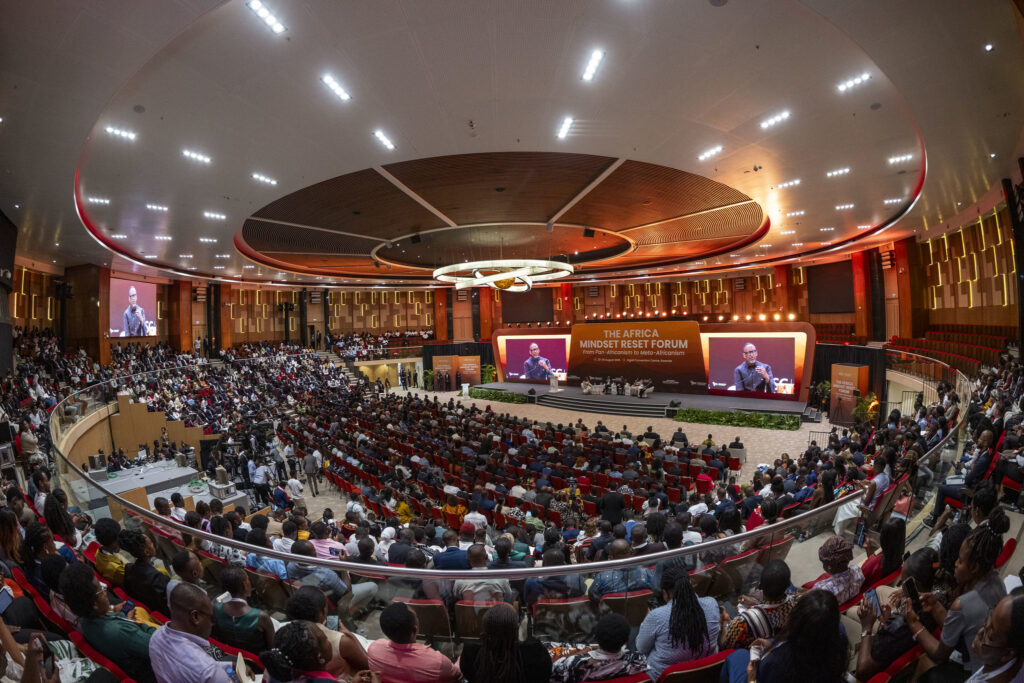
The hall was filled largely with young people, including a strong presence of content creators and young Africans who had already built ideas, platforms and initiatives with their own hands.
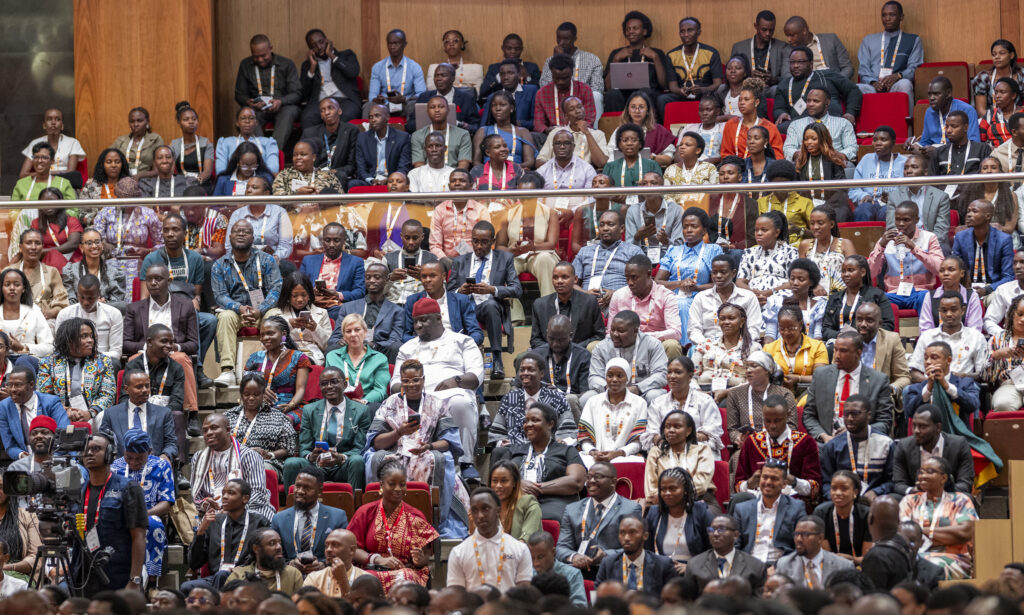
The hall was filled largely with young people including content creators.
That made the recollections more than personal history. Kagame acknowledged the distance between their generation and his, but also the common responsibility to decide what to do with the circumstances they inherit.
“You have to decide what you want to do with the circumstances you find yourself in. You cannot choose the circumstances, but you can choose what you do with them,” Kagame reflected.
From the leaders’ personal experiences, it’s clear that mindset had allowed them to move from difficult circumstances to action.
It was the decision to confront dependence, choosing a purpose and remaining committed to it and refusing to accept statelessness as a permanent fate that made the difference.