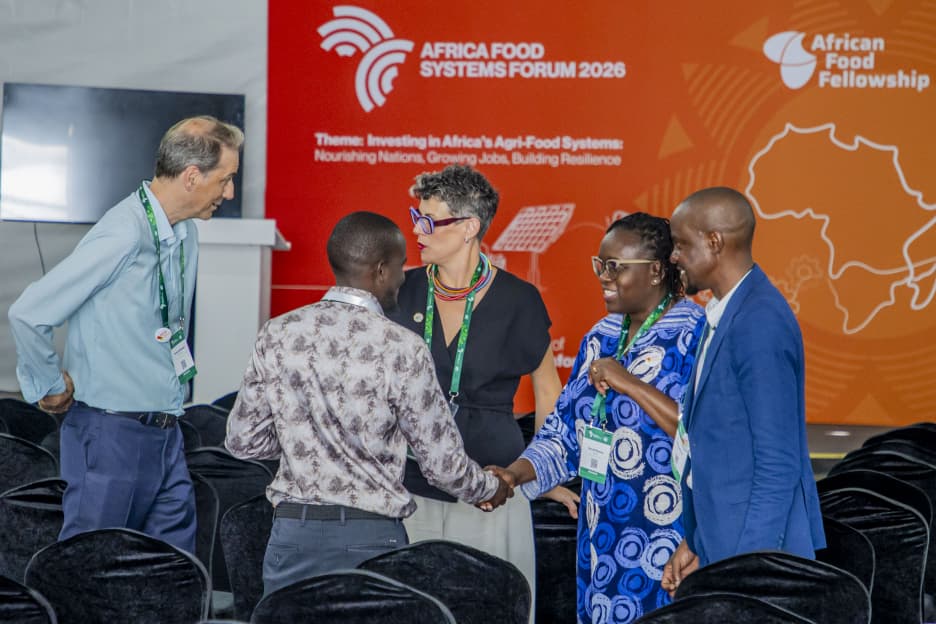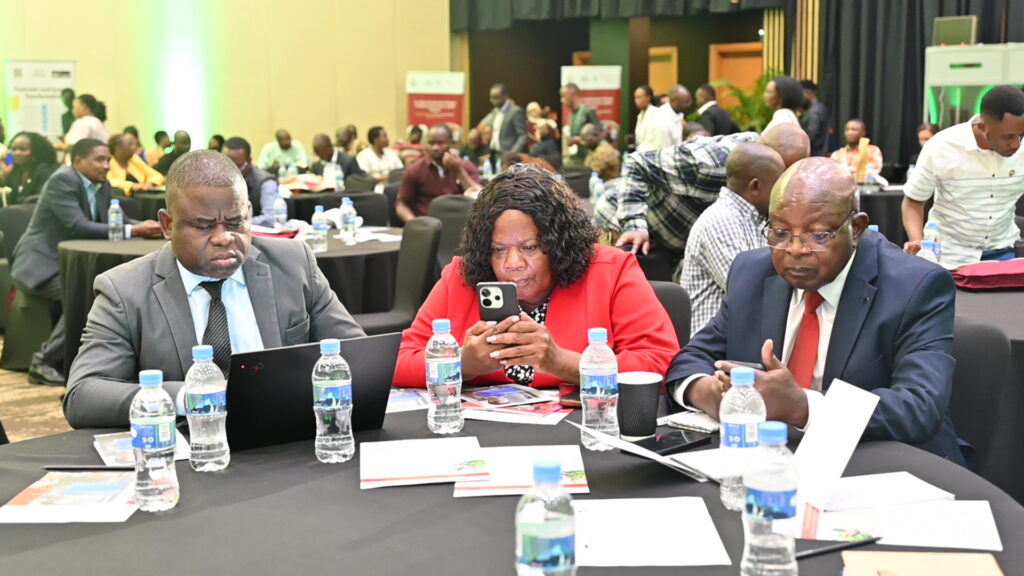
The Africa Food Systems Forum pre-summit sessions were held in Kigali on Monday.
KIGALI – Africa’s food crisis presents a stubborn paradox in which the continent has the land, farmers, crops and agricultural knowledge to produce far more food, yet millions remain food insecure.
At the Africa Food Systems Forum pre-summit in Kigali on Monday, debates in various side chats hinged more on why production has failed to translate into reliable food security and what must change between the farm and the dinner table.
Speaker after speaker, delegates approached the problem from different views, but their arguments converged on one major idea of a future which depends on connecting parts of a system that have too often operated separately.
Africa Keeps Responding to Shocks
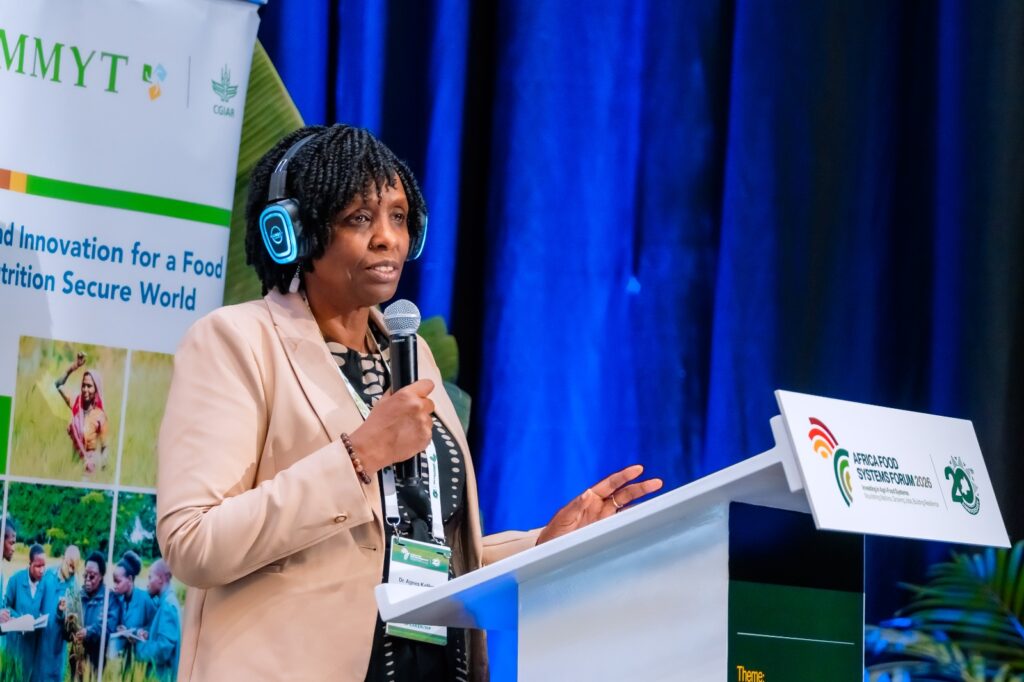
Dr. Agnes Kalibata speaking at a pre-summit discussion.
Dr. Agnes Kalibata, the Founder and Chair of C4Impact Advisory Group, argued that recent global crises have repeatedly exposed weaknesses in Africa’s food systems resulting in spending more on immediate relief while leaving the underlying system unchanged.
The COVID-19 pandemic exposed poor storage and transport networks. The Russia-Ukraine war revealed heavy dependence on imported fertiliser, while climate shocks, conflict and energy disruptions have continued to threaten food production and affordability.
“During the pandemic, no country had enough food reserves to last beyond a few months, but weak infrastructure made it difficult to move food from areas with supplies to those facing shortages. It was not a failure of production, it was a failure of connectivity of our systems,”
That experience, in her view should have triggered long-term investment instead of waiting for another agricultural risk so as to undertake emergency spending.
“It scares me that the agricultural sector has become a sector almost like a social protection sector, where resources go straight into managing the cost of fertilisers, food, and who eats next. This is not investments, it is not transformation, it is crisis management,” Kalibata said.
Research Must Reach the Kitchen
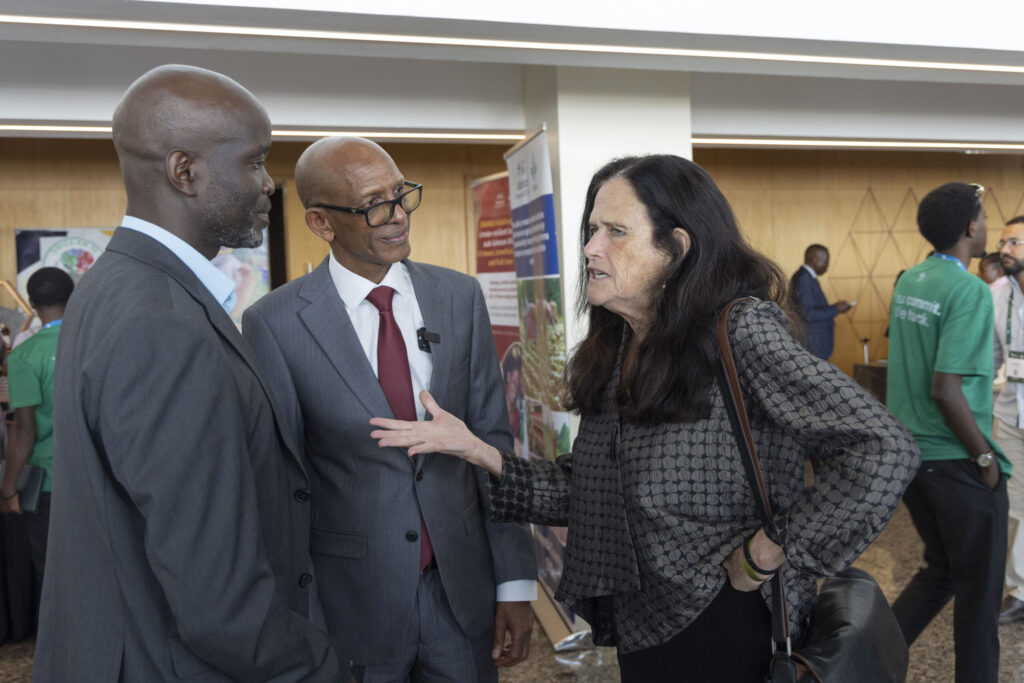
Jean Claude Rubyogo, the Director of the Pan-Africa Bean Research Alliance (PABRA), provided a practical example of what that connection can look like where Rwanda has become an important part of that network.
PABRA, works with national agricultural research institutions, farmers, businesses and other actors to ensure that bean research does not end in laboratories but reaches farms and markets.
Rubyogo said around one million Rwandan smallholder farmers are growing improved bean varieties, while varieties developed in Rwanda have also been taken up in countries including Uganda, Tanzania, Burundi and Cameroon.
“The value of agricultural research should not be measured only by how much a farmer harvests. It should also be measured by whether the resulting crop works for consumers and the wider food ecosystem,” he said.
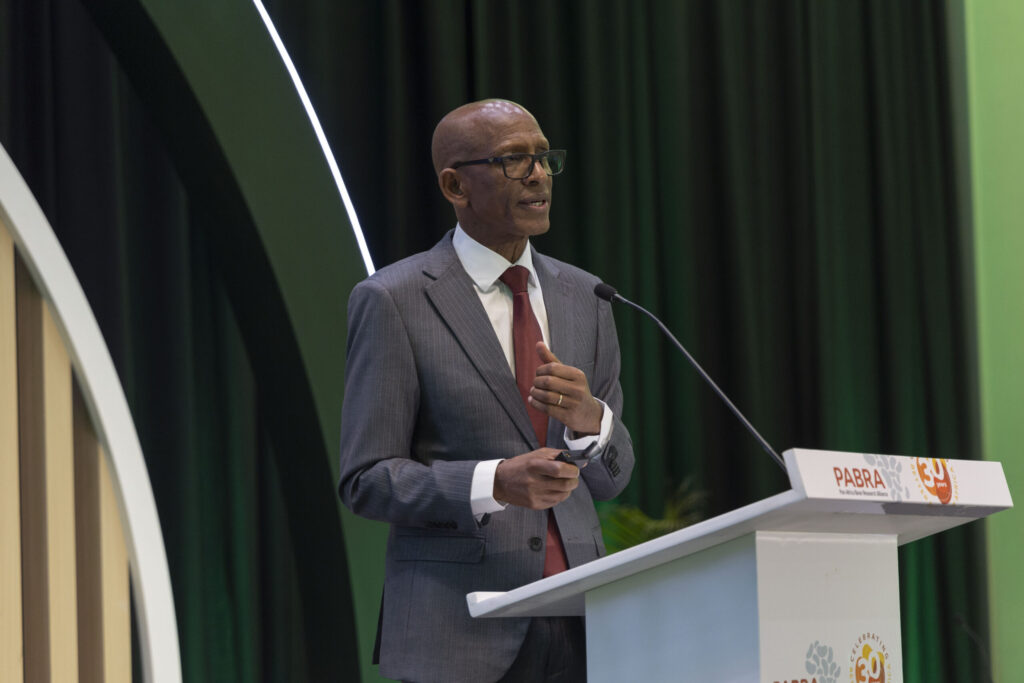
Jean Claude Rubyogo, the Director of the Pan-Africa Bean Research Alliance (PABRA).
One example is a new generation of bean varieties that can dramatically reduce cooking time. Traditional beans can take two to three hours to cook, while some improved varieties take less than an hour.
That matters in a continent where firewood is becoming harder to obtain and expensive for institutions such as schools.
“It’s not easy now to get firewood. And you don’t have to cut trees. You also don’t need the time of women who are going to wait for two to three hours. That’s a breakthrough,” Rubyogo said.
PABRA is also working with Rwanda’s education and agriculture authorities to expand high-iron beans in school meals, linking what farmers produce to an institutional demand for nutritious food.
Connecting The Pieces Requires Leadership
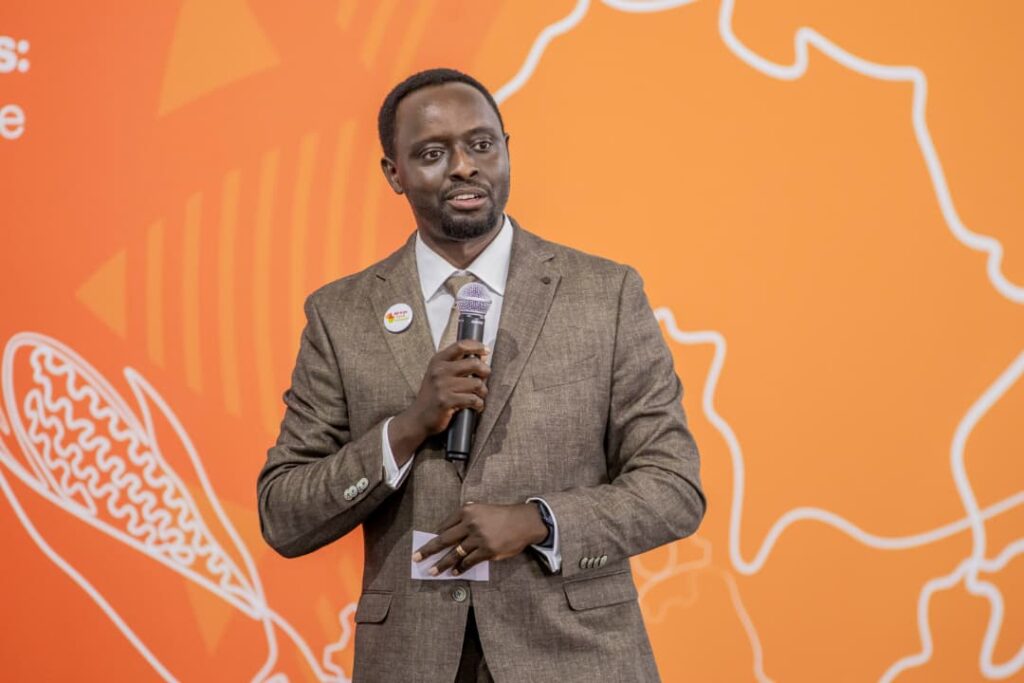
Pascal Murasira, Executive Director of Africa Food Fellowship.
But even good research, functioning markets and regional trade do not automatically create a functioning food system. Someone has to bring those interests together.
The African Food Fellowship leadership program brings people working in different parts of the food system into a common network, with the idea that problems such as food insecurity and malnutrition cannot be solved by one ministry, organization or intervention acting alone.
Pascal Murasira, the Fellowship’s Executive Director, said the complexity of food systems demands a kind of leadership capable of coordinating people who may otherwise work in isolation.
“When we are dealing with a system characterized by enormous complexity, we need individuals who can act in ways that are coordinated, but also match to the level of that complexity,” Murasira said.
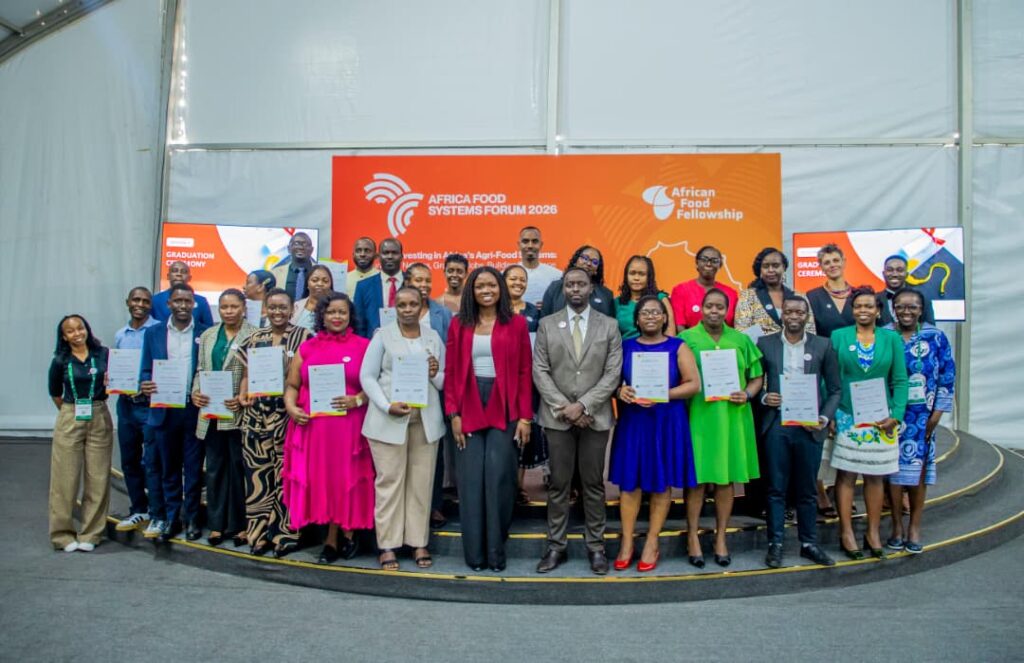
27 fellows graduated in the Fellowship’s fifth cohort.
With the graduation of its fifth cohort comprising 27 fellows, the African Food Fellowship has grown into a network of 129 leaders working to transform Africa’s food systems.
Murasira used childhood malnutrition to illustrate the point. The problem can involve food availability, household income, markets, behaviour, education and health, making it difficult to assign responsibility to one institution.
“There is no single owner of these problems. They have no single root cause, which means there is no single fix. The solution sits at the intersection of behaviour change and economic empowerment,” he said.
Ultimately, the continent does not simply need to produce more food. It needs to store it, move it, trade it, make it affordable, connect farmers to markets and ensure that research responds to what consumers and institutions actually need.