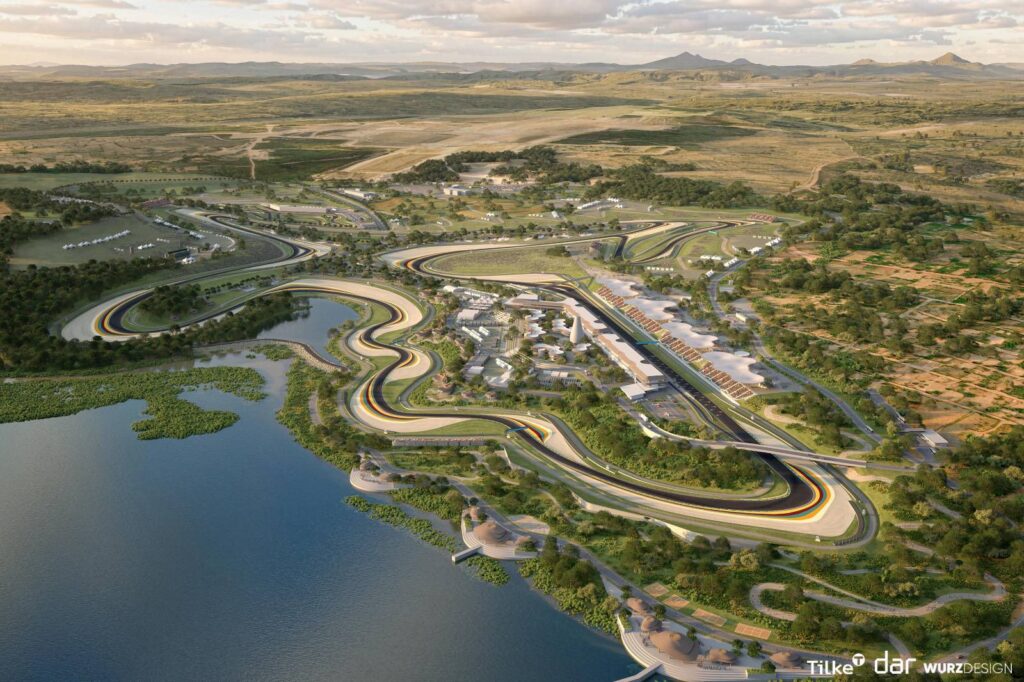



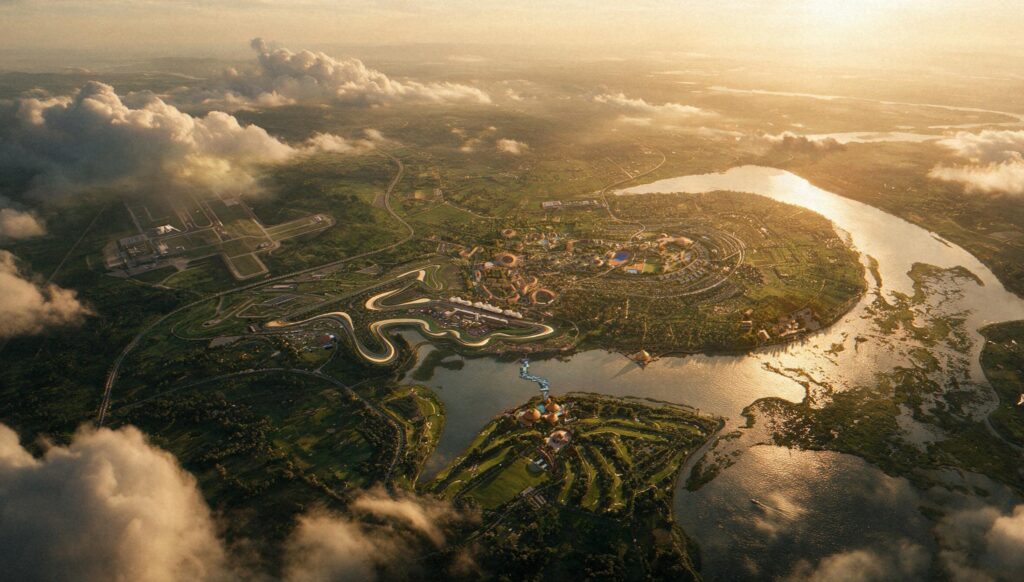
 KIGALI – A 197-metre elevation gain over a single lap will distinguish Rwanda’s proposed Formula One circuit from every other track on the championship calendar, according to Carsten Tilke, the engineer leading its design.
Built around Bugesera’s natural hills and Lake Kidogo in Ririma sector, the circuit is shaped to turn Rwanda’s rugged terrain into both a technical challenge for drivers and a defining spectacle for spectators.
“The elevation gain of 197 meters per lap is record breaking for the calendar of Formula One,” said Tilke, Managing Director of Tilke Engineers & Architects, about the project.
Rather than flattening the landscape to accommodate the sport, the designers will work with its natural contours to create a fast, undulating track with steep gradients, demanding corners and opportunities for wheel-to-wheel racing.
A Landscape Built for Racing
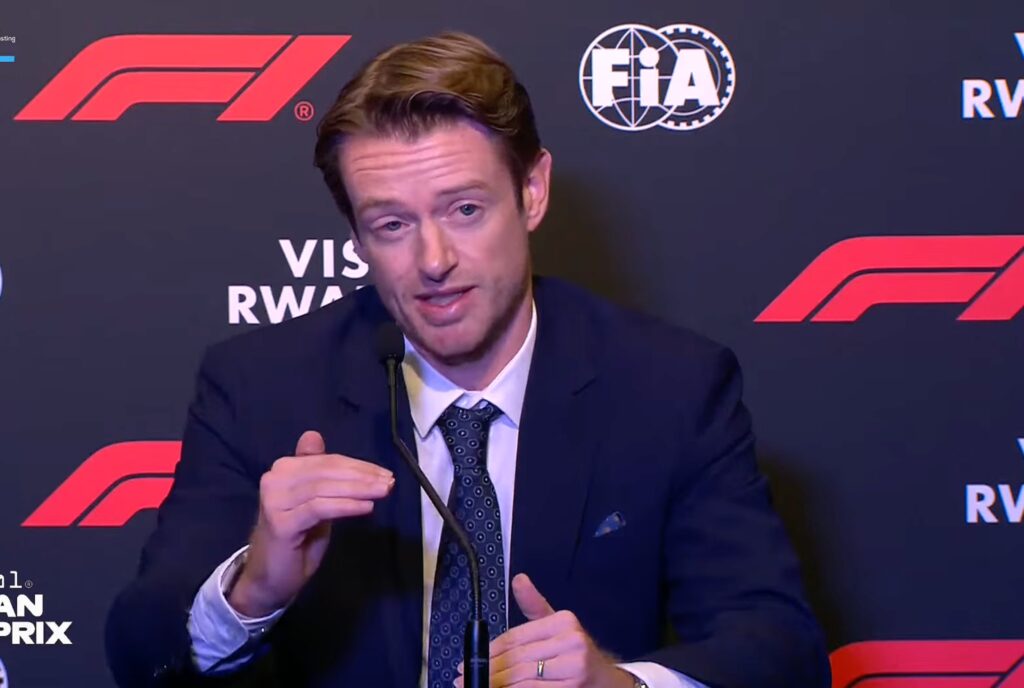
Carsten Tilke, the Managing Director of Tilke Engineers & Architects, speaking to the press about the project.
According to organizers, discussions about the project began in 2023, with several possible locations and circuit concepts considered. Bugesera ultimately stood out because its hills and lake offered a natural foundation for the track.
Alexander Wurz, a former F1 driver involved in the circuit’s design, believes the location itself offers an advantage that engineering alone could not easily reproduce.
“I said, guys, there is only one location this circuit should be, because it doesn’t need us to design it; nature designed already the perfect topography,” he said, describing the combination of two hills with the lake below.
The terrain allows the proposed circuit to rise and fall with the landscape, creating a layout that is intended to be technically demanding while remaining visually distinctive.
The hills could also provide elevated vantage points for spectators, with Wurz estimating that between 35,000 and 40,000 people could be accommodated on the hillsides on either side of the track.
The scenery will be matched by competitive racing with designs intended to offer overtaking opportunities, different strategic options and corners that test drivers without compromising the contest.
Where The Gradients Test Drivers
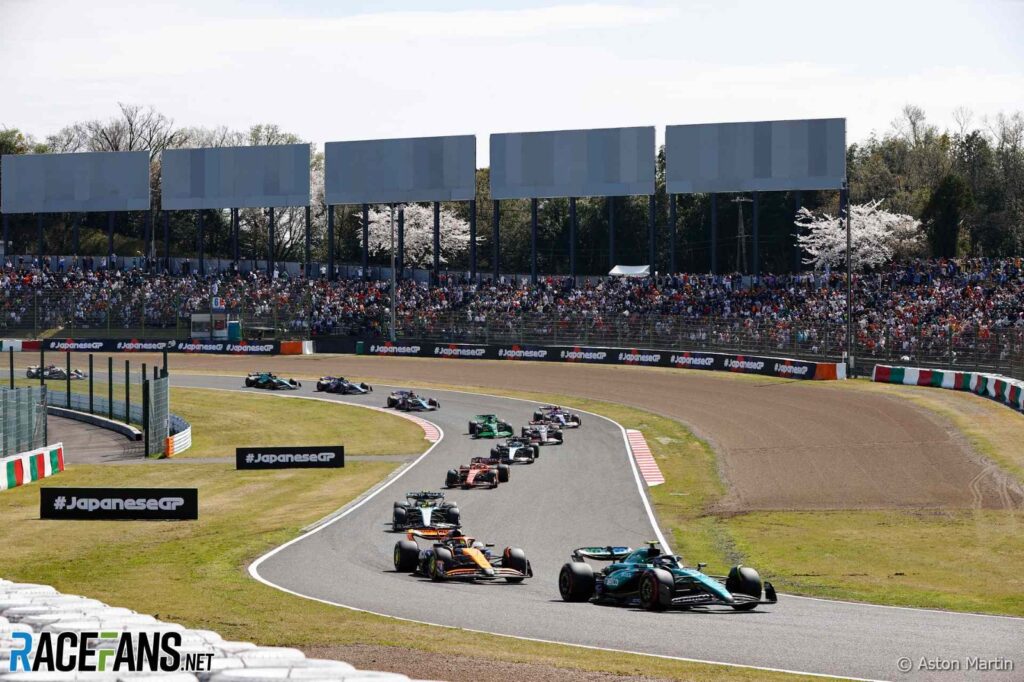
Rwanda’s proposed Formula One circuit from every other track on the championship calendar.
One of the most striking sections is turn 2, which Wurz described as a combination of a high-speed descent, a compression and a steep uphill exit.
Drivers would descend at a gradient exceeding 10% before entering the compression, where they would experience substantial vertical and lateral forces.
The corner then climbs towards an incline approaching 15%, with Wurz saying cars could still be travelling at around 240 kilometers per hour as they power uphill.
He believes the layout could allow cars to run side by side, while the sequence of corners around the lake would demand precision. A mistake in one turn could compromise the next and cost a driver valuable lap time.
“It is technically ultra challenging, visually absolutely beautiful,” Wurz said.
Sitting approximately 1,300 to 1,400 meters above sea level, the site has thinner air than many established racing venues. That reduces aerodynamic downforce, affecting the grip available to cars.
The designers are considering gradients and camber, the angle of the track across a corner, to shape vehicle behavior and maintain a challenging but workable layout.
The proposed circuit has 17 corners. Its final technical specifications will emerge through detailed design work with Formula One and the FIA.
A Rwandan Identity Beyond the Track
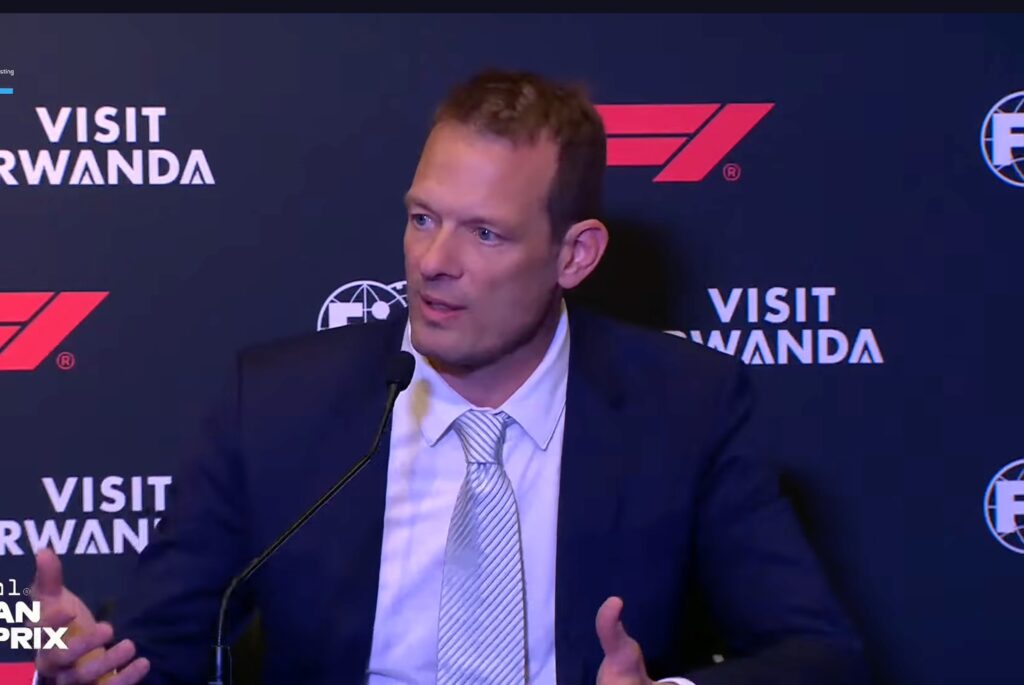
Alexander Wurz is a former F1 driver who is involved in the circuit’s design of the proposed Formula One circuit in Rwanda.
Wurz said the circuit will host other motorsport categories, including endurance racing, touring cars and motorcycle competitions. That requires a layout capable of working for both two-wheel and four-wheel racing and across different technical regulations.
Plans include a Rwandan pavilion showcasing local culture, distinctive team villas, and locally influenced designs for the pit building and grandstands.
“If you’re in the paddock, if you’re at the track, everyone will immediately recognize we are in Africa and we are in Rwanda,” he said.
The designers are assessing materials that could be sourced locally while ensuring the finished surface meets the requirements for grip, consistency and durability in wet and dry conditions.
The 197-metre elevation gain is the clearest expression yet of what the circuit is designed to offer. If delivered as planned, Rwanda’s landscape will not simply provide a backdrop for F1, its dramatic rises, descents and natural contours will become part of the competition itself.
Beyond The Chequered Flag
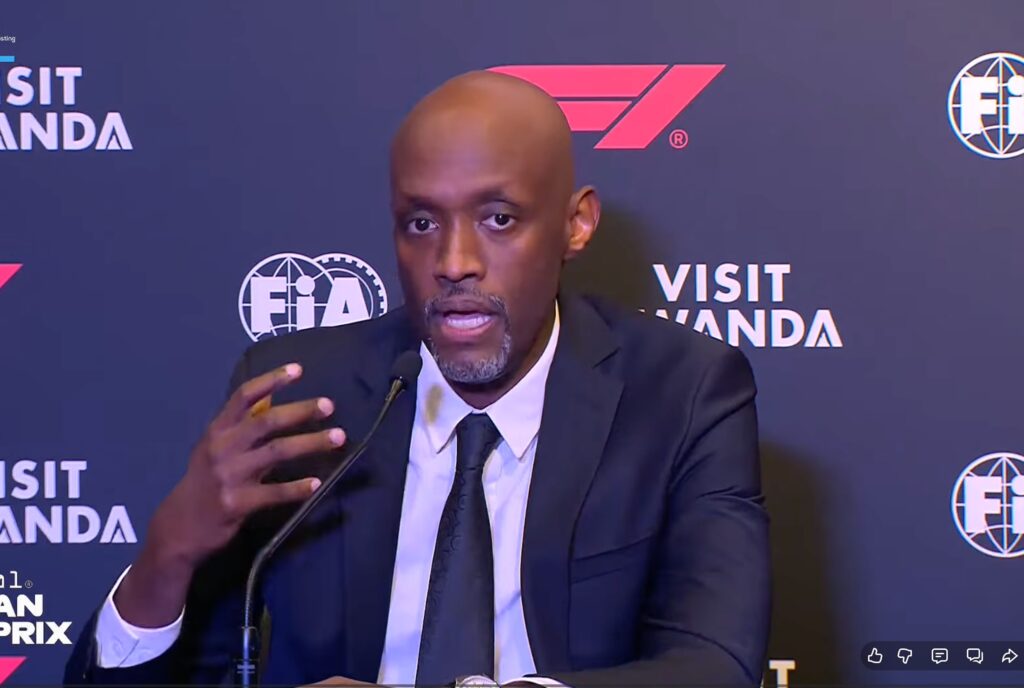
Jean-Guy Afrika, Chief Executive of the Rwanda Development Board.
Jean-Guy Afrika, Chief Executive of the Rwanda Development Board said Rwanda intends to make the circuit more than a venue for a single annual race with a broader strategy to attract visitors, stimulate investment and create a facility that remains active all year round.
The plans include using the venue for concerts, exhibitions and other events throughout the year. That wider use is also linked to Rwanda’s growing tourism ambitions and the expansion of airport capacity to accommodate more visitors.
Sports Minister Nelly Mukazayire said preparations had already moved beyond the dream stage, with work on the design and engagement with F1 and the FIA forming part of a longer process.
“The government intends to build local capacity around motorsport, including opportunities in karting, rallying and other disciplines, while developing skills in engineering, event management, hospitality and related businesses,” she said.
For young people, the minister said, the prospect of a career in motorsport should extend beyond becoming a driver to include the many technical and professional roles that make the sport possible.
The challenge, therefore, is not only to deliver a circuit distinguished by its 197-metre elevation gain, steep gradients and demanding corners, but also to ensure that its benefits reach beyond the track.
If the engineering delivers the spectacle its designers envisage, and the wider plans translate into sustained opportunities for local businesses and talent, Rwanda’s most striking elevation will manifest in what the project helps the country build around it.
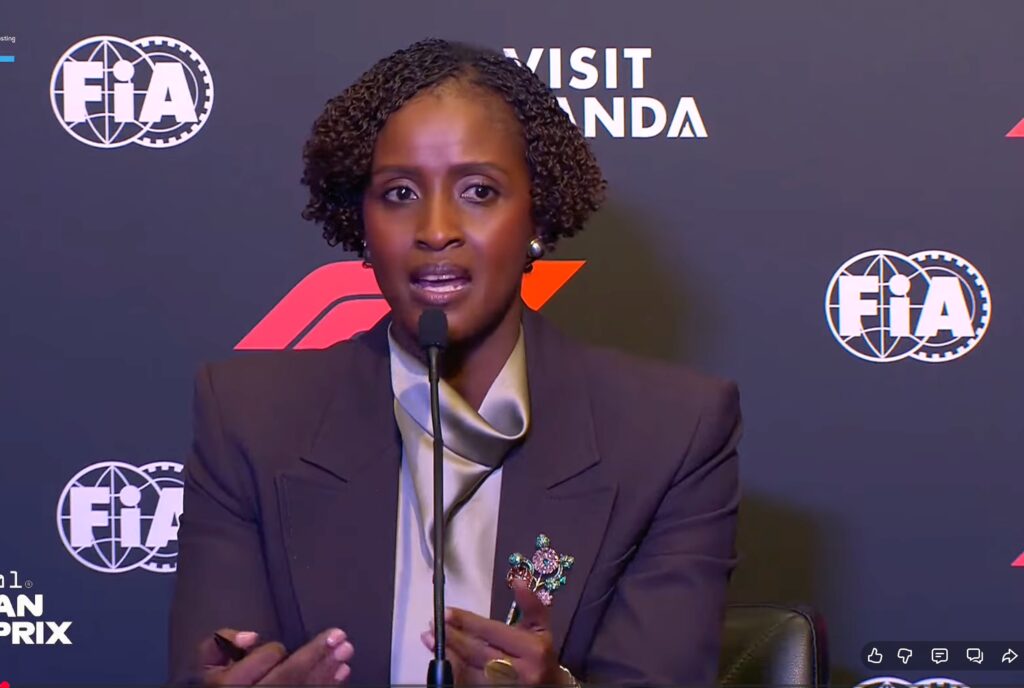
Sports Minister Nelly Mukazayire said preparations had already moved beyond the dream stage.