



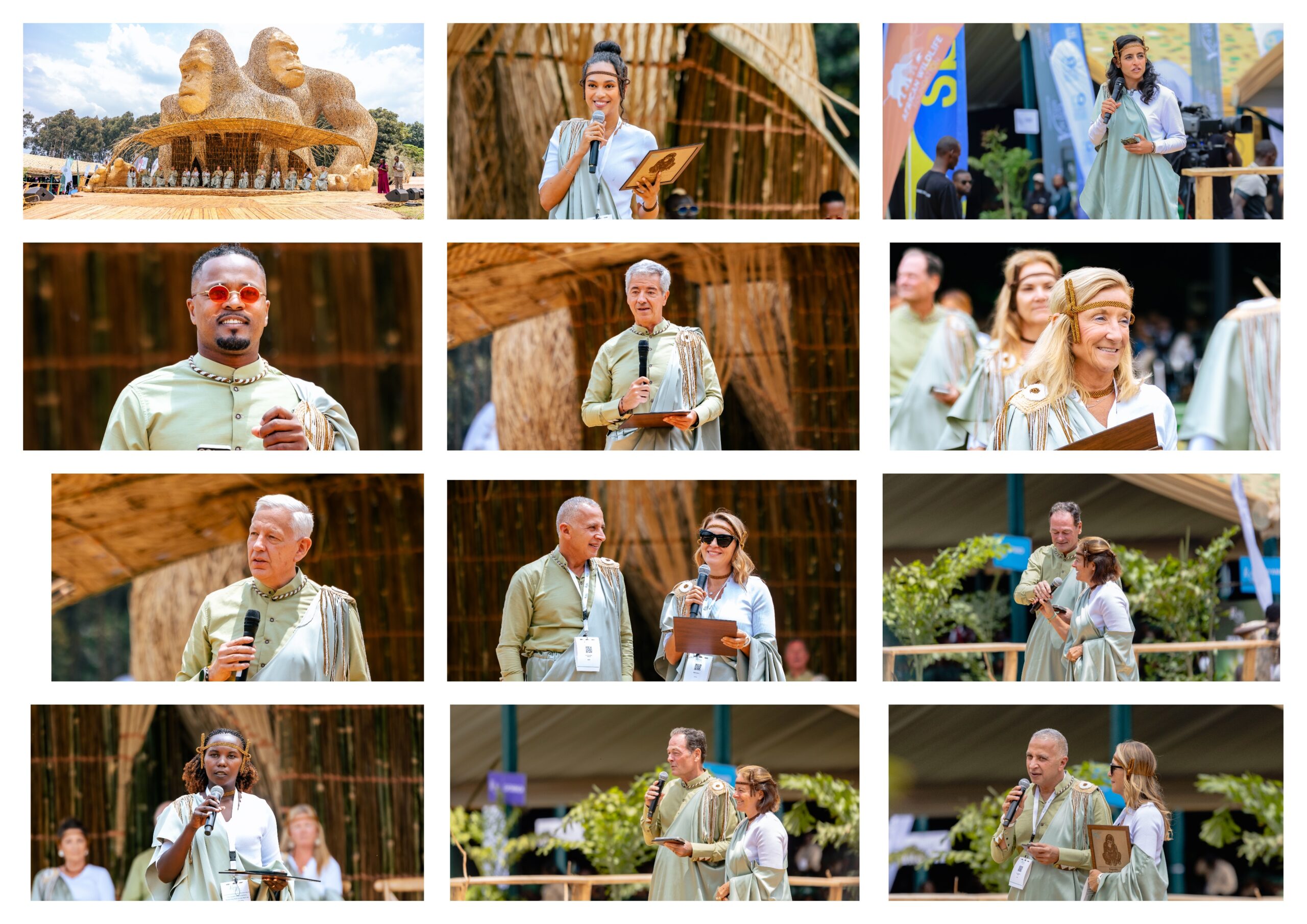
The international personalities who named the baby gorillas
KINIGI, Rwanda — The mist had settled over the mountains when the names began.
One by one, 22 baby mountain gorillas born over the past year were given names Friday at Rwanda’s annual celebration of one of the world’s most remarkable conservation recoveries.
They were named Ishakwe, Umukondo, Shikama, Inkera, Rugamba, Umucyo, Ngabonzima, Ndongozi, Ndahiro, Ngoga, Muhuza, Komezutsinde, Ntwarane, Tarama, Mpinga, Ruhembe, Muganura, Igihembo and Nkwakuzi, among others.
For a few minutes, the focus was on the animals.
Then came the people who had travelled from around the world to name them.
There was Patrice Evra, the former Manchester United and France captain. Mamadou Sakho, another former French international and Paris Saint-Germain captain. Olympic high-jump champion Mutaz Essa Barshim. David Lappartient, president of the Union Cycliste Internationale.
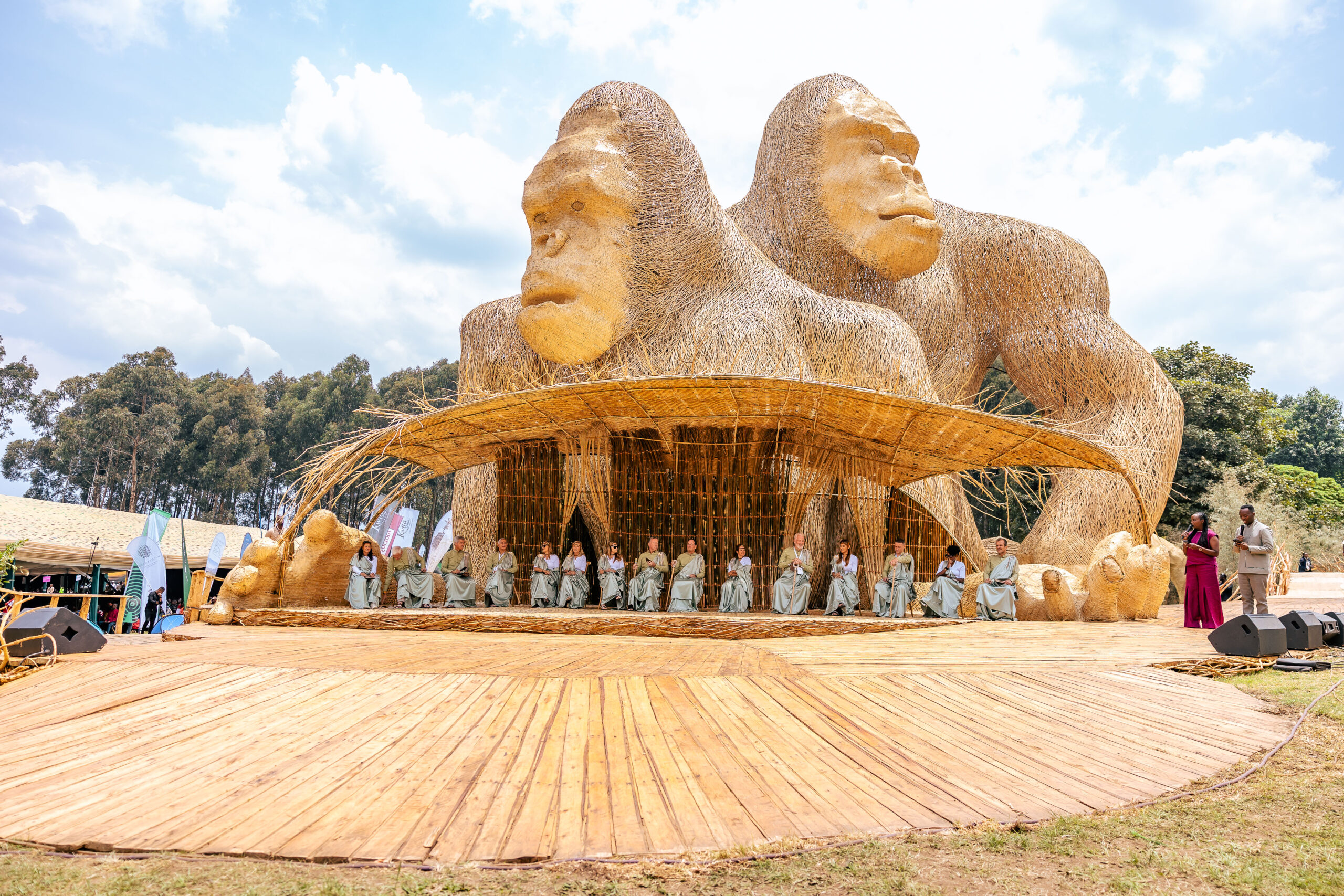
There were business leaders, conservationists, filmmakers, artists and tourism officials.
And there were Rwandans whose work happens far from the international spotlight — including Jeanette Uwimbabazi, a Nyungwe National Park ranger who works on the front line of the fight against wildlife crime.
Together, they formed the unusual cast of Kwita Izina, Rwanda’s annual gorilla naming ceremony.
Now in its 21st year, Kwita Izina has grown far beyond a ceremony.
MORE PHOTOS FROM THE 21ST GORILLA NAMING CEREMONY 2026
It has become a showcase for an idea Rwanda has spent years trying to prove: that protecting nature does not have to stand apart from economic development. Conservation can generate tourism. Tourism can support communities. Communities, in turn, can become part of the protection of the forests and animals that draw visitors to Rwanda.
This year’s theme put the idea plainly: “Conservation is Life: Sustaining the Future.”
A Rwandan tradition goes global
The ceremony is rooted in an old Rwandan tradition.
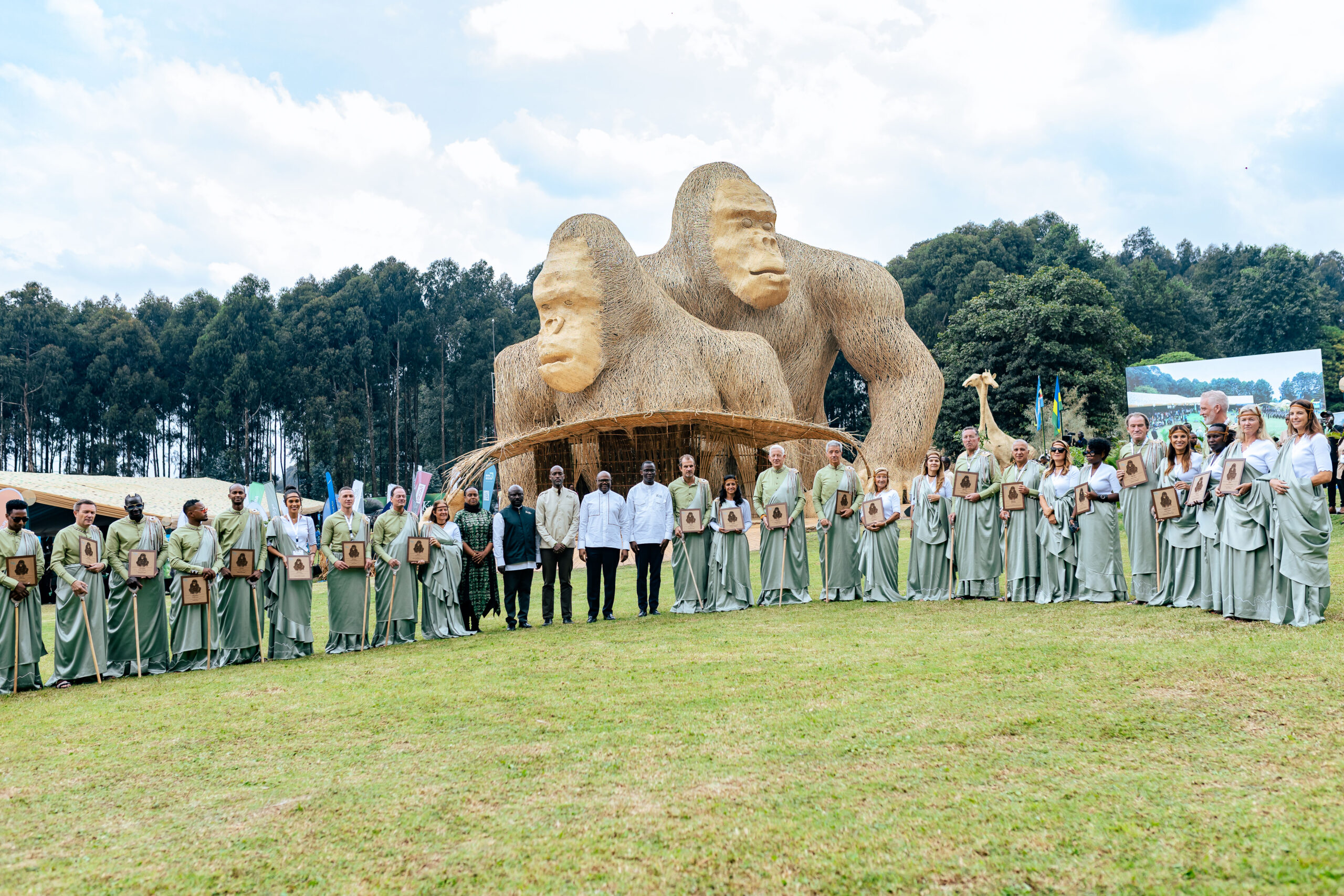
Newborn children are named in the presence of family and community. Rwanda adapted that tradition to its mountain gorillas, turning the naming of each new animal into a public celebration of its survival.
Since Kwita Izina became an annual event in 2005, more than 438 mountain gorillas have been named.
The symbolism is important.
A gorilla born in the forest might otherwise be known primarily through scientific records and conservation databases. Through Kwita Izina, the animal receives a name in front of thousands of people and an audience that stretches well beyond Rwanda.
The names also carry meaning.
Some celebrate strength, leadership or resilience. Others reflect people, places or values that Rwanda wants to associate with the future of conservation.
This year, the namers included Shaikha Al Nuwais, incoming Secretary-General of UN Tourism and the first woman to lead the organisation, who named Ishakwe.
Dominic Barton, chairman of Rio Tinto and LeapFrog Investments and former global managing partner of McKinsey, named Umukondo.
Alastair Fothergill, the award-winning filmmaker behind Planet Earth and Blue Planet, named Mpinga.
And Evra named Muganura.
The former Manchester United star appeared to be enjoying the moment as much as the crowd.
He described Rwanda as “deep, powerful and emotional,” praised its conservation efforts and suggested other African countries could learn from the country’s experience.
He also indicated that he wanted to stay longer.
Sakho went a step further.
After giving his gorilla the name Ntwarane, he told the crowd: “From today I am a Rwandan.”
The Prime Minister: a success that brings a new responsibility
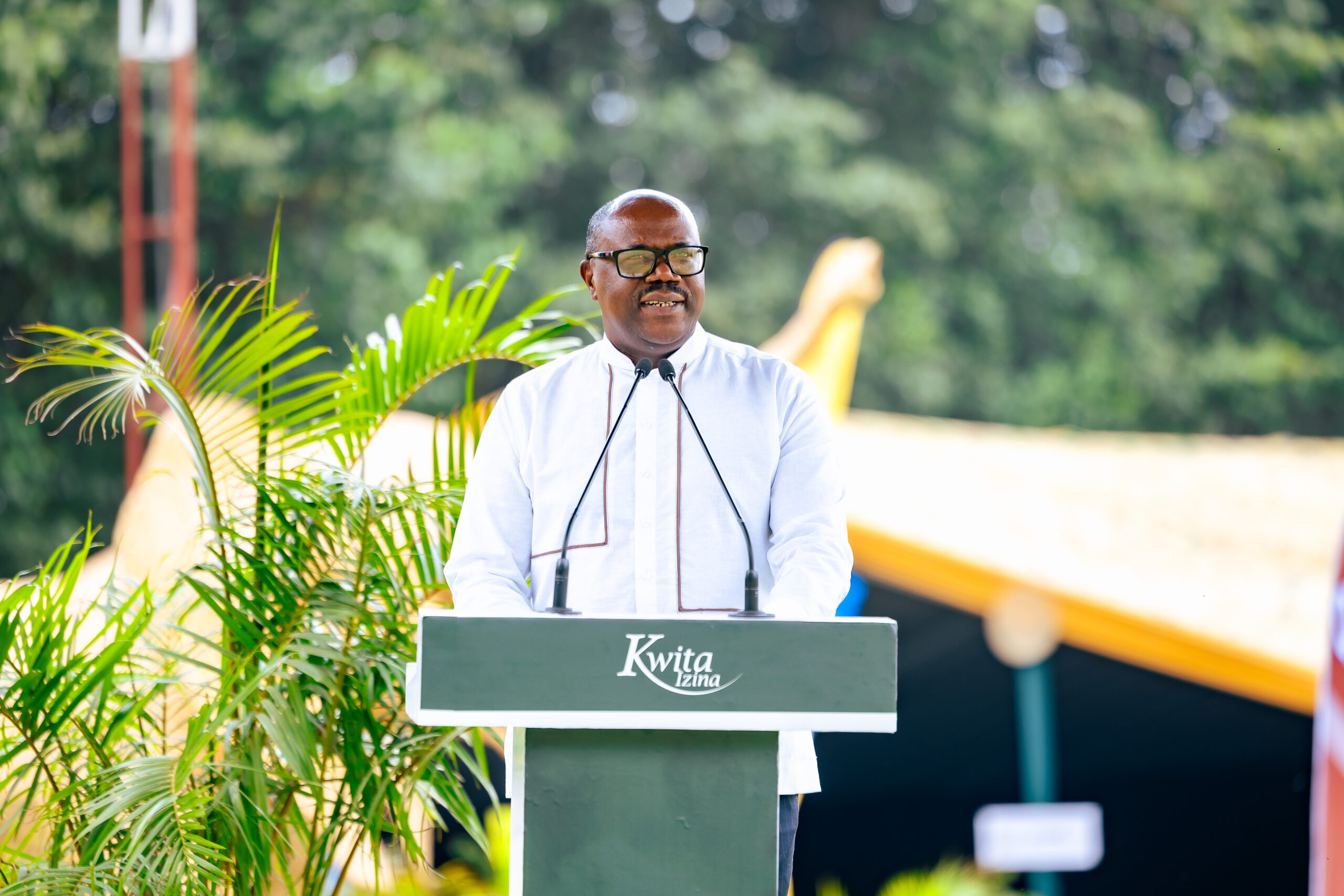
Prime Minister Dr Justin Nsengiyumva
Prime Minister Dr Justin Nsengiyumva, who represented President Paul Kagame at the ceremony, placed the celebration in the broader context of Rwanda’s conservation ambitions.
The Prime Minister underscored Rwanda’s role as custodian of a species whose recovery has become a global conservation success story, while stressing that growing gorilla numbers also bring greater responsibility to protect and expand the habitat on which they depend.
That responsibility is becoming increasingly important.
The mountain gorillas are doing something remarkable.
The animals are doing something remarkable
Mountain gorillas were once pushed dangerously close to extinction by habitat loss, poaching, disease and other pressures.
Today, their numbers are moving in the opposite direction.
More than 1,060 mountain gorillas are estimated to live in the wild across the Virunga Massif and the Bwindi ecosystem.
They are now the only great ape population showing sustained growth.
That recovery has made the gorillas more than a conservation success.
They have become one of Rwanda’s most valuable tourism assets.
But Rwanda’s approach increasingly asks a harder question: What happens to the people living beside the forest?
The answer has been to put communities closer to the centre of the conservation equation.
Through the Tourism Revenue Sharing Programme, 10% of national park revenues is returned to communities surrounding protected areas.
More than Rwf23 billion, or about $16 million, has supported nearly 1,300 projects, including schools, health centres, water infrastructure and livelihood programmes.
The logic is straightforward.
If a community sees tangible benefits from protecting a national park, conservation becomes more than a government policy or an environmental slogan. It becomes part of the local economy.
When a gorilla ceremony fills a town
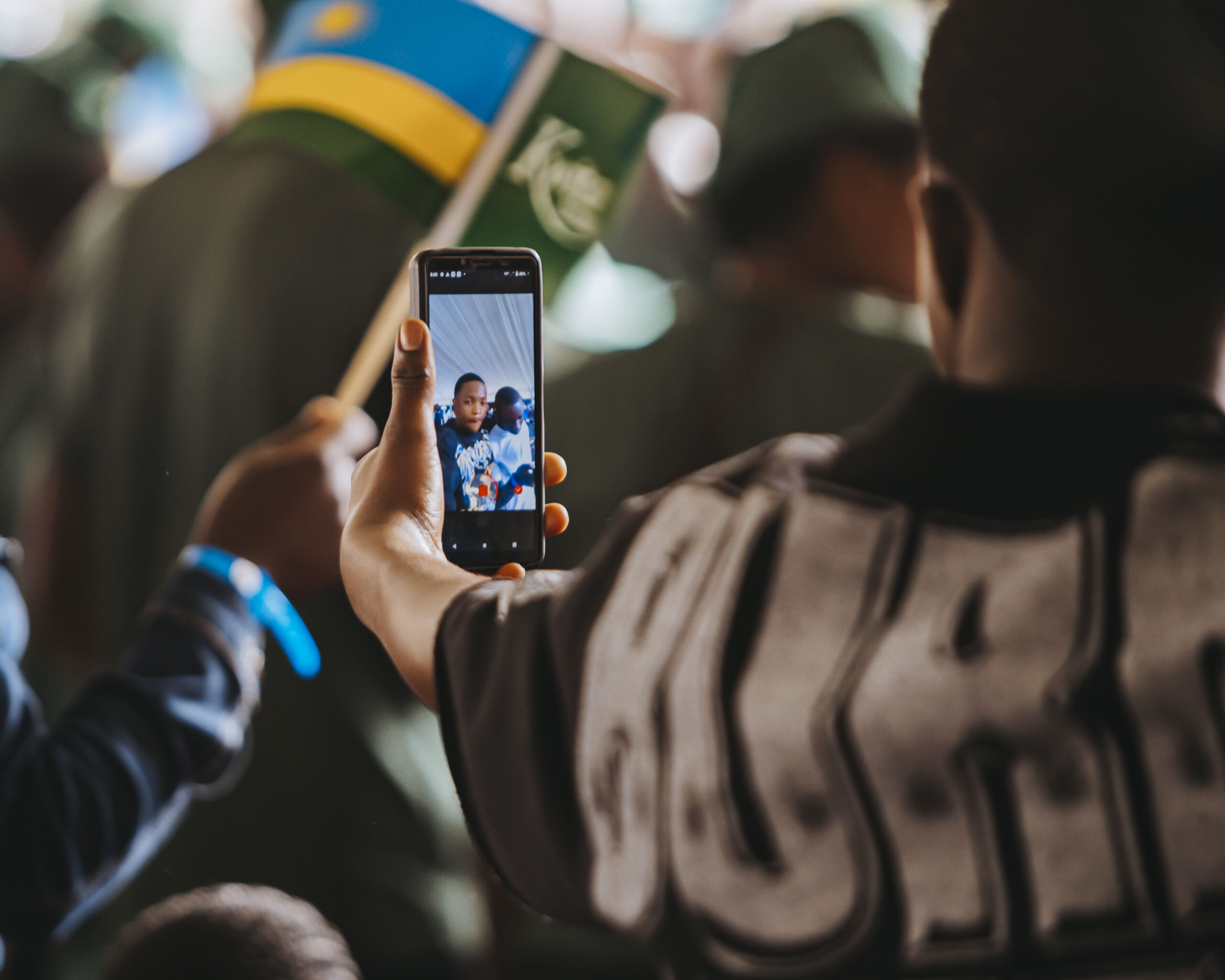
That relationship was visible in Kinigi and the wider Musanze area this week.
Hotels filled. Restaurants and shops became busier. Visitors arrived for the naming ceremony, conservation exhibitions, gorilla treks and community events.
The event has created its own ecosystem around the animals.
On Friday, cultural performances by Rwandan artists including The Ben, Rideman, Bushali and Kivumbi King turned the conservation gathering into something closer to a national festival.
On Saturday, the celebration moves to Kigali, where Nigerian Afrobeats star Rema will headline the Kwita Izina Concert at BK Arena.
For Rwanda, this is part of the point.
The gorillas attract the world.
The world brings visitors.
Visitors bring spending.
And the revenues can help finance the protection of the very landscape that brought them there.
It is an increasingly deliberate cycle.
The next challenge is making the forest bigger
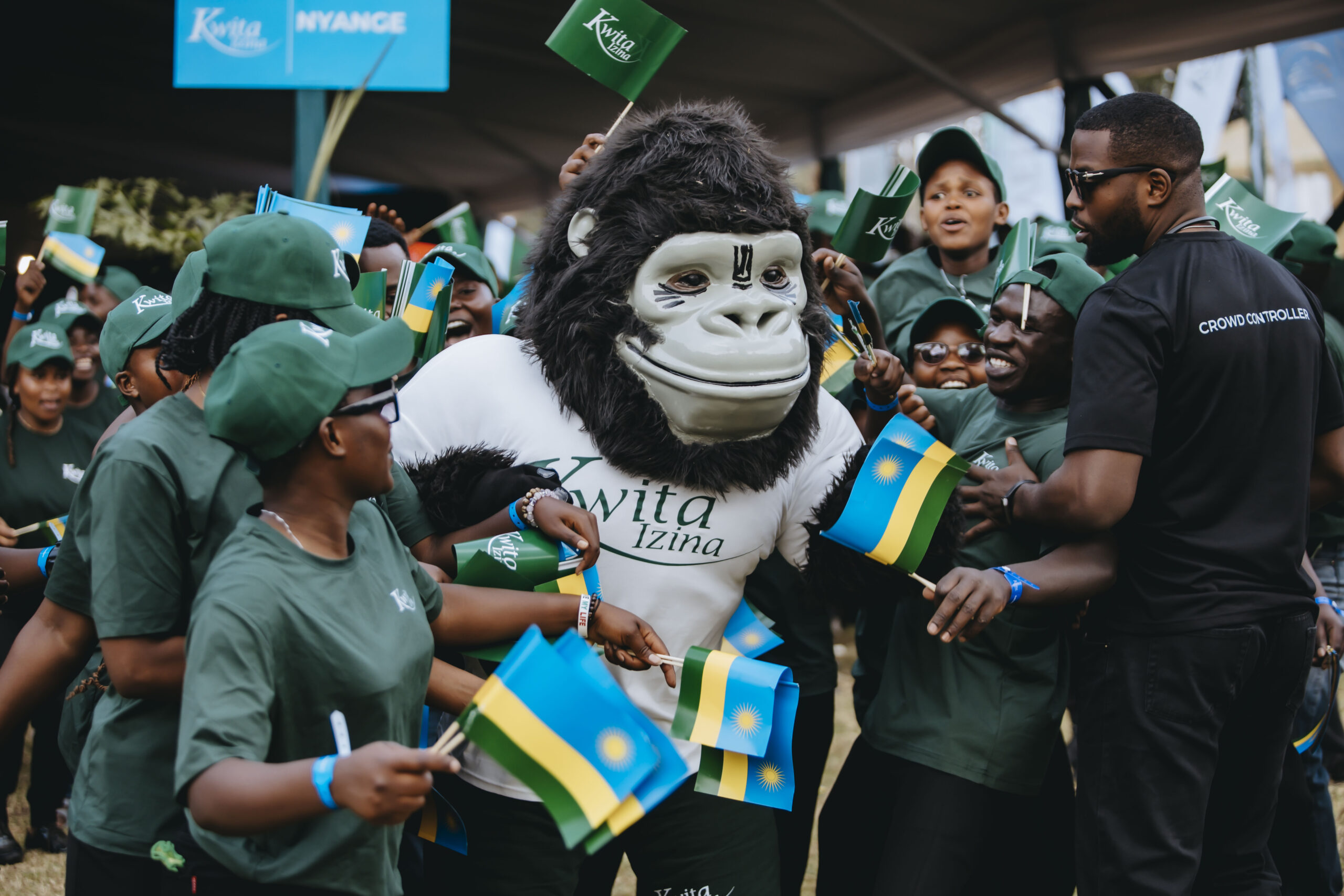
Rwanda is not stopping with the gains already made.
Plans are underway to expand Volcanoes National Park by about 3,740 hectares.
The government also plans to establish buffer zones expected to benefit more than 17,000 people, alongside the development of a Smart Green Village in Kinigi.
The planned expansion reflects the new challenge created by conservation success itself: as the gorilla population grows, so does the need for secure habitat.
The expansion will bring its own challenges.
More protected land means more pressure to balance conservation with the needs of people living around the park. Agriculture, housing, infrastructure and tourism all compete for space.
That is where Rwanda’s conservation model will face one of its most important tests.
The success of the gorillas cannot be measured only by how many animals survive.
It must also be measured by whether the communities around them see enough value in keeping the forest standing.
A ceremony with a larger message
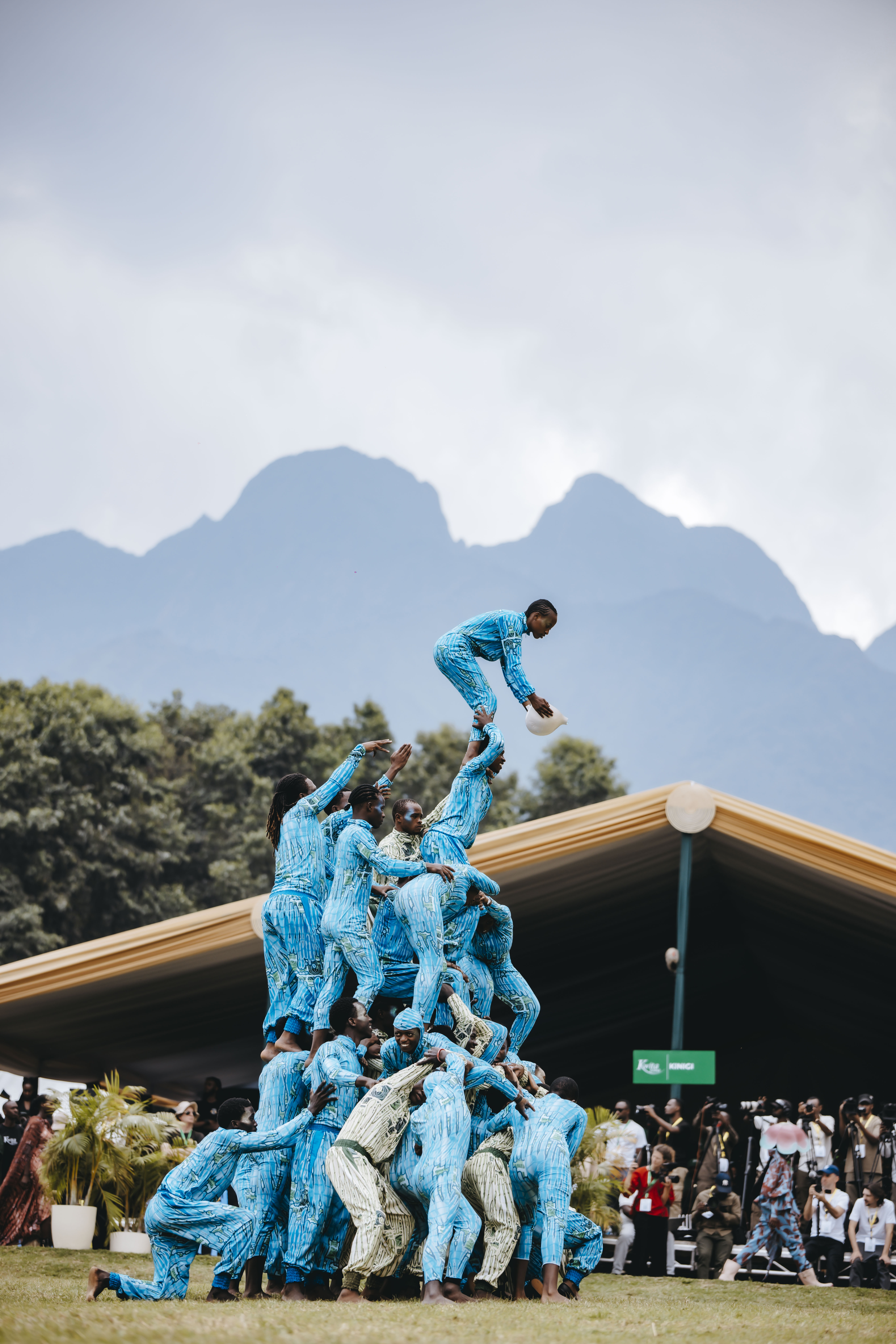
By the end of Friday’s ceremony, the 22 young gorillas had acquired something that will follow them for the rest of their lives.
Names.
But Kwita Izina has acquired something larger over its two decades.
It has become a stage on which Rwanda tells the world what it believes conservation can look like when wildlife, tourism, communities and economic development are treated as parts of the same system.
The message is not that a gorilla can be saved by a ceremony.
It cannot.
The real work happens in the forest — with rangers, scientists, communities, veterinarians and conservationists.
But once a year, Rwanda brings that work into the open.
It invites presidents, business leaders, athletes, artists and ordinary citizens to stand together and celebrate an animal that once seemed destined to disappear.
And under the misty mountains of Kinigi, 22 more gorillas became part of that story.
