



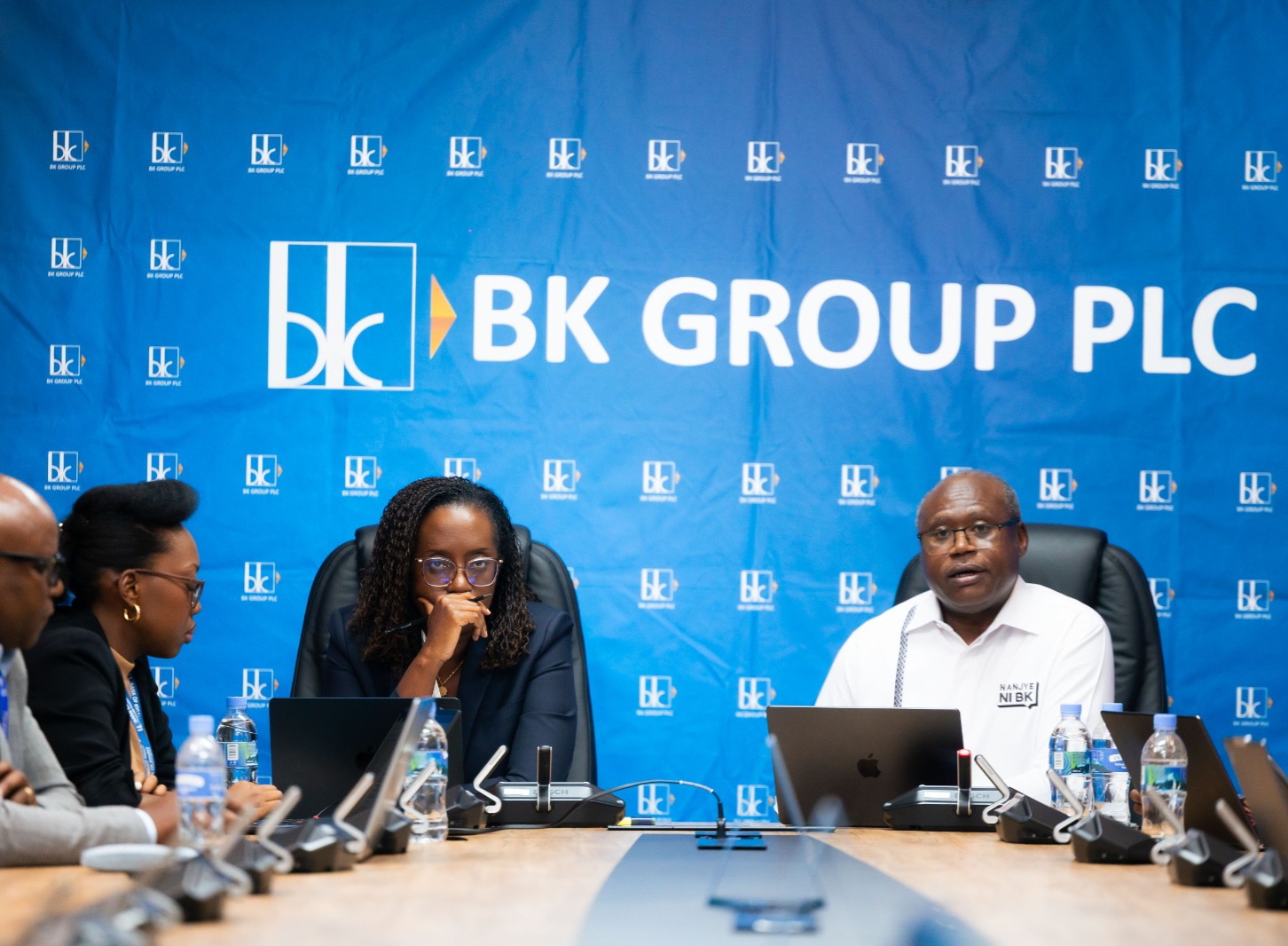
KIGALI — BK Group PLC is shrinking the number of businesses it operates as it refocuses the financial conglomerate around two core activities: commercial banking and investment banking.
The shift marks a significant change for a group that spent years building a diversified financial-services portfolio spanning banking, insurance and technology.
Under the new strategy, Bank of Kigali will remain at the centre of the group’s commercial banking business, while BK Capital will become the main vehicle for investment banking and capital-markets activities.
The restructuring has already produced two major changes.
BK Group has completed the sale of its entire stake in BK General Insurance to the Rwanda Social Security Board for Rwf31.7 billion.
It has also integrated BK Techouse, its technology subsidiary, into Bank of Kigali, ending the company’s existence as a separate subsidiary. Its technology platforms, assets and relevant contracts have been transferred to the bank, with the functions now operating under the bank’s Digital division.
The changes were explained by BK Group management during the presentation of its first-half results on September 2.
From many companies to two core businesses
BK Group CEO Dr Uzziel Ndagijimana told news conference this week that the group had undertaken a thorough assessment of its businesses before deciding to consolidate around the two areas.
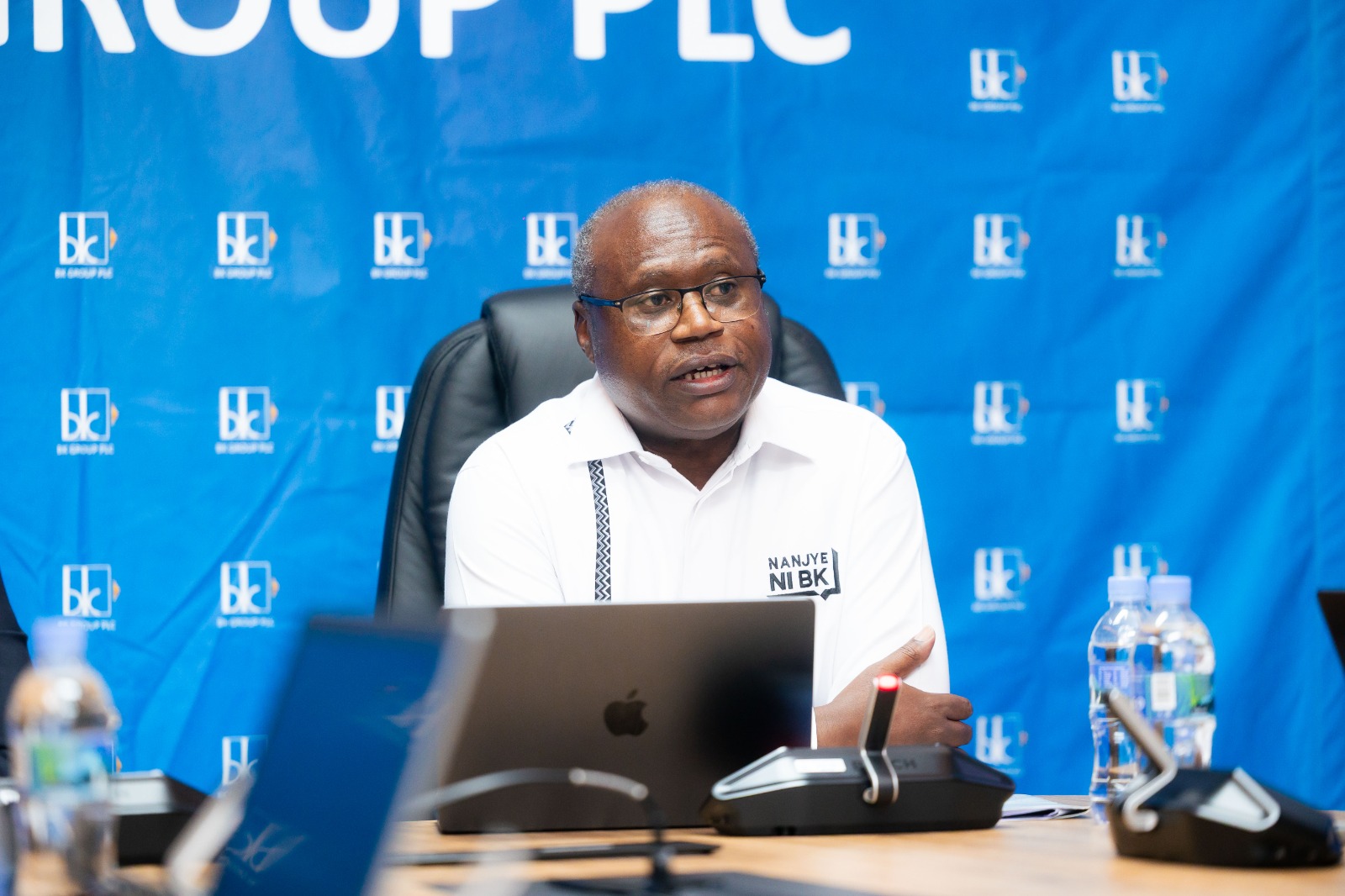
The objective, he said, is not to abandon diversification, but to achieve it within banking and investment banking rather than through ownership of numerous subsidiaries.
“Diversification is not about now having many companies,” Ndagijimana said. “It is about having a larger range of services within our priority businesses.”
The strategy is expected to allow Bank of Kigali and BK Capital to work more closely, particularly in areas such as wealth management, investment products and other financial services.
The insurance sale to RSSB, completed for Rwf31.7 billion, is therefore more than a disposal of one business. It is part of a broader attempt to make BK Group a more focused financial group.
BK Group’s current corporate structure lists Bank of Kigali, BK Capital and BK Foundation as its remaining subsidiaries, with the foundation serving as the group’s philanthropic arm.
The numbers remain strong
The restructuring comes as BK Group continues to report growth.
For the six months to June 30, the group posted Rwf56.4 billion in net income, an 8.6% increase from the same period last year.
Net interest income increased 14.8%, while non-funded income grew 28.5%.
Total assets reached approximately Rwf2.98 trillion, up 2.9% from a year earlier, while shareholders’ equity rose 6.9% to Rwf543.4 billion.
The performance came against a difficult economic backdrop.
Rwanda’s economy grew by 10% in the first quarter, but inflation remained elevated, rising from 8.9% in January to 14.5% in July. High energy, transport and food costs have increased pressure on households and businesses.
For BK Group, however, the growth environment has continued to generate opportunities across lending, deposits, payments and investment services.
Bank of Kigali is becoming less dependent on loans
The restructuring at group level is being accompanied by a change in the way Bank of Kigali makes money.
The bank’s operating income before impairments increased 15.6%, even though its loan book declined by 1.3%.
That is significant.
It means the bank is generating stronger income without relying simply on expanding the amount of money it lends.
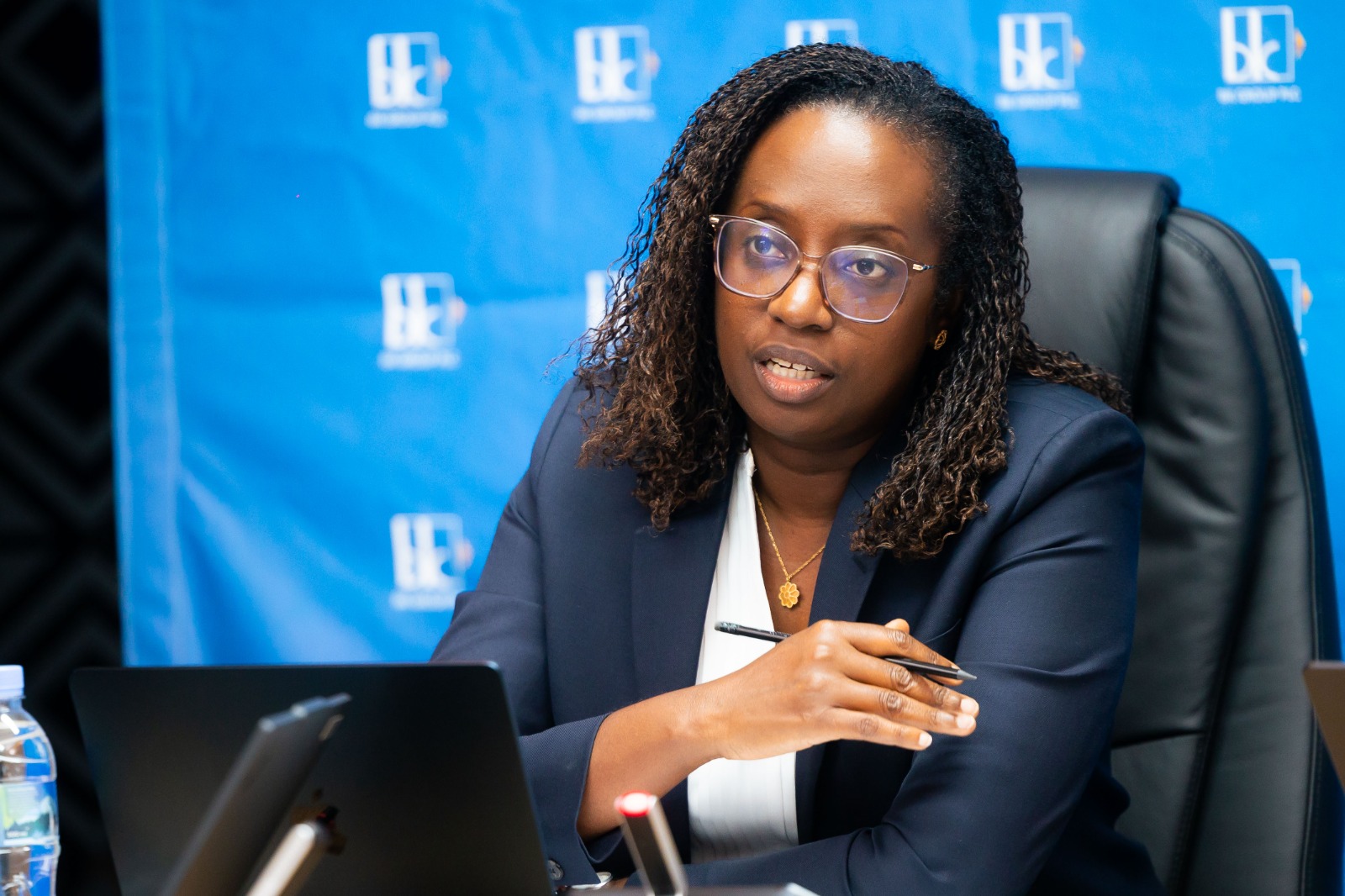
For the banking arm, Bank of Kigali CEO Dr Diane Karusisi said the result showed the bank was becoming better at managing its entire balance sheet and generating income from different activities.
The bank’s customer base also grew 10% year-to-date, helped in part by its expanding partnerships in sports.
Deposits are growing faster than loans
One of the strongest numbers in the results was the growth in customer deposits.
Deposits increased 11.8% to Rwf2.12 trillion by the end of June.
The bank said it has been deliberately targeting cheaper sources of funding, particularly current and savings accounts.
That strategy reduced its cost of funds to 2.3%, from 2.7% at the end of last year.
Net interest income consequently rose 14% to Rwf124 billion.
The bank also recorded strong growth in income from transactions.
Net fee and commission income increased 29.1% to Rwf12.6 billion, with management attributing much of the growth to higher digital transaction volumes.
The message is increasingly clear: Bank of Kigali wants to make more money from customers’ everyday financial activity, not just from lending.
Digital banking and electric vehicles
Technology is also being pushed deeper into the bank following the integration of BK Techouse.
The move means technology is no longer being treated primarily as a separate subsidiary within the group. It is becoming a core capability inside the bank.
That comes as digital transactions are already generating stronger fee income.
The bank is also experimenting with new businesses linked to Rwanda’s changing economy.
One of the most notable is BKGO EV, an electric-vehicle financing product launched earlier this year.
Bank of Kigali is financing up to 100% of the cost of electric vehicles through partnerships with EV dealers.
Within only a few months, the portfolio had reached nearly Rwf5 billion.
The bank sees electric mobility as an emerging business opportunity as fuel prices remain high and Rwanda pushes toward cleaner transport.
But bad loans are a concern
The strongest warning in the results came from the bank’s loan book.
Bank of Kigali’s non-performing loan ratio rose to 6.5%, from 4.8% at the end of the first quarter.
Net impairment charges on loans increased 65.8% to Rwf18.5 billion.
Management said the deterioration was concentrated in a small number of corporate exposures, particularly in the construction sector, rather than reflecting a broad-based problem across the economy.
The bank had earlier disclosed difficulties involving a large manufacturing company that had entered the NPL category.
That facility has since been cured following a takeover and should be reflected positively in the third-quarter results.
Several construction companies, however, remain in arrears.
Bank management said it is working with the companies and their promoters and expects the NPL ratio to return to below 5% in the third quarter.
A different lending strategy
The bank is also deliberately reducing its concentration in large corporate borrowers.
Its future growth strategy puts greater emphasis on retail banking, MSMEs and agribusiness.
That represents a potentially important change in the bank’s risk profile.
Rather than depending heavily on a relatively small number of large borrowers, the bank wants a broader customer base and more diversified sources of business.
Its growing customer base and sports partnerships are part of that effort.
Bank officials said partnerships with the Rwanda Premier League and individual football clubs such as Rayon Sports are helping the bank reach communities that have traditionally been less served by formal banking.
The five-season partnership with the Rwanda Premier League is particularly important because it gives BK access to the league’s 18 clubs, players, supporters and surrounding communities.
The bank sees those relationships not only as a way of gaining retail customers but also as a pipeline for future MSME customers.
The group is betting on focus
The changes leave BK Group with a simpler proposition.
Instead of trying to own a large collection of financial businesses, it wants to build scale around commercial banking and investment banking.
Bank of Kigali provides the mass-market banking engine.
BK Capital provides the investment and capital-markets arm.
And technology is being brought directly into the bank rather than maintained as a separate business.
The strategy also comes with a clear financial backdrop: a group generating more than Rwf56 billion in half-year net income, while its largest subsidiary is growing income even as its loan book contracts.
For BK Group, the next phase is therefore less about becoming bigger by adding more companies.
It is about making the businesses it already considers strategic larger, more integrated and more profitable.
