



“It is that humans will stop thinking because machines can think for them,” argues the writer in the article
In 1969, Jiddu Krishnamurti published Freedom from the Known, a book assembled from his earlier talks and dialogues. Its central challenge was deceptively simple: Can a human being live without being imprisoned by conditioning?
Krishnamurti was not primarily asking us to escape society, abandon knowledge or reject tradition. He was asking something more uncomfortable: How much of what we call “my thinking” is actually mine?
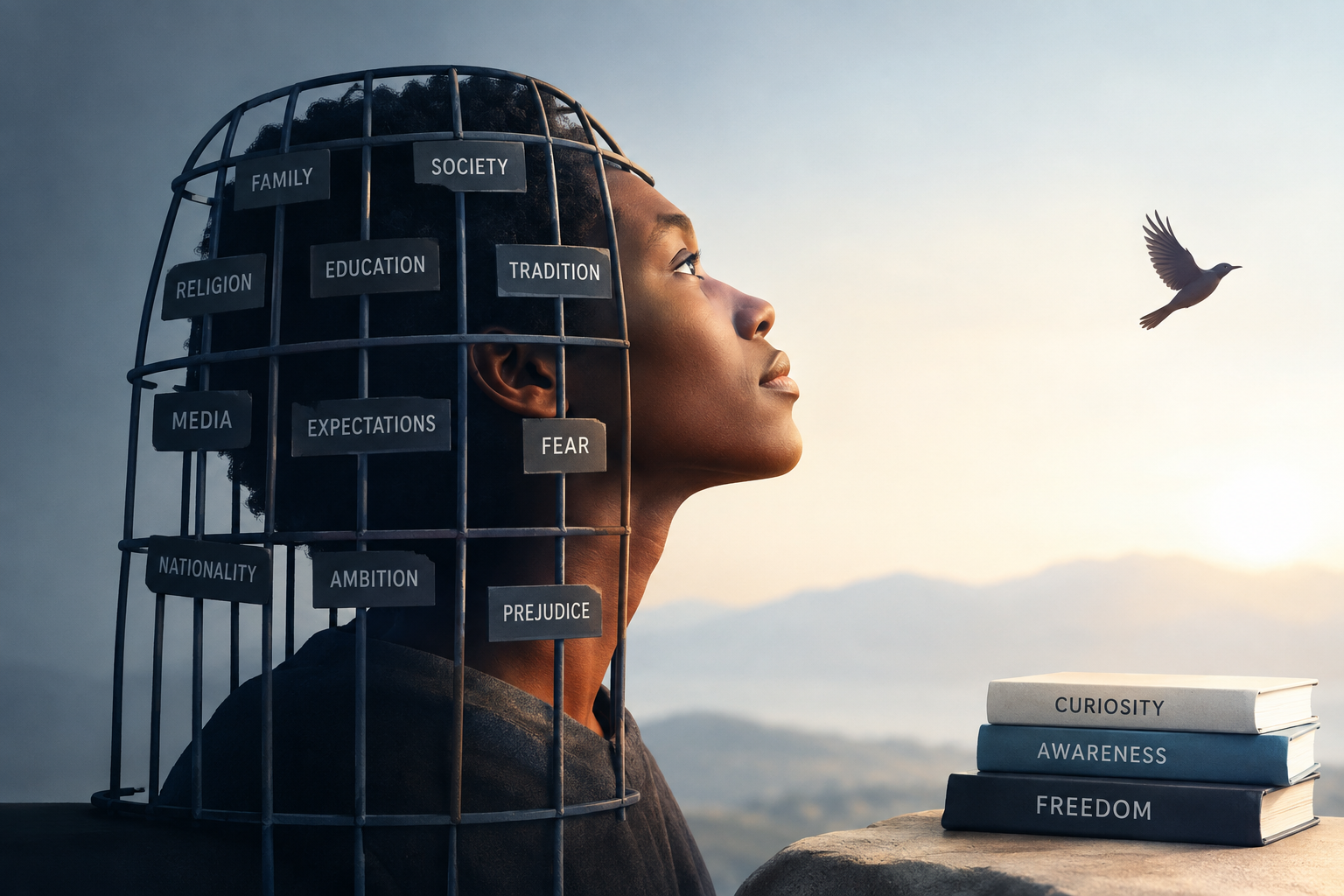
From childhood, we inherit names, languages, religions, nationalities, ambitions, prejudices and ideas of success. School teaches us what to remember. Society teaches us what to admire. Family teaches us what to fear. Advertising teaches us what to desire. Institutions teach us what authority looks like.
Eventually, we become so accustomed to these influences that we mistake conditioning for identity. And this is where Freedom from the Known becomes remarkably relevant to the technological age.
We now carry machines capable of answering questions, writing essays, generating images, coding software and increasingly performing intellectual tasks. Yet perhaps the greatest danger of artificial intelligence is not that machines will think like humans. It is that humans will stop thinking because machines can think for them.
Krishnamurti argued that thought is fundamentally connected to memory and therefore conditioned by the past. Thought can be extraordinarily useful within its proper domain, but it can also become mechanical: repeating patterns inherited from experience, culture and authority.
Consider the modern student. A question appears. Instead of struggling with it, they ask AI. An answer appears. The assignment is completed. But what happened to the struggle? The struggle may have been the education.
This does not mean AI is harmful. A calculator did not destroy mathematics. A microscope did not destroy biology. Technology can expand human capability enormously. The danger begins when convenience replaces cognition. And this problem extends beyond students.
We outsource navigation to algorithms, memory to search engines, relationships to social platforms, creativity to generators and increasingly judgement to artificial intelligence. We can become extraordinarily efficient without becoming more intelligent.
That is the paradox. Technology can increase our capacity while decreasing our necessity to exercise it.
Krishnamurti also challenged authority. He argued that genuine freedom cannot exist while the mind psychologically depends upon authorities, imitation and conformity.
This matters in Africa.
We often inherit systems of education, governance, economics and technology designed elsewhere, then measure our success by how efficiently we reproduce them. We sometimes confuse certification with intelligence, employment with achievement and imitation with progress.
Perhaps freedom from the known means asking: Why must development look like somebody else’s development? Why must an African university resemble a European university? Why must an African technology company depend entirely on foreign infrastructure? Why must intelligence developed elsewhere define what intelligence means here? Why must our children learn to answer yesterday’s questions when the world is changing faster than the syllabus? These are not arguments against knowledge. They are arguments for awareness.
Krishnamurti’s radical proposition was that freedom does not necessarily come from acquiring another ideology, another guru or another system. The mind must observe its own conditioning directly. He repeatedly returned to attention: seeing what is happening without immediately condemning, justifying or escaping it.
That may be the most important lesson for the AI age. We do not need humans who know everything. We need humans who can notice when they have stopped thinking. The future will belong not simply to those with the most information, nor even those with the most powerful AI.
It may belong to those capable of using powerful machines without becoming mentally dependent upon them. Because the most sophisticated prison may not have walls. It may be a comfortable mind that has forgotten how to question. Freedom begins when we become curious about the things we stopped questioning.
James Kaliisa is Co Founder & CTO of Nexus Inc., a Rwandan deep tech company building sovereign artificial intelligence infrastructure and digital systems for Africa.
