



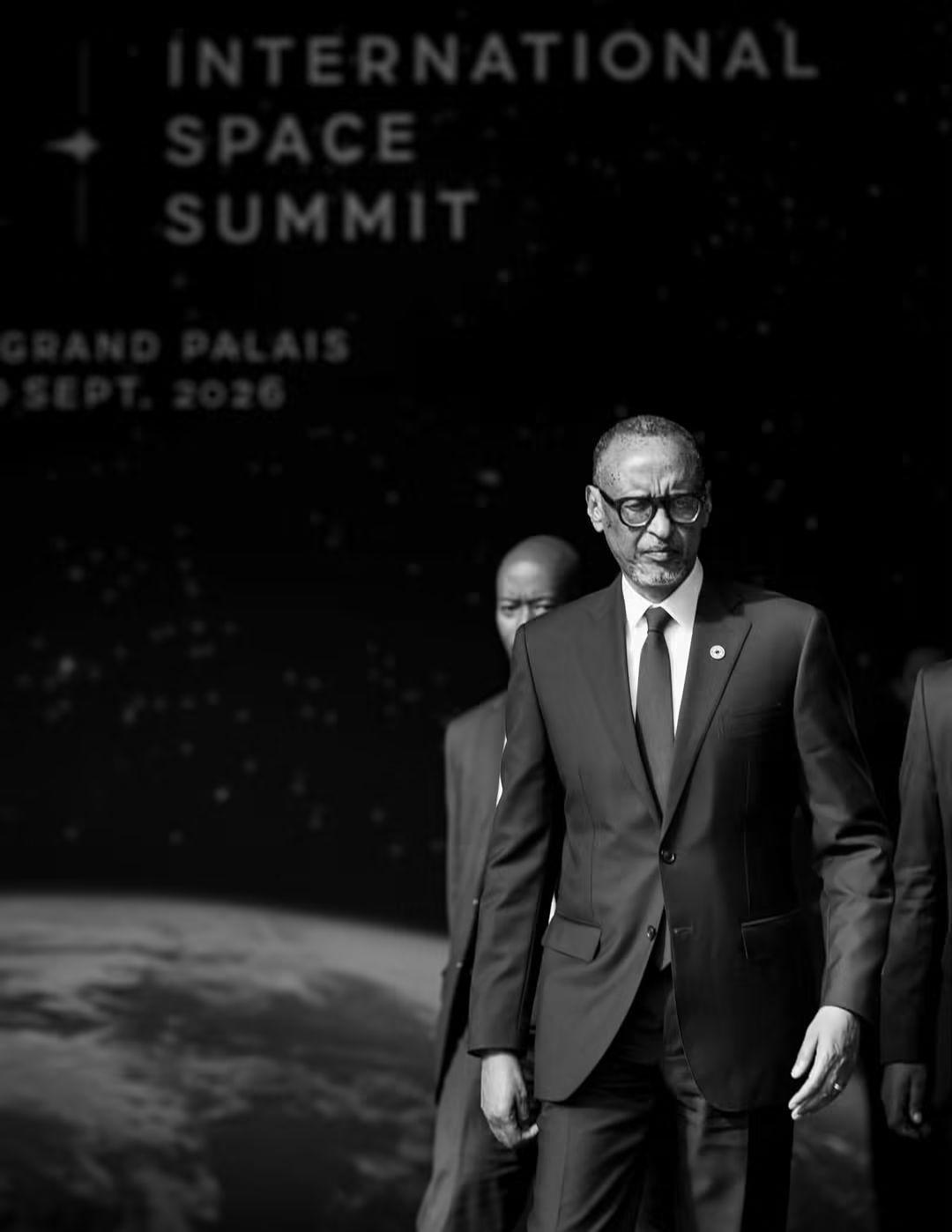
PARIS — President Paul Kagame has warned that African countries risk losing access to valuable orbital and radio-frequency resources as the global space industry expands, urging the continent to coordinate its interests and have a stronger voice in setting the rules for space.
Speaking at the first International Space Summit in Paris on Thursday, Kagame said Africa should not remain only a consumer of satellite services and other space technologies.
“Africa intends to be a full participant in this growth — not only as a user of space capabilities, but also as a contributor to science, research and global decision-making,” he said.
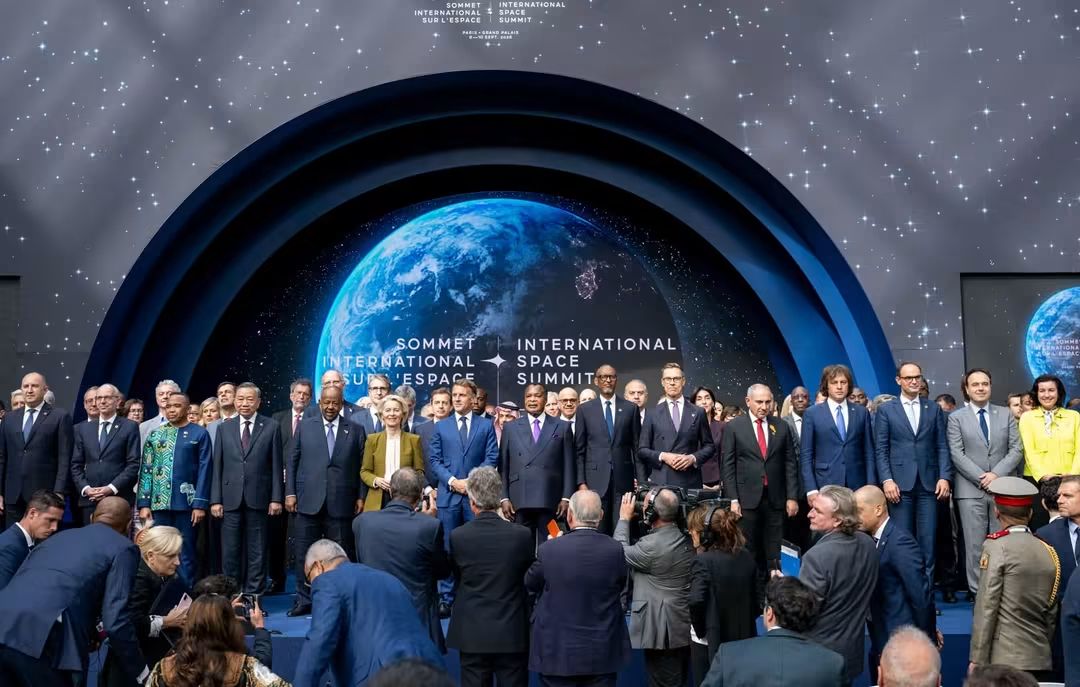
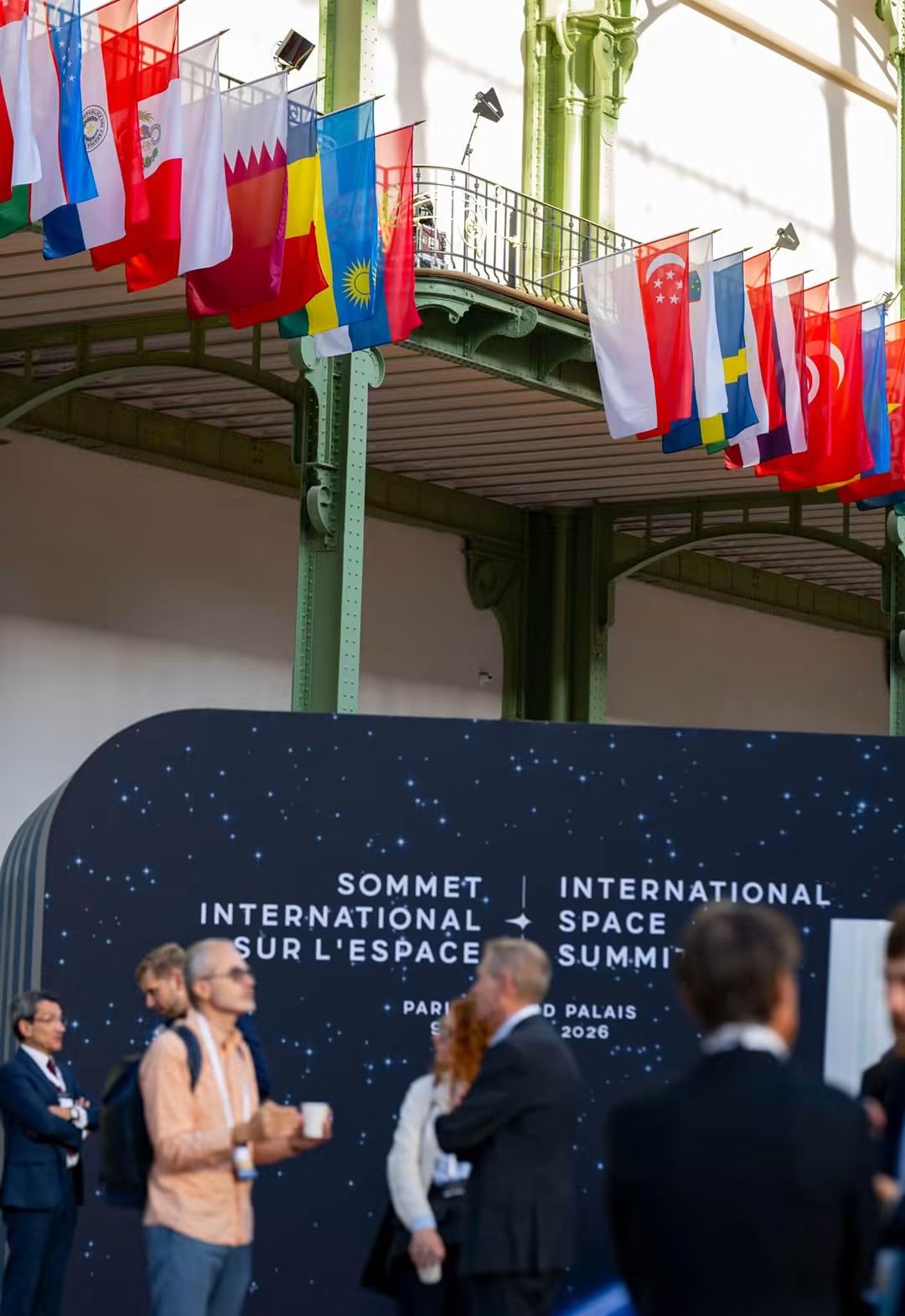
The two-day summit, hosted by French President Emmanuel Macron at the Grand Palais on September 9–10, has brought together nearly 120 foreign delegations, including heads of state and government, scientists, astronauts, space agencies, private companies and international organisations.
France says about 90 countries and international organisations are represented, with around 60 participating at head-of-state, government or ministerial level. Nearly 1,100 space-sector companies are also attending.
The meeting is addressing the rapidly changing space economy, scientific research and exploration, and the security and regulation of space. It is also designed to promote international cooperation rather than produce a binding global treaty.
Africa Wants a Bigger Role
Kagame said Africa’s young and increasingly connected population gives the continent an opportunity to develop a new generation of scientists, engineers and entrepreneurs.
“With the right support, our talent pool can develop the relevant expertise, build businesses and create real value for Africa,” he said.
He pointed to Rwanda’s own space programme as an example of how a relatively small African country can begin building capabilities in the sector.
Rwanda established its national space agency in 2020 and joined the Artemis Accords in 2022. The country also operates satellite ground infrastructure in Rwamagana that serves global operators and contributes to regional space capabilities.
Kagame said Rwanda is already using space technologies and artificial intelligence in areas including agriculture, infrastructure and disaster management.
He argued that such applications matter because space technology is no longer limited to exploration or scientific research. Satellites increasingly underpin services used on Earth, including communications, navigation, weather monitoring, agriculture and disaster response.
Fight for Orbital Access

One of Kagame’s strongest points was about access to the limited resources needed to operate satellites.
As satellite constellations expand, he said, competition is intensifying for radio-frequency spectrum and orbital positions.
Developing countries could find themselves at a disadvantage if they do not act collectively.
“Rwanda, alongside other partners, supported the African Telecommunications Union’s efforts to regain several orbital slots for the continent,” Kagame said.
He presented that experience as an example of what coordinated African action can achieve.
“This experience demonstrates how coordinated African action can protect our interests and reinforce our participation in this sector,” he said.
The issue is particularly important as governments and private companies deploy increasingly large numbers of satellites in low-Earth orbit and compete for access to frequencies and orbital resources.
France and Germany have themselves identified radio-frequency spectrum and satellite orbits as strategic resources and have backed the role of the International Telecommunication Union in coordinating their international use.
Kagame Calls for Rules That Include Developing Countries
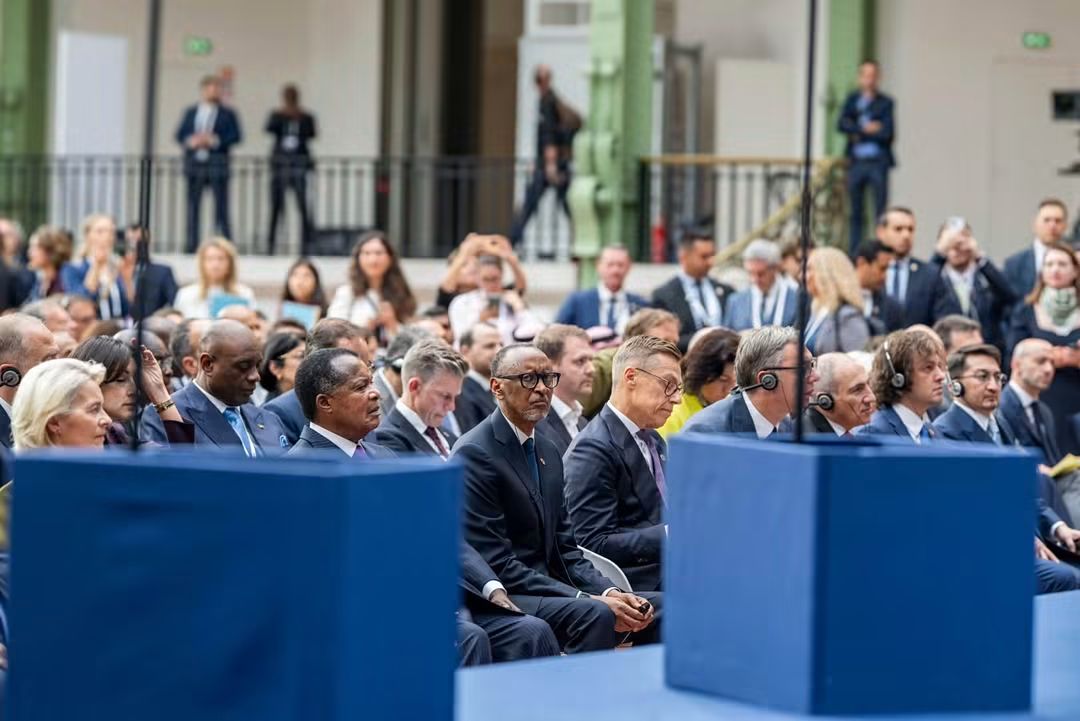
Kagame said the speed of technological change must be matched by clear international rules.
He argued that future frameworks should recognise both civilian and security applications of space technologies while allowing countries to cooperate responsibly.
But he said developing countries must have a meaningful role in shaping those rules.
“This requires an inclusive process that gives developing countries a meaningful voice and ensures that their priorities are fairly represented,” he said.
The argument places Rwanda’s position within a broader African concern that the continent should not become dependent on technologies, data and services controlled elsewhere.
Kagame also called for greater technology transfer.
He said export restrictions continue to limit access to knowledge and modern technologies and welcomed partnerships that can strengthen research and local technical capacity.
He cited E-Space, a satellite technology company working with African countries, as an example.
“A company like E-Space shows what this can look like in practice,” Kagame said. “It is working with a growing number of African countries to develop and deploy satellite-based solutions, bringing commercial activity closer to the markets and people that stand to benefit the most.”
Avoiding a New Space Divide
Kagame’s central warning was that the inequalities that exist in other sectors should not be reproduced in space.
“Ultimately, we should avoid reproducing in space the inequalities that exist in other domains,” he said.
His remarks came as Europe itself is debating how to reduce its dependence on external space capabilities.
Macron has used the Paris summit to push for stronger European cooperation and greater strategic autonomy in space, while the European Union is developing its IRIS² satellite communications system as part of efforts to build independent capabilities. The European Space Agency has also called for greater coordination among European satellite programmes.
That debate gives African countries an opening to push for a different kind of partnership, Kagame suggested — one based not only on buying services but also on developing local expertise, businesses, infrastructure and decision-making capacity.
“We stand ready to work with France and Europe and other partners to deepen space cooperation and deliver for all,” he said.
Rwanda’s Space Ambition
Kagame’s appearance in Paris reflects Rwanda’s effort to establish a position in the emerging space economy despite having no launch facility or large domestic space industry.
The country’s space policy is aimed at attracting investment and promoting innovation. Its ground infrastructure in Rwamagana provides a connection to international satellite operators, while the government has promoted satellite applications for development.
Rwanda’s membership in the Artemis Accords also places it within a US-led framework for cooperation around the peaceful exploration and use of the Moon, Mars, comets and asteroids.
For Kigali, the immediate value of space technology is less about sending people into orbit than using satellites and data to solve problems on the ground.
Agriculture, infrastructure planning, disaster management, connectivity and environmental monitoring are among the areas where satellite data can be applied.
Kagame’s message in Paris was that Africa should be involved in developing those capabilities rather than simply purchasing them.
Beyond Space
Kagame’s Paris visit also included a meeting with Khaled El-Enany, Director-General of the United Nations Educational, Scientific and Cultural Organization, before the space summit.
The two discussed Rwanda’s partnership with UNESCO in education, science and technology, cultural heritage, and the preservation of history and memory.

The meeting came as Rwanda continues to expand its cooperation with UNESCO in education, science, technology and heritage.
The broader space summit has brought together governments, international organisations, scientists, military representatives, astronauts and private companies around questions that extend beyond commercial opportunities.
France has framed the meeting around the future of the global space economy, scientific and technological cooperation, and the security and sustainable use of space.
For Kagame, however, the message was clear: Africa cannot afford to wait until the rules and resources of the new space economy have already been divided.
The continent, he said, needs to develop the capacity to participate, negotiate and shape what comes next.
