



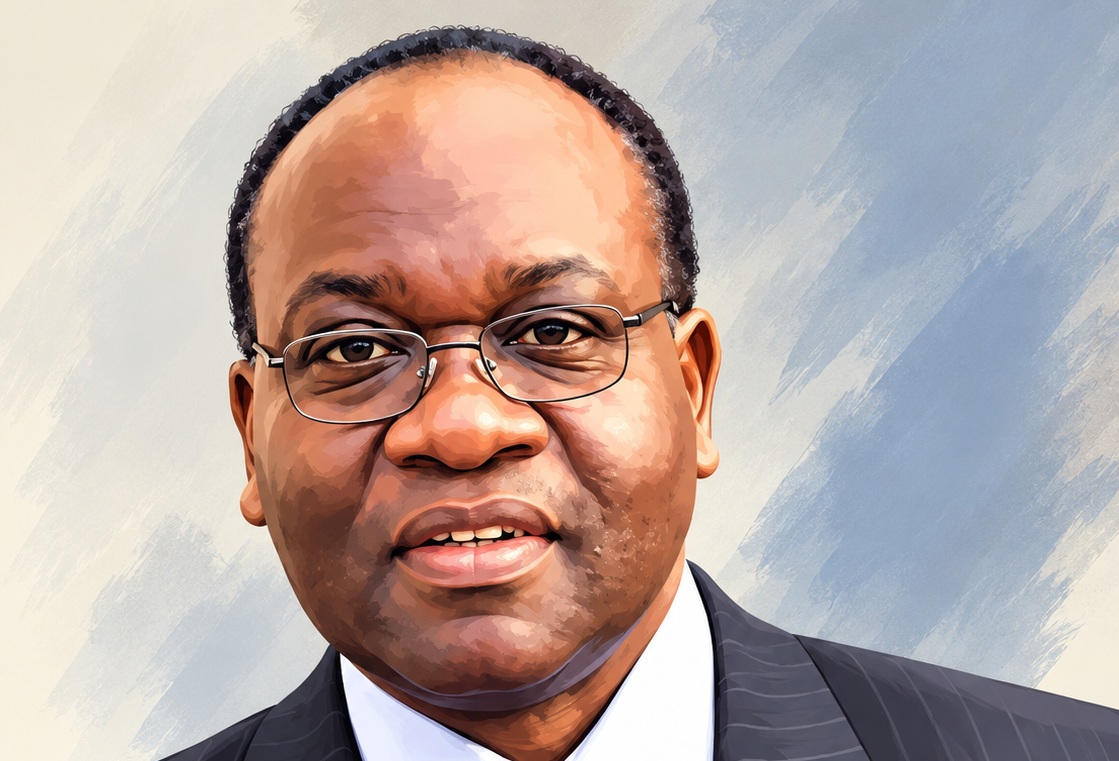
A British court has imposed a £100,000 bail guarantee (about Rwf195 million), on a Rwandan-born doctor accused of involvement in mass killings during the 1994 Genocide against the Tutsi.
Dr Vincent Brown, formerly known as Vincent Bajinya, 65, will remain in custody unless the guarantee is paid.
Bajinya is the first person in the United Kingdom to be charged over alleged crimes linked to the Genocide against the Tutsi in Rwanda.
At the Old Bailey court in London, Judge Mark Lucraft KC granted Bajinya conditional bail but imposed stricter conditions than those set during an earlier hearing.
The £100,000 guarantee is four times the £25,000 security previously imposed by magistrates.
Bajinya must surrender his passport and any national identity cards. He is also prohibited from applying for international travel documents and must live and sleep at his London address under a court-imposed curfew.
He will be electronically monitored and must report to police every day.
The judge said Bajinya would remain in custody until the £100,000 condition is met.
Bajinya is accused of killing, directing or encouraging the killing of members of the Tutsi ethnic group during the Genocide against the Tutsi.
British prosecutors allege that three members of one household were killed between April 6 and 13, 1994, together with a taxi driver, a mother and her young son.
The alleged victims are Dominique Mukurarinda, Immaculee Mukankusi, Gerasi Rurangirwa, Leandre Mbogoye, Charlotte Kamaguja and Olivier Tuyishime.
Bajinya denies the allegations.
The current prosecution follows a seven-year British investigation into the killings.
Alleged role in Kigali
Bajinya was a medical doctor who worked in Kigali and later headed the National Population Office, known by its French acronym ONAPO.
According to allegations presented in earlier British court proceedings, Bajinya became involved with Interahamwe militia activities in Kigali in the period leading up to and during the genocide.
Prosecutors previously alleged that he attended meetings in Kigali where plans for violence against Tutsi were discussed and that he became a leader or coordinator of militia activities in the capital.
Court papers cited in earlier proceedings alleged that he was involved at roadblocks in the Rugenge area of Kigali, where people suspected of being Tutsi were stopped.
One allegation concerned a man identified as Leandre, who was reportedly brought to a roadblock where Bajinya was allegedly giving orders. He was accused of ordering militia members to kill the man.
In another alleged incident, Bajinya was accused of leading a group to a house where a Tutsi woman was hiding with her two-month-old baby. The allegations stated that the baby was killed and that the woman was questioned before being shot.
These allegations have been denied by Bajinya, and the current British proceedings will determine the charges against him.
A long-running case
Bajinya’s legal case in Britain dates back to the mid-2000s.
He was first arrested in 2006 following Rwanda’s request for his extradition, alongside other Rwandans accused of genocide-related offences. He was later released in 2009 after British courts halted the extradition process.
He was arrested again in May 2013 following a renewed request from Rwanda.
The 2013 arrests involved five Rwandans: Bajinya; Emmanuel Nteziryayo, who had been mayor of Mudasomwa; Charles Munyaneza, who had been mayor of Kinyamakara; Celestin Ugirashebuja, who had been mayor of Kigoma; and Celestin Mutabaruka, who had headed the Crête Zaire-Nil project in southern Rwanda.
The five had been living in Britain and were wanted in connection with alleged participation in the Genocide against the Tutsi.
Bajinya subsequently fought efforts to have him transferred to Rwanda and sought to have his case handled in Britain.
In July 2013, a British judge ordered his temporary release while proceedings over his possible transfer continued. He was required to wear an electronic monitoring device and observe a night-time curfew at his home in Islington, north London.
From doctor to public official
Bajinya was born in Rwanda and trained as a medical doctor in the 1980s.
He worked as a doctor in Kigali, including at King Faisal Hospital, and later worked with ONAPO, the government institution responsible for population and family-planning programmes.
He eventually became head of the institution.
After leaving Rwanda, he moved to Britain with his family in 2000.
In Britain, he worked for Praxis, a London-based organisation supporting refugees and people who had experienced torture. He also served on the Refugee Nurses Task Force, which was established to advise the British Government on issues affecting refugee nurses.
The allegations against Bajinya concern events during the 1994 Genocide against the Tutsi, when an estimated 800,000 Tutsi and moderate Hutu were killed over about 100 days.
Bajinya is due to appear again at the Old Bailey on October 9.
British authorities are continuing investigations into other alleged genocide offences connected to Rwanda.
