



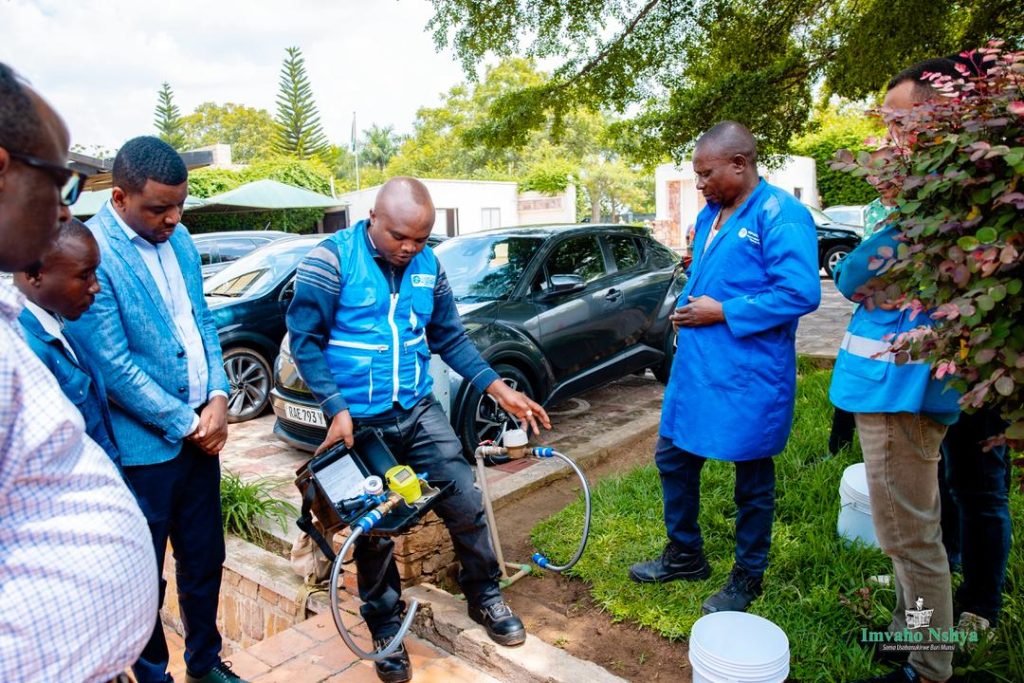
WASAC is the national water utility
The Water and Sanitation Corporation (WASAC) came under scrutiny in Parliament on Tuesday over its decision to halt a project to install a system for monitoring water losses, despite the work reportedly being 99% complete and most of the contract value already paid.
MP Eugene Mussolini raised the issue during a parliamentary session in which State Minister for Infrastructure Armand Zingiro presented information on the project.
Mussolini questioned why the project had been stopped when it was almost complete and most of the money had already been paid.
The project involves installing a Supervisory Control and Data Acquisition (SCADA) system to help WASAC monitor its water distribution network and identify losses.
During the parliamentary discussion, the estimated cost of water losses was put at between Rwf10.5 billion and Rwf29 billion.
Zingiro said the contractor had initially agreed to carry out the work at a lower cost but later sought to withdraw before completing the project. He said the parties subsequently agreed that the contractor would resume work under an extension that would not involve additional costs.
“The work will resume next week,” Zingiro said.
The project comes as WASAC continues to grapple with high levels of water that is produced but not billed, according to the latest report by the Auditor General of State Finances.
The report for the year ended June 30, 2025, found that 37.8% of water produced by WASAC was not billed, down from 39.5% in the previous year.
WASAC produced about 85.75 million cubic metres of water during the period, of which 53.33 million cubic metres, or 62.2%, was billed. The unbilled water was valued at Rwf10.4 billion, based on the minimum tariff of Rwf323 per cubic metre.
Non-revenue water includes water lost through leaks and overflowing reservoirs, as well as water that is consumed but not billed because of theft, inaccurate meters and other problems in the distribution system.
The Auditor General recommended that WASAC develop strategies to reduce these losses.
The report also found delays in connecting new customers and replacing defective water meters. Of 282 customer connections examined by auditors, 223 were delayed by between 10 and 188 days, against a service charter target of two working days after the required materials had been supplied.
The replacement of defective meters was delayed by between 12 and 269 days, partly because of procurement-related shortages.
The findings highlight the financial and operational challenges facing WASAC as it seeks to reduce water losses, improve billing and provide more reliable services to customers.
