



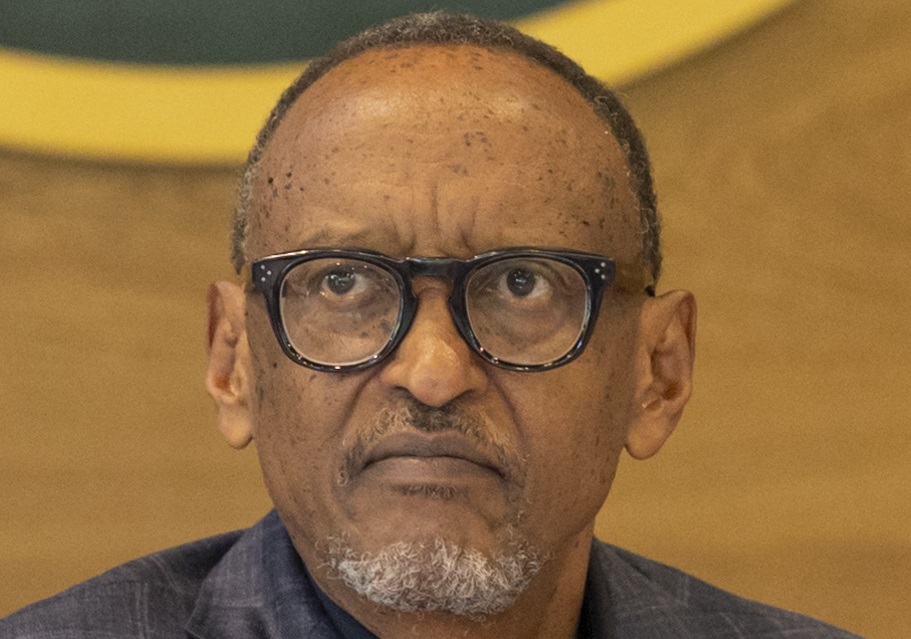
What makes Kagame, and Rwanda itself, so discomforting. They are the student who aces the test, but whose performance makes everyone else in the classroom feel exposed — underprepared, slow, or uninterested.
In the heart of Nairobi, a group of university students sit around a coffee shop table, scrolling through a video clip of Rwanda’s President Paul Kagame giving a sharp, no-nonsense speech at a global forum.
One of them, Sharon, sighs loudly. “This guy is just something else. He speaks like he knows exactly what he wants,” she says, “Meanwhile, we’re still waiting for our leaders to fix potholes and corruption scandals.”
It’s a scene repeating itself across Africa: young people comparing their countries to Rwanda — sometimes with admiration, more often with frustration. It’s not that Rwanda is perfect. Far from it. But for the past 30 years, it has become a kind of model student in Africa — one whose performance makes others in the class look lazy, corrupt, or unprepared.
And at the center of it all stands President Kagame — the discomforting student no class wants, but no one can ignore.
The Global Scorecards That Changed Rwanda
Rwanda’s rise wasn’t just luck or guesswork. It was fueled by sheer determination from the highest levels. The most famous example is the World Bank’s Doing Business Index, where Rwanda ranked second in Africa and among the world’s top reformers year after year. These rankings were not simply for decoration. Rwanda took them seriously, implementing dozens of painful but structured reforms in tax, business licensing, land registration, and more.
Other African countries began to pay closer attention. As Rwanda steadily climbed the charts, governments in Kenya, Ghana, and Nigeria started tracking their own rankings more actively. The global scorecards began to matter — not just to donors and investors, but to citizens and media who now had benchmarks to question their leaders.
Just this week, the UNAIDS Global Progress Report, as reported by KT Press, showed Rwanda among the few countries on track to meet 2030 HIV/AIDS targets. The report praised Rwanda’s health system for its efficiency, data-driven approach, and community-level interventions. This kind of recognition is not occasional; it’s frequent. Rwanda has found a way to score high on the same platforms that measure governments across the globe — and that makes its performance harder to ignore.
READ MORE: Rwanda Meets All Global Targets for HIV Control – UNAIDS
Stadium Envy: BK Arena Starts a Regional Race
When Rwanda opened the BK Arena in 2021, it stunned the region. Costing over $100 million and completed in under two years, the arena became East Africa’s largest indoor facility. Since its launch, it has hosted the Basketball Africa League, CHOGM events, regional conferences, global concerts, and even esports tournaments.
It wasn’t long before other countries tried to follow. In 2023, Kenya announced an ambitious plan to construct seven new stadiums, after years of public pressure and embarrassment on the sports scene. Uganda moved quickly to renovate its Namboole Stadium and began exploring indoor venue, whose development is in the final stages in western Uganda.
In DR Congo, a Kinshasa-based arena was unveiled, clearly influenced by Rwanda’s multi-purpose model.
For years, indoor arenas were seen as a luxury only the West or Gulf States could afford. But Rwanda changed that. BK Arena became more than a building — it became a statement. As one Kenyan sports fan wrote on X (formerly Twitter), “Before BK Arena, we never even thought arenas were for Africa. Now every minister wants to build one. Rwanda showed them it’s possible.”
Tourism Branding: “Visit Rwanda” Becomes the Blueprint
In 2018, Rwanda surprised the world by signing a sponsorship deal with English football club Arsenal and later with Paris Saint-Germain (PSG). The now-famous “Visit Rwanda” logo appeared on player jerseys and in stadiums, making Rwanda one of the first African countries to advertise itself on the global sports stage.
What many dismissed as a vanity move turned out to be a masterstroke. Tourism numbers grew. Airline routes expanded. The country rebranded itself in the eyes of the world.
Soon, others followed. In 2022, Uganda launched “Explore Uganda: The Pearl of Africa,” a national tourism rebrand clearly inspired by Rwanda’s strategy. Ghana and Kenya began exploring similar models using celebrities and social media to attract visitors.
Rwanda had proven that country branding wasn’t just for the West. A small country could promote itself like a tech startup — and win.
Sports Diplomacy Goes Continental
Beyond the tourism branding, Rwanda took things a step further by creating deep partnerships with football clubs across Europe and the Middle East. By 2024, the country had established long-term deals with at least five clubs — Arsenal, PSG, Bayern Munich, Al-Nassr, and another under negotiation — for branding, youth development, and tourism promotion.
These were not one-time PR stunts; they were investments in perception, influence, and soft power.
Soon, other African countries began copying the model. In 2024, DRC sports officials entered negotiations with French Ligue 1 clubs and recently FC Barcelona, and Ghanaian sports media publicly debated whether their government should follow Rwanda’s playbook. Rwanda was now a small country with a loud voice in the global sports business.
Rwanda’s New Export: Homegrown Technology
Rwanda is not just exporting coffee, tea, or minerals anymore. It is now exporting something far more modern — its technology systems.
In July 2025, Rwanda’s Senate confirmed in a public report that the country is making money from exporting homegrown digital platforms such as IREMBO — Rwanda’s all-in-one government services portal — and RRA’s online tax declaration system.
Countries like Eswatini, Chad, Guinea, Kenya, and Lesotho have all purchased or implemented these systems, paying for not just software but also the frameworks, training, and policy templates that come with it. Rwanda’s approach is simple: deliver a full package of digital transformation, not just code.
One African government reportedly paid millions of dollars for Rwanda’s digital tools, calling them more effective and affordable than consultants from Europe or North America.
Rwanda is now treating its own reforms as premium products — and other countries are buying in.
READ MORE: Technology Transfer Is Rwanda’s Latest Pricey Export
Kagame: The Regional Reference Point
President Kagame has become a reference point in African leadership debates. His speeches at forums, sometimes sharp and provocative, often go viral. In youth WhatsApp groups, TikTok reels, and Twitter memes, Kagame is framed as the no-nonsense leader that many wish they had.
In Uganda, during a 2024 national television panel, an opposition politician declared, “Rwandans are building what we’ve been planning for 20 years. It’s painful to watch.”
Even leaders who criticize Rwanda’s governance style quietly acknowledge Kagame’s performance on issues like infrastructure, digital governance, and service delivery. It’s not hero worship — it’s comparison, and it cuts deep.
Kigali: The Conference Capital
Rwanda’s strategy to turn itself into Africa’s conference capital took off after hosting the Commonwealth Heads of Government Meeting (CHOGM) in 2022. The city of Kigali underwent massive infrastructure upgrades and now regularly hosts global summits — from Women Deliver to the Transform Africa Summit.
Other countries followed. Kenya began expanding its Kenyatta International Conference Centre. Uganda fast-tracked a new national events venue. Nigeria launched a program to attract global business events to Abuja and Lagos.
Rwanda had made meetings and summits a pillar of its national income — proving that conference tourism is not just decoration, but a business.
It is not that other countries haven’t been doing these things. It is that plenty of other crucial things are going wrong, so the populaces of these nations, wonder what is wrong with their countries.
Of course, Rwanda is not without flaws. But even critics concede that the system works. Roads are clean. Public services function. The buses run on time. Emails get answered. There’s visible order.
A renowned academic recently told a regional panel, “Rwanda may not be a liberal democracy. But at least it’s a functional state. Most of our countries are neither.”
RwandAir and the Ripple Effect
Rwanda’s ambition has extended to the skies. The launch and steady growth of RwandAir took many by surprise. What business did a small, landlocked country have starting its own national airline?
But the results were undeniable. RwandAir expanded routes across Africa, Europe, and the Middle East. It supported the tourism sector and helped brand Rwanda as globally connected.
READ MORE: The 30 Years of Consequential Decision-Making
The ripple effect came quickly. Tanzania rebranded and invested heavily in reviving Air Tanzania. Uganda launched Uganda Airlines in 2019. DR Congo reintroduced Air Congo. Even South Sudan and Zambia followed suit, either relaunching or studying national carriers.
Again, Rwanda made the move first — and others scrambled to catch up. And that’s the pattern. Again and again.
The Student No One Wants — But Needs to Watch
Rwanda’s journey from the 1994 genocide to continental admiration was not a miracle. It was built through discipline, deliberate reforms, and relentless follow-through. And it has turned Rwanda into something very uncomfortable for other governments: a working example of what is possible.
Rwanda doesn’t just talk reform. It executes it. Then it shows results. Then it exports those results.
And that’s what makes Kagame, and Rwanda itself, so discomforting. They are the student who aces the test, but whose performance makes everyone else in the classroom feel exposed — underprepared, slow, or uninterested.
Rwanda is the student no class wants — but no serious class can afford to ignore. And in many ways, for a continent trying to define its future, that may be exactly the kind of student Africa needs.

2 comments
President Kagame is a lead Shirp.We have a Good Governor.
We treasure the undeniable efforts of our own who offered themselves no matter what comes, to liberate Rwanda, at a time when the world gave a blind eye, and a deaf ear to the cries of million Rwandans. Lord God I never thought that 1 Corinthians 1.26-31
Comments are closed.