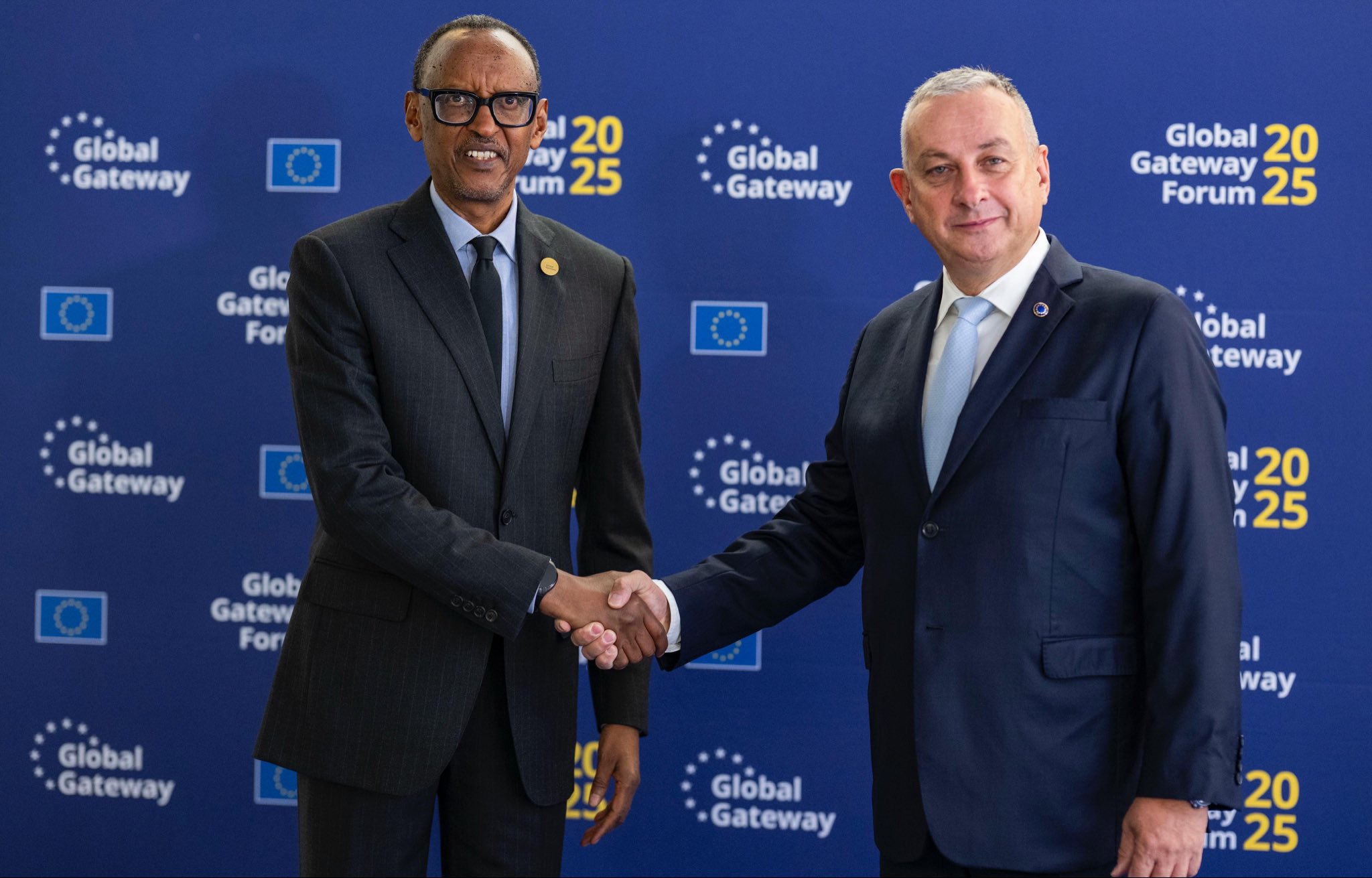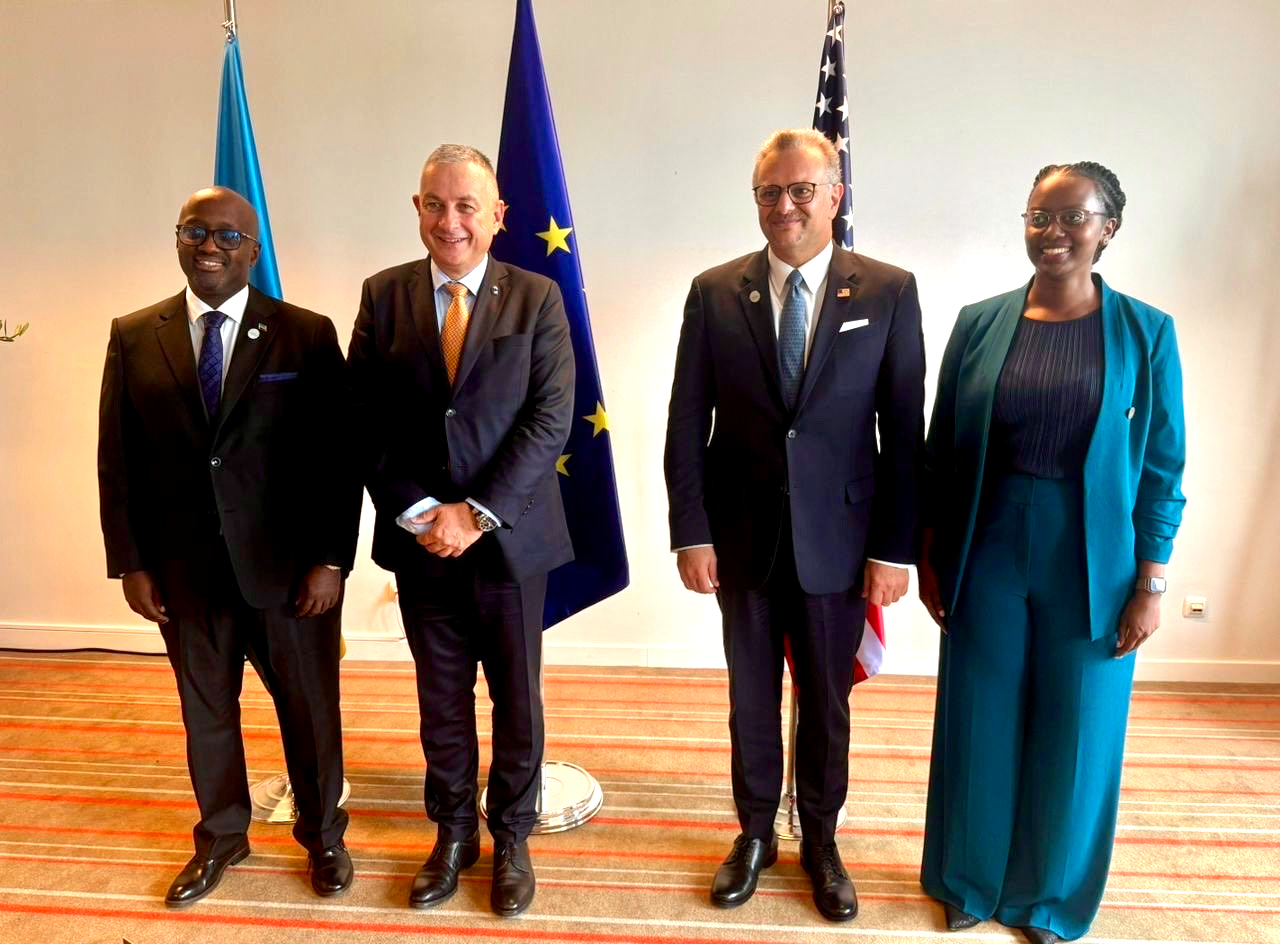
L-R: Amb. Olivier Nduhungirehe, Jozef Sikela, Massad Boulos and Tesi Rusagara
The European Commission has pledged its support to the Regional Economic Integration Framework (REIF), a new initiative aimed at deepening economic ties and fostering stability in the Great Lakes region.
The announcement was made during the second edition of the Global Gateway Forum* held recently in Brussels.
The EU’s commitment focuses on facilitating broader regional integration and economic development within the framework of its external cooperation policies, particularly in Africa.
The REIF is a newly established framework rooted in a peace agreement between Rwanda and the Democratic Republic of Congo (DRC), mediated by the United States, to promote stability and shared prosperity across the Great Lakes region.
Although the formal signing of the REIF was expected last week, the DRC pulled out at the last minute, despite earlier positive negotiations in Washington, D.C., where the framework had been finalized.
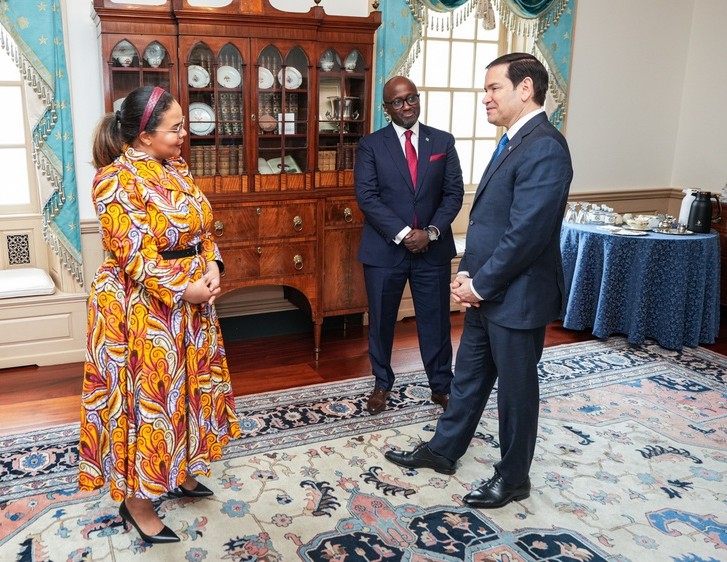
U.S. Secretary Rubio hosts a Declaration of Principles signing ceremony between Democratic Republic of the Congo Foreign Minister Thérèse Kayikwamba Wagner and Rwandan Foreign Minister Olivier Nduhungirehe
Nonetheless, the European Commission has already aligned its resources and regional cooperation programs with the REIF’s priority areas, including clean energy, sustainable mining, and transport infrastructure.
EU Commitment Welcomed:
Following the Global Gateway Forum, Rwanda’s Minister of Foreign Affairs, Amb. Olivier Nduhungirehe, and Minister of State for Resource Mobilization and Public Investments, Tesi Rusagara, held a joint meeting with EU Commissioner for International Partnerships, Jozef Sikela, and U.S. Senior Adviser for Africa, Massad Boulos.
The discussions centered on deepening regional economic integration as a foundation for peace and prosperity in the Great Lakes region. Both Rwandan officials welcomed the European Commission’s commitment to support the Regional Economic Integration Framework (REIF).
While the EU has not yet announced dedicated financial programs under the REIF, its existing frameworks and instruments already align with the initiative’s core objectives and implementation strategy.
Alignment with EU Regional Strategies:
The European Commission’s support to the REIF is consistent with its broader regional cooperation strategies, particularly through the following pillars:
Aid for Trade (AfT): The EU is the world’s largest provider of Aid for Trade, helping developing nations strengthen trade policies, overcome regulatory barriers, and enhance infrastructure to better integrate into global markets. This directly supports the REIF’s goal of promoting trade liberalization and cross-border interoperability.
Global Gateway Strategy: Launched in 2021, the Global Gateway is the EU’s flagship initiative to promote smart, clean, and secure connections in digital, energy, and transport sectors, with a target to mobilize up to €300 billion by 2027.
The REIF’s priorities — such as the Rusizi III hydropower project, regional transport corridors, and ICT cooperation* — align closely with the Global Gateway’s investment focus.
Support to Regional Economic Communities (RECs):
The EU maintains strong partnerships with regional bodies like the East African Community (EAC), Common Market for Eastern and Southern Africa (COMESA), and the Economic Community of the Great Lakes Countries (CEPGL).
The REIF seeks to create synergies with and revitalize these institutions, making EU support to the RECs an indirect but essential contribution to REIF’s implementation.
Key Areas of Direct and Indirect Support:
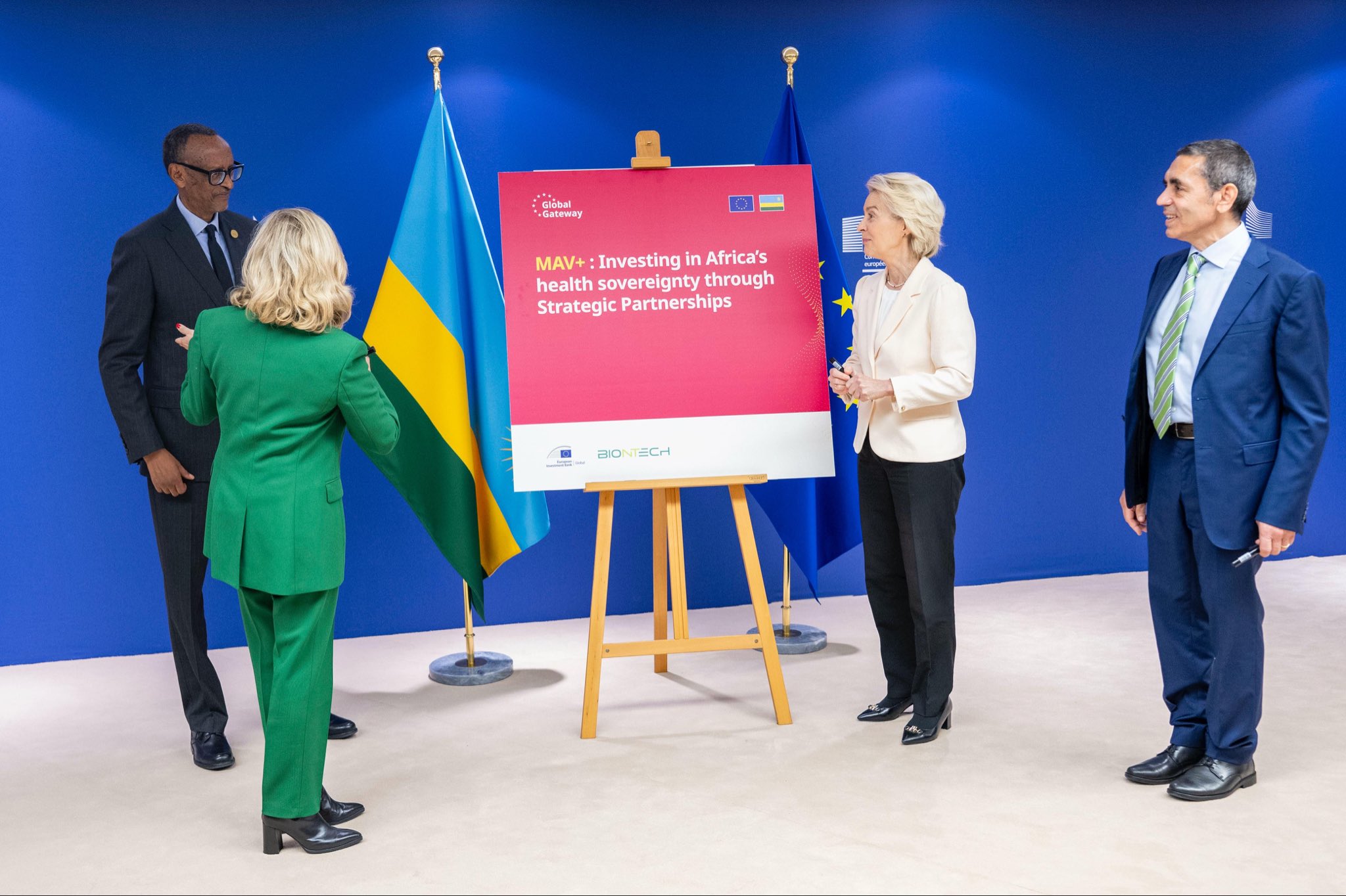
The EU’s cooperation frameworks with Rwanda, the DRC, and neighboring states already fund several initiatives that advance the REIF’s strategic pillars:
1. Mineral Supply Chains: The EU supports Rwanda’s efforts to formalize its artisanal mining sector and enhance compliance with international due diligence and transparency standards. These programs directly address REIF’s goal of curbing illicit mineral trade.
2. Infrastructure and Connectivity: EU funding and technical assistance extend to major regional infrastructure projects, including road network corridors such as the Northern and Central Corridors, and energy projects like the Rwanda–Burundi 220Kv power interconnector, which will link the DRC and other East African nations.
3. Governance and Security: Through governance and institutional support programs, the EU is helping improve *border management, strengthen economic governance, and promote a rules-based regional economy — foundational elements for the REIF’s long-term success.