



When I arrived in Nairobi on Monday afternoon, the city pulsed with its usual pre-pandemic rhythm.
Jomo Kenyatta International Airport (JKIA) was alive with activity, the air thick with anticipation for the three-day conference I had come to attend.
Outside the terminal, Nairobi’s legendary traffic chaos quickly asserted itself. My cab driver, an old hand at navigating the gridlock, offered a knowing smile and pointed toward the congestion on Mombasa Road.
“We’ll use the Expressway,” he said confidently, referring to the elevated route that soars above the jams.
The double-decker Nairobi Expressway—an impressive addition to the city’s infrastructure—offered a smooth, fast escape from the tangle below. For a toll, we glided past the standstill traffic and reached the city center swiftly.
Through Monday and Tuesday, Nairobi moved with its normal pace: the familiar political chatter, the daily grind, and no signs of tension—just another bustling week in East Africa’s largest city.
Wednesday: The day everything changed
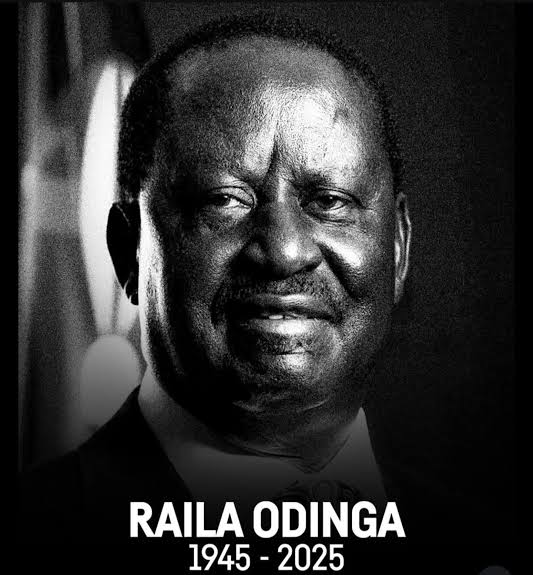
The atmosphere shifted dramatically on Wednesday morning as I entered the conference hall. The usual cheerfulness among my Kenyan friends was replaced by an uneasy silence. Then came the devastating news that froze the nation—Raila Odinga was dead.
Kenya’s long-standing opposition leader and political titan had passed away in India, where he was undergoing medical treatment.
Reports said he suffered a cardiac arrest during a morning walk. Within hours, the news spread across the country, plunging it into deep sorrow and disbelief. Kenya’s President William Ruto announced a week-long mourning period.
After the conference, I spoke with veteran journalists and political observers. Their consensus was firm: this was a moment that would redefine Kenyan politics.
The end of a historic rivalry
For decades, Kenya’s political landscape was shaped by the rivalry between Raila Odinga and the Kenyatta family—a saga that began with their fathers; Jomo Kenyatta, the nation’s founding president, and Jaramogi Oginga Odinga, its first vice president. That generational feud has now reached its final chapter with Raila’s death, observers said.
A party without its captain
Odinga’s passing has created a leadership vacuum within his party, the Orange Democratic Movement (ODM). Political analysts believe the ripple effects are only beginning to unfold.
Odinga never named a clear successor, leaving the party vulnerable. Despite efforts to diversify leadership across Kenya’s ethnic lines, ODM’s heart remains rooted in Odinga’s Luo community. This dynamic makes succession delicate.
One current party official from the Luhya and Coast communities is viewed as an unlikely choice to win broad support from the ODM base. Meanwhile, within the Odinga family, no strong political figure has yet emerged to carry the mantle. The absence of a clear leader has left ODM exposed and uncertain.
What lies ahead for President Ruto
For President William Ruto, Odinga’s death changes everything. Ruto had been engaging Odinga in dialogue and extending olive branches to cool political tensions. Those efforts, seen as personal gestures rather than formal negotiations, aimed to maintain stability.
With Odinga gone, Ruto faces a different political reality. His most formidable rival—and the one person capable of restraining mass protests—is no longer there. While this may strengthen Ruto’s influence over opposition dynamics, it also removes a stabilizing force from Kenya’s often volatile political scene.
Observers warn that new movements, particularly the energized Gen-Z activists who recently took to the streets, may now seize the moment to push for radical change. Their enthusiasm borders on revolutionary, and the absence of Odinga could ignite new waves of unrest.
A nation in mourning
After our conference on Wednesday, two friends from Uganda and Tanzania suggested that we walk downtown Nairobi.
As we walked through Nairobi streets, the nation’s grief was on full display. Green branches—symbols of mourning and dignity in Luo culture—were tied to cars, buses, and motorcycles across the city.
From public transport vehicles to private sedans, the twigs fluttered in silent tribute to man millions called “Baba” (father). The atmosphere was heavy, reflecting both national sorrow and the uncertainty of what comes next.
Raila Odinga’s passing marks the end of an era—a man whose political life embodied the fight for democracy and reform. His death closes a monumental chapter in Kenya’s story and opens a future that, for now, remains uncertain.
The Writer, Dan Ngabonziza, is the Editor-in-chief and Business Development of Kigali Today Ltd, the parent company of KT Press, KT Radio 96.7FM and KigaliToday.com

2 comments
Excellent , Exceptional , Unbelievable Unfortunates, Unforgettable Scene & Moment.
No more No less; Emulate & Forge ahead.
Comments are closed.