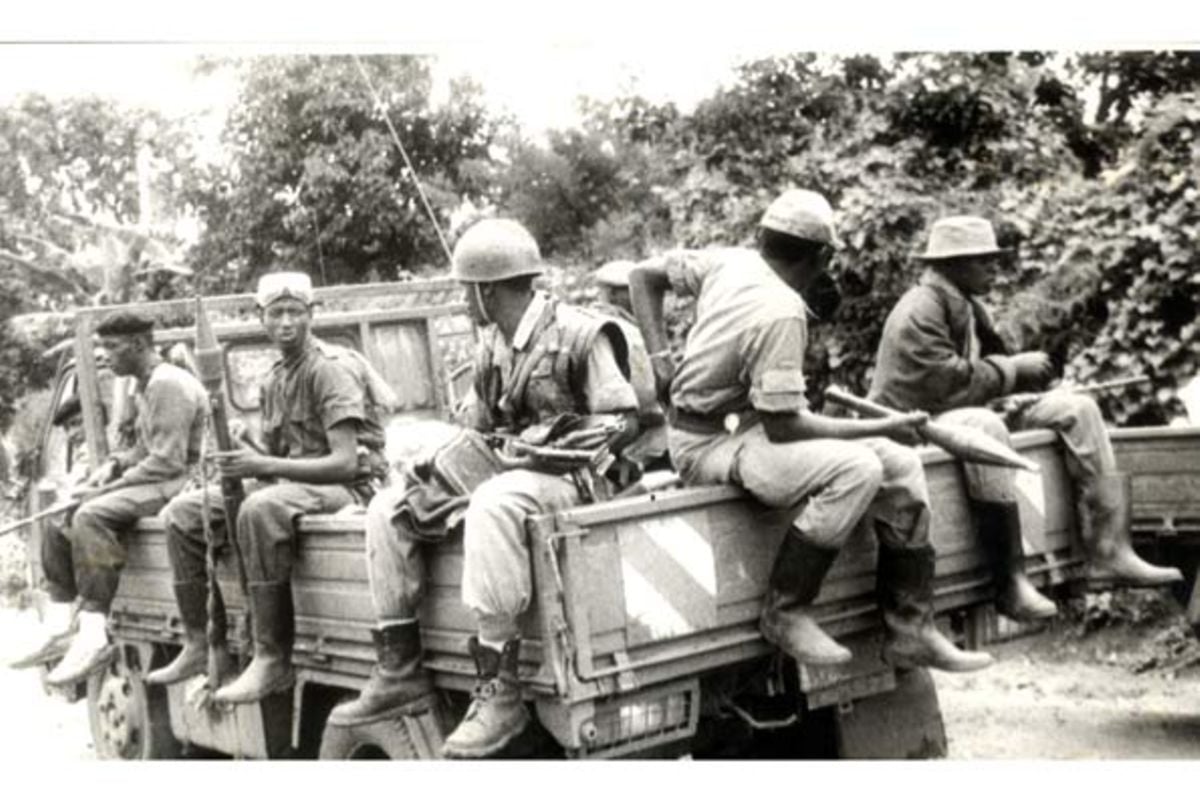
RPA rebels during the liberation war (Photo by The Monitor, Uganda)
Thirty-five years ago, on October 1, 1990, the hills of Rwanda witnessed the dawn of a struggle that would forever reshape the destiny of a nation.
On that fateful morning, a group of determined young men and women—most of them refugees exiled for decades—chose to rise above despair and confront the impossible.
They formed the Rwanda Patriotic Army (RPA), leaving behind the comforts of their childhood villages in foreign lands to face hunger, cold, death, and uncertainty, all in pursuit of the dream of a free Rwanda.
Theirs was not an ordinary fight. It was a journey of courage and sacrifice that remains etched in the hearts of Rwandans across generations. Among them was Paul Kagame, then just 33 years old, who would emerge as the leader to guide the struggle through its darkest and most uncertain moments. What they endured, and what they achieved, remains one of the most powerful lessons of sacrifice and patriotism in modern history.
The harsh road of liberation
The RPA rebels were not soldiers of fortune, nor were they driven by personal gain. They were sons and daughters of Rwanda who had lived much of their lives in exile, denied the dignity of belonging to their homeland.
When they crossed the border into Rwanda in October 1990, they walked into a future that promised nothing but hardship.
The mountains and forests, rivers such as Akagera, Akanyaru and many more that became their battlefield, were merciless. Nights were cold, the kind of cold that pierced through worn-out clothes and bruised bodies.
According to stories from these brave men and women, many had no shoes, forcing them to walk barefoot over thorns, stones, and rugged terrains. Hunger was a constant companion. There were days when a handful of beans or maize husks had to be shared among many. Water was scarce, and the exhaustion of endless treks left their bodies weak.
And yet, their greatest pain came not from hunger or cold but from the sight of their comrades falling beside them. Some were killed in battle, others gravely wounded with no proper medical care available.
In those moments, the survivors were forced to carry both their grief and their hope, knowing that the struggle demanded every ounce of strength they had left.
There was never a single peaceful night of sleep. Rest meant vulnerability, and vulnerability could mean death. But these young rebels pressed on. Each step they took, every hill they climbed, was an act of defiance against despair.
They were bound together by one conviction—that Rwanda must be free, and that future generations must inherit a homeland that welcomes them as its rightful children.
Paul Kagame and the spirit of leadership
President Paul Kagame, then a young commander of just 33 but with enormous military experience, inherited not only the task of reorganizing a struggling force but also the dream of thousands who had entrusted their lives to the cause.
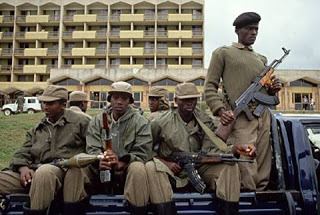
RPA soldiers outside the Parliamentary buildings back in early 1994
Through discipline, vision, and strategy, he transformed the RPA into a disciplined army capable of withstanding impossible odds. His leadership became a turning point—restoring order where chaos threatened, instilling hope where despair had nearly taken hold, and pushing forward until victory was achieved.
Kagame’s leadership was not about privilege, but about selflessness. It was leadership that demanded sacrifice, not reward. His courage and strategic foresight gave Rwanda a chance to live again.
A lesson for generations
Today, thirty-five years later, Rwanda stands as a testimony to their sacrifice. The rebels of October 1, 1990, laid the foundation for a nation that rose from ashes to become a beacon of resilience, unity, and progress.
Their story is not only one of military victory but also of human determination against overwhelming odds.
But the question that confronts us, Rwandans, today is this: how do we, the beneficiaries of their sacrifice, honor their legacy?
The challenges we face today are different. We are not in the forests, nor do we face hunger, barefoot marches, or the fear of bullets whistling through the night.
Our struggles are in the classrooms, in innovation hubs, in boardrooms, in farms, and in communities. They are in fighting poverty, building strong institutions, protecting the environment, and ensuring that Rwanda continues to stand tall among nations.
If the young men and women of the RPA could give up their youth, their comfort, and sometimes their very lives, can we not, too, make sacrifices—however small—to keep Rwanda moving forward?
Can today’s generation, with opportunities for education, peace, and prosperity, show the same bravery in their own contexts?
The torch of sacrifice
The heroes of October 1, 1990, are ageing. Many of them, once young warriors, now carry grey hairs and the weight of time. Soon, the torch they carried through fire and blood will be passed on. And it will not be enough to simply admire their bravery in speeches and commemorations.
What will matter is whether we, the next generation, will have the courage to hold that torch high and carry Rwanda into its next chapter.
Sacrifice today may not mean hunger in the forests or battles in the night. It may mean working with honesty even when corruption tempts us. It may mean giving our best in school, in business, or in service to our communities. It may mean putting Rwanda’s progress above personal gain. It may mean protecting the unity that was bought with blood.
The story of the RPA is not a relic of history—it is a living reminder that true freedom is never free, and that progress is sustained only by courage, sacrifice, and responsibility.
On this 35th anniversary, Rwanda bows its head in gratitude to the brave young men and women who answered the call of history on October 1, 1990.
Their names, some known and many unknown, are written in the soul of the nation. They endured hunger, cold, wounds, and death to restore the dignity of a people.
To honor them is to live with purpose, to sacrifice when called upon, and to never forget that Rwanda was bought at a price.
And so, as their journey nears its passing into the hands of a new generation, we must ask ourselves: will we carry the torch as bravely as they did?
Because Rwanda’s story is not finished. It is being written today—by us.