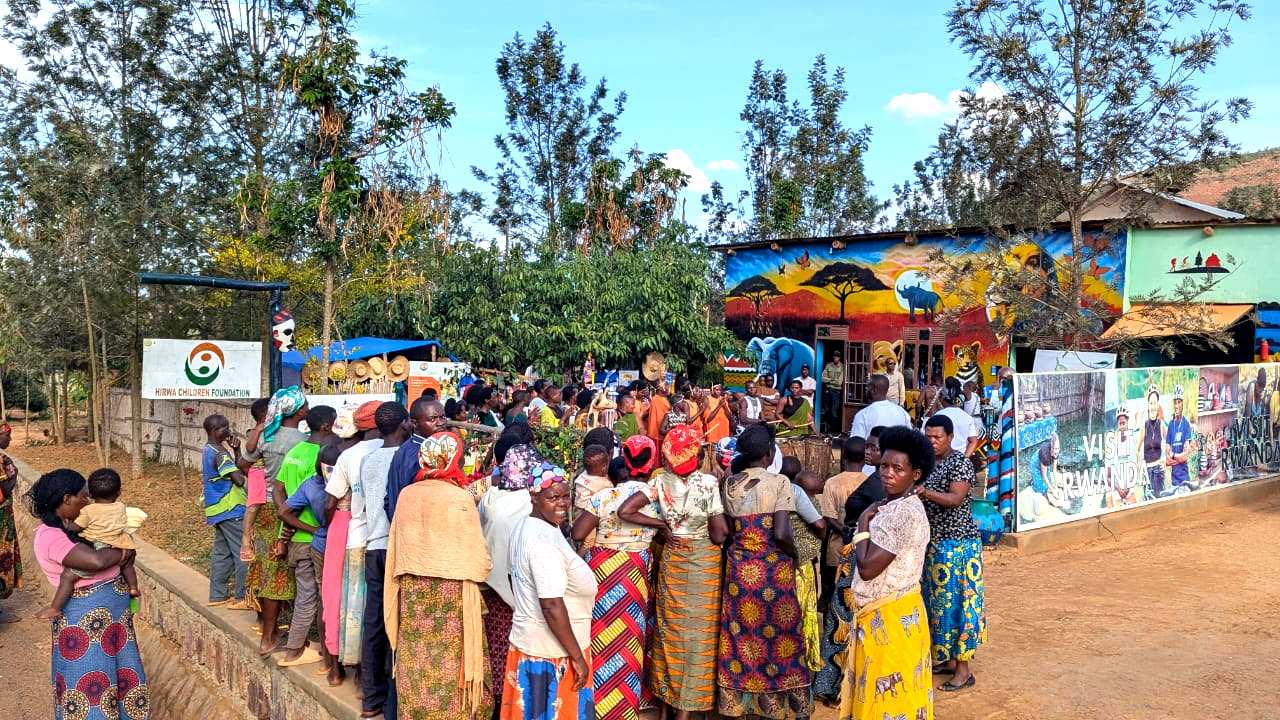
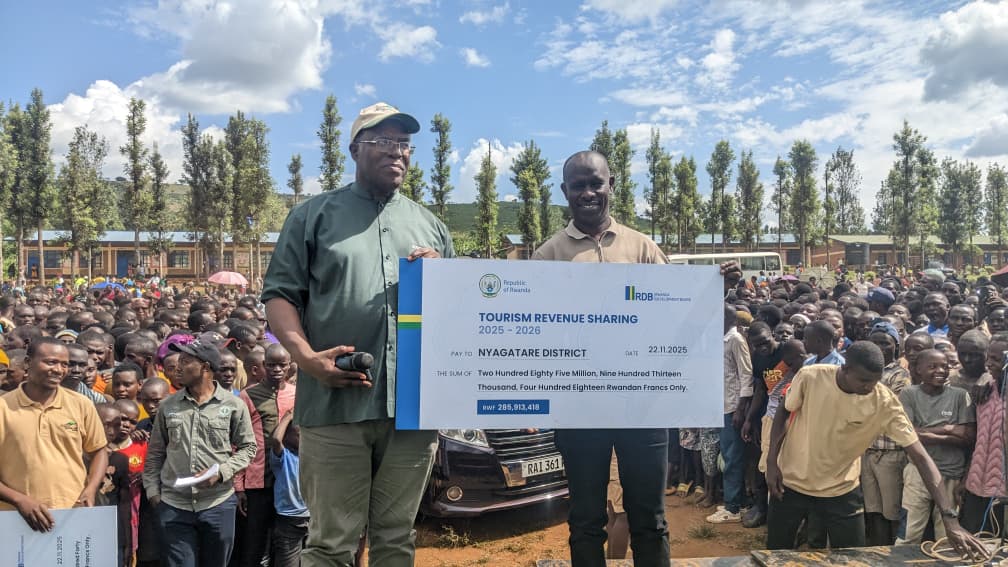
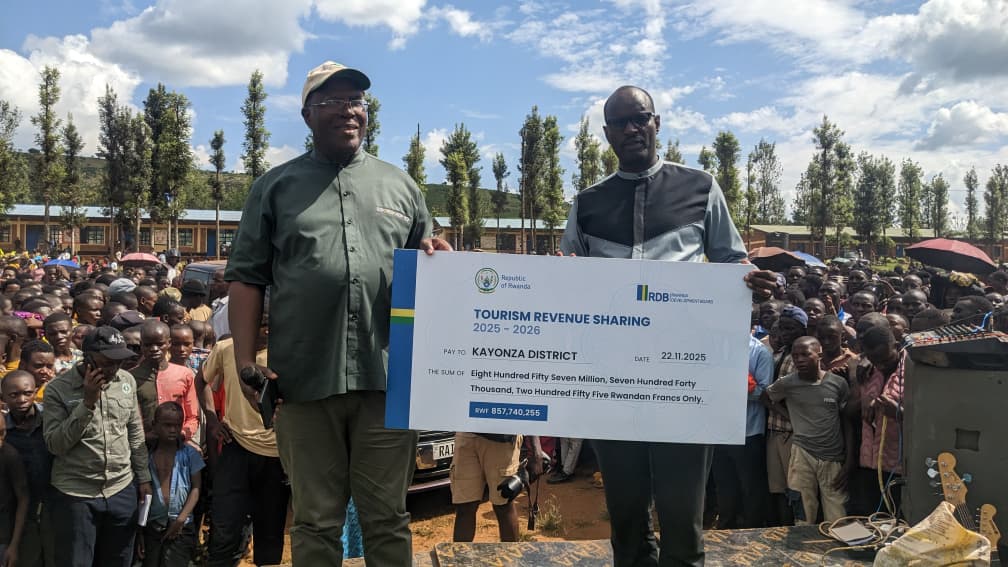
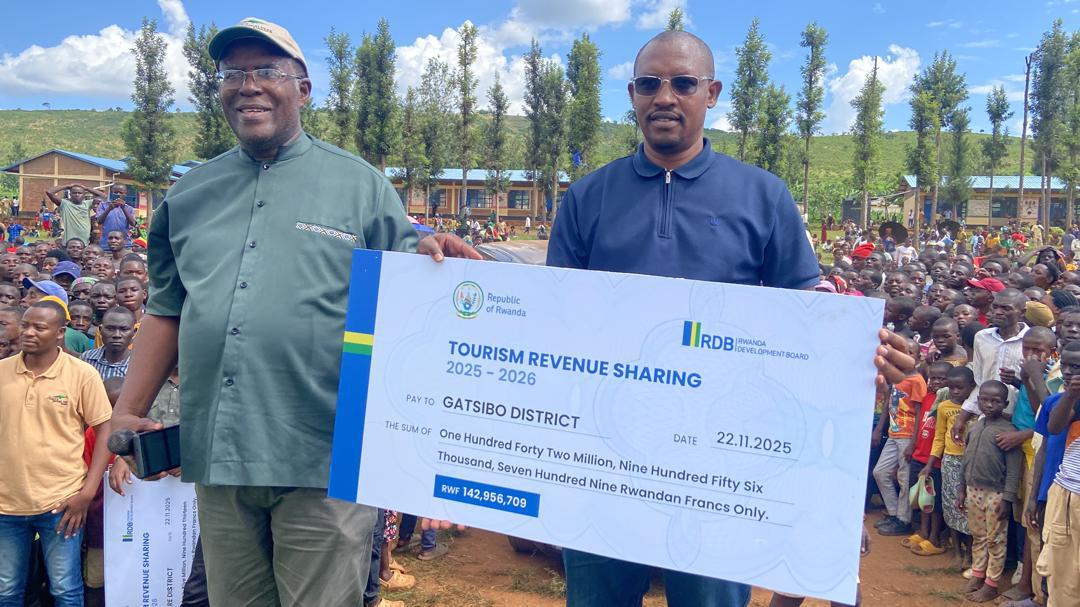
Districts surrounding Akagera National Park were on Saturday presented with dummy cheques worth Rwf1.2 billion under the Tourism Revenue Sharing (TRS) programme for the 2025–2026 fiscal year.
Akagera, Rwanda’s flagship savannah and wetland conservation area, spans approximately 1,122 square kilometres and is bordered by Nyagatare, Gatsibo, and Kayonza districts—communities that play a central role in the park’s conservation efforts. The largest share of the park lies within Kayonza District.
Under the government’s 10% Tourism Revenue Sharing policy, Kayonza received the biggest allocation at Rwf857 million, followed by Nyagatare with Rwf285 million and Gatsibo with Rwf142 million.
Since 2010, Akagera National Park has channelled $4.7 million into community development through revenue-sharing schemes and special grants, reflecting its growing impact on surrounding areas.
During the cheque handover, residents from Kabare, Rwinkwavu, and Ndego sectors in Kayonza District requested the construction of a youth center offering health services, saying it would help youth access essential care, prevent early pregnancies, and reduce vulnerability to HIV and other diseases.
Others called for clean water access and upgrades to existing health facilities to minimise long travel distances to district hospitals.
Kayonza District Mayor John Bosco Nyemazi commended residents for proposing projects that advance shared community goals, assuring them that the submissions will be prioritised during development planning.
He also urged communities living near the park to continue safeguarding it from poaching, emphasizing that they benefit annually from the park’s tourism revenues.
In Nyagatare District, TRS-funded projects have significantly improved livelihoods through the construction of solar-powered water points, modern Early Childhood Development (ECD) centres, small markets, electricity connections, and the provision of science equipment to schools.
Residents have also benefited from income-generating initiatives, including small livestock distribution, livestock farming support, and handcraft projects.
These interventions have helped communities bordering Akagera National Park combat poverty and enhance their overall well-being.
Nationally, more than Rwf5.34 billion was channelled into the Tourism Revenue Sharing Scheme between 2005 and 2020.
In 2024 alone, the government invested Rwf3.27 billion to support 105 community projects, marking one of the highest annual investments since the programme began.
Ultimately, the TRS scheme serves as a direct financial incentive for conservation, strengthening the link between Akagera’s ecological success and the socio-economic progress of the Eastern Province communities that help protect it.