



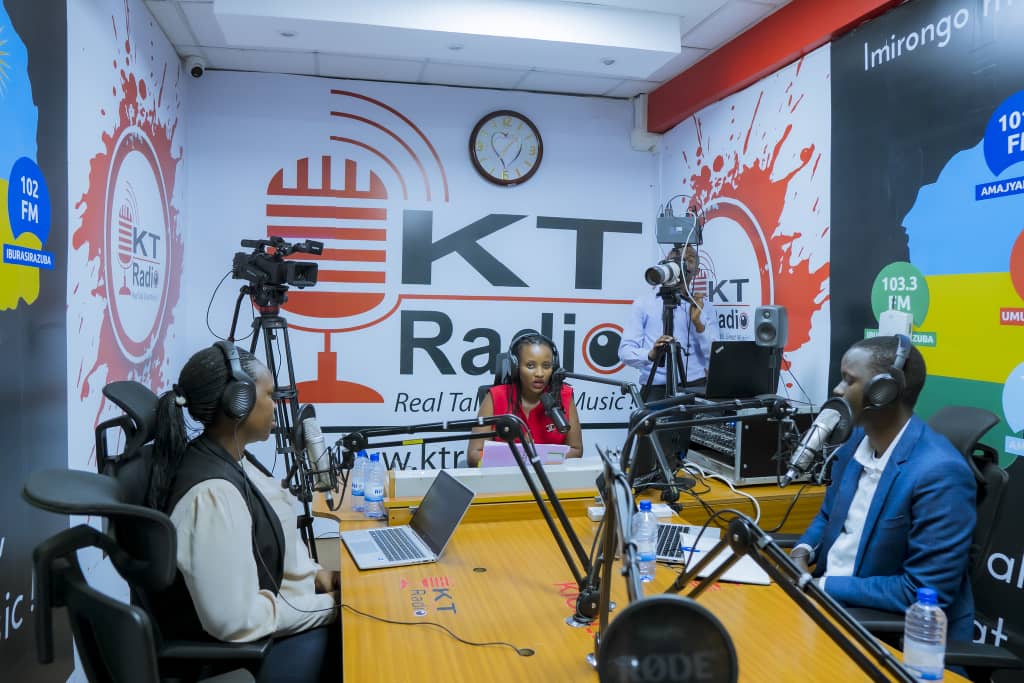
 The EdTech Mondays show returned on Monday, November 24, 2025, with a compelling discussion on how Rwanda can scale up access to technology-enabled education in rural schools.
Broadcast live on KT Radio and the Kigali Today YouTube channel from 6 to 7 p.m., the episode was moderated by presenter Germaine Umukazana and featured leading voices in the country’s education technology ecosystem.
The panel included **Karara Benon**, CEO of DATA+ Rwanda—an organization specializing in professional training, research consultancy, and software development aimed at closing the region’s digital and data skills gap.
Also joining the conversation was **Jeanne Beula**, General Manager of **kLab (Kigali Innovation Hub)**, one of the country’s major technology innovation centers.
Karara emphasized the need for user-friendly digital tools that can support teachers regardless of their working environment. He stressed that technology should empower educators in both well-equipped and under-resourced schools.
“We need technology that enables teachers to continuously upgrade their skills in order to keep up with the times, because knowledgeable teachers produce knowledgeable students. To match global progress, we must continuously learn,”* he said.

He welcomed the ongoing efforts by the Government and the ICT Chamber through the Hanga Hubs operating across nine districts, noting that such initiatives are essential for strengthening teacher capacity.
Karara also highlighted a persistent challenge: a lack of exposure among learners. He noted that many children fear digital tools not out of intimidation, but simply because they rarely interact with them.
“In many secondary schools we visited, one ICT room serves 800 to 1,000 students. With a one-hour lesson, a student may only touch a computer once a week. Learning a computer in just one hour a week is extremely difficult,”* he explained.
He added that fears of equipment damage or theft continue to limit student access to computer labs, turning what should be a learning resource into a restricted space.
Beula echoed these concerns, pointing out that private sector initiatives aiming to advance digital education in rural areas face limitations due to reach and resources.

However, she noted that partnerships with the ICT Chamber—particularly through the eight Hanga Hubs—have helped extend training opportunities to underserved communities.
“Through these hubs, we also conduct training sessions to ensure that communities have access to the services we provide,”* she said.
Beula explained that the hubs also train teachers who later train their peers, helping spread essential digital skills within the education system.
Since its establishment in 2012, kLab has supported around 4,000 young people, including secondary school and university students.
Still, she pointed out that digital literacy gaps remain significant, especially in secondary schools where resource constraints make it difficult for learners to practice.
“In some schools, two or three students share one computer. Some adapt quickly, but others struggle, especially when paired with more experienced users. Many students are still not accustomed to using computers,”* she said.
Beula concluded that kLab’s mission remains focused on helping young learners build confidence and familiarity with digital tools through consistent engagement and hands-on experience.