




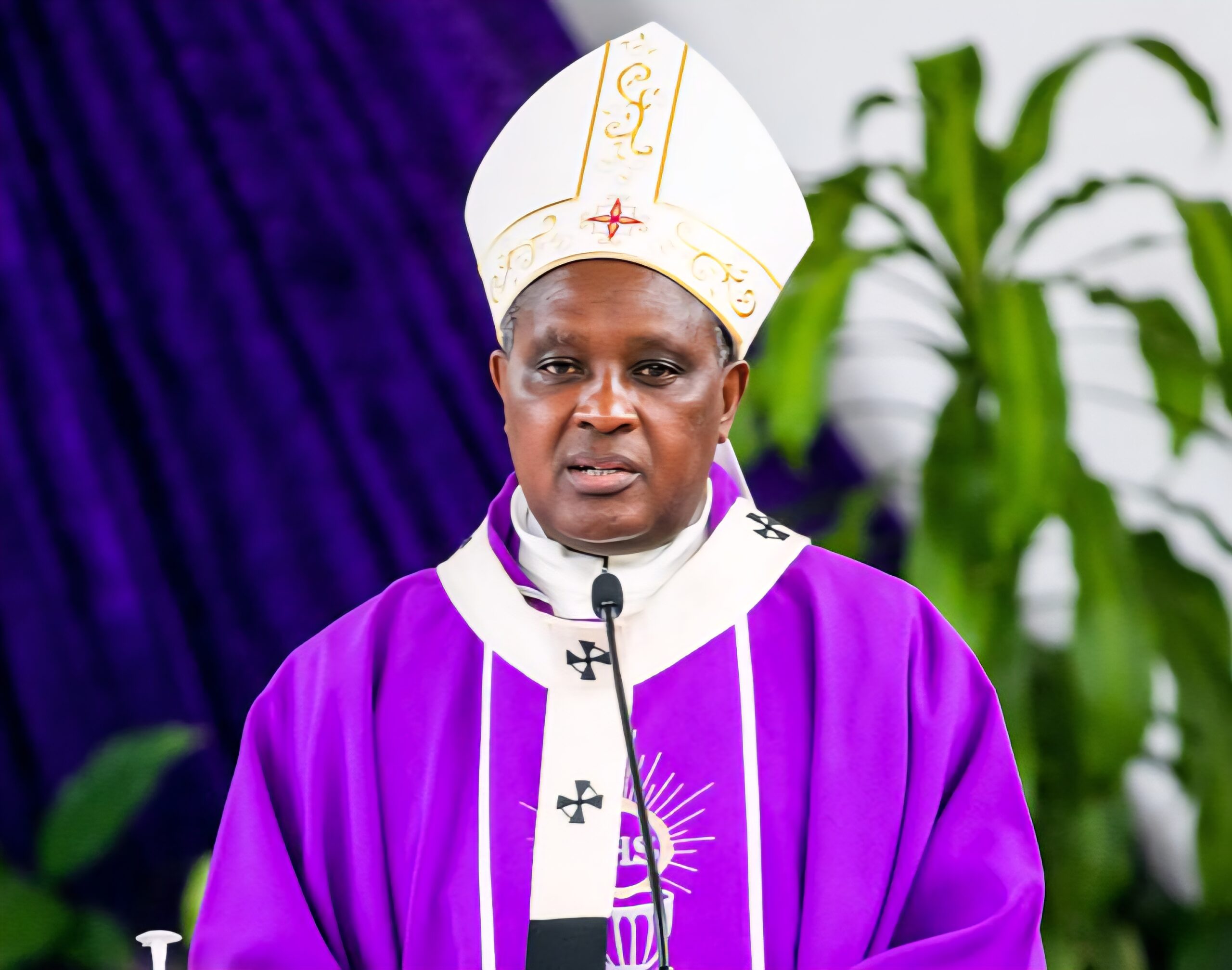
Cardinal Kambanda
Archbishop of Kigali, Antoine Cardinal Kambanda has urged authorities to reopen Catholic churches that meet required standards, saying many believers are struggling to practice their faith fully as Christmas finds the Church in Rwanda facing deep challenges.
Speaking to Christians during the Christmas sermon, Cardinal Kambanda reflected on the birth of Jesus Christ, noting that while Christ was born for all humanity—including Rwanda—He arrives in a society wrestling with serious spiritual and moral difficulties.
“The Word who was born for all people was also born for us here in Rwanda,” Kambanda said. “But in what condition does He find us? He finds a people thirsty to know God, yet burdened by serious challenges that threaten faith. He finds us in the darkness of our night, weighed down by the sins of the world.”
The Cardinal noted the continued closure of many churches, parishes, chapels, and outstations, saying Christ finds communities unable to gather for worship.
He also warned against what he described as a form of modern progress that seeks to replace God, adding that respect for the Lord’s Day, prayer, and the signs through which God offers salvation is declining among many believers.
Kambanda further noted that the world Jesus encounters today is one that increasingly promotes limitless individual rights, elevates moral confusion, and normalizes what was once considered unacceptable.
He pointed to growing intolerance toward believers and diminishing respect for the Virgin Mary, whom he described as central to God’s plan of salvation.
“A person who lives in darkness needs light to understand where they are and where they are going,” he said. “In darkness, people fear everything—even those they meet who may be their brothers and sisters. Just as the eye needs light to see, the human mind needs God to understand its purpose and direction.”
The Cardinal cautioned against attempts to understand God solely through human intellect, saying this often leads people away from the truth.
“Just as the moon cannot shine without the sun, a person cannot have light unless it comes from the true light of God,” he said, identifying that light as Jesus Christ, the Word of God made flesh.
He also warned against emerging ideologies that deny the need for God, arguing that human fulfillment cannot be achieved through material support and development alone.
Referring to the wise men who visited Jesus at His birth, Kambanda said they offer a powerful example of placing God at the center of life.
“No one can attain the happiness they are destined for without God,” he said.
Cardinal Kambanda expressed solidarity with Christians whose churches remain closed and who now follow religious teachings online.
He renewed his appeal to authorities to act, calling for the reopening of churches that comply with established requirements so that believers can once again worship together.
He concluded by emphasizing the central role of prayer in Christian life, saying believers cannot rely solely on worldly things, as they were created for eternal life.

5 comments
Restricting one’s faith destroy that person’s values
The article is overly theoretical and interpretive, relying heavily on moral and theological abstractions rather than grounding its argument in concrete socio-political or public health realities. While the call for reopening churches is framed in spiritual and moral language, it does not sufficiently engage with the practical, regulatory, and epidemiological considerations that originally justified the closures. By treating religious restriction primarily as a moral or spiritual deficit, the argument risks flattening complex realities—such as public health governance, state responsibility, and differential institutional capacity—into a single moral narrative.
Moreover, the piece tends to collapse distinct domains—faith, public policy, health regulation, and social morality—into one interpretive frame, thereby overlooking the tensions and trade-offs that exist between them. This approach creates the impression that opposition to reopening churches is rooted in hostility toward faith, rather than in pragmatic governance concerns. As a result, the argument appears more normative than analytical, privileging moral appeal over empirical or contextual nuance.
Government has never closed any Church but synagogues
I love this writing of Cardinal Kambanda.
Cardinal Kambanda is right about churches. Priorities for churches go against humanity! It’s a shame for Mankind.
Comments are closed.