



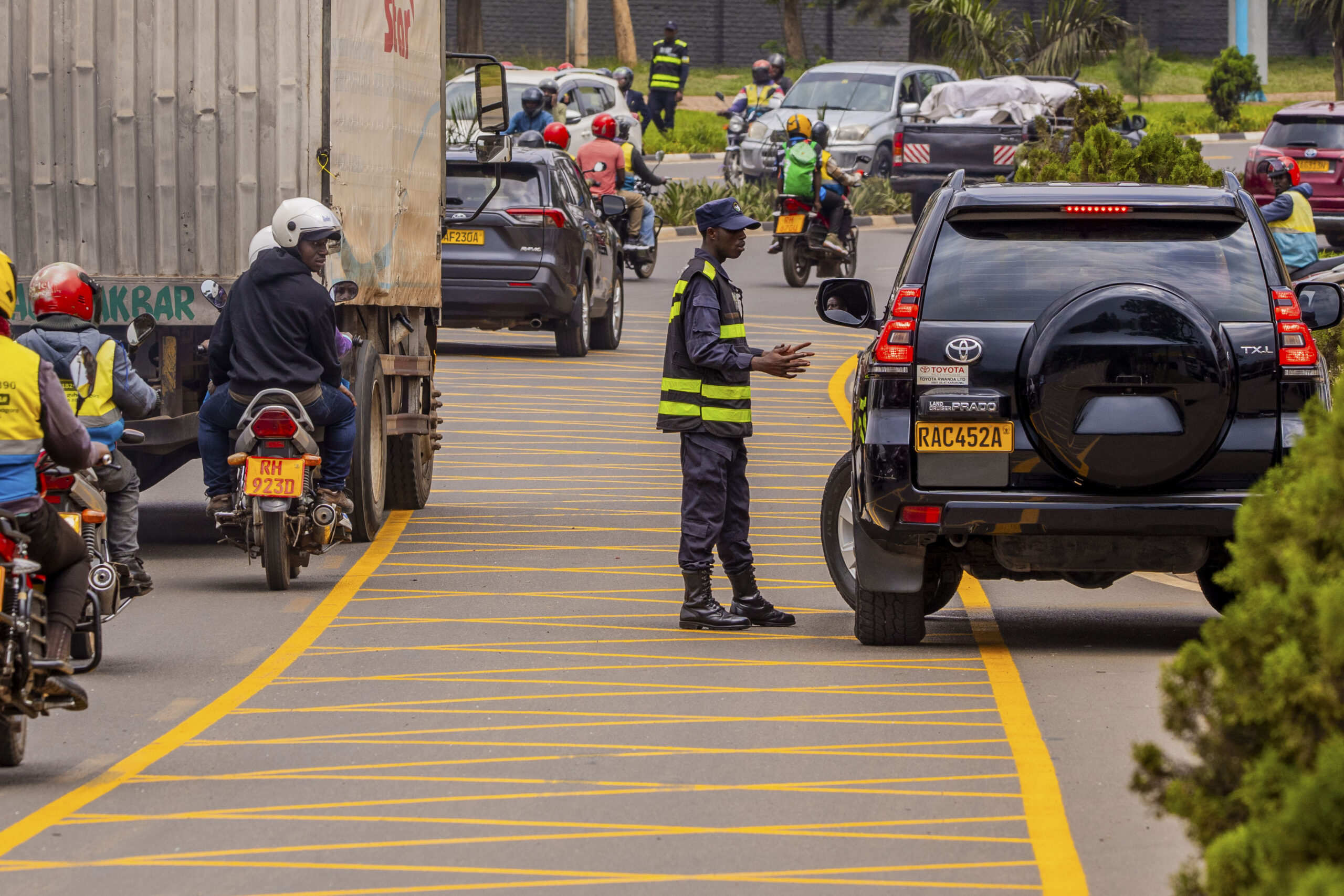
As I drove from home to work this Monday morning, there were interesting scenes across the road from the Sonatubes roundabout to the Central Business District (CBD).
This stretch, known for its strategic importance, is notoriously the busiest road during rush hours, characterised by near-standstill traffic jams.
The urgency to address this mobility crisis culminated in a pivotal announcement earlier this week.
On Monday, the City of Kigali issued a statement in Kinyarwanda, which translates as a clear proclamation of a new urban order: “Starting this Tuesday, public transport vehicles carrying many passengers will be given priority to pass earlier using a special light in the traffic lights. We have started with the road: Downtown-Sonatube-Remera. If you drive a vehicle in #KigaliYacu, respect the road rules and signs. Do not drive in the lane designated for buses, which is marked BUS ONLY, thus #Let’sPreventTrafficJams,” reads a pinned statement from City of Kigali on its X account.
This was more than a regulatory change; it was a clear message signaling a mandatory behavioral change for all road users, prioritizing the public good over individual convenience.
Yet, as I drove through the newly demarcated zone, the enforcement reality was immediate and challenging.
As expected, traffic Police officers were not resting. Their presence was heavy, a necessary deterrent against ingrained habits. And leading the charge of defiance, as has always been the case, were the motor taxi operators.
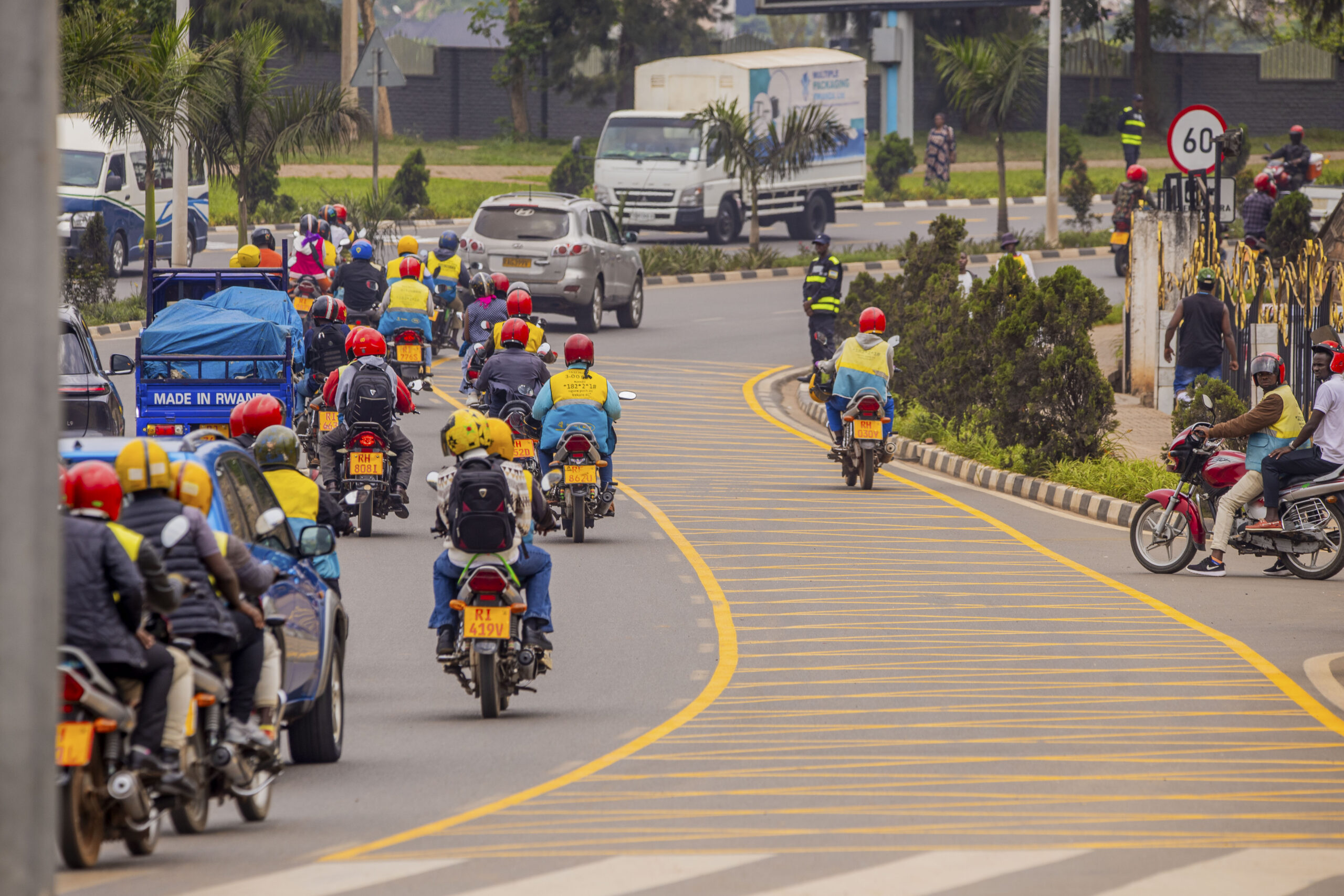
The motos, a critical yet notoriously chaotic element of Kigali’s transport, were the most stubborn boys in town. While huge signages clearly marked the BUS ONLY lanes and the new bus priority light shone at every signal, these drivers took advantage of their usual characters, treating the clear road as an opportunity for quick passage, actively violating the new traffic rules.
It was a visual metaphor for the city’s struggle: the future clashing with the past. Clearly, the Police will be busy in the next few days issuing traffic fines, a punitive measure necessary to enforce the new discipline.
The strategic imperative of dedicated bus lanes
The rationale behind these Bus Lanes is an internationally recognized pillar of smart urban planning. It is not merely about giving buses a head start; it is about fundamentally restructuring the city’s transit hierarchy.
The City of Kigali’s investment in DBLs and the specialized traffic light system—a form of Intelligent Transport System (ITS)—is a calculated move to provide the following crucial things in Rwanda’s road transport policy, especially in cities;
Maximising throughput: A single lane dedicated to a fleet of high-capacity buses moves a significantly greater number of people per hour than if that lane were occupied by single-occupancy vehicles and motos. This is the core principle of mass transit efficiency.
Guarantee reliability: By shielding buses from the general gridlock, the system ensures a predictable schedule. For Kigali’s vast workforce, this consistency translates directly into economic productivity and reliability, making the bus the most attractive transport mode.
Reduce the environmental footprint: Encouraging modal shift from private cars and two-stroke motos to public buses, particularly as Kigali introduces cleaner electric models, is critical for lowering the city’s overall carbon emissions and improving air quality.
The motos’ continued encroachment is a direct attack on this efficiency, deliberately undermining a system designed to benefit the majority of commuters.
Addressing the stubborn motor taxi operators
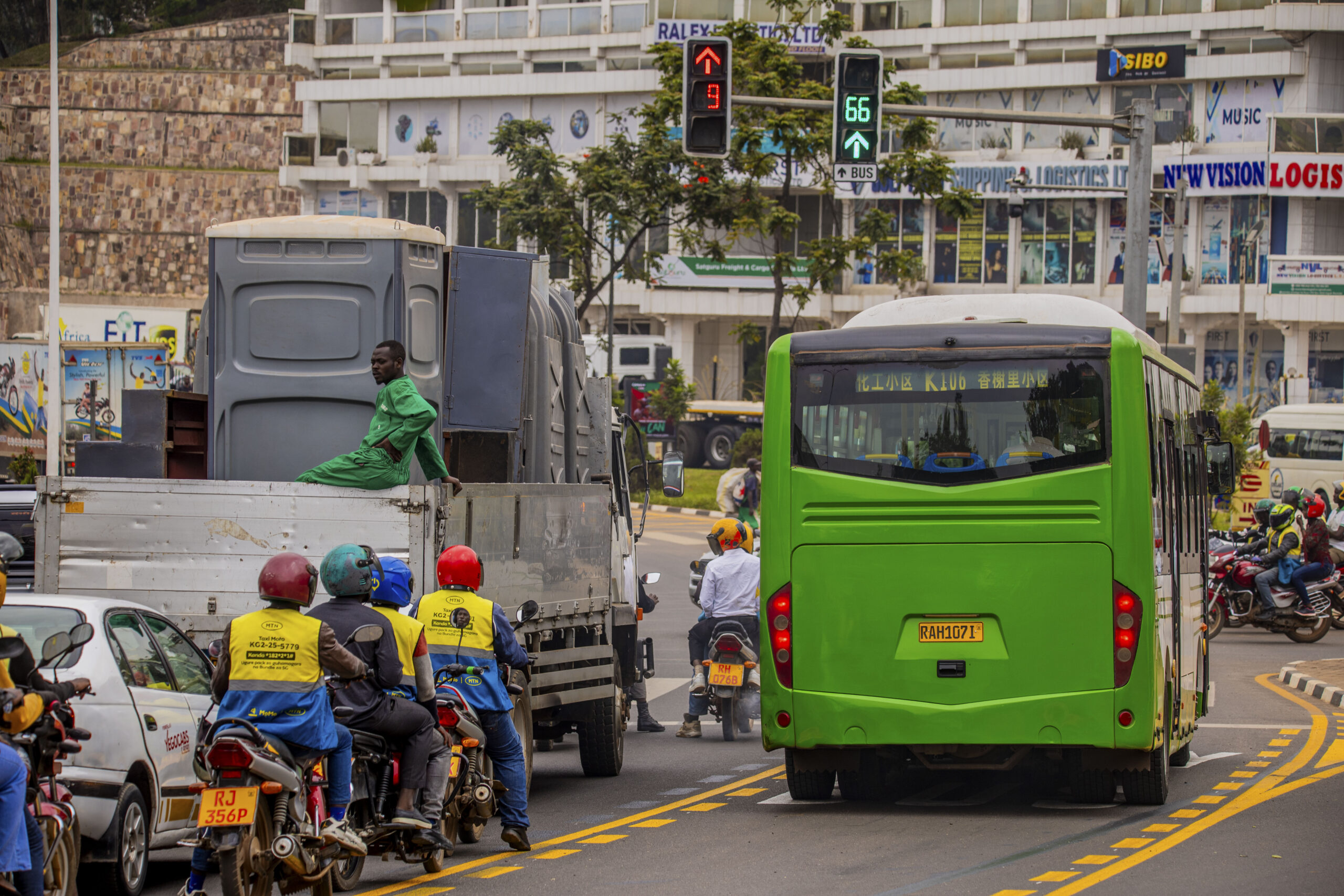
A bus using a dedicated lane is benefiting for traffic green light which releases the bus before other vehicles on the KN 3 Road in Kigali City on December 2nd, 2025. The Government of Rwanda has recently made changes in the traffic rules whereby buses operating in the public transport are priotized and given a dedicated lane at road junctions. With the BUS ONLY lane, a bus waiting for a green light is now able to move ahead before every other private cards and is not allowed to spend more that 3 mins at the bus stage.Photo:Cyril NDEGEYA
The stubborn motor taxi operators are a cultural fixture, used to navigating the urban landscape by exploiting gaps and ignoring constraints. Their collective defiance presents a complex socio-economic challenge that requires more than just fines.
Cooperative accountability: The city must engage the moto cooperatives to make them accountable for their members’ behavior. These associations are the most effective conduit for both mandatory education and internal sanctioning.
Reframing the narrative: Operators must be continuously educated on the fact that this is not a war against them, but a professional standard being applied. The chaos they create slows down everyone, including their own potential customers who use the buses. Professionalism means adhering to the rules, regardless of the size of their vehicle.
Designing for separation: The city should invest in infrastructure that makes the motos’ stubbornness less feasible. This includes physical deterrents, where possible, or clearly designated, separated lanes for low-speed two-wheelers on adjacent roads to keep them entirely out of the high-speed, high-capacity Bus Lanes.
The success of Kigali’s modern transport vision hinges on the ability to enforce this one, simple rule: BUS ONLY.
For the city to grow efficiently, the stubborn motor taxi operators must transition from being obstacles to being law-abiding partners in mobility.
The fines and enforcement over the coming days will serve as a definitive litmus test for whether Kigali can successfully implement its ambitious urban plan.
#Let’sAvoidJams must become an operational mantra, enforced firmly, starting at the Sonatubes roundabout and extending throughout the city’s strategic corridors.

2 comments
Very good for Kigali City. Motos drivers have to respect these new regulations aiming to achieve the objective.
Motorcycle should like any other vehicles have a plate number at the front. They behave the way the choose because detarent cameras cannot identify them from the front