



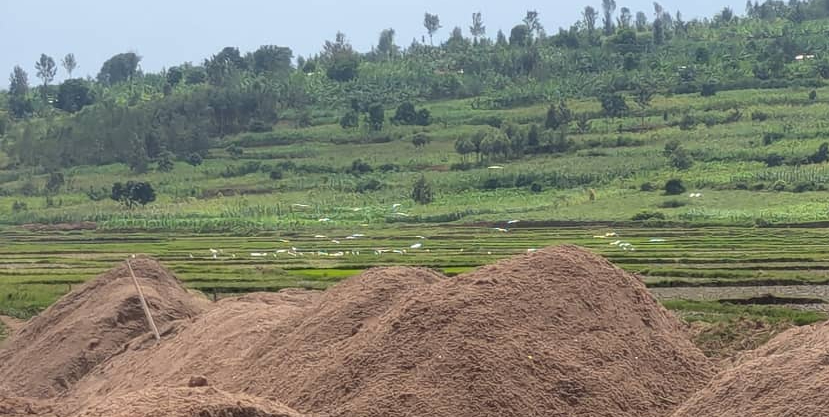
 While the Sustainable Agricultural Productivity and Market Linkage Project (SAPMP) was designed to boost agricultural productivity through irrigation and land rehabilitation, its implementation in Nyiramageni marshland has unexpectedly opened up a new economic opportunity for surrounding communities through sand collection.
The Rwf16 billion SAPMP project, funded by the Korea International Cooperation Agency (KOICA) and implemented by the Rwanda Agriculture and Animal Resources Development Board (RAB), focused primarily on rehabilitating the 600-hectare Nyiramageni marshland, which had long been affected by seasonal flooding, uneven water distribution, and soil erosion.
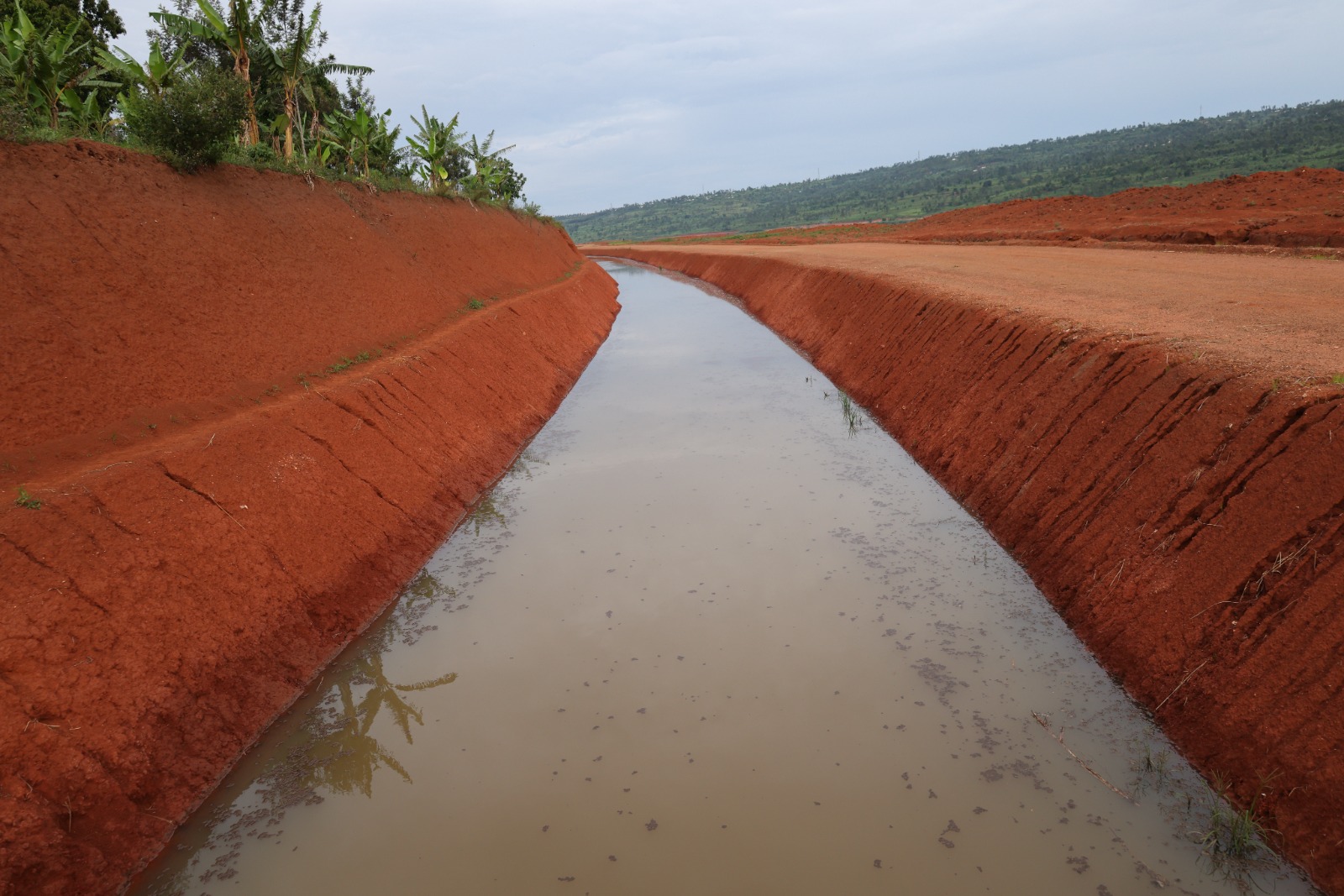
Key interventions under the project included the construction of reinforced intake structures to regulate water flow, nearly 20 kilometres of irrigation canals to ensure consistent water supply, improved drainage systems to prevent waterlogging, and sand traps aimed at reducing sediment entering the canals.
In addition, SAPMP invested heavily in hillside land husbandry—constructing terraces, soil bunds, and waterways—to control runoff from surrounding hills and protect the marshland infrastructure.
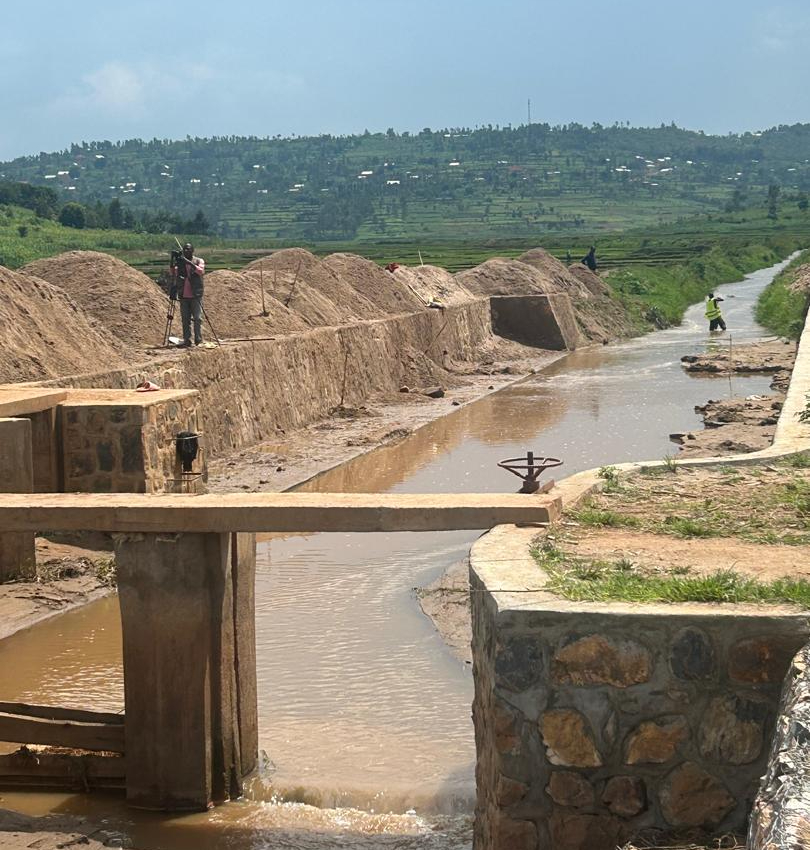
However, despite these preventive measures, sediment carried from the hillsides continued to accumulate in drainage channels and canals, posing a risk of blockages and environmental degradation.
Though the project timeline (2022-2026) has reached 86%, managing all this trapped sediment was not part of the project’s original economic plan, but it soon presented an unexpected opportunity.
Youth who have found gold in sand mining
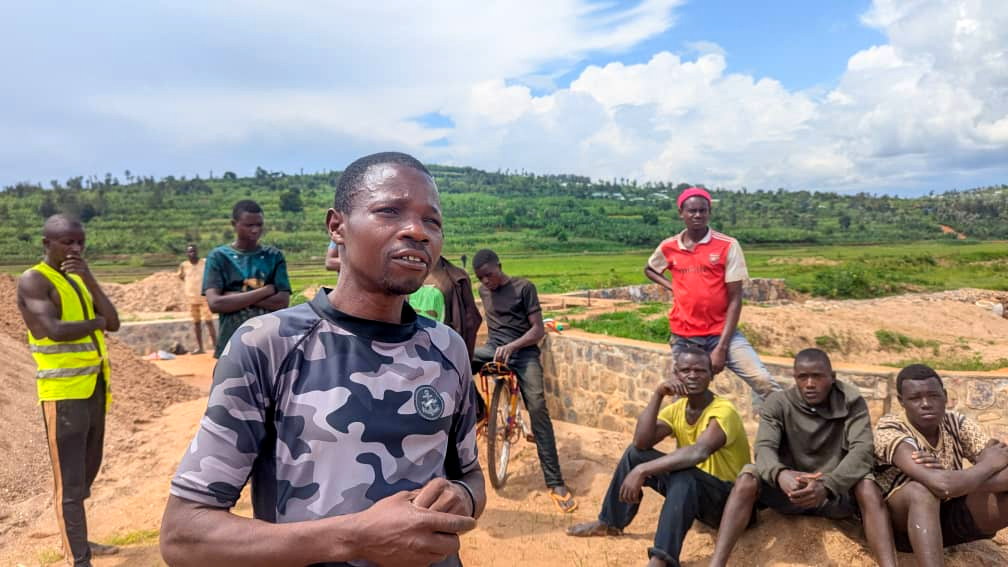
For many youths and unemployed community members who were not among the project’s 3,000 direct farmer beneficiaries, the accumulated sand became a source of income. Along the Nyiramageni canals, groups can now be seen manually desilting piles of sand, loading them onto trucks for sale.
“Instead of idleness and substance abuse, especially alcoholism, this activity has given us daily work and income,” said one young man involved in sand collection.
At some collection points, workers say they are able to extract between two and three tonnes of sand per truck. Each truckload earns them about Rwf5,000, depending on the amount of labour required.
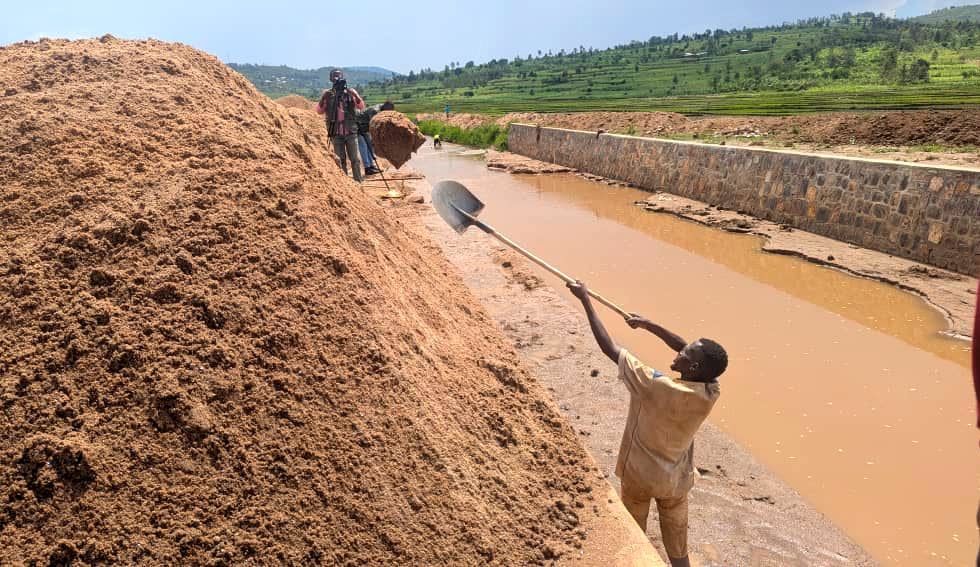
With the support of Gisagara District authorities and the local Water Users’ Association, the sand is sold to private buyers, and the proceeds are deposited into the cooperative’s bank account.
The funds are then used to pay casual labourers and support the maintenance of irrigation infrastructure.
Jean Pierre Muhire, SAPMP field manager for Nyanza and Gisagara districts, said the initiative has evolved into a sustainable model that combines job creation with infrastructure protection.
“This was not planned as an income-generating activity, but it has become a practical solution that creates jobs, maintains canals, and ensures the long-term sustainability of the project,” Muhire said.

Jean Pierre Muhire
He added that sand collection is closely coordinated with farming cooperatives to ensure that desilting is done at the right time and in a manner that does not damage irrigation structures. The activity is also regulated and taxed at the district level, with revenues contributing to local development efforts.
District officials welcomed the unplanned economic benefits, noting that they not only support livelihoods but also help protect the environment and safeguard donor-funded infrastructure.
They pledged continued collaboration with local communities to ensure that the initiative remains sustainable and beneficial in the long term.

Gisagara District Mayor, Jérôme Rutaburingoga
All Photos: Daniel Sabiiti