



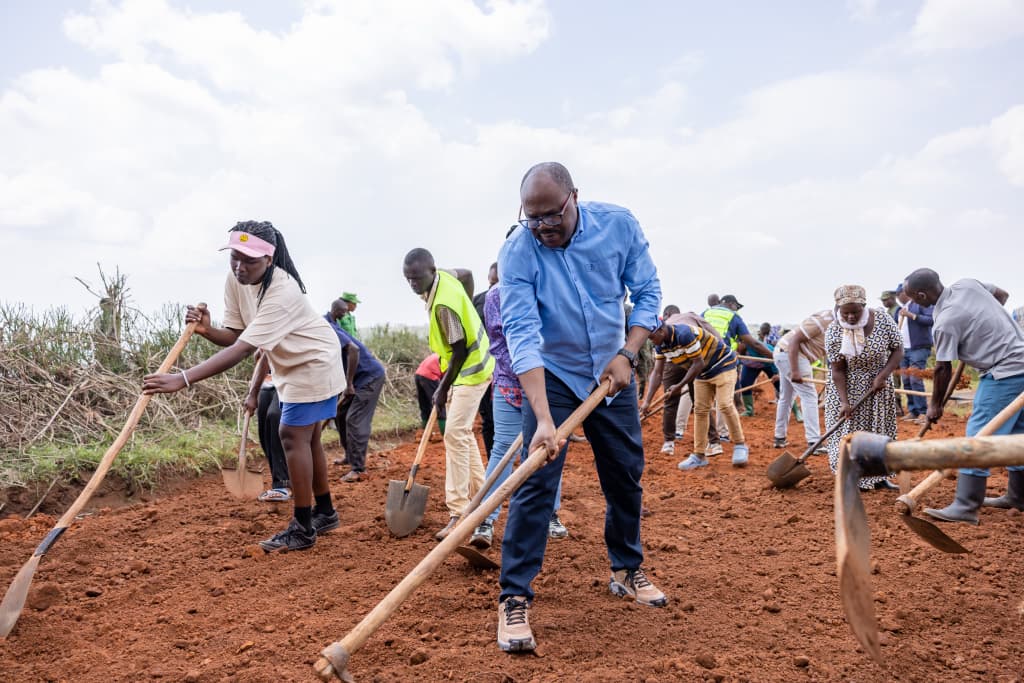
Today, Prime Minister D. Justin Nsengiyumva joined residents of Gahini Sector in Kayonza District for the monthly Umuganda community service to construct a maram road that will improve farmers’ access to markets.
The exercise took place in Nyamiyaga Village, Kahi Cell, where participants, including provincial leaders, laid 19 kilometers of the 36-kilometer maram road connecting Kahi and Giperefe to the Kayonza main road.
This vital infrastructure will enable Kahi farmers to connect to nearby markets and transport their milk produce to the Milk Collection Centers more efficiently and on time.
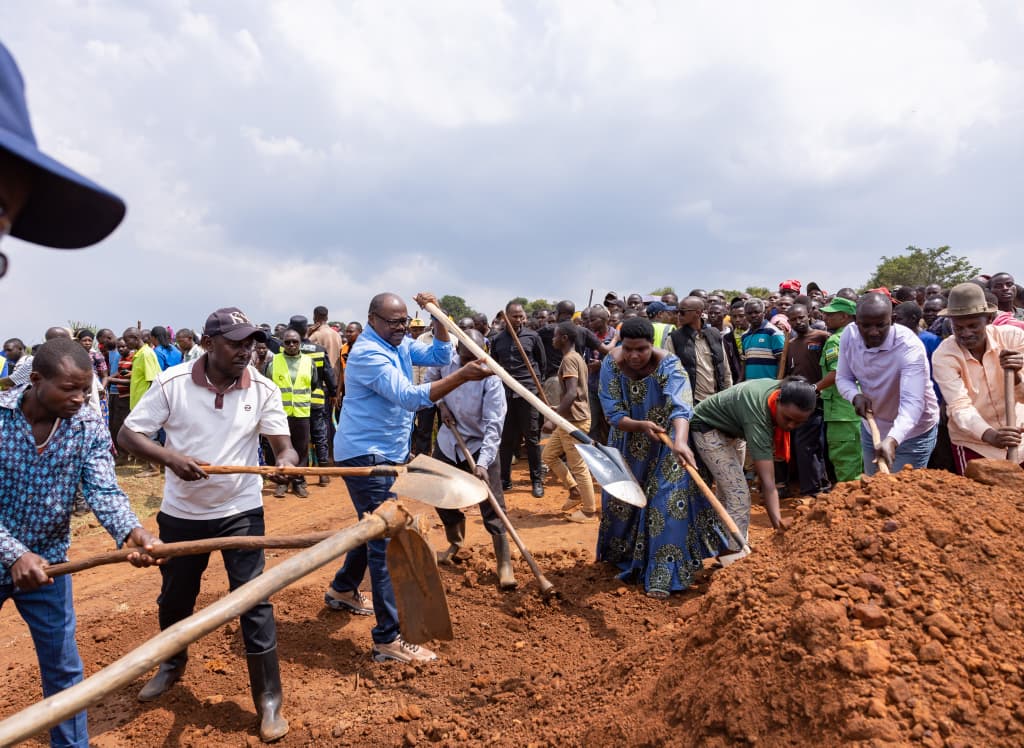
“Umuganda is one of our homegrown solutions as Rwandans to our problems without waiting for others to do so. We should be proud of being able to construct our own roads and use all our efforts to build this nation,” PM Nsengiyumva said.
Ahead of the 2026 Heroes Day this Sunday, Nsengiyumva said that the Umuganda activity is a way of contributing to the sacrifice and what was done by Rwandan heroes and walking in their footsteps.
Ending Eastern Hunger:
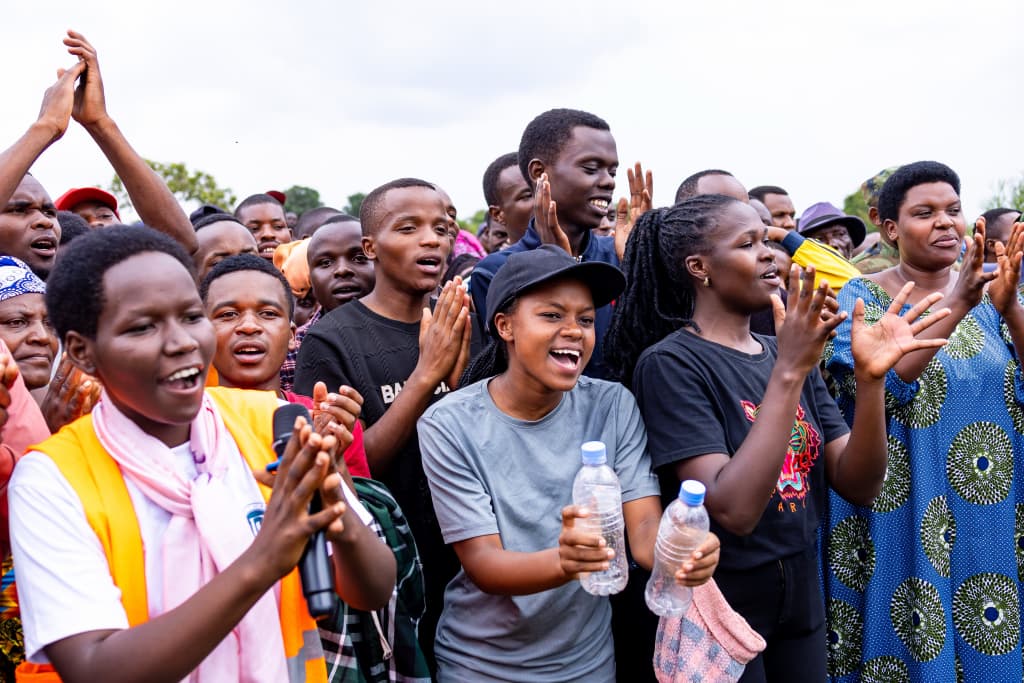
Residents recalled the PM’s memory on the issue of food insecurity caused by long droughts that recently left Kayonza residents in hunger.
Nsengiyumva said that this is something that is regrettable and many local officials have been held accountable for these failures.
“If this happens again, the Mayor and Governor will be given severe punishments than other former leaders responsible for this shortcoming,” Nsengiyumva said.
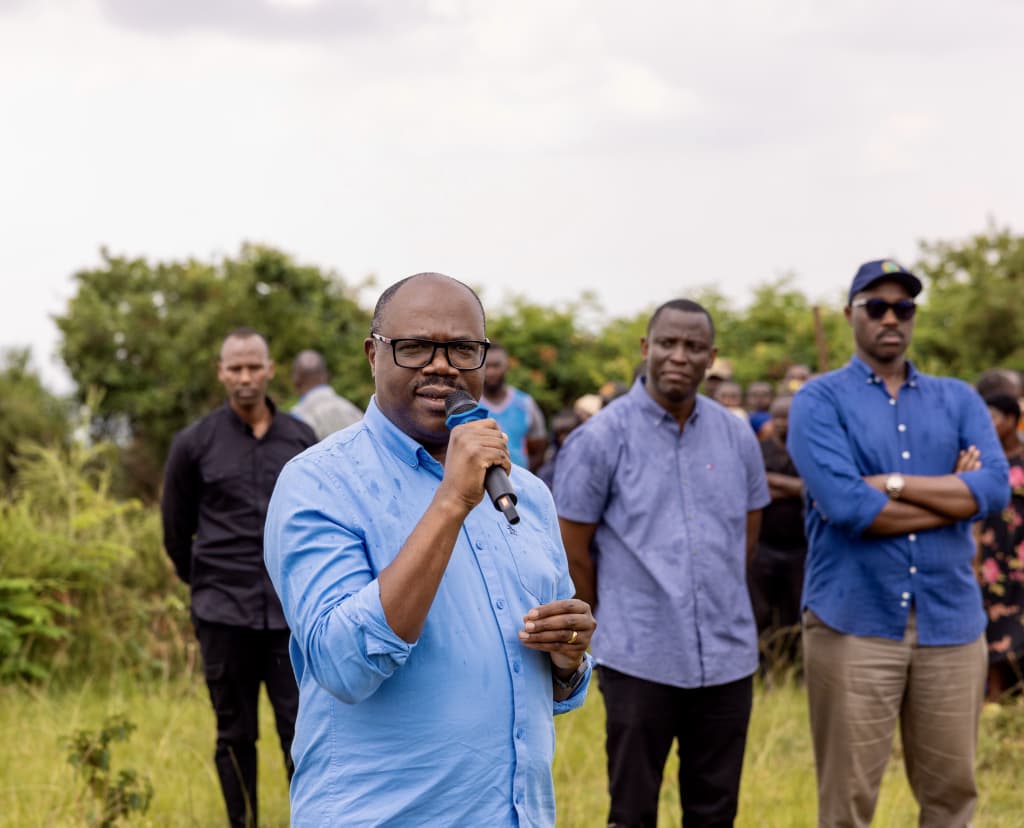 “Rwanda as a country that supports other hunger-stricken countries should not be having food security issues,” Nsengiyumva said, noting that IFAD and World Bank-funded projects such as KIIWP, CDAT should be used to ensure food security and improved livelihoods.
The Kayonza Irrigation and Integrated Watershed Management Project – Phase II (KIIWP 2) is a massive agricultural transformation initiative in Rwanda’s Eastern Province. As of January 2026, the project has entered an advanced implementation stage with significantly expanded funding.
The total estimated cost for Phase II is approximately $61 million (Rwf 53 billion), though recent comprehensive reports from late 2025 suggest the broader investment for irrigation in the region (including related infrastructure) may scale up to over $205 million.
Also in the province is the Commercialization and De-risking for Agricultural Transformation (CDAT) project, one of Rwanda’s most ambitious agricultural initiatives backed by a $300 million (approx. Rwf 380 billion) investment from the World Bank Group.
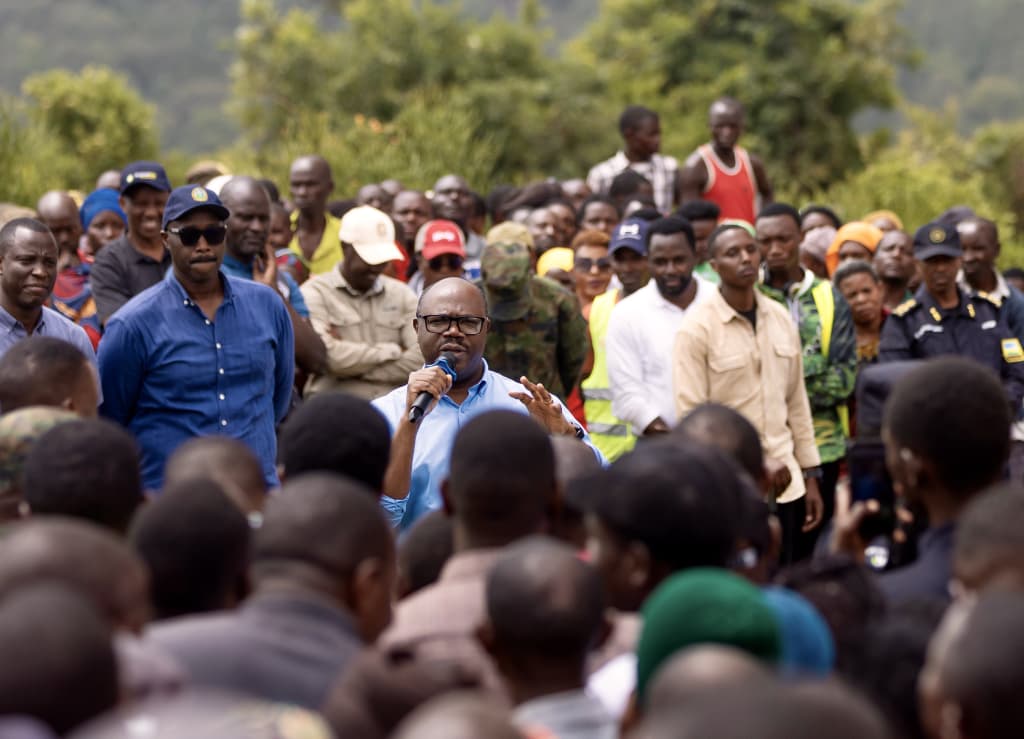
The PM asked leaders to use these opportunities to end hunger, improve farmers’ incomes and livelihoods, and specifically to the Mayor of Kayonza and Eastern Governor, he said:
“I want to see these same families that suffered from hunger giving testimonies of success when I return here next year. Do it or otherwise you will have to explain why and be held accountable,” he said.
The PM told residents that the government, through its partners, will in the meantime solicit more projects that will enable farmers to be climate-resilient in the future.
The Mayor of Kayonza, Fred Hategekimana, said that some of the tasks ahead will be to ensure that the maram road construction is completed and work with other institutions to ensure green and sustainable growth.